21-04-24
Kanazawa
Today we dock in Kanazawa. This is the capital of the Ishikawa Prefecture, on Japans central Honshu Island, well known for its well preserved Edo-era districts, museums and regional handcrafts. Kenrokuen Garden, begun in the 17th century and the adjacent Kanazawa Castle which was built in the 1580s.
Shuttle buses are provided to get into the train station from where we can walk to the castle and gardens. It’s an overcast day and only supposed to be about 16 degrees. There is still snow on the mountains in the distance. We have to clear customs here this morning before going ashore as we are returning from South Korea. Finally our group is called, around 11am and we head ashore and board the shuttle for the centre of town. The train station looks pretty new and is again absolutely spotless.

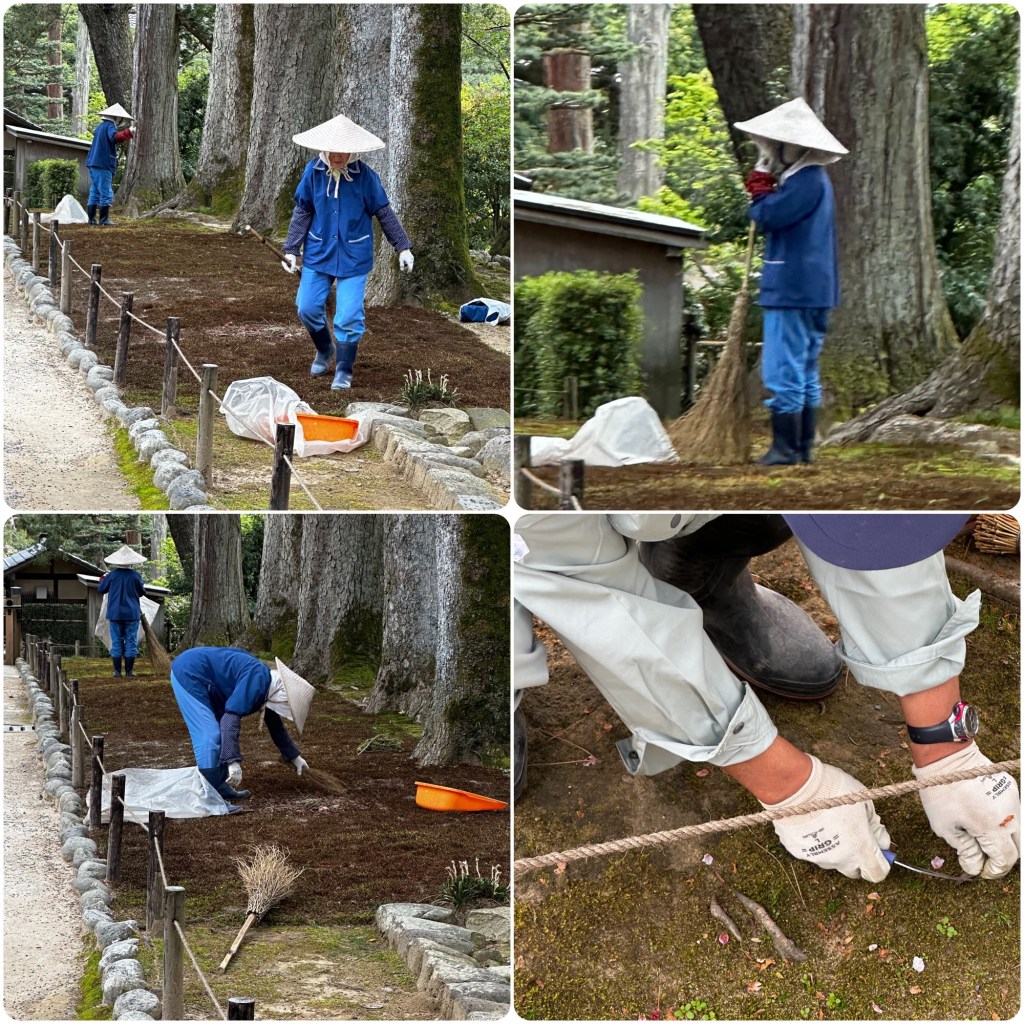
Kanazawa Castle is the place the city revolves around. The castle and Kenrokuen gardens date back to 1546, when the religious school of the Honganji temple was founded. The sprawling castle park remains a place for visitors and locals to enjoy the natural beauty of the changing seasons. The cherry blossoms have almost finished but the azaleas are just starting to bloom and with many more colours, the garden will no doubt look spectacular in a couple of weeks time. Moss covers a lot of the ground, with spring bulbs and irises showing their colours soon. It is certainly a lovely garden to wander around, with many different areas and plants. Some of the bigger trees have been here for many many years and have their branches propped up to stabilise them during the snowy periods. (P:- This gardening “thing” appears to be quite an art! Very precise, immaculately trimmed and manicured.Planned, propagated and planted with precision. A Gardener was busy weeding (with Tweezers)! I took a photo and he told me “most important get weeds small 1 by 1” – Think I will forget that garden advice! I kinda think Phil wouldn’t be allowed near a Japanese Garden with his Bulldozer, Excavator, Tractor, Chainsaw, Weed-eater or a spray tank of Roundup! They seem to have taken all the fun out of Phil’s gardening techniques!)
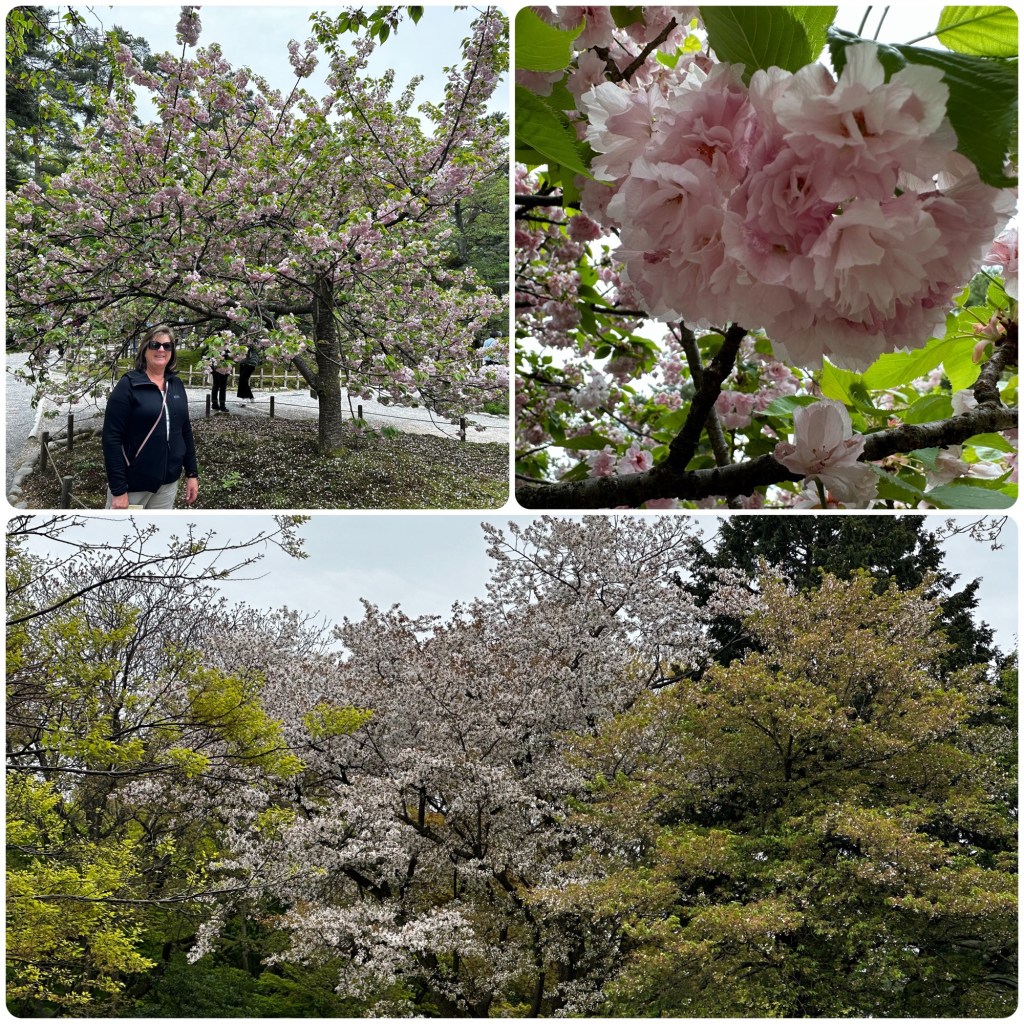

From the gardens we walk to the Higashi Chaya District about 20 minutes away. This is the largest of three historical Geisha districts still remaining in Kanazawa. It is a perfectly preserved neighbourhood where Geisha performances can be seen during the evenings. Many of the buildings that are no longer used as Geisha houses are now used as shops and restaurants.
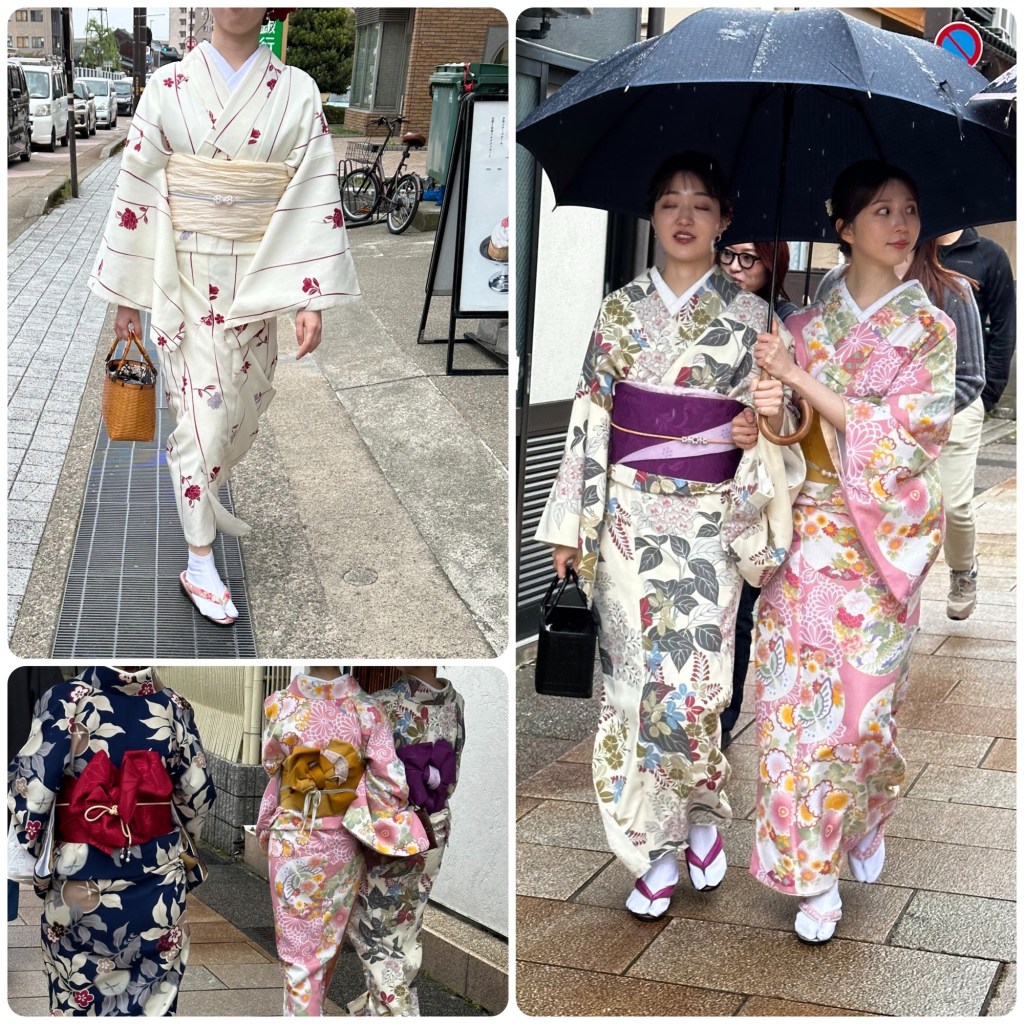
Just down the road is another Chaya District with many narrow alley ways and tea houses.

A fast walk back to the train station to get back before the rain starts. This has been a lovely area to explore and I would love to come back in a month or so with spring in full bloom.
22-04-24
Sakata
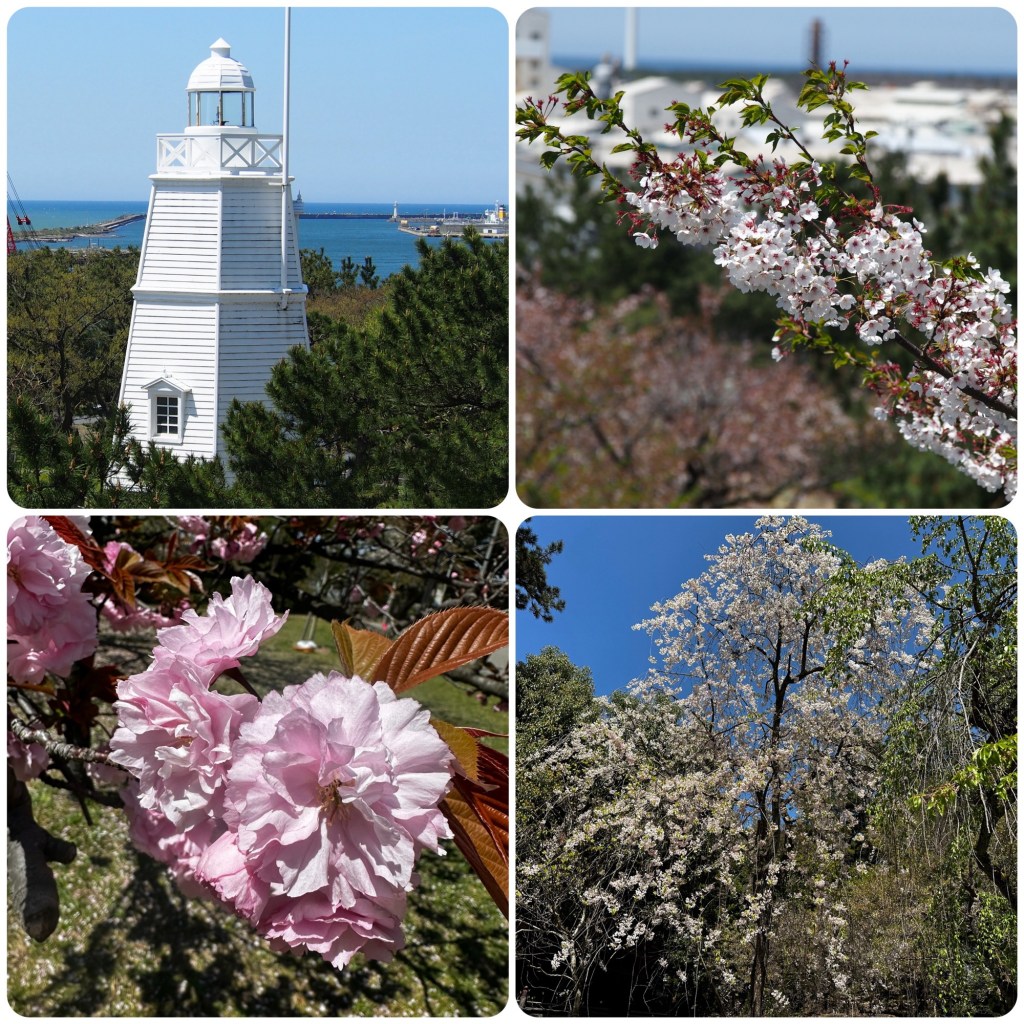
This morning we docked in Sakata. (P:-As we approached the port a prominent cone shape, snow covered mountain dominated the beautiful clear blue sky ( no smog today in Sakata) Mt. Chokai at 2326m. The area is known for its high grade rice production and Sake (rice wine and rocket fuel). This city faces the Sea of Japan and is located at the mouth of the Mogami River. There is a real welcoming committee on the dock to greet us. Drummers, school children, Geisha and a few stalls with free food samples of the area. I think Philip tasted everything. ( P:- it was also noted that Judith was seen sampling Sake shortly after breakfast today).
As we disembarked we watched the children from the local school playing traditional games, we could have a go at drumming, but didn’t try it, and got our snaps with the Geisha ladies. They had some great stalls besides the food stalls, with earrings, magnets, toys, general souvenirs, kimonos and some indigo dyed items. Everything was beautifully presented. After tasting some Sake, at 10.30 in the morning we boarded the shuttle bus into the town centre. Greeting the buses in town were groups of school girls, about 14-15 years old, smartly dressed in their uniforms with signs out ready to translate for us or show us where the attractions were. Very keen to help us and speak English with us. Several times through out the day these girls approached and asked if we needed any assistance.

First stop is Hiyoriyama Park, checking out the Kaiko Temple and several other smaller shrines. Good views over the waterfront from here and the park is much more authentic than some of the bigger parks we’ve been to. From here we walk down the the canal and head back towards town and the Sankyo Rice Warehouses. These storehouses were constructed in 1893 and made up of 12 buildings. 9 of the 12 storehouses were still in use in 2022. A line of Zelkova trees not only provides shade from the sun but also protects the buildings from the wind. People in Sakata regard these storehouses and trees as a sign of prosperity for the city.
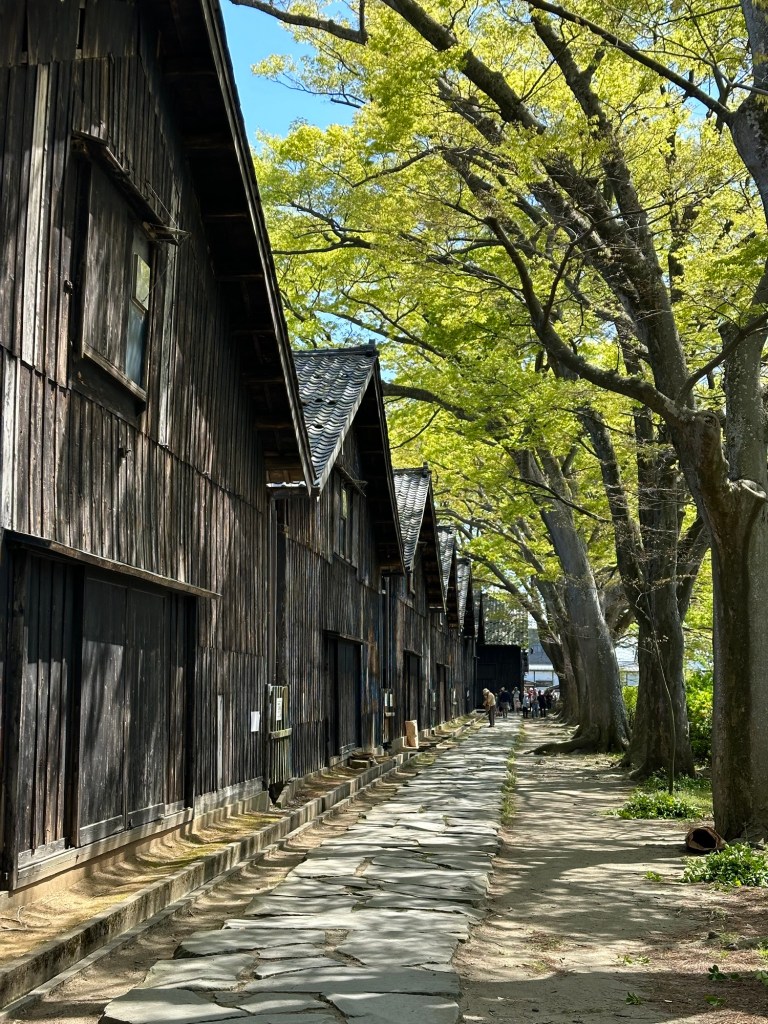

Before we left this morning Philip had been on Google maps and discovered that just outside the city, a SHORT walk from the centre of town, was the start of a huge area of rice paddies. He suggested that it would be good if we could walk out there to have a look. Hmmmm not sure I want to walk that far, so after finishing at the warehouses I suggest we take a taxi out to have a look. Surely we can use Google translate to get us out there. So after some discussion, via translate we jumped in a taxi and off we went. No sure what we would see or if it would be worth it. I’m glad we didn’t walk because I think we may have missed our return time to the ship.
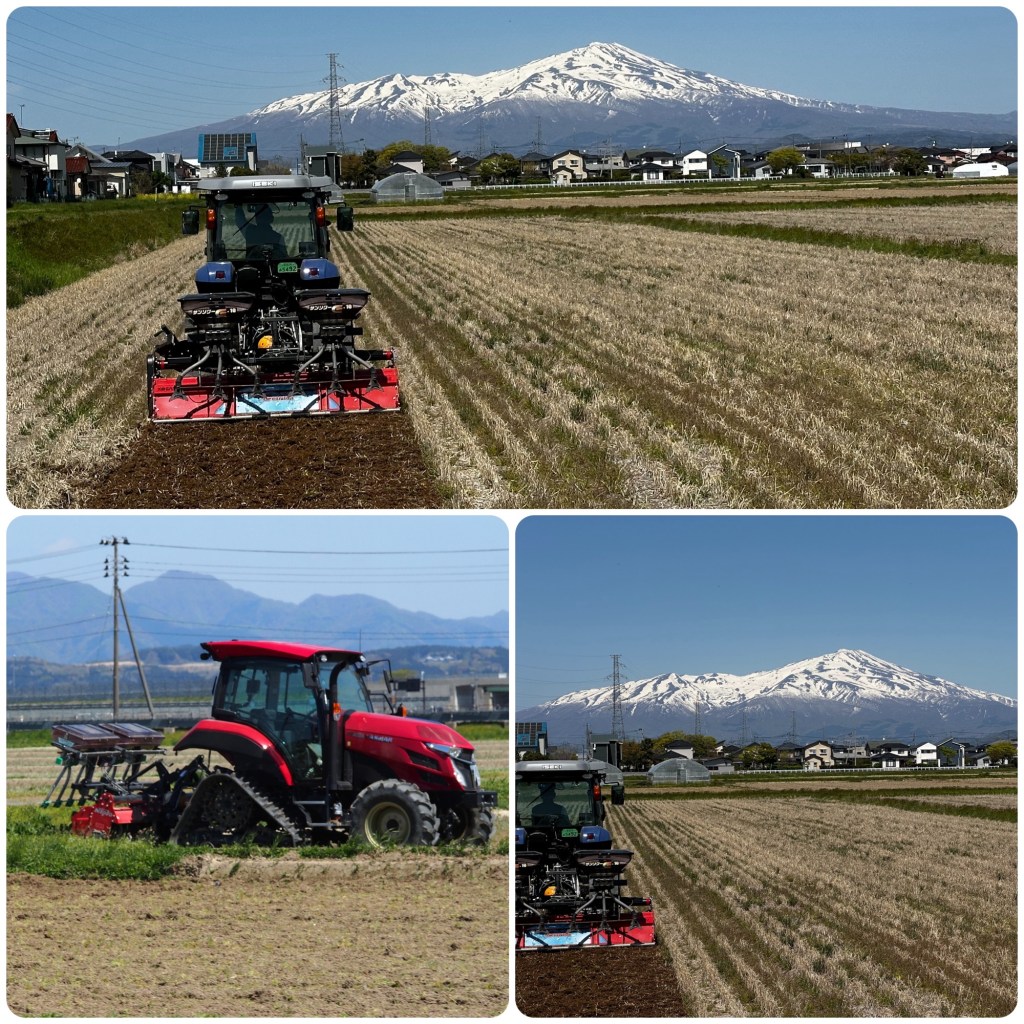
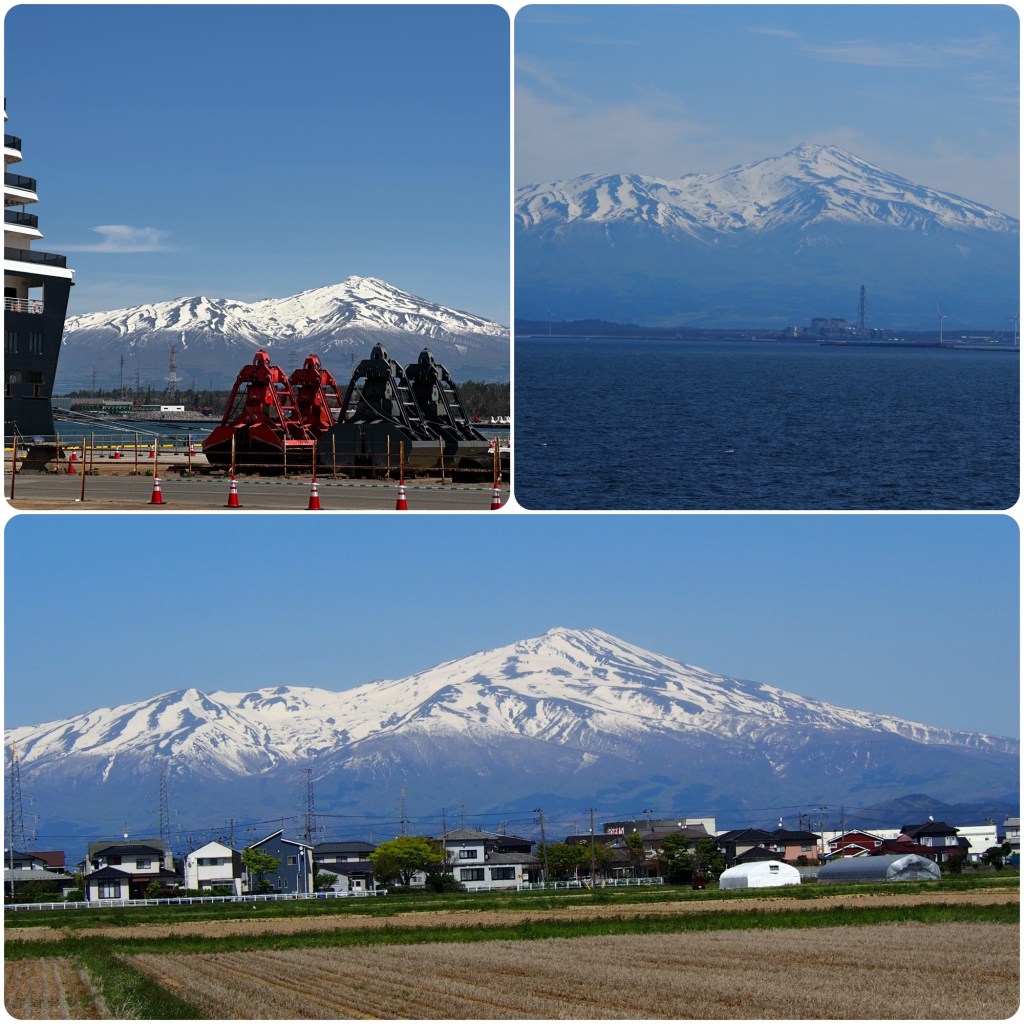
But it was a great ride through the outskirts of the city and into the rice paddies where they are just starting to plant this seasons rice. Well worth the $30 taxi fare to the the paddies with snow topped Mt Chokai in the distance.
(P:-Would have been a very pleasant walk but the Taxi idea worked a treat and our driver in black suit white gloves and tie (as they all are) drove us out of town to an area of rice fields for us to view. Timed perfectly as it was the first day of rice planting for the season, Two tractors were planting seed in a one pass operation into last years stubble. Water was starting to flood the corner of the first paddy planted. All happening under the shadow of beautiful Mt Chokai. Great to see a bit of real Japan! Made me smile a lot more than Castles, Shrines and Temples!
-85% of farm land in Japan grows Rice.
-The average farm is 0.8 of 1 hectare
-Ninth Largest producer of rice in the world
-Exports around 11 Million tonne of rice
-Most Japanese farmers are over 65)
The taxi dropped us back in the city centre where we found some stalls and shops selling souvenirs etc. Found one where I could try on a Kimono. And then found another that was selling used Kimonos and Obi’s (belt). Some may be travelling back to Tassie. They were being sold to help the continued support of the Great Eastern Japan Earthquake in 2011. Most were being sold for 2000-3000 yen, $20-30.

As we prepared to depart the port the local community is out in force again. Traditional dancers and samurai all perform as the Mayor makes speeches which are translated into English. Half an hour of performances entertain us and the locals wave and sing and clap as we leave. They make the cruise ships feel so welcome and wish us safe travels as we depart.
(P:-The mooring lines dropped and as we cautiously left the port the sun was being chased from the clear skies by a full Moon, closing the chapter on another wonderful day.)


 Tassie Travellers
Great photos , beautiful gardens and flowers. All very interesting. Beautiful kimono, did you buy one?🥰😆
LikeLike