15-04-24
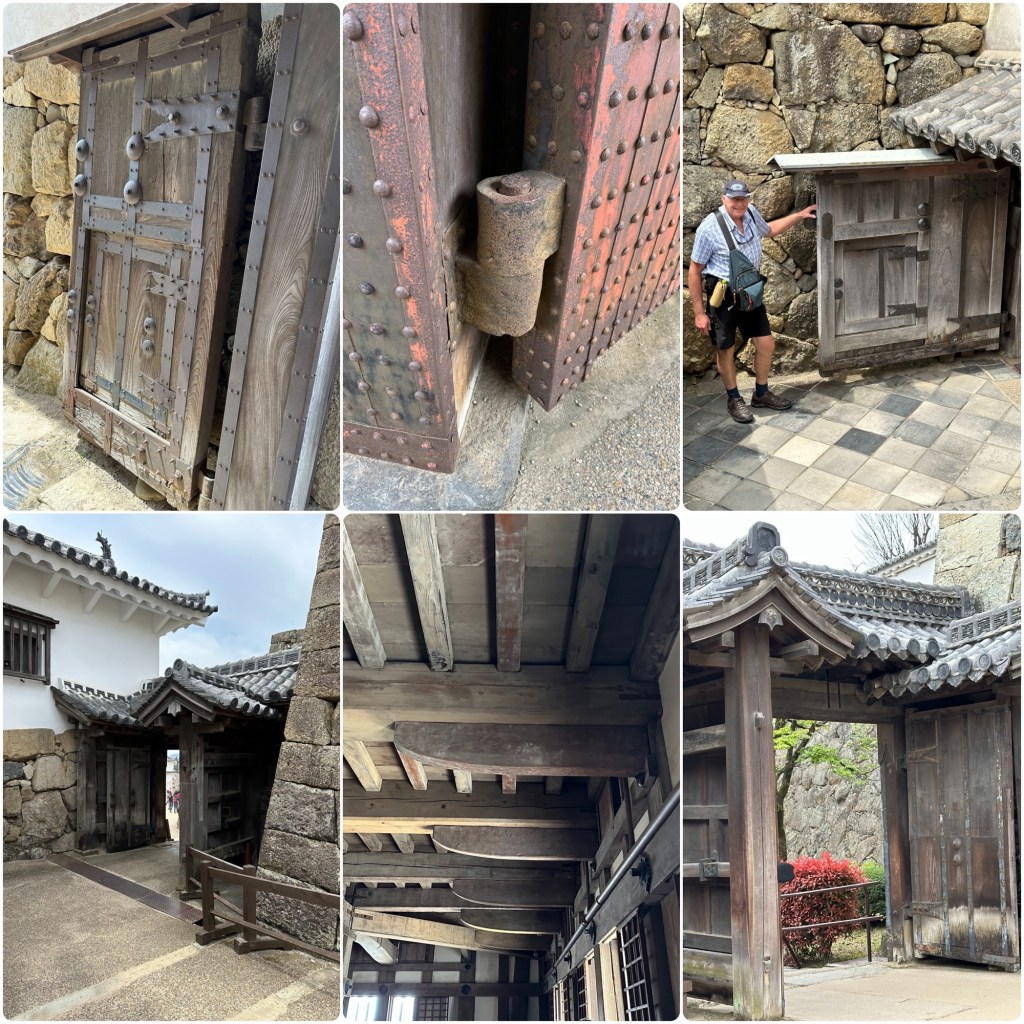
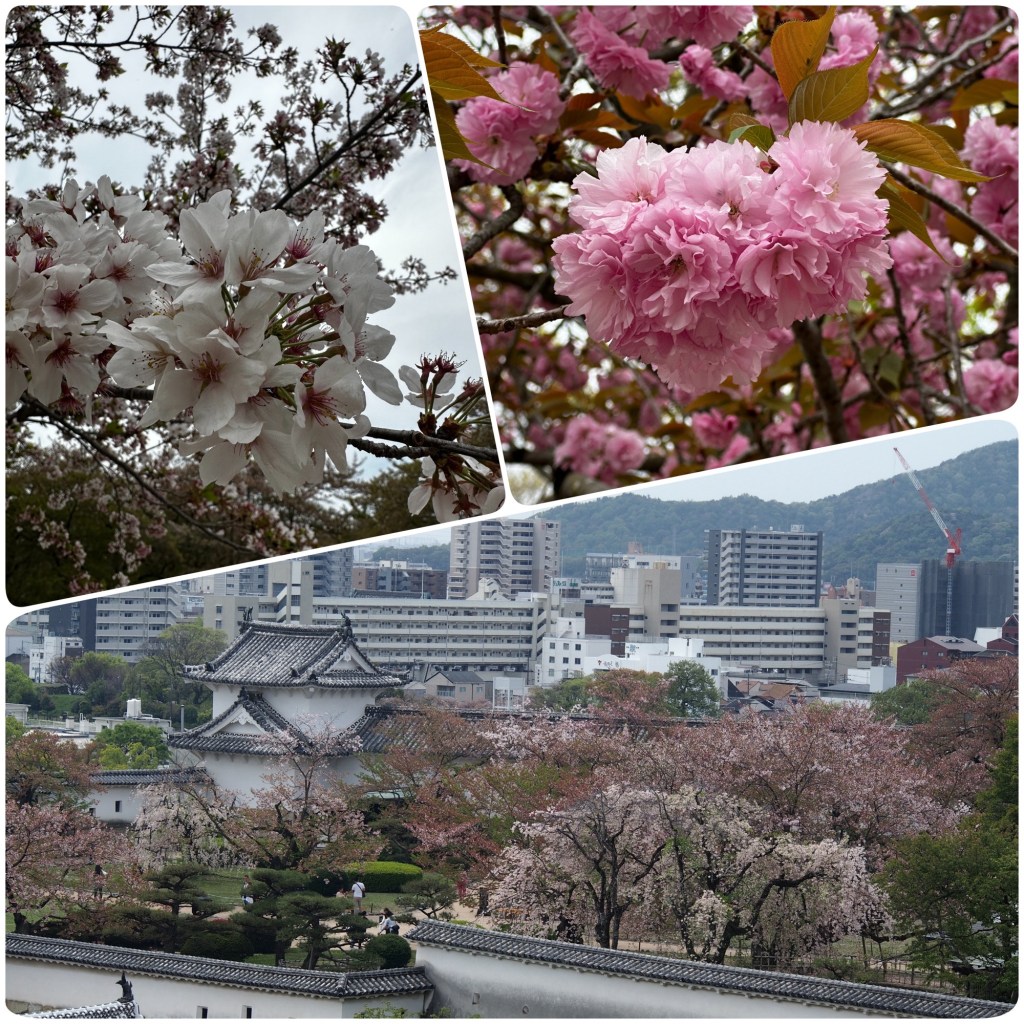
The UNESCO World Heritage Himeji Castle, also known as White Heron Castle for its soaring Keep and white plaster walls is our chosen destination today. Just over an hours drive away it is Japan’s most visited castle. The main Keep, (highest part) was built in 1601 and is one of the oldest surviving in Japan. Because the castle was never besieged, bombed or burned, more of the buildings have survived to the current day. The castle comprises a cluster of keeps, surrounded by rings of fortifications called baileys. The only stone structures are its foundations. The buildings are made mostly of wood, earth and plaster. Some of the huge doors and gateways were very impressive, with massive metal hinges and locks.
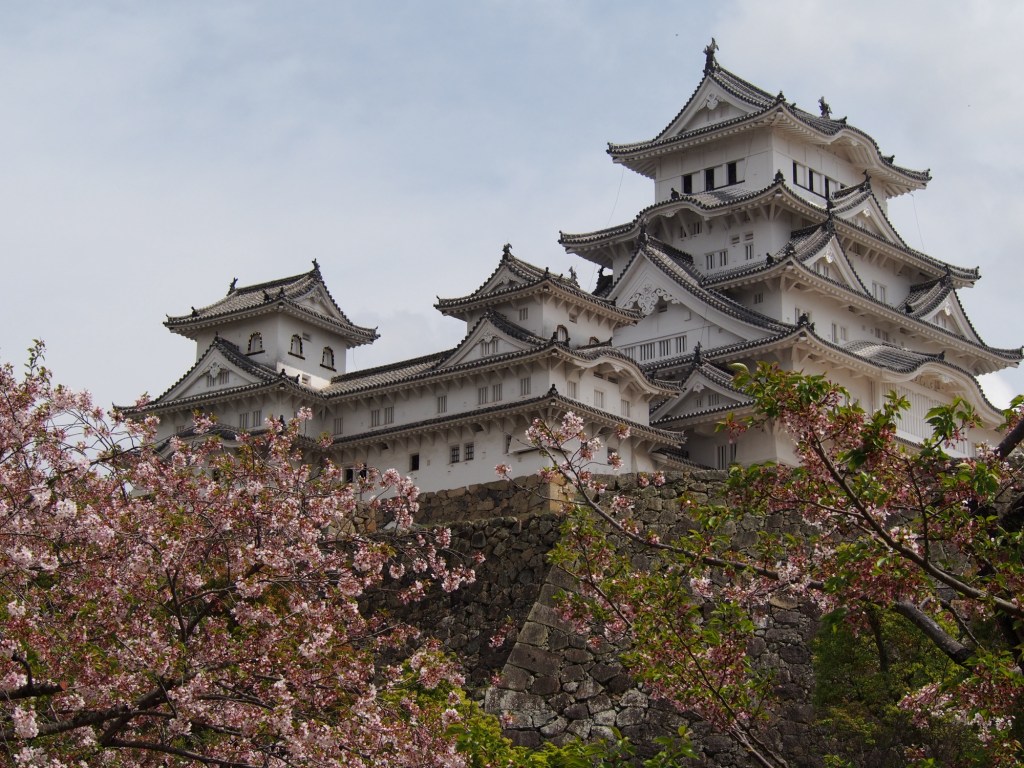
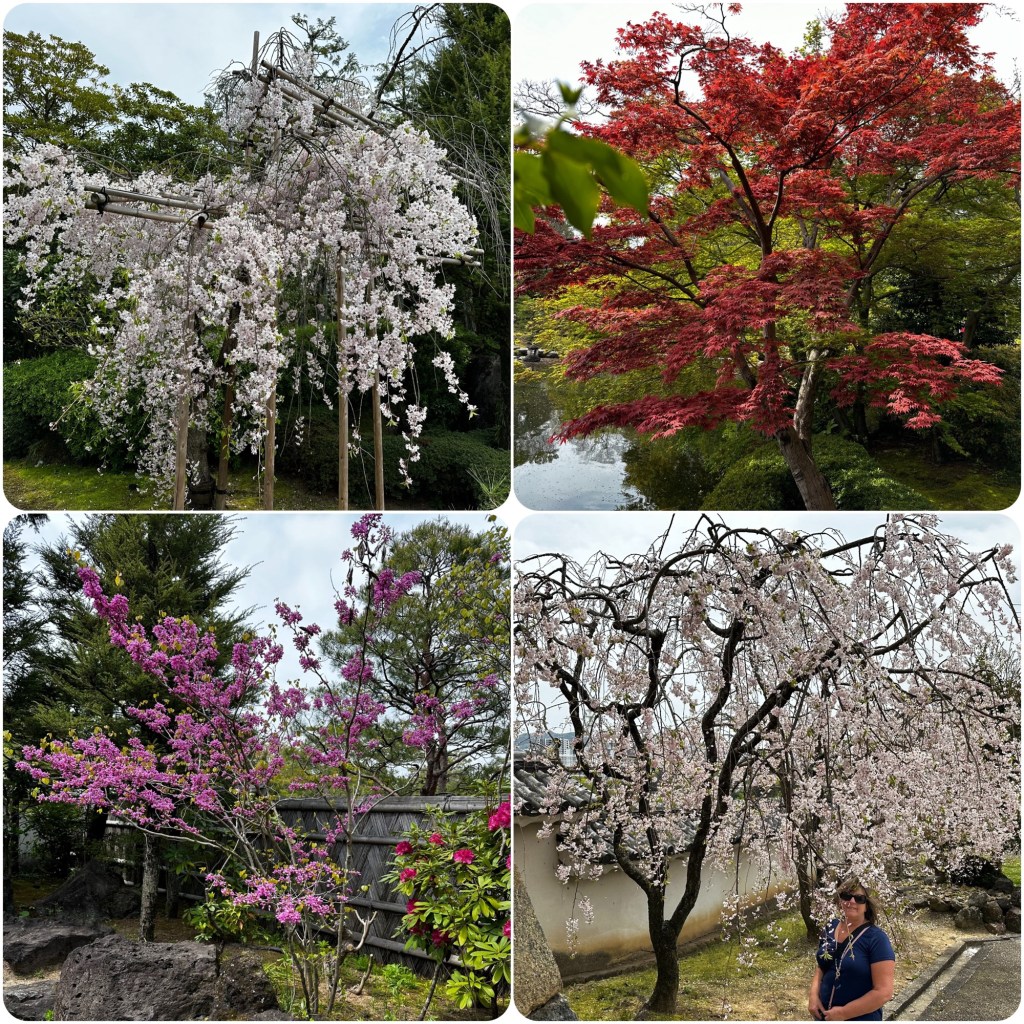
The surrounding Cherry Blossom trees, although past their prime by a few days, are still beautiful and the falling petals form a carpet of white and pink on the ground.
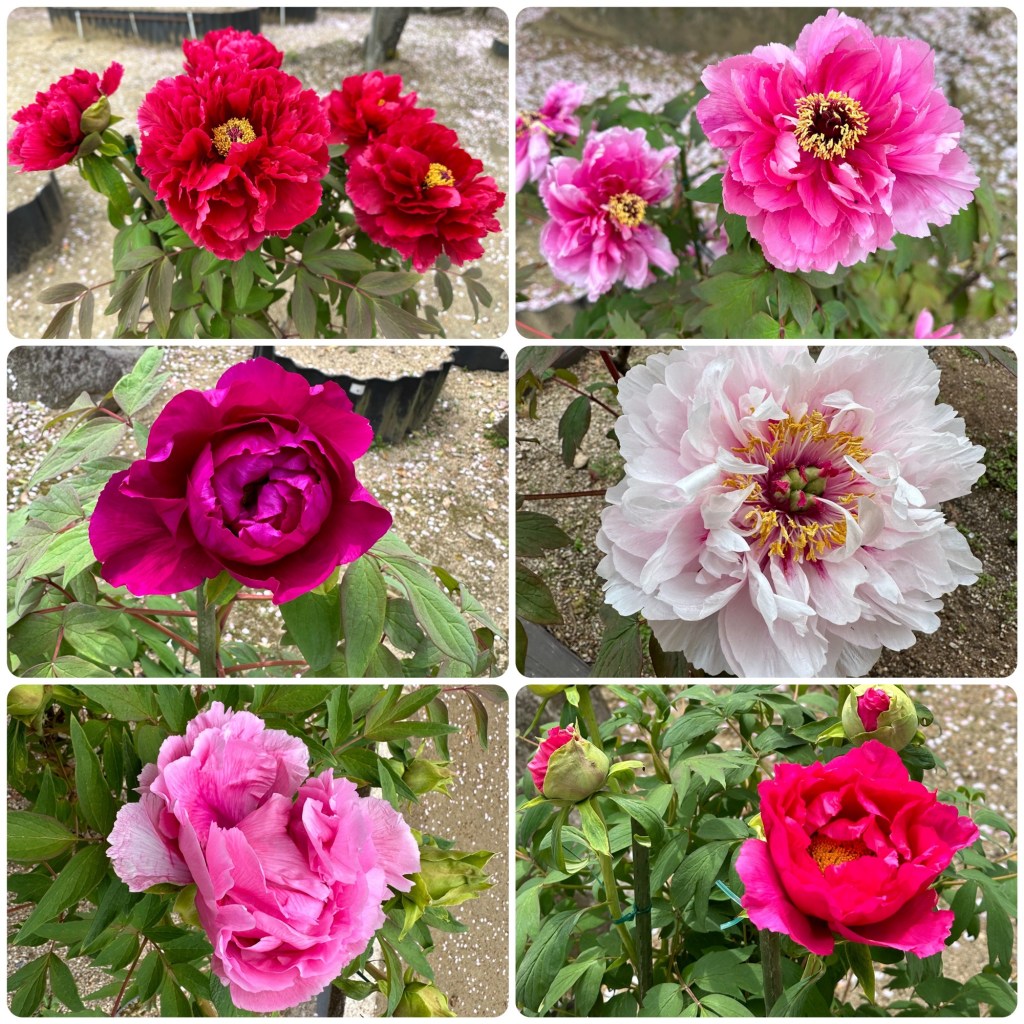
We stopped by the Peony garden which will be outstanding in a couple of weeks time as they are only just beginning to bloom.
Had a wonderful lunch at a local Japanese cafe just outside the castle gates. Philip had tempura prawns and miso soup and I had chicken and miso soup. Both very tasty dishes.
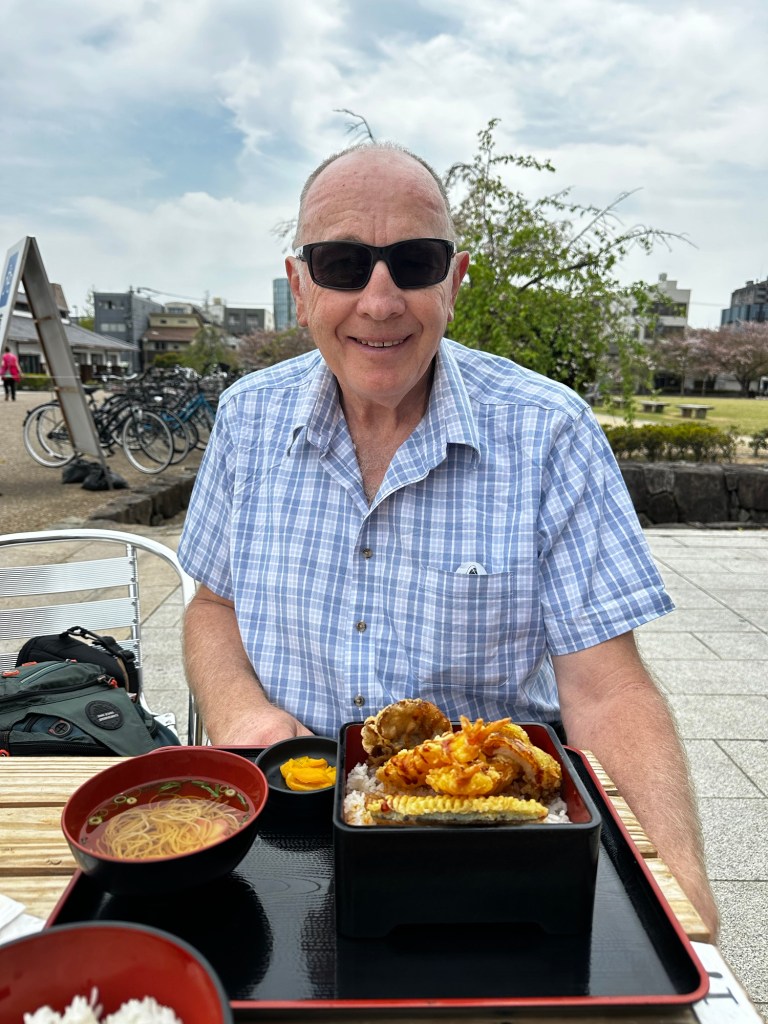
(P:- Kobe, the port city we are docked at, is famous for its “Kobe Beef” Quite a trade off for me to forego a Kobe Beef Lunch to go look at an old Castle! But after visiting the castle I would have to say it was impressive!)
16-04-24. KOCHI
Free do-it-ourselves day today. Especially for Philip with just me as tour guide. Once we are docked around 8.30 we organise ourselves and head down to disembark and catch the shuttle into central Kochi, about a 30 minute ride. As we leave the port area we are straight into green houses and rice paddies. The rice is more advanced here than earlier in the trip.
Once we disembark at the Harimaya-Bashi Bus terminal we pick up a town map and start walking. Because we are early and the shops/market aren’t open, we wander up to Kochi Castle. Built along the same lines as the Himeji Castle. Built on a small hill overlooking the city, with numerous steps winding up to the main Keep. Again it’s very picturesque with azaleas starting to bloom all around the castle walls. The castle construction was begun in 1601, with the main structures completed two years later, but it took 10 years to complete the whole castle complex. In 1727 most of the castle was destroyed by fire. In 1753 it was rebuilt in the original style. Kochi castle is one of 12 remaining in Japan.
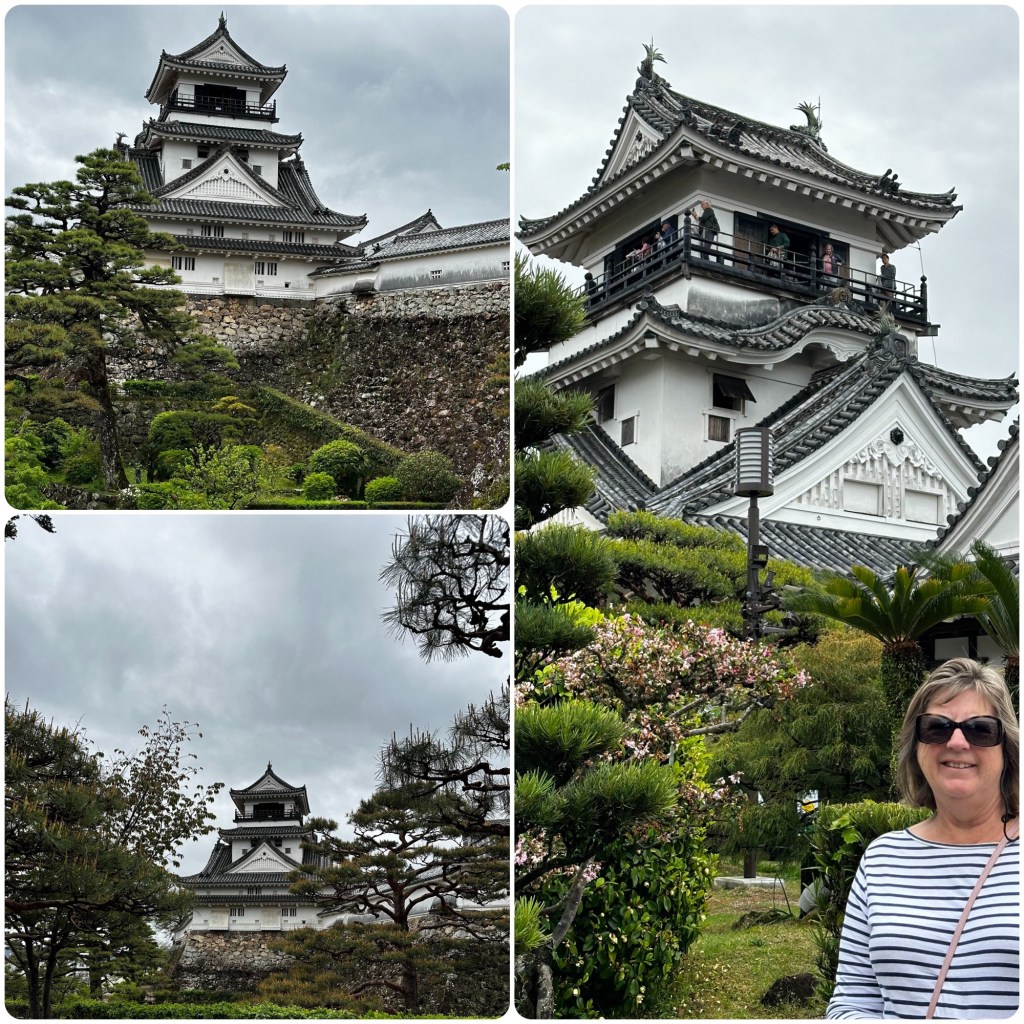
(P:- TWO castles in TWO days! For a guy like me with all but no Cultural appreciation interests that is about enough for now! They are beautiful but the gardens surrounding them are more beautiful. I am really enjoying the gardens Spring is about to burst in a couple a weeks and the gardens would be even more fantastic. I am hoping that Judith doesn’t get ideas from the Japanese on gardening techniques! Everything is too straight, too formal, too trimmed, too weeded and way too much structure for my chainsaw and weed eater gardening style! I almost felt ill when I saw a couple of gardeners weeding the lawns— on hands and knees with Tweezers! )
After leaving the castle grounds we walk down to Hirome Market. This is known as one of Kochi’s best places to eat. It’s a large hall filled with food vendors and large communal places to eat. You certainly have a variety of choices from nori tempura, tuna, chicken, vegetable and fruits and Bonito Tuna being seared over burning straw. Of course we can’t walk through and not try something so some Seared, salted Bonita (Tuna) is purchased. It is barely seared on the edges and raw in the centre. Served with wasabi and garlic. Surprisingly very tasty.

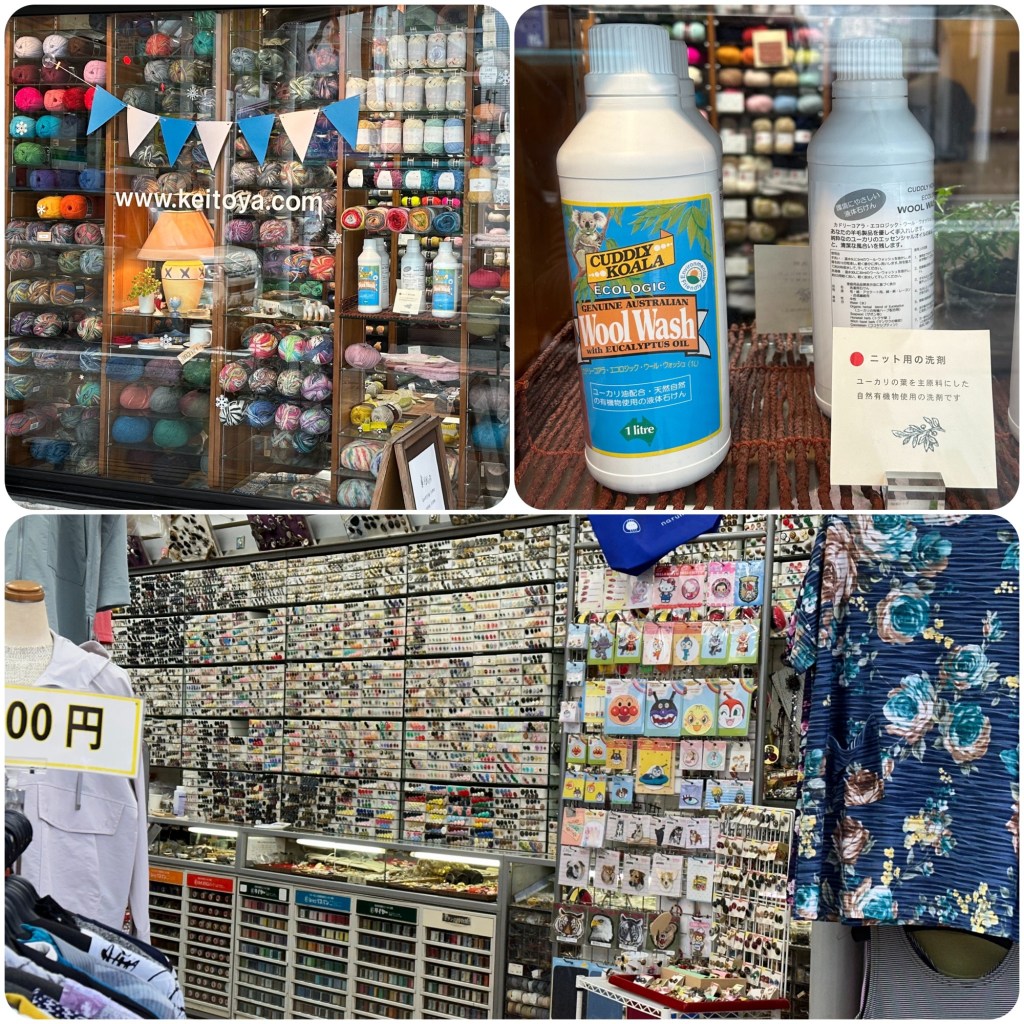
From Hirome we wander through Obiyamachi, Kochi City’s central shopping arcade. Along the way we spot a shop selling buttons, threads and fabric oddments then just around the corner a wool shop. Mostly imported wools. Even some eucalyptus wool wash from Australia. Further on a beautiful Bridal Kimono Shop. Lots of small clothing and souvenir shops and a Diamaru Department store where we head down to the basement to check out the food department. Not as flash as Isetan in Shinjuku but worth a look.

It’s now past lunch time so we find a traditional cafe and take a seat. Full of locals, No English menus or speaking here. Luckily they have photos on theirs menus so we pick something that looks good and hope for the best. Green tea, chopsticks and a moist towel are delivered first, then small dishes with soy sauce and soy sauce and lemon mixture. The lady sitting at the next table tells us that the soy is for the raw fish and the soy and lemon is for the fried food. When our meal is delivered it’s bigger than expected but looks good. Raw tuna, salmon and rice, fish and rice, crab claws, shell fish, tempura prawns and more. It all tastes delicious and is very filling. After lunch we head back to the bus terminal and back to the Westerdam.

Things I’ve discovered about Japan so far.
Everything is beautifully clean
Even the trains floors are highly polished
Everyone is very polite and happily greets you
Women are beautifully dressed. No daggy jeans or skin tight leggings
Men are smartly dressed, suits or smart clothes, no butt cracks or jeans round the knees here
(P:- Judith forgot to mention the heated public toilet seats and also the ditch squat toilets. All immaculately clean just different to the norm for us.)
Also the public toilets that play babbling brook music while you pee. (Incentive I guess)

 Tassie Travellers
Enjoying your dialogue and fantastic photos!!
LikeLike
Again amazing photos.Very impressive shrines and beautiful blossoms and flowers. Food looks very good but very large portions.Enjoy 💕🥰🚢🏯
LikeLike
Loving the guided tour you are giving us of your journey. Fantastic photos and mouth watering food stories. I can see lots of inspiration for your garden at home, – “P” might be in for some hard work when you get home!!!!!!
LikeLike
Love it👍. Yes, I’ve heard it’s very clean and neat. Sets a high standard😆
LikeLike
Food looks amazing but very large!
Enjoying your blog very much . Gardens are beautiful
LikeLike
Looks fabulous Judith & Philip beautiful photos
We have always been told how clean and tidy the Japanese are.
LikeLike