Mt Augustus to Meekatharra
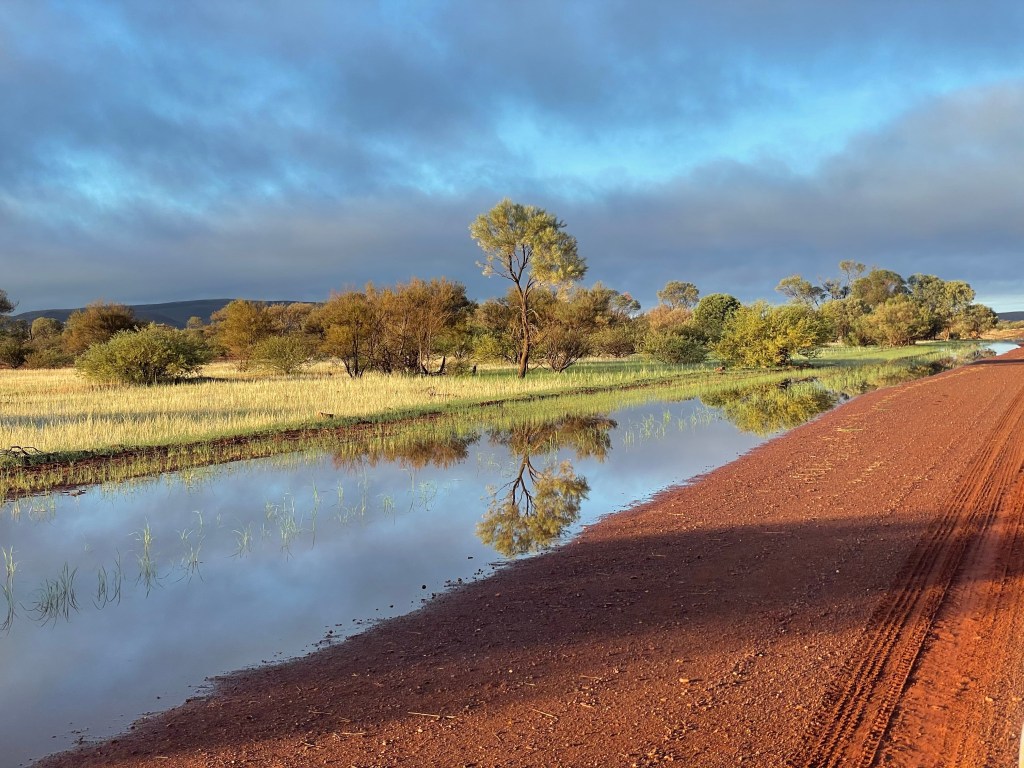
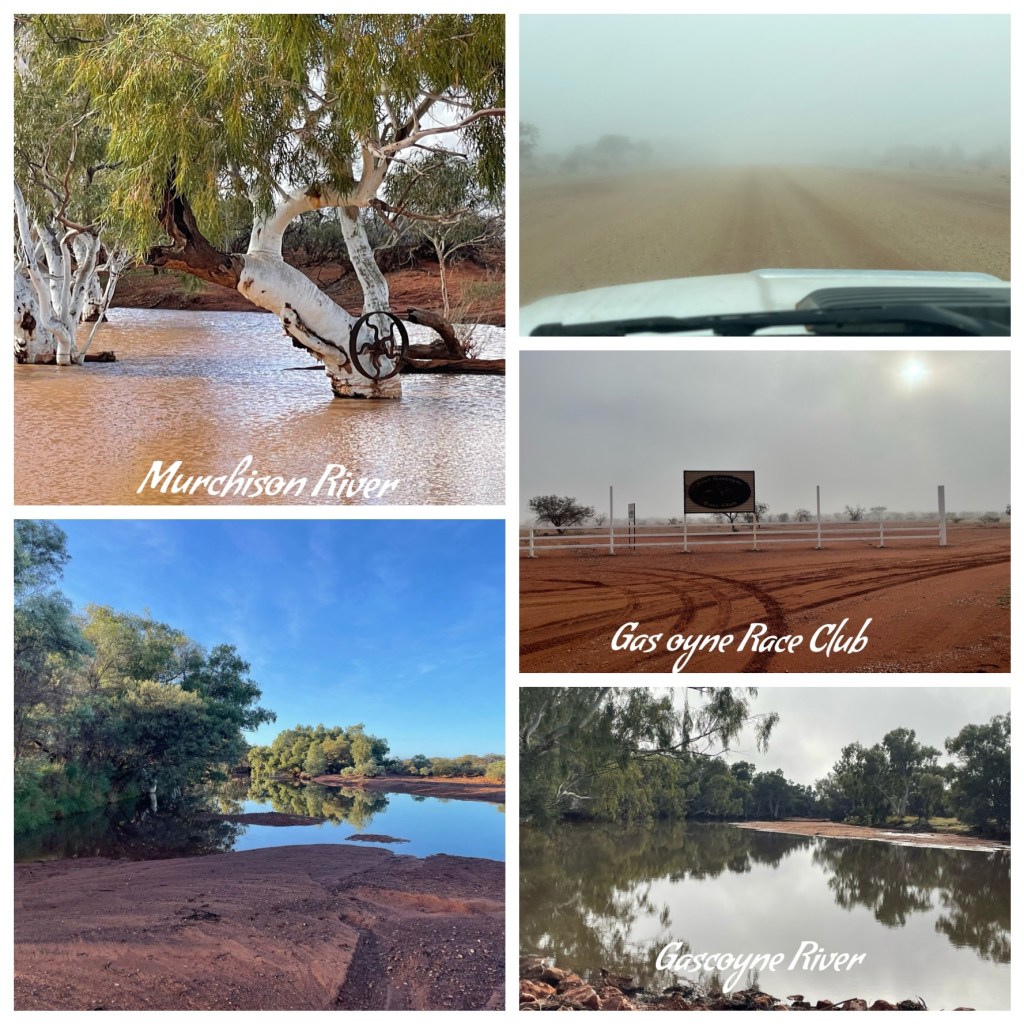
We are free from Mt Augustus but only one route out is available and that’s heading to Meekatharra. Fortunately that’s the direction we wanted to travel. We are up and on the road early, departing just after 7 am. We are not the first to leave, there have been several vehicles out before us. The road has dried out quite nicely but it’s pretty wet off to the sides. Lots of water laying about so some great reflections in the pools. Not far down the road we come into thick fog which lasts for some time before slowly lifting.
An unusual sight to see out here in the middle of no where is a race track for the Gascoyne Race Club. Big sign and white fences leading into the club. Last race meeting was in 2018. The race track is serviced by a large airstrip nearby and is about 30 k from Landor Station on the Gascoyne River. The river has been well over the road but is now thankfully just lapping the Ford. This is also a place where Charles Kingsford Smith stopped on his mail run ( yes the pilot of fame, after flying for Qantas, came to the west and started the Gascoyne Trucking Company)! through this area. When the river was in flood they used a flying fox to deliver the mail across the river. The remains of this can be seen around several of the trees along the river bank.
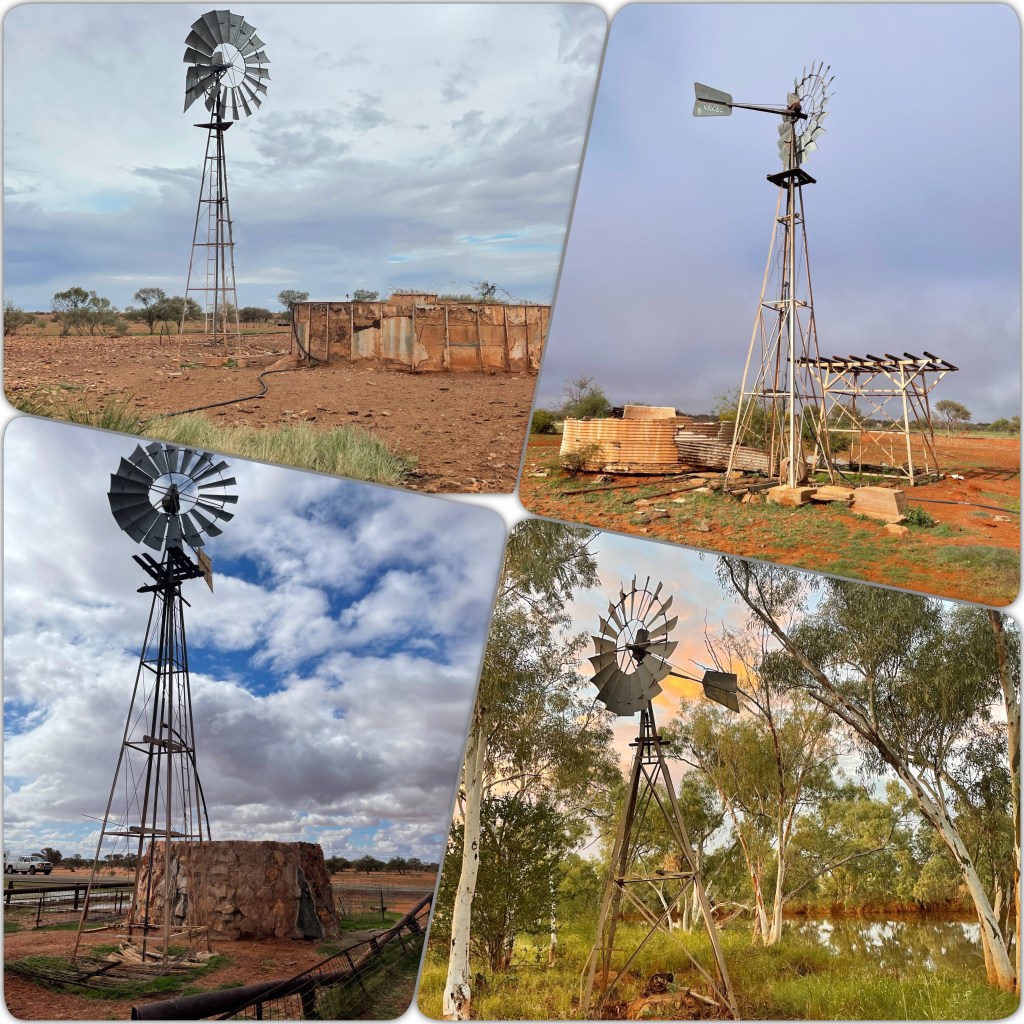
Further up the road we stop at a windmill and some outbuildings which we wander around and through. There used to be a shearing shed here once as well but all remains of that are gone now. The shearer’s quarters still remain, with a great old wood stove at one end and a large meat safe at the other end of the building. Not sure how the meat and other perishables would have kept in a tin shed with a huge cook stove and 40 degree heat during summer. It’s interesting to walk through these old places and wonder how they survived out here.
Next stop was Mt Gould Lockup. This was manned from 1888 with four officers and half a dozen Aboriginal Trackers. Serious offenders were taken on a 450k trek to Carnarvon on foot (in chains) with police on camels. Non serious offenders were held in the lockup behind the station. After crossing the Murchison river later in the day and then another smaller river but with water over the road we reached Meekatharra where we fuelled up with both fuel and an ice cream before finding a camp spot just down the road.
Sunday 13
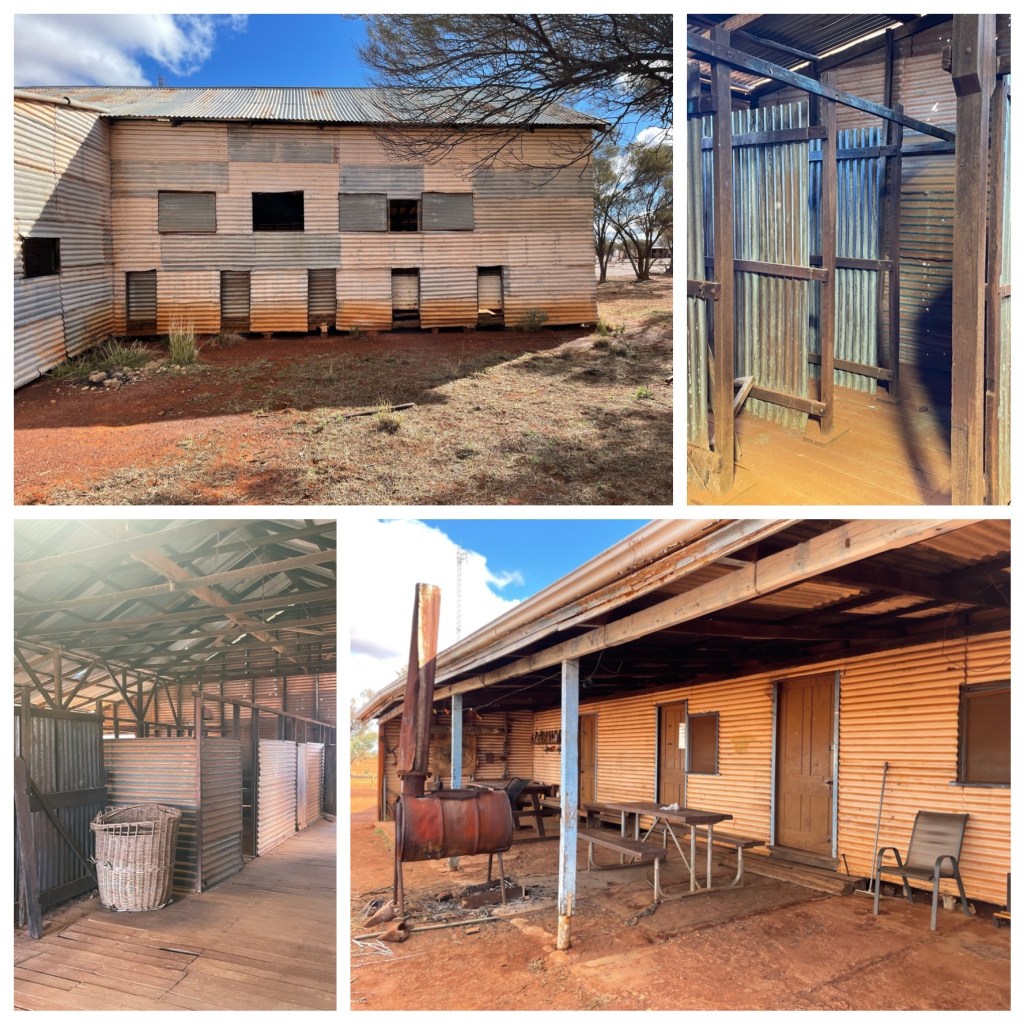
An easy day today. After exploring Meekatharra for a while, there’s not much there so it didn’t take long, we drove south to Nallan Station where we are staying for 3 nights. Arriving about lunch time we found our site and settled in for a lazy afternoon. A walk around the station yards and a chat with station hand, Carl got us entry into their old Woolshed. They also have shearer’s quarters here which they let out to guests, a lovely old style kitchen facility, an outdoor bbq area and a large fire pit which was quickly claimed by a group of travellers all with Trackmaster vans. They weren’t very friendly for a chat when we ventured over later in the afternoon. We also talked to Cathy who along with her husband purchased this property 4 1/2 years ago and have had drought ever since. The station is 250 000 hectares and they run 300 head of cattle. Just the bare minimum. They would normally stock 1000 head. (P) These people really take pride in their property, the cattle in excellent condition (considering the dry) along with great fences yards etc. not to mention being great Campground hosts.)
Monday 14
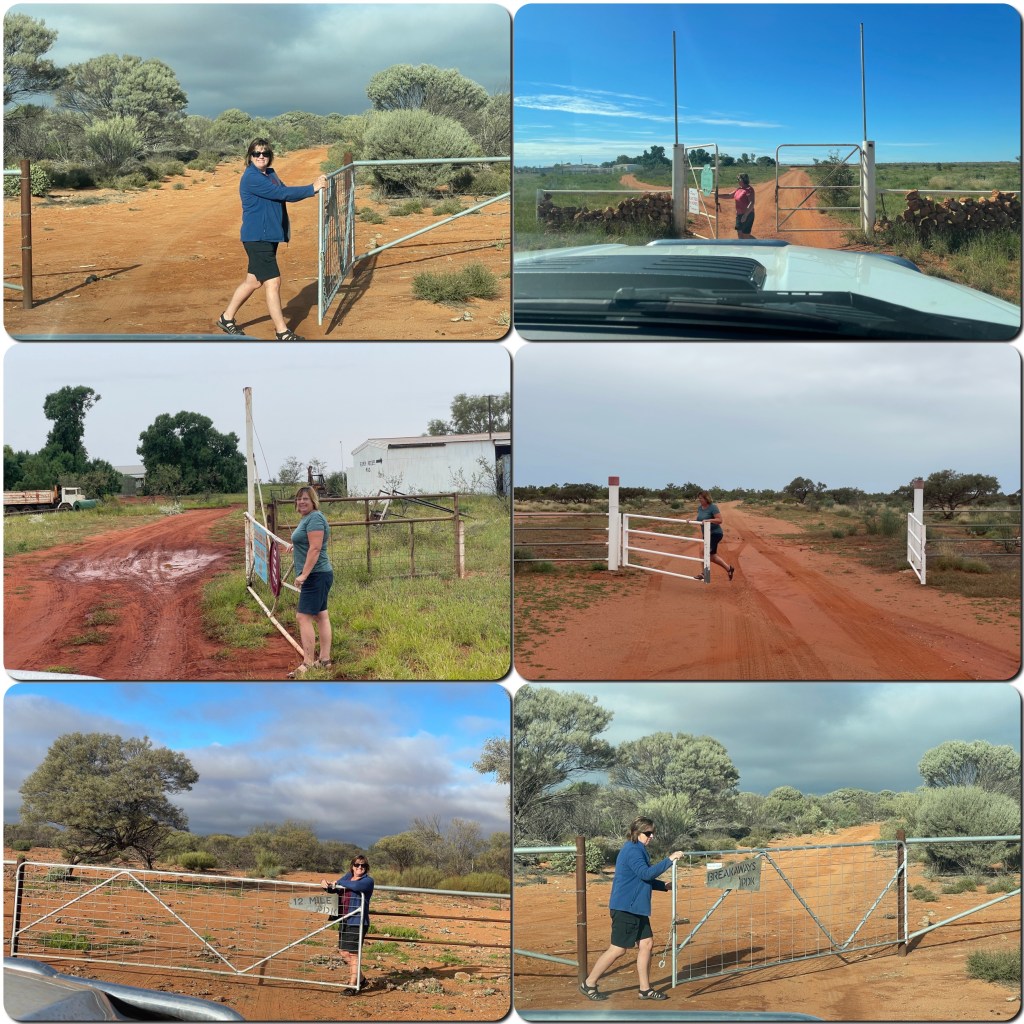
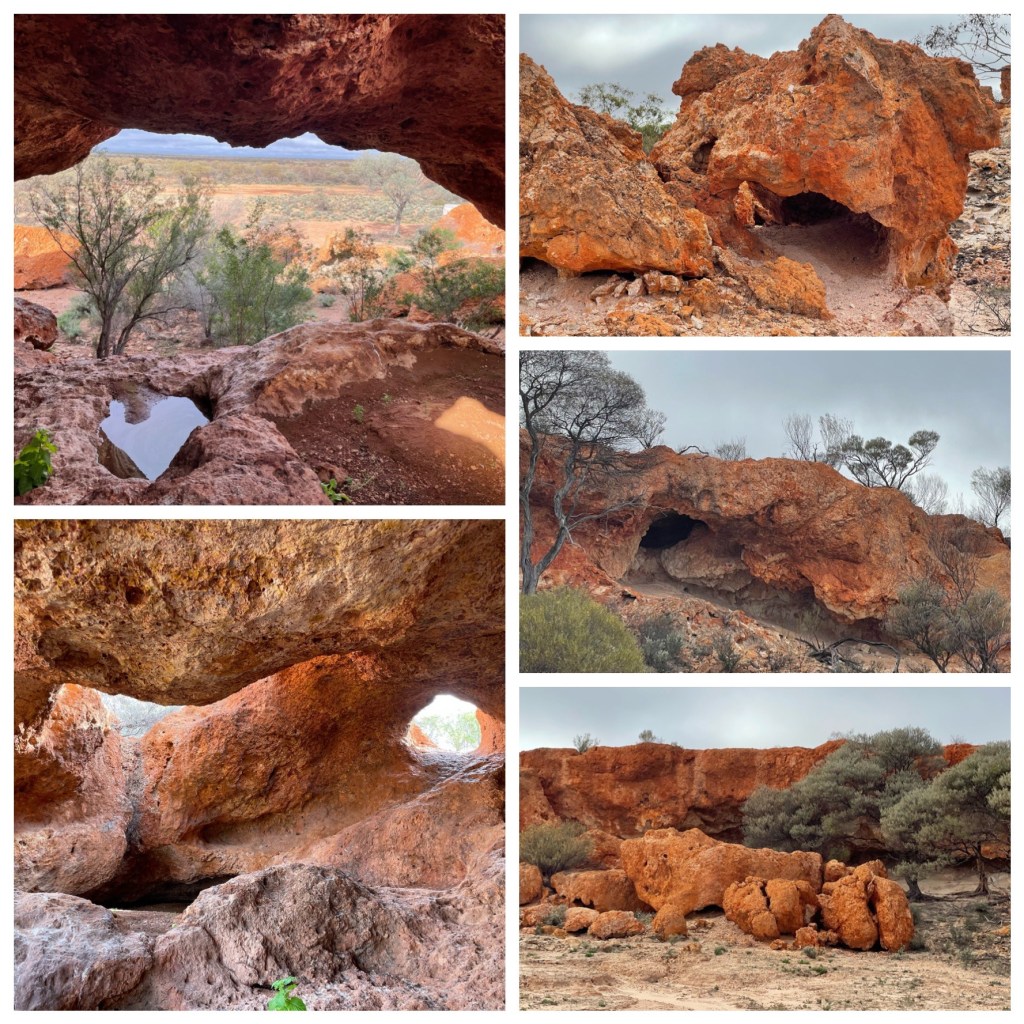
We are leaving the van here today and doing a loop out to Lake Mason. May stop in the Rooftop tent overnight. First port of call is The Breakaways which is a short 50+ k from the homestead and deep within Nallan Station. Not sure what we will find but that’s all in the adventure. Armed with our instructions we find the turn off and follow the directions. Only having to backtrack a short distance near a windmill to get to the right gate. After a short time we arrive at the area of interest. It is amazing. The Breakaways are cliff faces that have, over time been eroded and collapsed, hence the name breakaways. The rock is very porous and caves and holes and interesting formations have been carved out of the cliffs.
Back on the road and we drive north through Cogla Downs, where we find another old Woolshed. Wool still on the floor and the classing table, lanolin scent in the air, electric shearing heads still on the wall. People just up and left. (P) The different management style between Nallan and Cogla are noticeably different- Nallan fit for a picture and Cogla an absolute mess, all cattle, regardless of age, we saw were unmarked and obviously have never been mustered not to mention the machinery, vehicles etc just left around the station where they broke down! We found out later that the property is owned by the Indigenous Land Council as a “training and economic development” property. What a disgrace ( in my opinion).
On to Lake Mason Station. Originally established in 1906, when it was known as Berrigun. Over time it has had numerous changes of boundaries and owners. Initially it was a cattle station before changing to sheep and wool production as its primary income for more than 80 years. In 2000 it was purchased by the government and joins Black Range lease and Kaluwiri Stations also purchased in 2000 and forms the Lake Mason Conservation Area covering an area of over 230000 hectares
Philip really wanted to visit this station and see the Woolshed that is still standing. It’s a bit of a disappointment, almost all gutted and just the shell standing. Of all the Woolsheds we have visited this is the only one with no machinery left inside. The old homestead was a step back in time with pressed tin ceilings and walls, tongue and groove walls and an outdoor laundry with copper stand in the corner. It did have an addition of an inside bathroom but also had the outside dunny. The shearer’s quarters were still standing and being used by campers. An outdoor wood stove and chimney stood solidly off to the side of the shearer’s quarters. I’m sure if it could talk there would be some tales told. Why anyone would live out here I have no idea. It’s barren, wind swept and miles from anything, but those early pioneers must have seen something to make them want to stay.

From Lake Mason we drive on to Sandstone. This is a very tidy town, lovely gardens down the centre of the street. A pub/grocery store (now that’s an interesting combination) is about all that is open. You can buy your bread and milk and have a beer before returning home. We top up with fuel and drive out the Heritage Trail that takes us through some more breakaways, (not quite as impressive as earlier today.) to London Bridge. This is part of a larger formation 800 metres long. It is formed from weathered basalt and is believed to be 350 million years old. It is gradually eroding away or falling down. Years ago it was wide enough for a horse and cart to drive over. Today it makes for a good photo opportunity.

We had intended to camp the night but it’s cold and windy so we keep driving back through Mt Magnet and Cue back to the van. 550 k predominantly dirt station tracks in a day is a bit much but it’s been a good day with lots of varied scenery. (P) I guess by now most who read this must realise I (and I trust Judith) enjoy our early pastoral activities and the history and stories that accompany it! I often comment “if only those walls could talk” as we wander through old relics of buildings. It is hard to imagine the tough times our early pastoralists went through ( as well as some very good times as well). Again I think some photos will be better than words!).

 Tassie Travellers
Great blog all very interesting and amazing photos xx
LikeLike
Very interesting indeed. Great photos.
LikeLike
Very interesting indeed. Great scenery.
LikeLike