Before we get to today’s tourist drive I just wanted to include some pictures of the trucks we are encountering. There are heaps of 4 trailer road trains carrying anything from fuel to gold bearing ore, mine equipment and assorted paraphernalia. (P) up to 160 tonne combined weight) As we drove towards Kalgoorlie a couple of days ago we followed a wide load. The widest we have seen. 8.5 metres. (Close to 29 feet wide) Two escort vehicles in front and one behind. To put it simply, there was NO ROOM to Overtake!!! Amazingly they were travelling between 80-90 Kph. We followed them for almost 100 kilometres. We had our radio on so could hear all the talk between the escort vehicle and oncoming traffic and the comments when vehicles didn’t move over or stop quickly enough.

Now to today’s (Friday 14th) touring. We are heading North from Kalgoorlie and our first stop was Broad Arrow, a township that supported the Railway. All that remains is the water tower, 3 railway cottages and the tavern. The water tower is one of the few cast iron tanks that remain in Western Australia.
After restocking with groceries yesterday and doing all our domestic chores we left Kalgoorlie this morning after a very enjoyable stay. The park we stayed in, although a Big 4 Park was mainly used by mining staff. The cabins here were let out for $400 per week and they were all full. Tourists were a bonus for the park. We met some great people here. The couple next to us the first few days, were in their late 70’s. He, Graham, look very worried when they pulled into the park after us and he was very grateful when Philip offered to back their van into the site for them. Philip then proceeded to give him a lesson on how to easily un hook their level riders along with a few other tips. We later enjoyed a drink with them and the next night Philip again came to the rescue when they couldn’t get their DVD player working. Graham had no technical idea but Joan had it all sorted when we had the right cords connected for them. The guy behind us (mine claim consultant) was also very chatty each time he saw us outside.
P) Kalgoorlie has been a great stop. A vibrant active hub to the Goldfields region of WA. We felt a little out of it as no matter where we looked at any time of day the popular standard of dress was Hi Visibility work clothing! I was almost concerned when Judith went shopping that she may have returned in the yellow/orange reflective attire!!
All but every thing in Kalgoorlie is BIG, trucks, loaders, diggers, mines, pubs just to name a few. This BIG theme has now caused us a most concerning problem. As most who know me would realise quality food is a bit of a hobby of mine.
A long time back an old wizened farmer mentioned to me that “meat is actually vegetarian- well Cows and Sheep eat grass and other vegetable matter and convert it into a protein that actually has a delicious taste” so meat is just naturally processed vegetables.”
I didn’t take a lot of convincing!!
Now back to the BIG issue. Whilst shopping I found a butcher and they had 2 of my favourite beef cuts. Beef ribs (delicious slow cooked on the hot coals) and a rib eye on the bone. When I got them home I realised wrapped up in the parcel was 2 long complete ribs of a Mammoth and the matching rib eye! None of which will fit in my camp cooking equipment or for that matter our Webber BBQ! To solve this serious issue I had to decide, do I butcher them with the Chainsaw, Pruning Saw, Axe or Angle grinder (new washed cut off disc )??

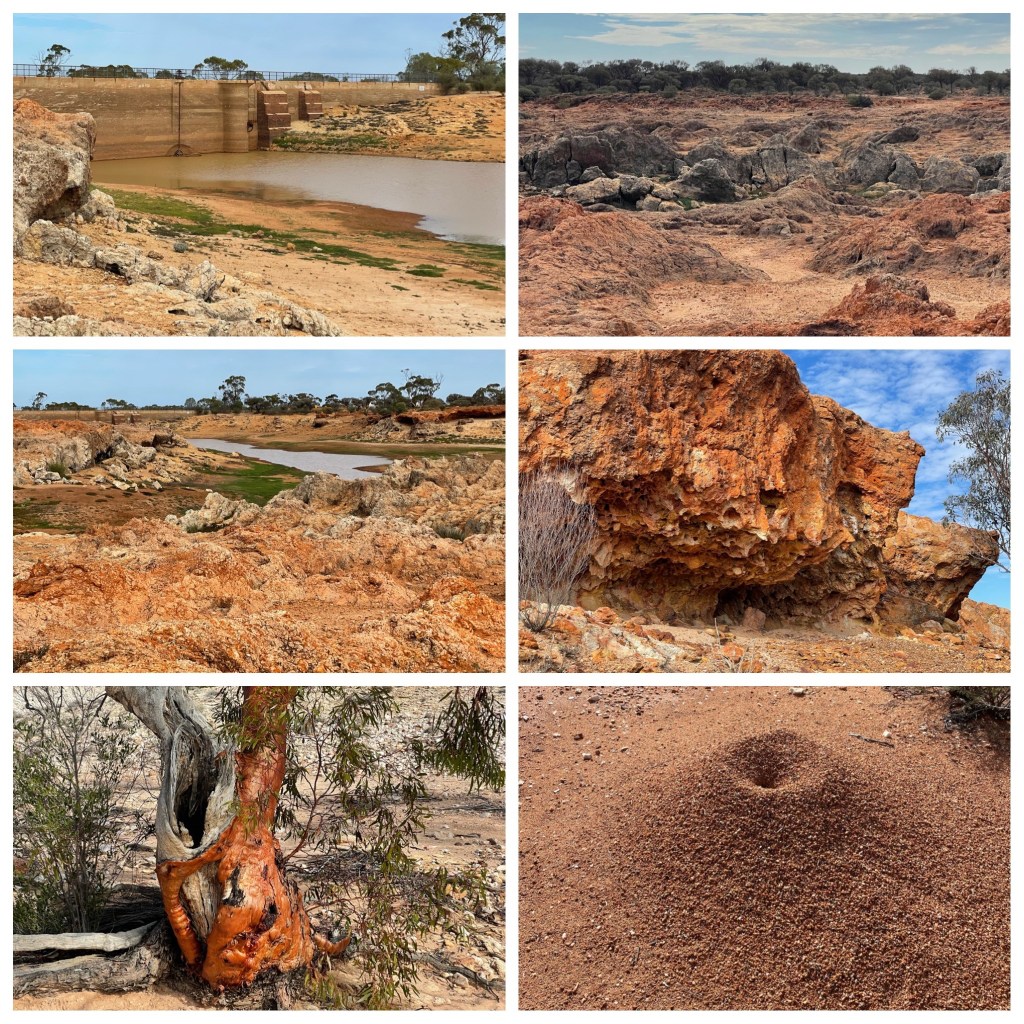
Next stop is Niagara Dam. This was constructed by the railway in 1897-98 for a cost of £62000. The huge quantity of cement that was needed for the project was railed to Kalgoorlie from Perth and then taken by camel train the 137 miles to Niagara. The camels were each loaded with two wooden half barrels with a total weight of about 1/2 a ton. By the time the dam was completed it had accumulated very little water due to lack of rainfall. To make matters worse a good supply of underground water was discovered at nearby Kookynie. Today the dam only has water after cyclonic events. It provides an oasis for campers, picnickers and locals.
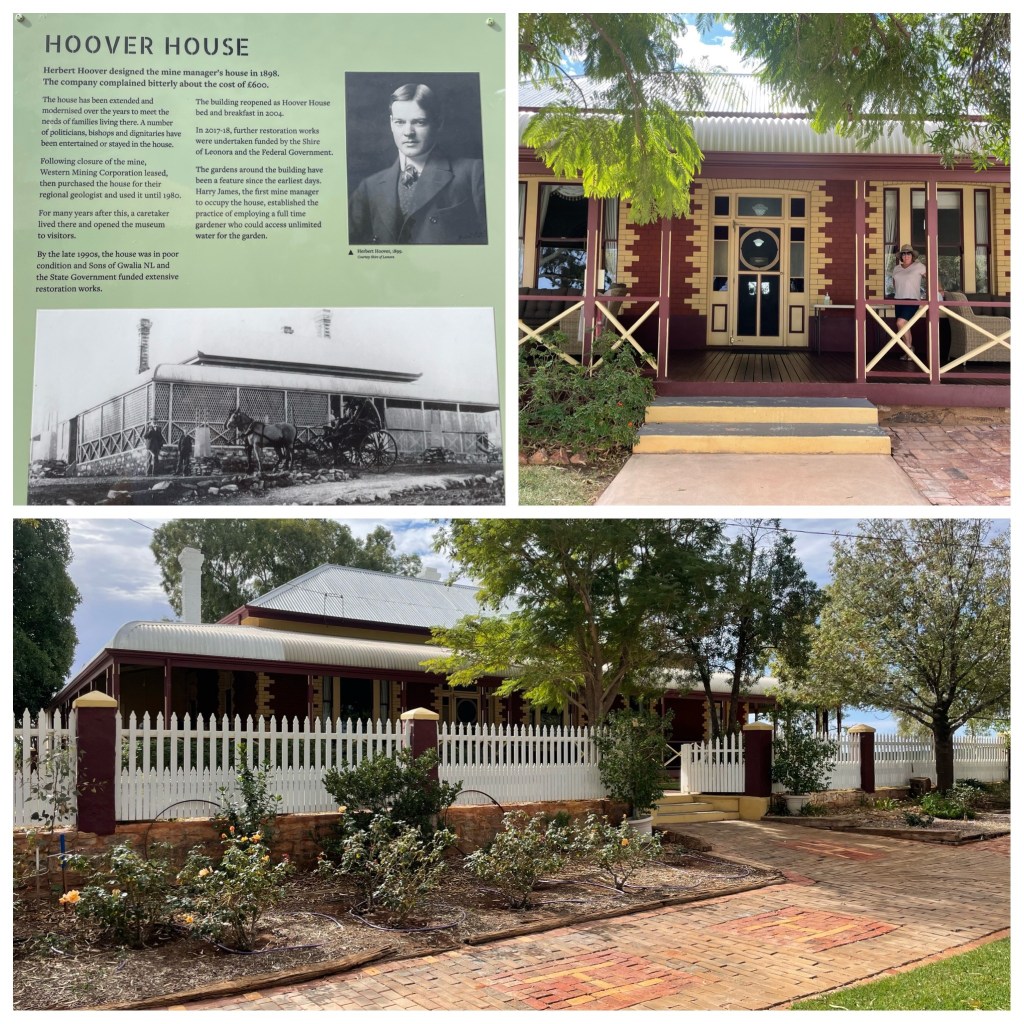
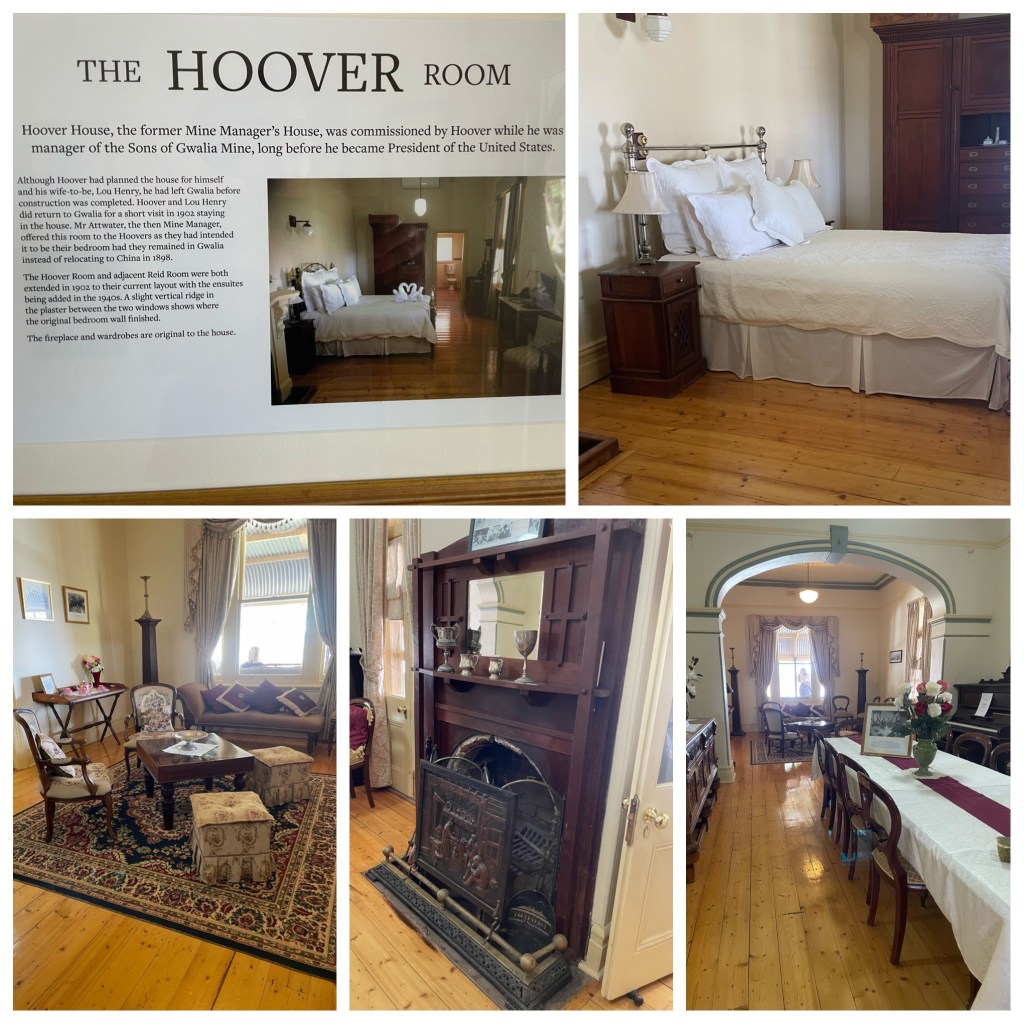
Gwalia is our next stop. We were expecting this to be much like some of the other abandoned towns we have seen over the last few days but it was a great surprise with a wonderful free museum and a town that had been reconstructed from buildings from other mining towns ( also some original cottages) in the area. The town sits right on the edge of the “Sons of Gwalia” mine. For our American friends reading this, a young Herbert Hoover (31st USA President) was sent here by the London Based firm, Bewick Moreing and Co. to evaluate its prospects. Hoover designed and had built the Mine Managers House, Mine Office and Assay Office in 1898 and designed the angled Head Frame, the only remaining wooden incline head frame left in the country. The underground mine this served was over 6000 feet deep!
Hoover House took two years to build due to disputes with management over the cost. An average house at the time cost £100 to build and this house cost £600.
There are two lookouts which provide good views over the present day mining operations. The open cut is almost 300 metres deep and almost 1 kilometre across. The mine has produced over 5 million ounces of gold. In 2006 St Barbara Mines proceeded towards the “ Gwalia Deeps” entering via the Hoover Decline tunnel. It is estimated that this has a potential of over 1.5 million ounces of gold but it is over 1 kilometre beneath the surface.
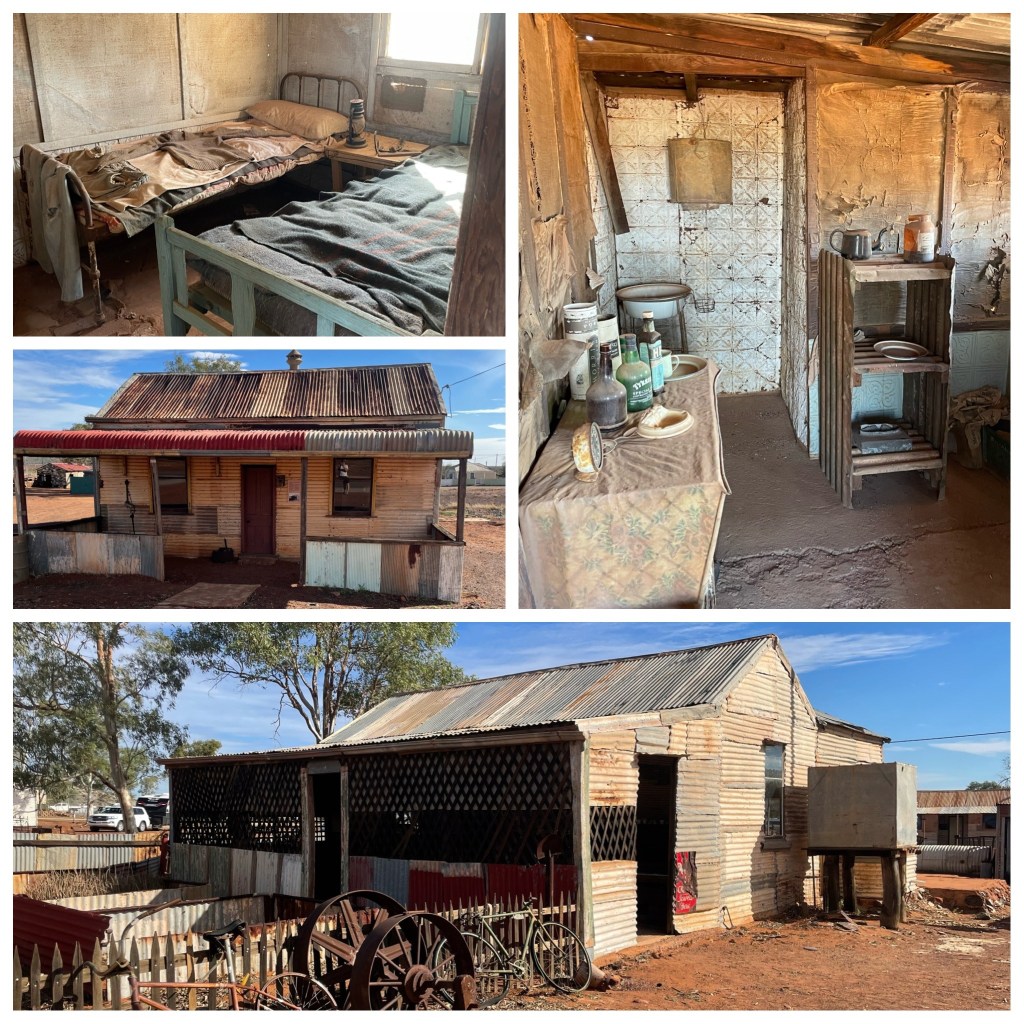
The old reconstructed Gwalia township was very well done. Properties were purchased by relatives or members of the community and reconstructed to look as they would have when the mine was operating. Most of the homes were open to the public. If the door was unlocked you could enter and enjoy looking back in time. Old pianos, wood stoves, spring beds, a basic shower in the corner of a kitchen, walls of hessian decorated with old newspaper and pressed steel sheets used for ceilings, door decorations and shower cubicles. Old vehicles were parked alongside homes, chicken coops were erected in yards and old baths were leaned against outside walls. We spent a very interesting few hours poking around discovering this interesting living museum.


 Tassie Travellers
Really enjoying your adventures through your eyes
LikeLike
Very interesting indeed. Amazing pics. Stay safe xx
LikeLike
Oh what a great read. Sounds fantastic exploring those places. Nice work dishing out those ‘tips’ and helping Graham ‘back the van’. And those big cuts of meat. I love it !!
LikeLike
So interesting an unforgotten part of australia!
LikeLike
Wow what interesting places and old townships. Loved reading all about it today. Was also great to talk to you on Sunday. You certainly write great blogs for us to read. Enjoy !!!Love xMum
LikeLike