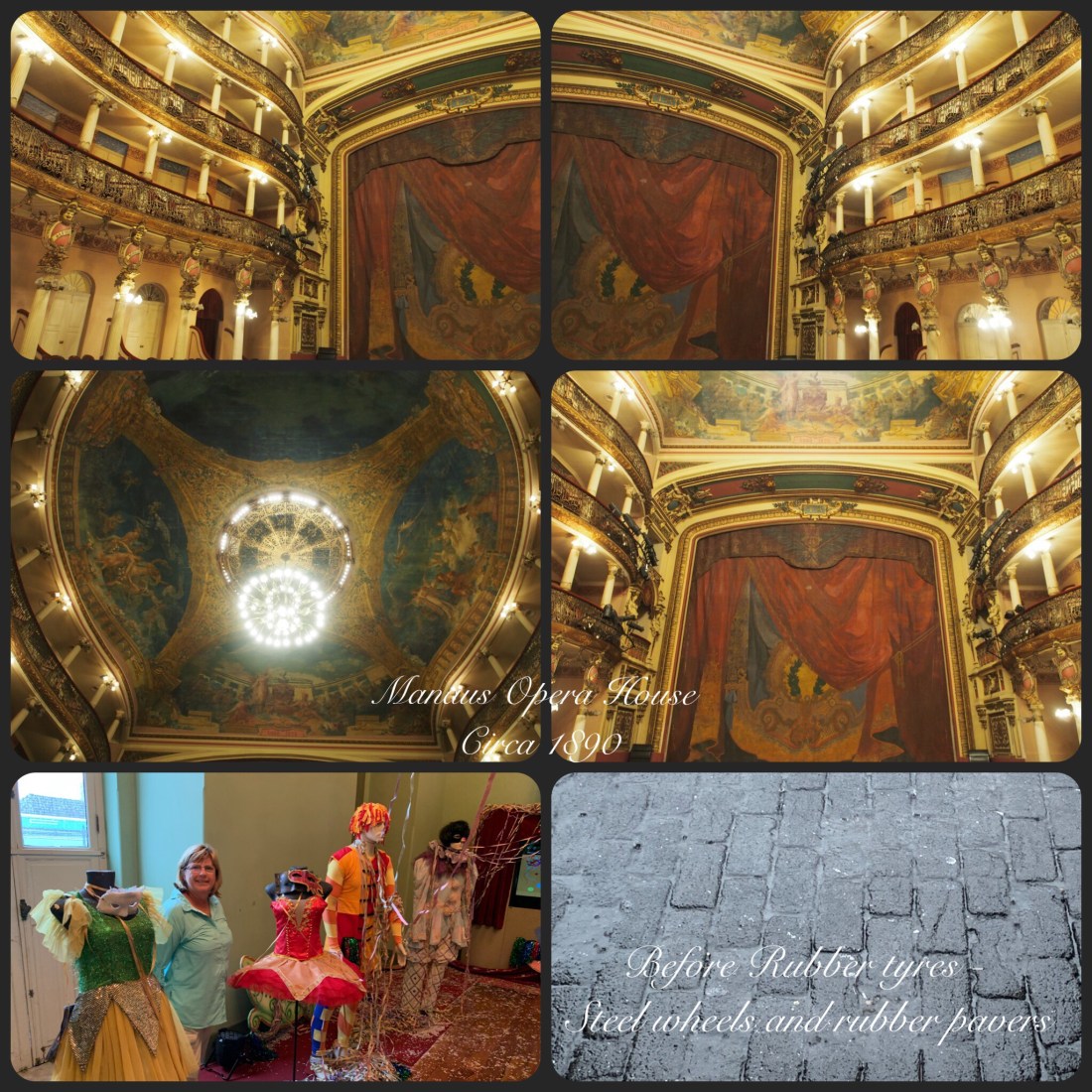
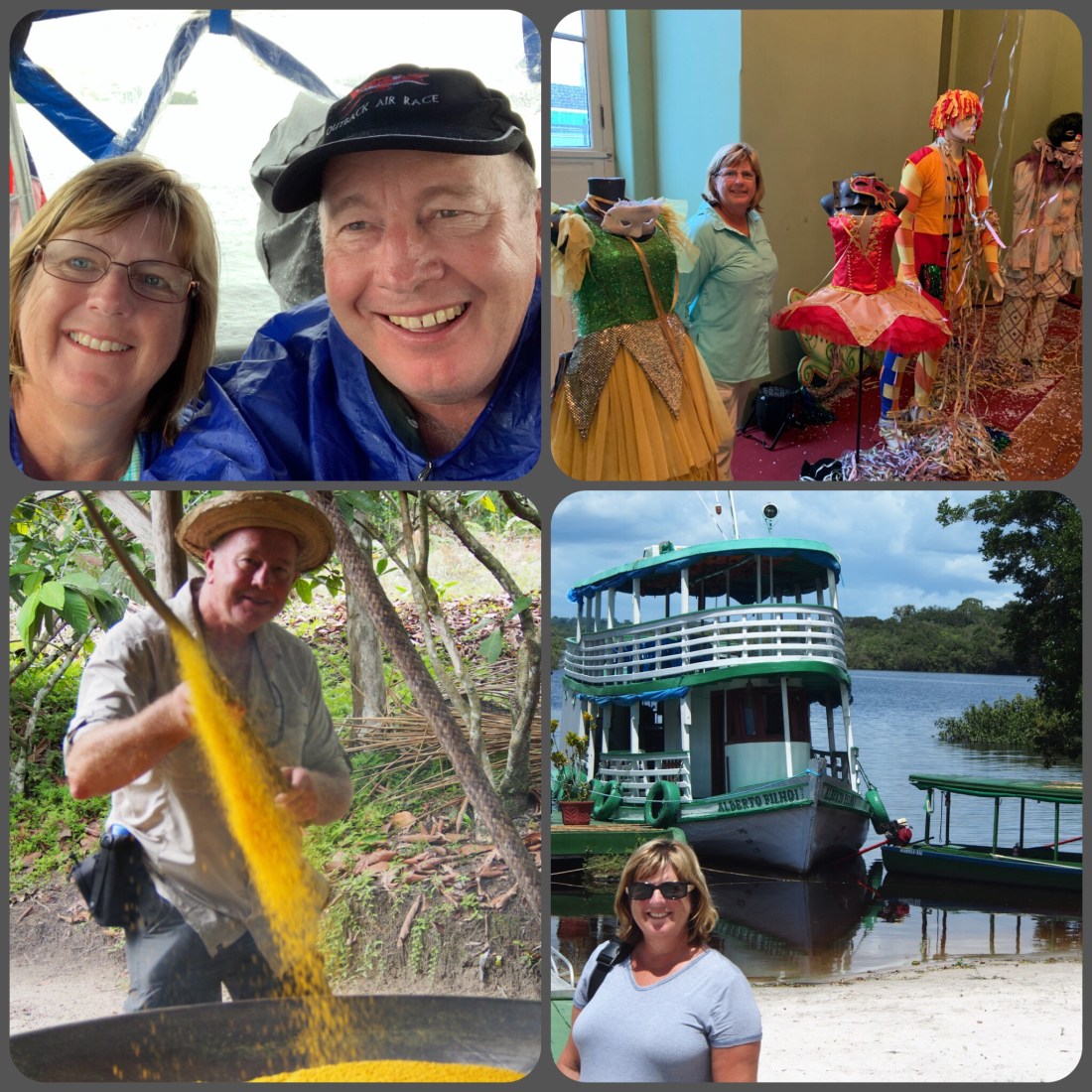
What a treat we have had. We arrived in Manaus on 15th March, 1000 mile from the mouth and 3 degrees south of the equator and not even half way up the river. (In a straight line the Amazon would reach from NYC to Rome). Every stop continues to amaze us and we can certainly say that the two days we were docked here have been the (P:- Well another) highlight of our trip and we only spent an hour in the city. We were two of twelve that booked two days and a night at the Amazon Eco Park Jungle Lodge and what an experience we have had. After being picked up by our coach we did a drive through the city and made a stop at the Teatro Amazonas just as a thunder storm hit the city with drenching rain and ear splitting thunder. Half of the passengers had packed their rain jackets in their overnight bags in the back of the bus. Lucky us, (P:- or common sense us) we had ours in our bag with us. Just as well because the guide made us stand in the rain instead of taking us straight inside. Most were sopping very quickly. This theatre/opera house was built in the 1890s, by the Rubber Barons, with all the materials and furnishings being brought over from Europe. Outside the Teatro streets were paved with rubber to stop the noise of the horses and carts from disturbing the performances (P:- Kinda reverse engineering – rubber streets and steel wheels) and there is still a section left today. It is an extremely elaborate building with a very ornate interior. 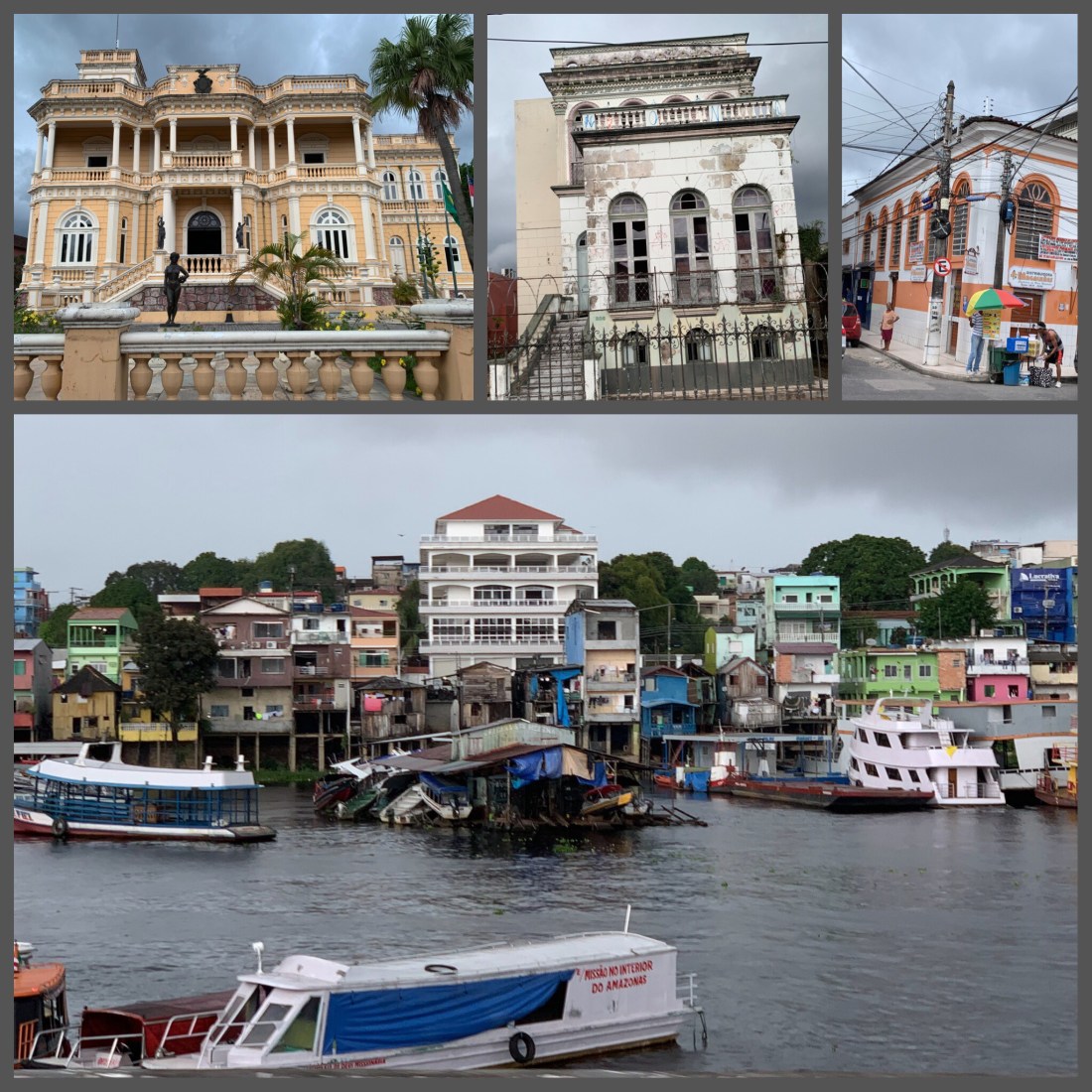
 From here we continued through the city to the marina, via a very circuitous route as the driver and guide got lost. (P:- Quite noticeable when you see the same sights 3 times over!) We finally met our boat for our transfer over to the Eco Park. Our information describes the Eco Park as follows “an enchanting place created for your comfort and offering guests a unique and unforgettable experience in the heart of the Amazon Rain Forest”.
After lunch and cabin allocation we are off on our first experience in a narrow boat with driver and our own guide, Marcos Lima, a researcher and fish biologist from this local area. (P:- Marcos is often employed by organisations such as National Geographic as a researcher and field guide). Marcos gave us a run down of what we would be seeing as we spend the next hour heading to an Indian Village. Explaining the rain forest, primary forest, flooded forest and secondary forest. We interacted with the local Indians and walked around their village and marvelled at the Blue Macaws that flew around the area while we were there. Then another hour down the Rio Negro back to the Park just before arriving back Marcos spotted a Toucan high in a tree, but clear enough to see, a tick off the list of things we wanted to see. Arriving back (P:-whilst the others in the party rested or immersed themselves in their “most important” internet time, Judith and I) had time for a short walk around the area before dinner. We walked down to the natural pools and just spent the time absorbing the cacophony of sounds and sights from the jungle, birds, cicadas, monkeys in the distance, bats flying around as the tropical dusk faded into night. Back to our cabin for a few minutes before heading to dinner. Marcos talked to us while we were dining and shared some of his experiences in researching this amazing place. After dinner we were again out on the boat for some alligator spotting. Unfortunately they weren’t cooperating tonight but it was fantastic to just float along listening to the sounds of the night. Owls, frogs and birds. There was just enough moonlight to give us some great reflections of the trees in the water as we were floating around in an actual flood plain of high water amongst the low forest. Back to our cabin by 9pm. We opened up our window shutters so we could listen to the jungle noises as we turned in for the night. (P:- with just insect screens between us and the world the sounds of nature soon drifted into part of our dreams. Evidently this was “ Shock Horror “ when we mentioned the wonderful night time sounds to some of the other guests who locked doors and wooden shutters and “enjoyed “ the rattle of their air conditioners and were petrified the tropical “Hob Goblins” were gunna come and get em ! )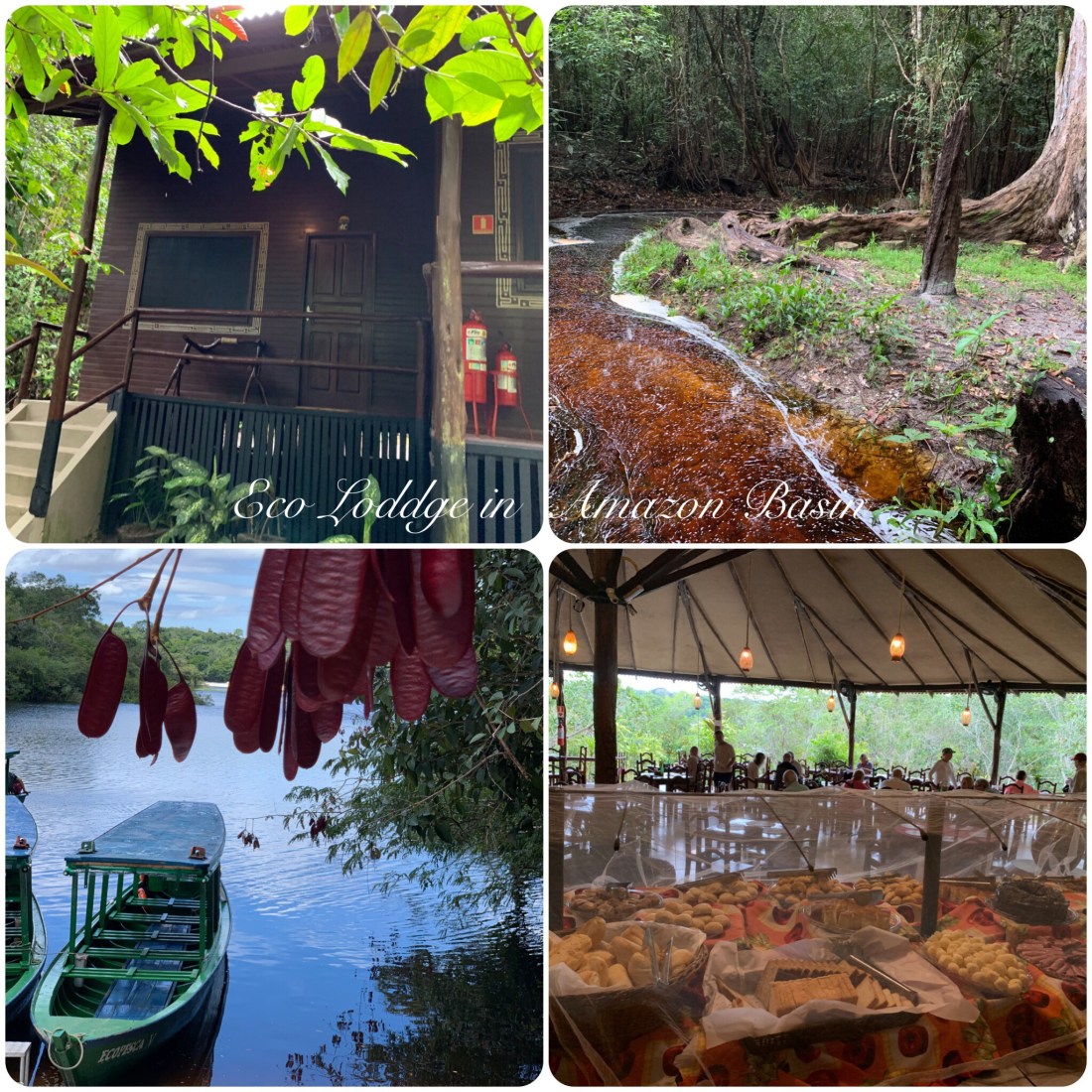
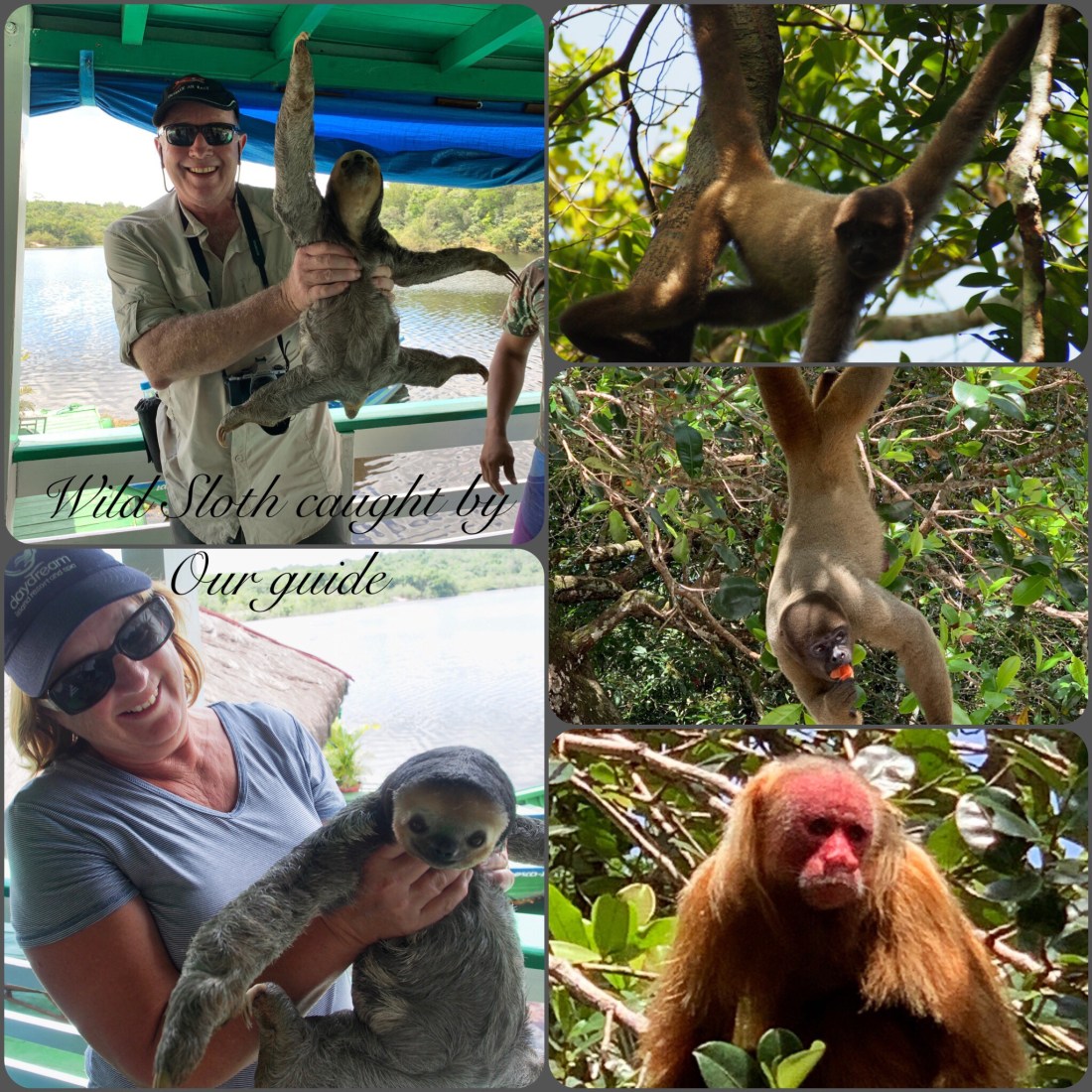
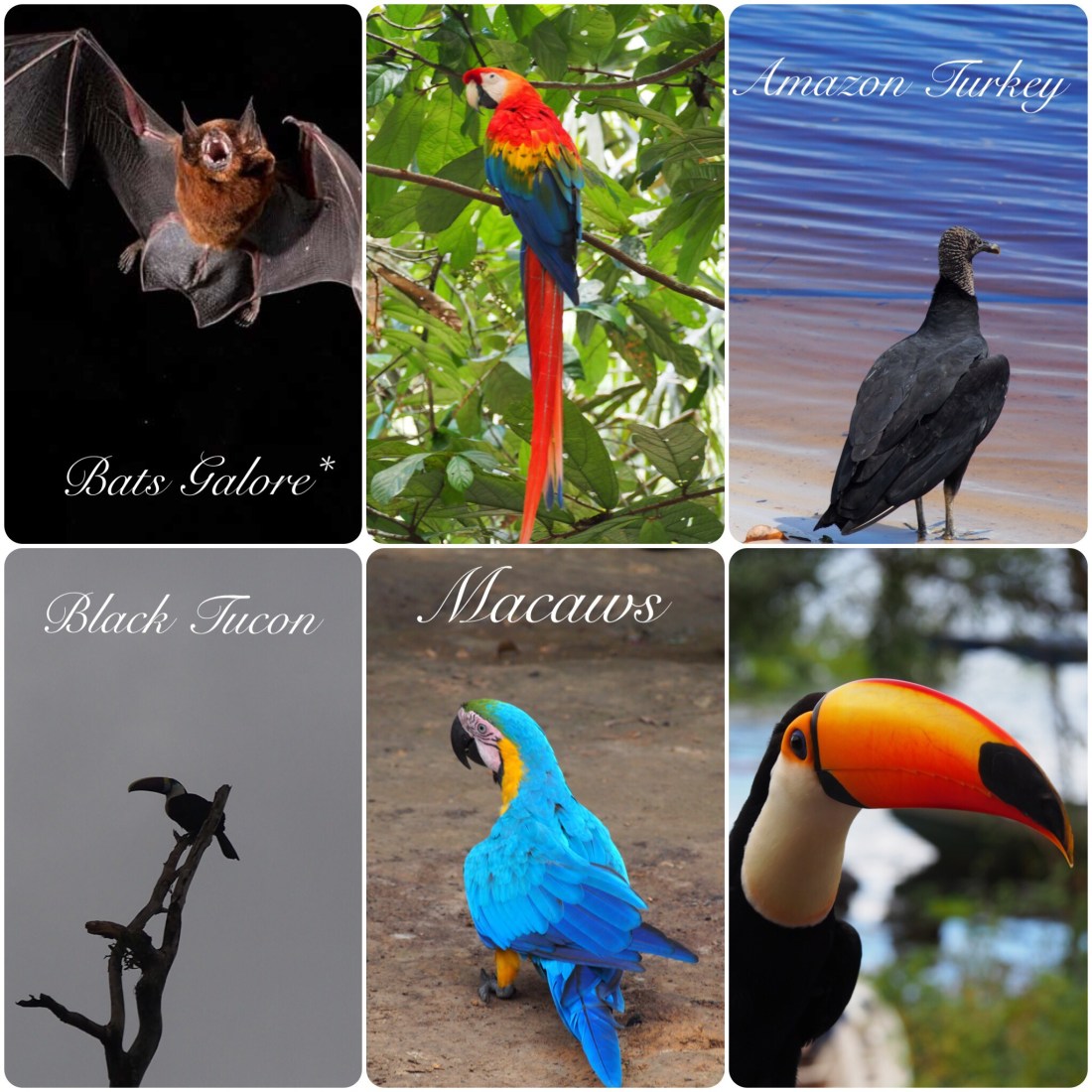 5.45 am and we are up ready to go bird watching at 6am. (Can’t miss any of these experiences, we may never get back here). Meeting at the coffee machine and after a quick drink we head out for an hours walk round the park as dawn breaks. Marcos did a great job pointing out birds, their habits and again just as we were finishing up we found another toucan high in a tree. We watched for quite a while and listened as it replied to Marcos mimicking it. Then back for breakfast before heading out on a walk through the rainforest. ( P:- very pleased I had my binoculars!) This certainly comes alive when our guide talks about the plants, spiders, ants, birds, snakes and the whole eco system of this area. Marcos pointed out the high water marks from 2012, where the water level was 45-52 feet above normal level. We are here at a time when the water level is reasonably high and the edges of the forest are flooded, (P:-the water will keep rising until June, by then the area of flood plains covered in the Amazon Basin will be larger than France!). We head across the bay from the lodge to see some monkeys, watching their agility as they swing about the treetops. We can hear howler monkeys in the distance and watch woolly monkeys here. Monkey areas are defined by the rivers, with different monkeys in different areas. Leaving the monkeys we head to another local village where Marcos gives us a history of the area and we are shown how the local people prepare the manioc plant ready to eat. The white manioc can be prepared and eaten straight away but the yellow manioc contains cyanide and needs to be grated and washed then cooked, forming almost a coarse flour like texture. Then we get to taste some manioc bread and sweet manioc cake along with some strong coffee. Then we see where they make rubber balls ready to sell, using volcanisation. (P:- a small volcano shaped smoking fire which adds smoke to the raw rubber causing it to solidify. The rubber was treated this way and shipped back to Europe in balls approx 300mm diameter).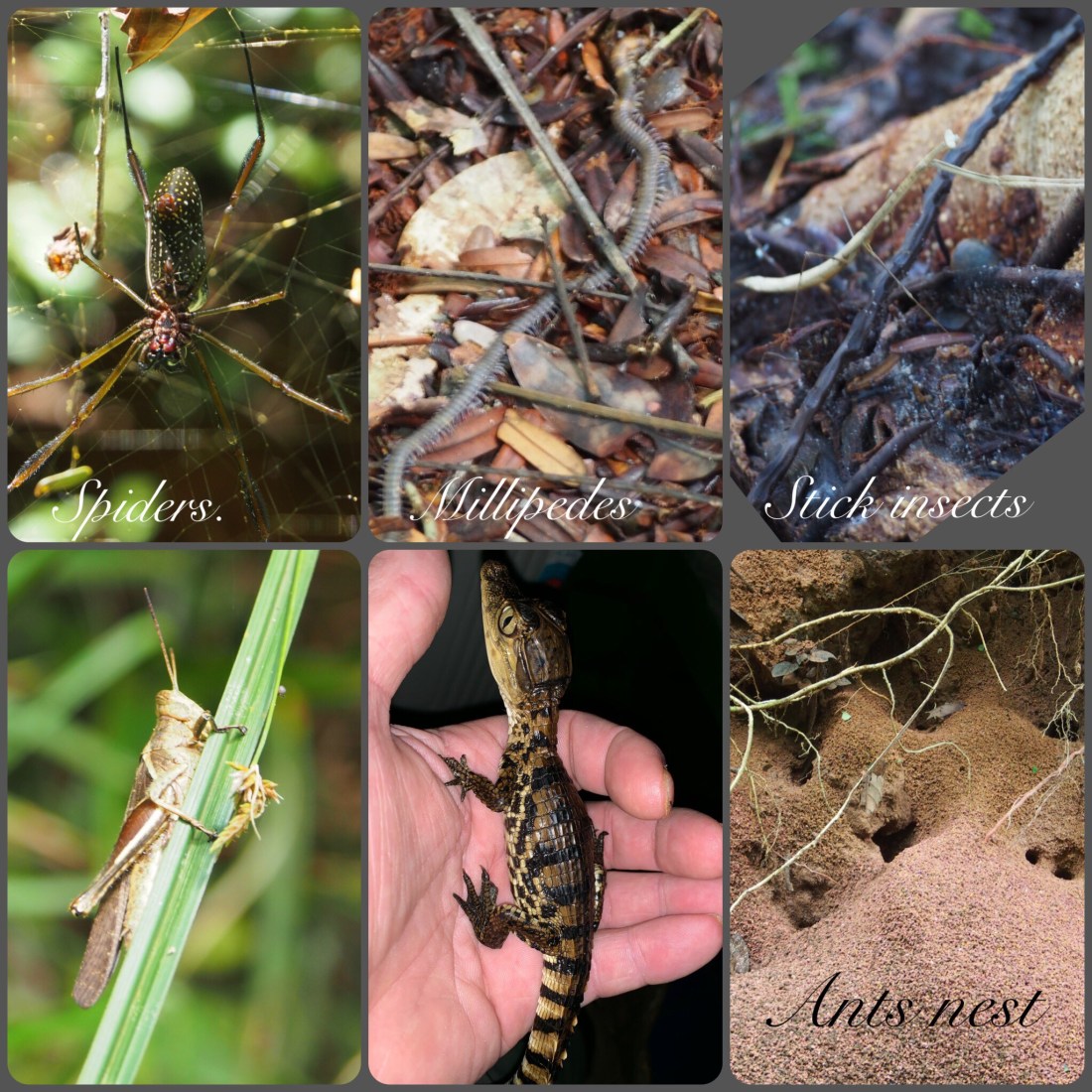
 Back to the lodge for lunch before packing our gear and boarding another larger classic old river boat, this time ready for the 1 hour 45 minute trip back to the Veendam. Marcos spends some of this time pointing out things of interest along the river. As we near Manaus we pass under the Rio Negro River Bridge. This bridge is 3 mile long and after crossing the river there is 42 kilometres of road through an agricultural area. That’s it!!! The bridge was built to look good (Politicians are the same world over) for the Soccer World Cup held here in 2014. The deepest spot under the bridge is 375 feet deep.
Marcos has been a fantastic guide and certainly loves the Amazon region. We will have to check out an article in National Geographic which he took part in, Last Tribes of the Amazon.
This has been an awesome experience, spending time in the rainforest, on the waters of the rivers, listening to the animals and birds of the area and learning so much about the Amazon. These few paragraphs don’t do it justice but it will stay in our memories for a long time to come.
 (P:-The Mirky Depths
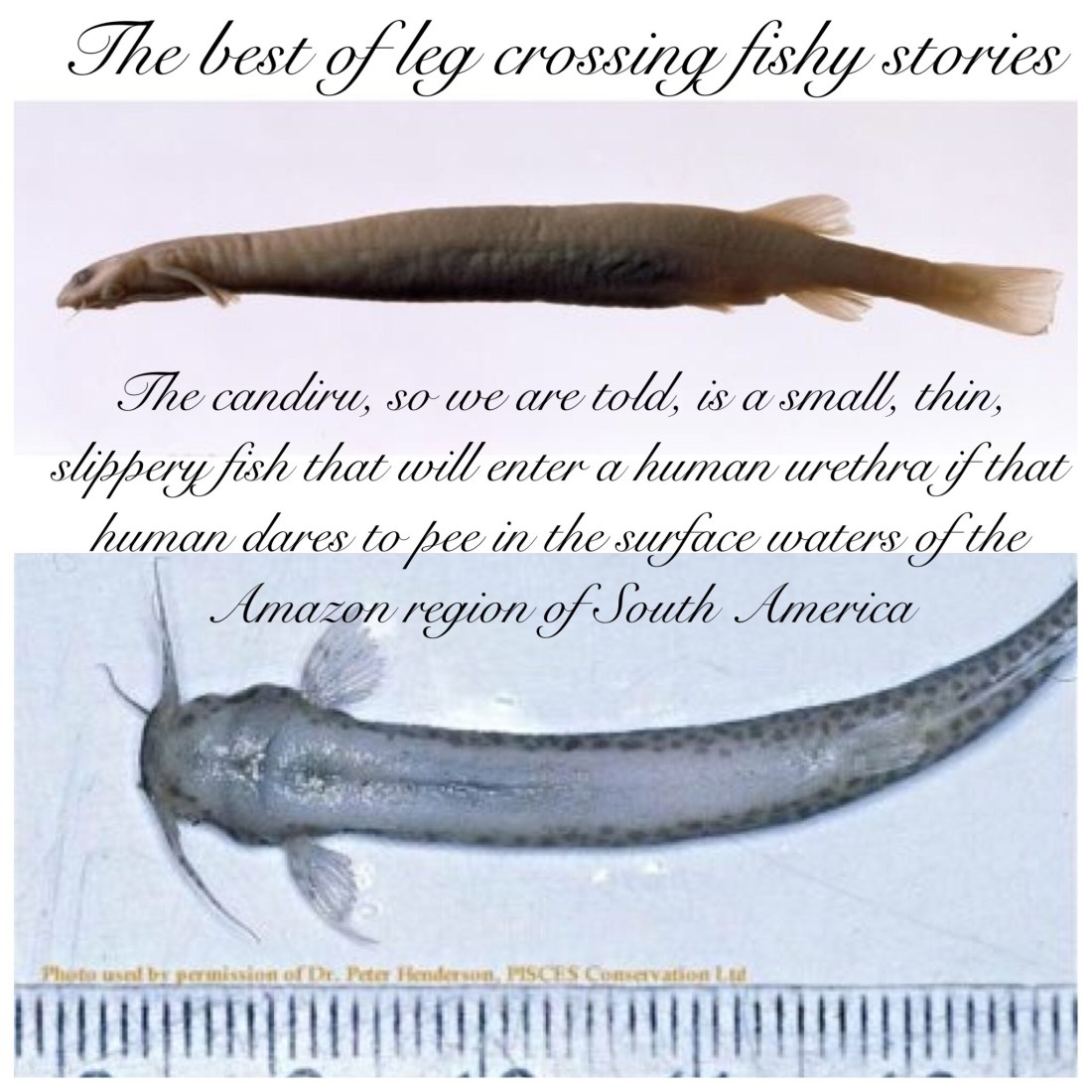
When staying at the lodge we were treated to local foods which included 3 different species of Amazon Fish. We ate the Piraña, it didn’t eat us! The fish was all hacked up with a machete, egg washed and baked. The flesh was firm, tasty and mild in all species. No filleted fish here, bones galore!
The Amazon basin contains the largest number of freshwater fish species in the world — more than 5,600 species
• Many fish in the Amazon — like the Tambaqui — are important dispersers of tree seeds
• The Pirarucu is one of the world’s largest freshwater fish attaining a length of up to 16 feet (5 meters).
• Several traditionally saltwater creatures have adapted to freshwater conditions of the Amazon including stingrays, dolphins, and sponges.
The silty waters of the Amazon which drains snow melt from the Andes has an almost neutral PH and is nutrient high. The flood plains covered by this water are fertile.
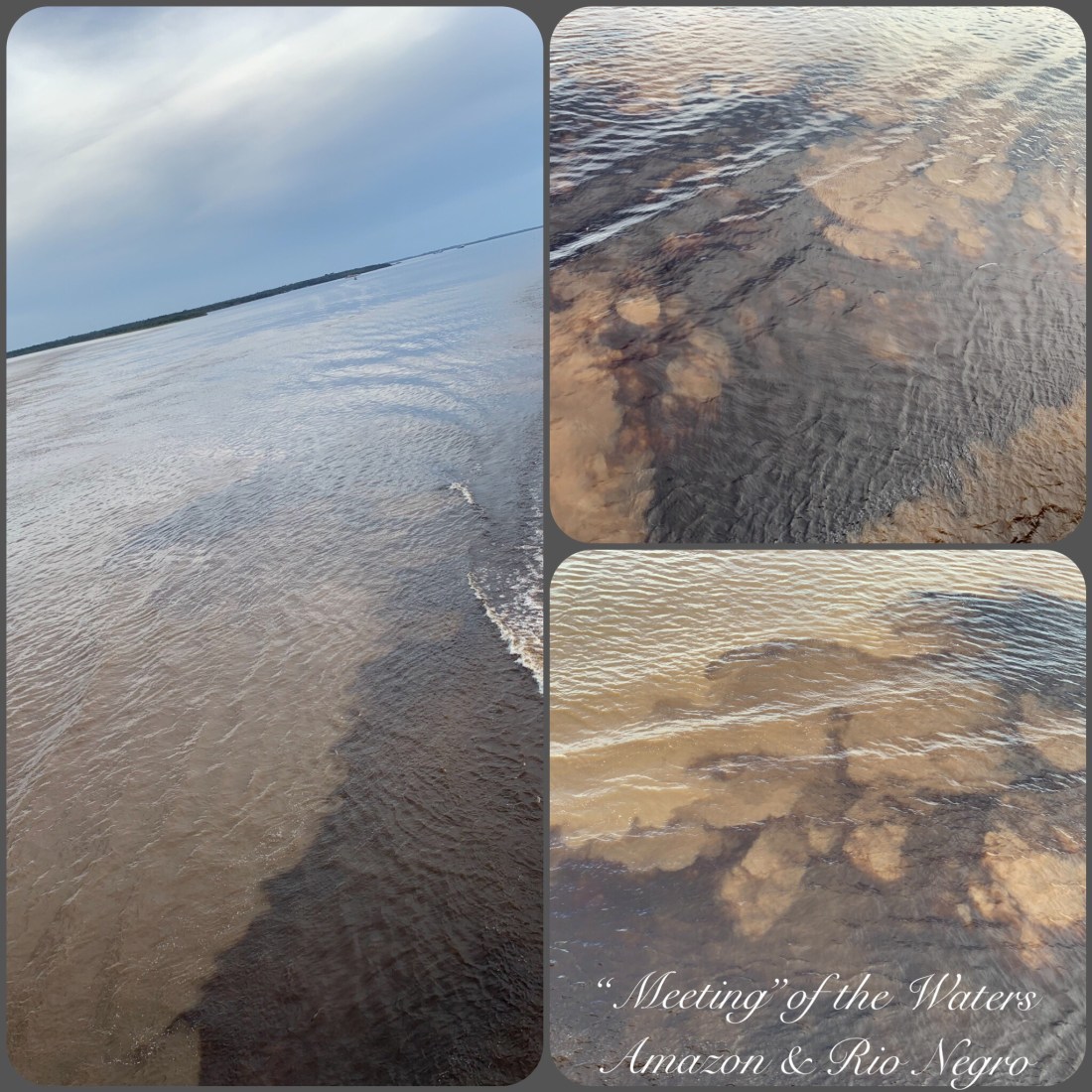
The Brackish (tea coloured) waters of the Rio Negro are acidic and soils are low in fertility. The “meeting of the waters is an interesting sight.
Adding to the “mirky depths” our guide was proud to tell us that Manaus had very little in the way of sewerage treatment plants. The city of almost 3 million just add their waste to this “mighty big river”.
The city has no street garbage collection but a series of “dry canals” . “The citizens simply throw their waste onto the streets, bottles, food waste, plastic etc etc” he explains and then Mother Nature simply washes all the trash into the canals during the tropical down pours (like we were experiencing) “ we have nets at the end of the canals to collect the waste there before it goes into the river” – good theory but by looking at the trash in the river and every corner we visit the system has a few flaws! Not to mention the oils, fats and small particles that slip thru what must be a very course net!
-Manaus, 3 million residents has only one road out which is thru Venezuela. (currently the border is closed), all access is by air or the Amazon to the city.
-20% of the world oxygen is produced by the Amazon rainforest.
-25% of all western pharmaceuticals come from rainforest based ingredients
We hope you enjoy our photos, almost all of which Judith or I have taken, ones marked with a * or otherwise noted are ones we have not taken. Part of our enjoyment is photography albeit in a “very point and shoot manner”.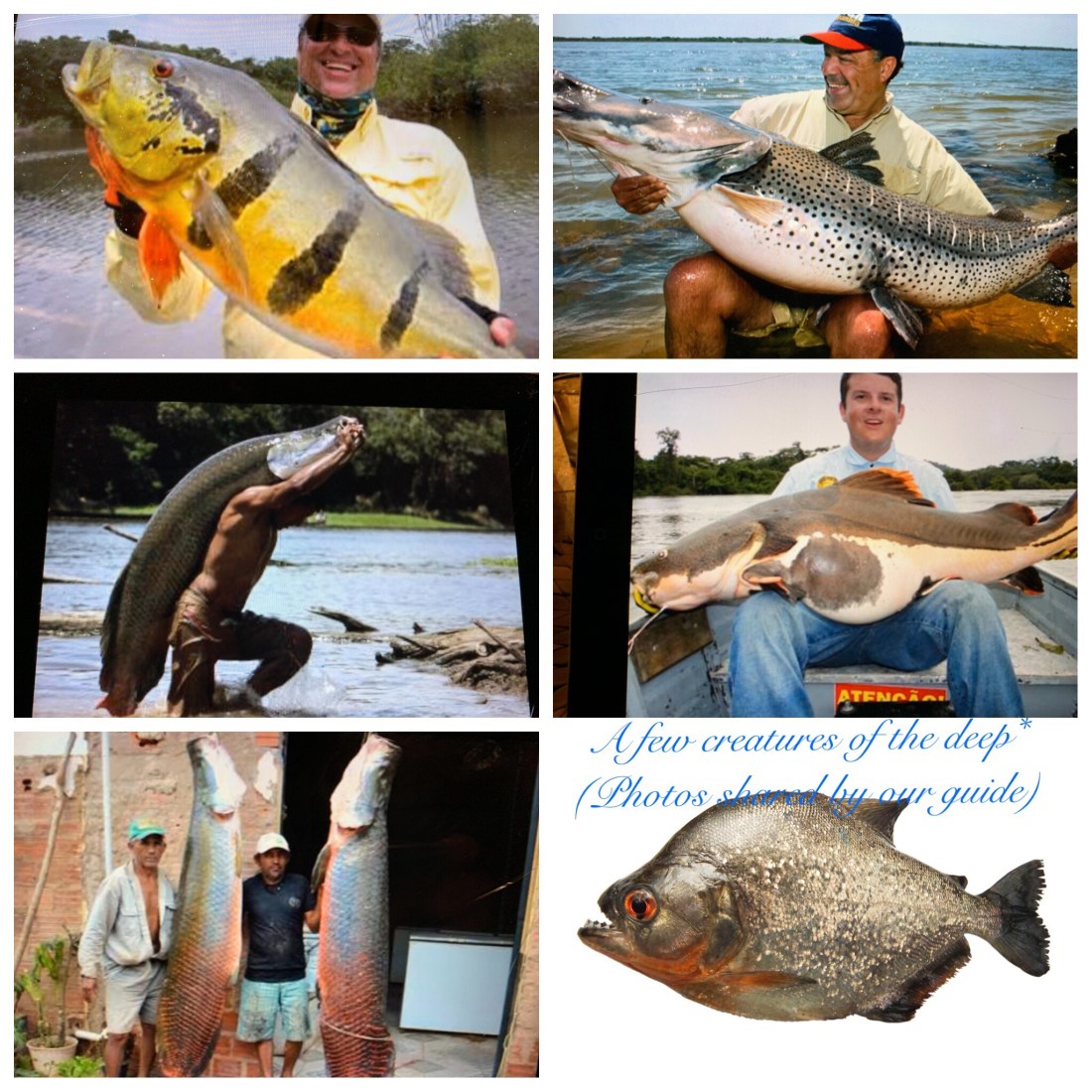

 Tassie Travellers
Wow. Sounds like you are soaking it all up. Fantastic.
LikeLike
Sounds awesome keep up with the good work
LikeLike
What a Holiday – Great stories, photos and so much more. Keep enjoying, we are loving sharing the ride with you!!!
LikeLike
I didn’t realize you could do this. I am considering (don’t tell Ed yet) doing the other half next year so this is good information, but I think I might send him off on his own. Is this too much for someone like me? As always, really enjoy your travel blog!
LikeLike