Train Delays and Rainy Days

14-03-25 Friday

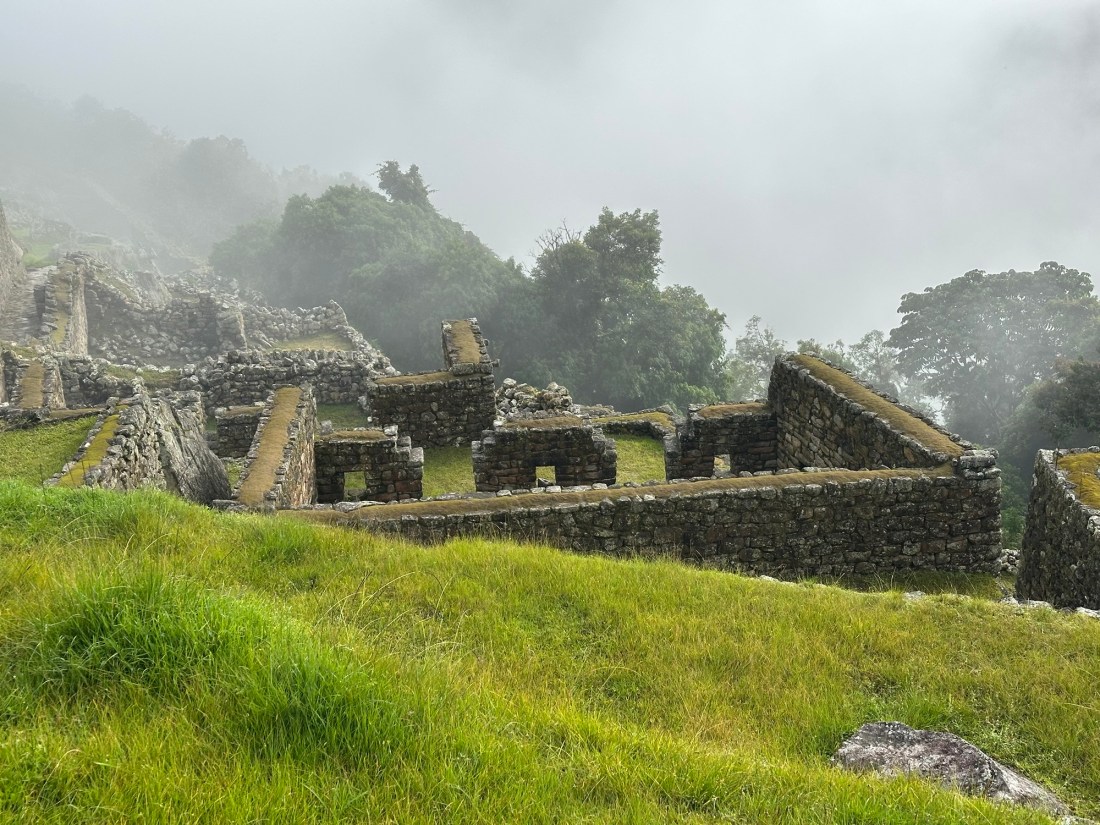
Another early morning as we have a 6am pickup and transfer to the Ollyantaytambo train Station for our ride to Agus Calientes and then on to Machu Picchu. We arrived, checked in and after a short wait we were escorted to our carriage and seats. Everyone was eager for the experience ahead, but alas things don’t always go to plan. Word came through that there had been a derailment with the previous train so there would be a short delay for operational reasons. Seven hours later, we finally arrive at the terminus, instead of 8 am it’s now 3pm. Not sure what will happen from here as we missed our time slot and lunch booking! Waiting for us was our guide Jacqueline who had our afternoon all sorted. After unloading our luggage we followed Jacqueline to the bus that would take us up the narrow, winding, steep road to Machu Picchu Citadel. We had a very quick bite to eat at the buffet, which had been kept open for the many late passengers, before following her into the historic site. We are doing Circuit 2 this afternoon and although misty and drizzly it’s eased for a time. Apparently this morning was quite wet so maybe the delay was a good thing.

Our first views of the site are amazing. This is one of the Seven Wonders of the Modern world. It is believed that this site was founded circa 1450-1470 and abandoned between 1532-1565. It sits on a ridge 2430 metres (7970 feet) above sea level. It was lost to the jungle for many, many years and was rediscovered by Agustin Lizarrags in 1902, lost and rediscovered again by Hiram Bingham in 1911. Machu Picchu underwent extensive restoration and conservation work, including stabilization and artefact excavation between 1929 to 1971 and was declared a Peruvian Historical Sanctuary in 1982 and UNESCO world heritage site in 1983.

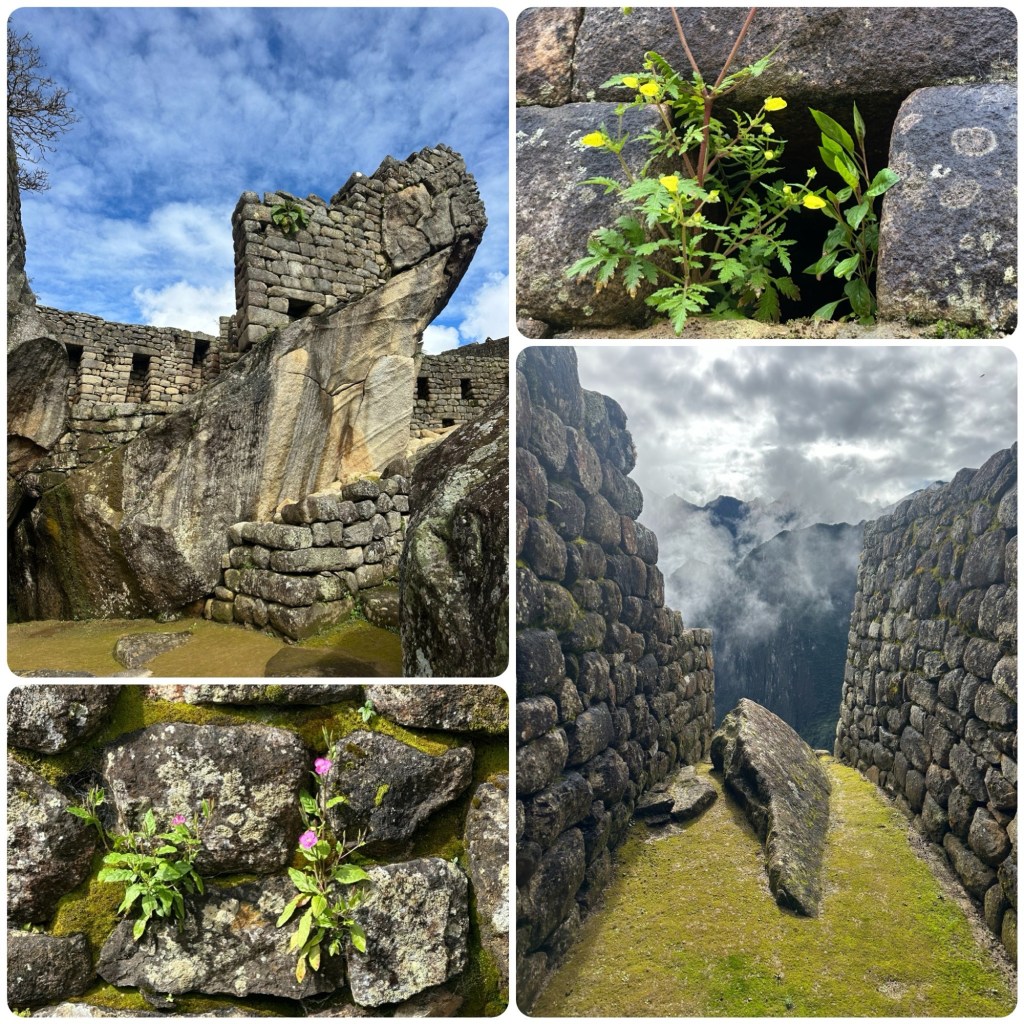
Machu Picchu Citadel

Our minds boggle as we try to understand why anyone would build structures and terraced farmlands on this mountain top. The modern theory is that the citadel was a private city for Incan Royalty. It has three primary structures, the Temple of the Sun, the Temple of Three Windows and the Intihuatana.

After 2 hours exploring this circuit and with the rain starting again we head back to the bus for the ride down the mountain. Philip is at the window seat this time so I don’t have to look at the steep edges of the road. We make it back safely and Jacqueline escorts us to our accommodation where we collect our luggage and head to our room. Dinner is included so after resting for a short time we dine and then it’s bed for the day so we can be ready for another early start tomorrow.
Residential Areas

15-03-25 Friday

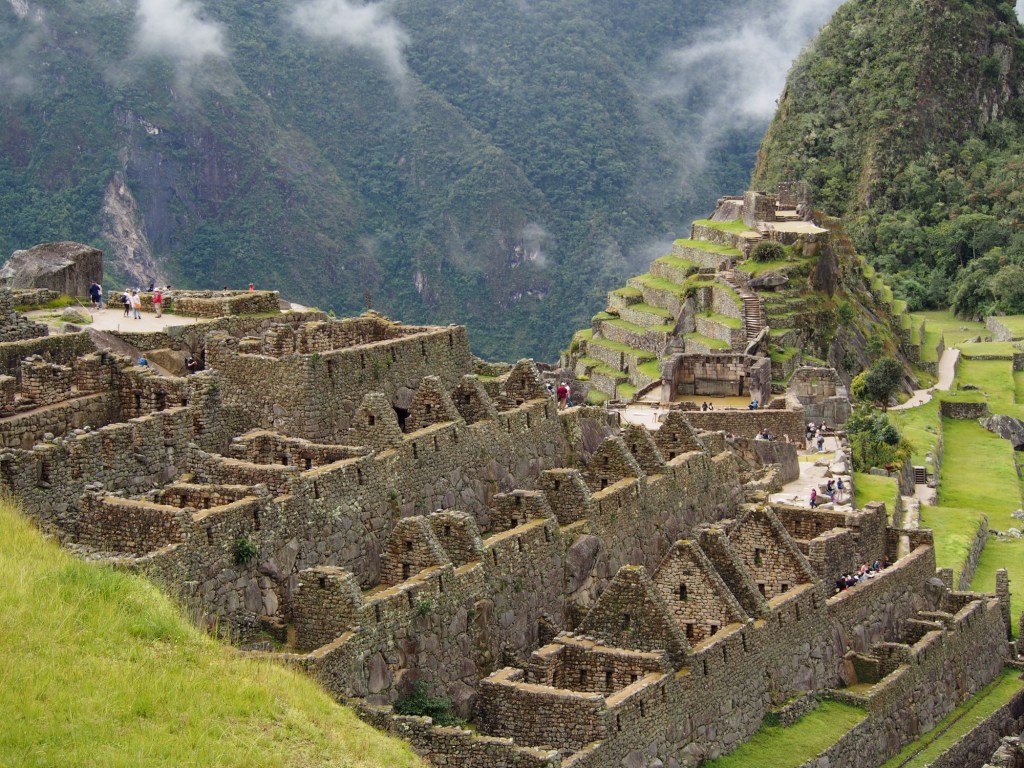
We both woke this morning thinking it had been heavy rain overnight and it was still raining but opening our window we find it has been the river we can hear roaring down stream. We are up again at 5am for breakfast and then off to the bus lines for our 6.20 am ride to the Citadel. Todays circuit is the lower circuit which we are doing on our own. We have a 7am entrance so not many people about yet. The clouds are swirling around the mountains, clinging to valleys and clearing to reveal spectacular views. Todays walk gives great views over the agricultural terrace area, views of the residential area and past the Central Plaza. Everywhere you look the views are amazing, the stonework intricate and solid. A truely amazing engineering feat that has withstood time and the jungle and now tourism.

Looking over Agricultural Terraces
Mountain View
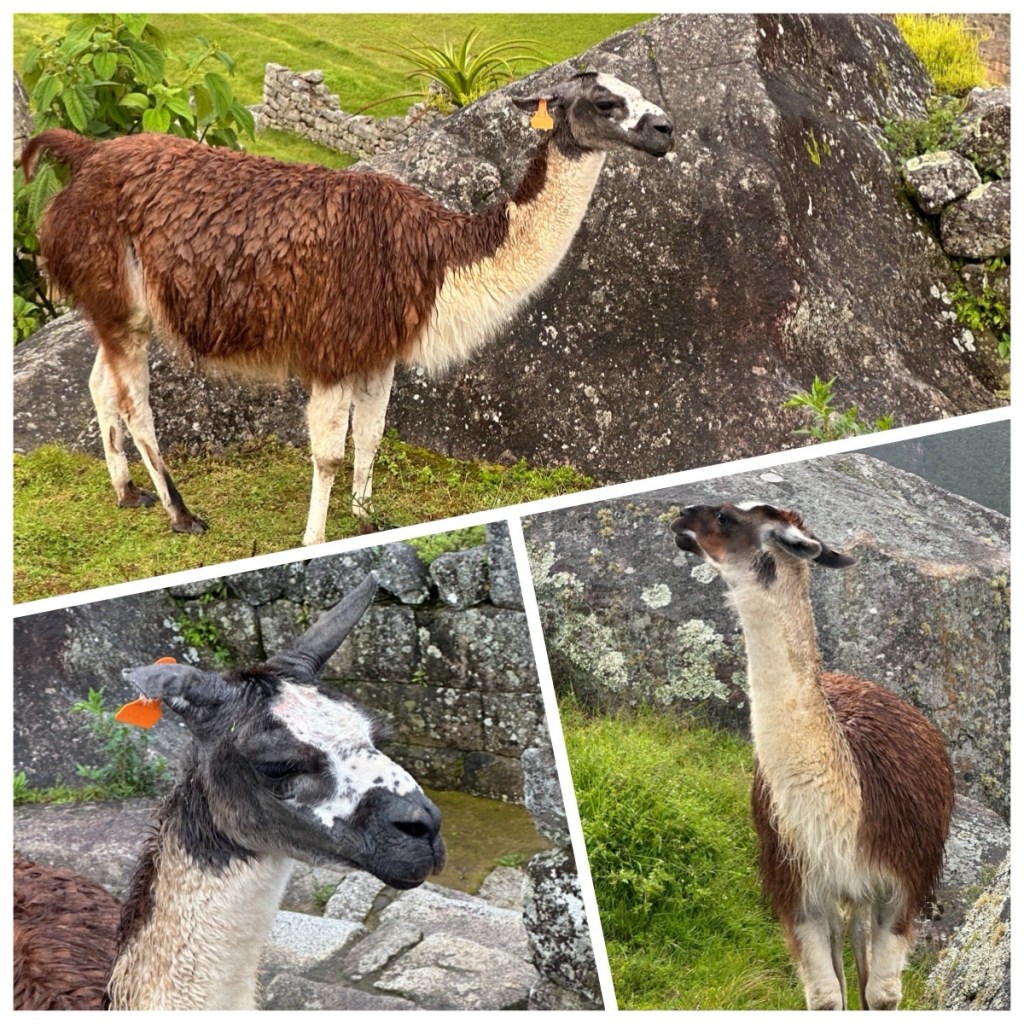
Resident Llamas

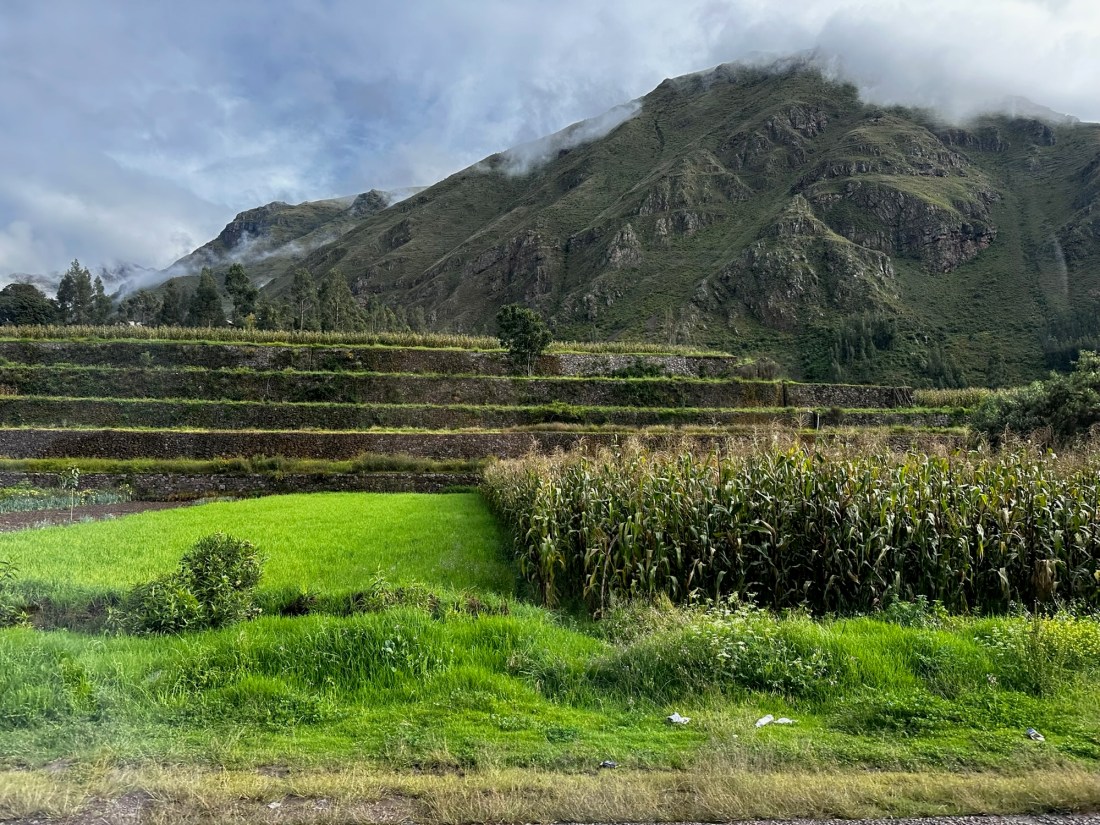
(P:- Been on the bucket list for a long time (and yes I have a huge bucket to empty yet!). What we can see is amazing but evidently 60% of the complex is not unearthed and isn’t visable. The site is immaculately maintained with excellent visitor paths to accomodate the approx. 1.6 million visitors a year. All visit by a light rail system that to my eye needs a bit of maintenance. 2 hrs from Cuzco to Ollyantaytambo by car on 3rd world roads with a driver (typical of third world countries ) who overtakes when he feels like regardless to oncoming traffic. Then 2 1/2 hours (normally) by train down the side of the 724klm long Urubamba River (a major feed in tributary of the mighty Amazon). The water flow, rapids and currents were amazing as was the surrounding scenery. Terraced Farm land, Inca ruins and the Inca trail were in prominent view as we rattled along. We were fortunate with our Potato Park Visit that we witnessed many ancient Inca ruins and some homes that the community members still live in. Getting off the Tourist beaten track (as we like to do) shows us a different perspective to most people see).
Inca Ruins and Potatoes

Inca Ruins and Potatoes

Arriving in Cuzco, Peru after a loooong days travel, we unloaded our bags at our hotel and headed out for a walk before dinner.

(P:- for me that consisted of my first ever trying Alpaca – finally found a good point about long legged furry Alpaca! Have never worked out why people like an animal that spits at you! Grotty things! However they do taste good and will be no doubt on the menu again.) After dinner it was showers and bed, although neither of us had a good nights sleep with jet lag kicking in and being at high altitude. (3399 metres).

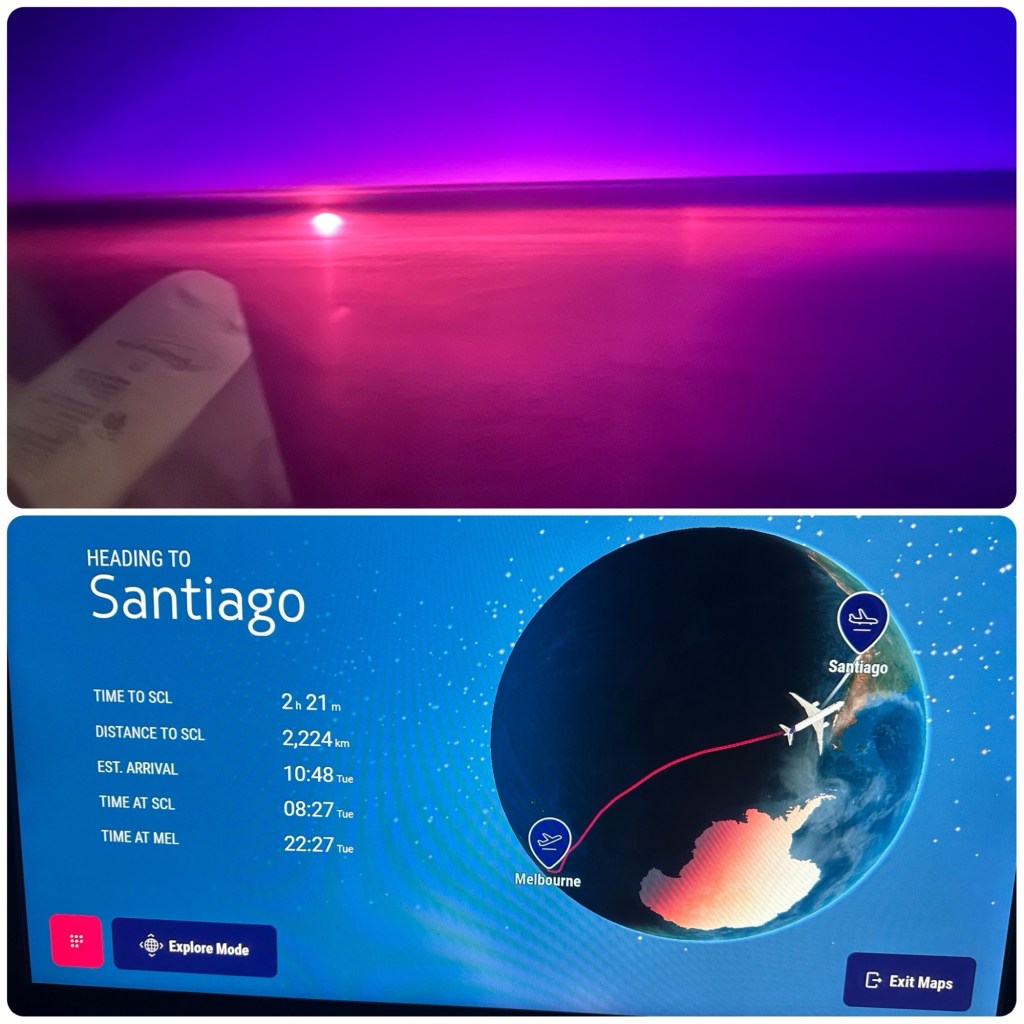
(P:- First Paragraph and Judith has neglected to mention that the food in the Latam Airline lounge in Santiago, Chile, is about the best lounge food we have come across. I guess I best keep proof reading to see what else has been forgotten!)

Sunrise as we approach Santiago

12-03-25

This morning our tour starts with a 7am pickup, although this turned out to be a little later as the old city area where we are, had a strike and no traffic was allowed to enter, therefore our guide had to walk several blocks to collect us and then walk back to the bus. Our tour today is taking us to The Sacred Valley. Beautiful views over Cuzco in the valley as we climb out of the city area and then down into the Sacred Valley with the Sacred River running through it. The mountainsides are steeply terraced with ancient ruins dotted along the crests of the mountains. Small farms cram along the river banks with corn, potatoes, beans and other crops. Average farms size is 2 acres.

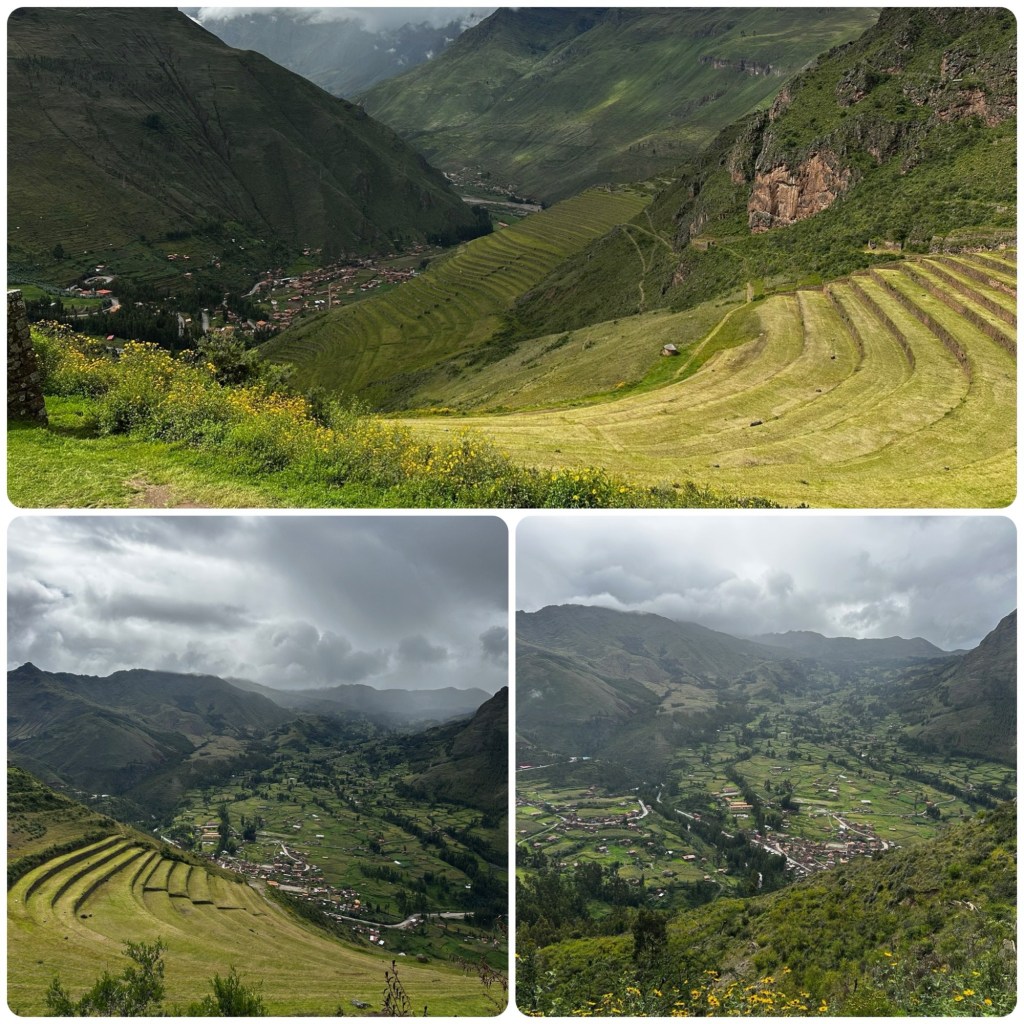
Our first stop is at Pisac Archeological site. These ruins are located at the eastern end of the Sacred Valley at an altitude of 3300 metres. Some of these ruins date back to the 1200’s. From here we get great views looking down over the terraces and up to the urban area of the ruins. Also seen here are ceremonial baths, the largest Inca cemetery in South America, (holes dug into the cliff face. 3000 people buried here). Here we were told how the terraces were constructed with four layers. The bottom layer rock, second layer gravel, third layer sand and the top layer fertile soil.

P’isaqa terraces

From here we head back into the town of Pisac to the market place where we are shown how to tell silver from platinum or other similar metals and where the jewellery is all handmade. Then onto the Alpaca store to learn the differences between Alpaca, Baby Alpaca, Vicuña and synthetic fibres. After looking around the store we wander through the market area and back to the bus.

Winding our way through extremely narrow streets where the bus had to do multiple point turns to get around the corners, we eventually head out of town again and back in to the hills to view some more interesting terracing. This time the terraces were in concentric circles. From here we continued on to our lunch stop where we enjoyed a buffet lunch of some traditional native foods. A variety of potato dishes, chicken, beef and pork all with local flavourings.

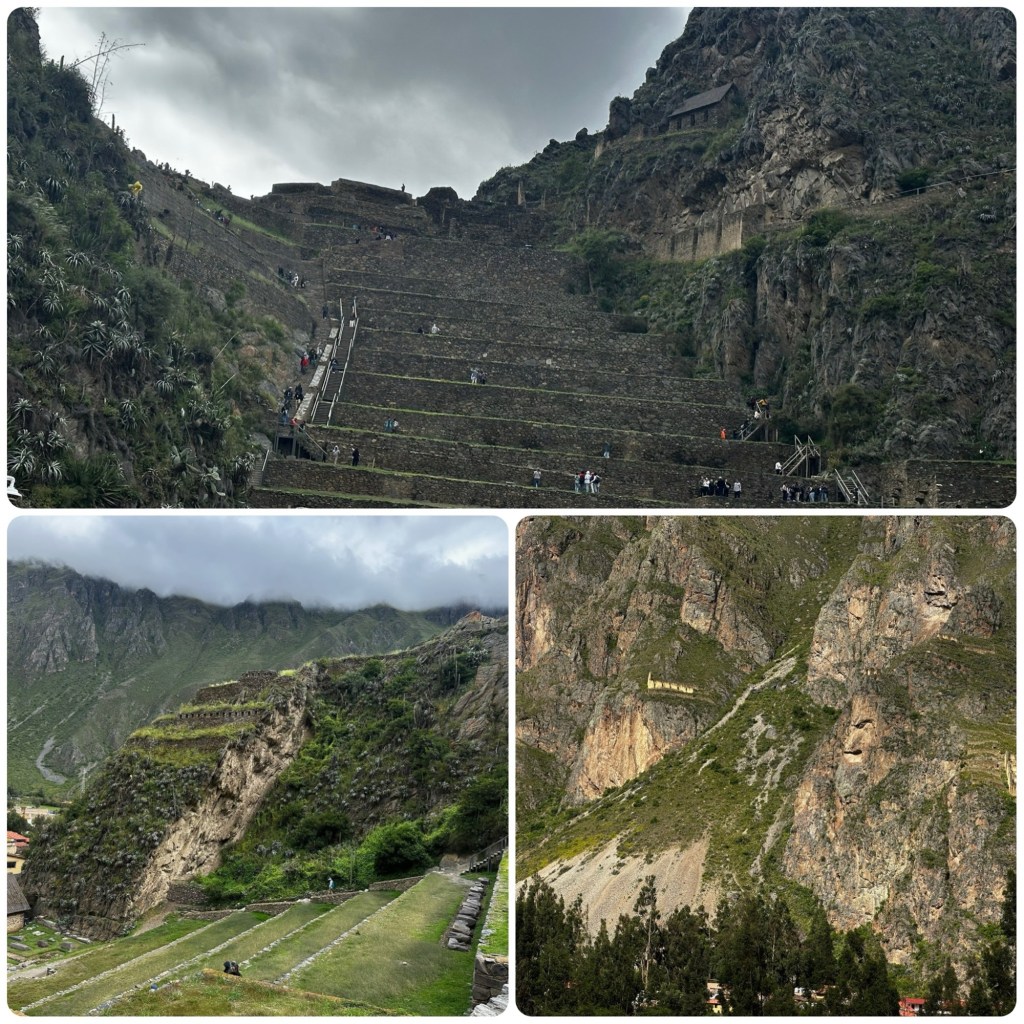
Ollyantaytambo

Ollyantaytambo is our next and final stop. This town sits at the northern end of the Sacred Valley and is believed to be the stronghold for the Inca leaders of the times. We enter the fortress and start to climb the many stairs to the temple area at the top, not an easy feat at this altitude and with a time limit to be back at our meeting point. Looking across the valley from the terraces we can see the granaries, where corn and grains were stored. These were built high on the hills with no doors and the windows low to the ground to take advantage of air ventilation. This is again an amazing place with so much to see.

Late afternoon we were delivered to the San Augustin de la Recoleta Monastery which is our accommodation for the next two nights. This is a gorgeous old building with beautiful gardens and fountains and the room isn’t bad either. A basic dinner at the restaurant here and an early night brings our day to an end.

(P:- Every one has warned us about high altitude and its side effects! Had about as many tips as to prevent it as I have had about driving on the R.H Side of the road! Evidently a key symptom of altitude sickness is a huge headache- Well I think that won’t work with me as I have had a non stop huge headache for 13 years! Next symptom becoming illogical – Well Not much use asking Judith to monitor me becoming illogical as she will claim I am anyway! Best to carry on regardless I think. So far no issues apart from they only put a miserable amount of oxygen in the air so I am half as fast doing things!)

13-03-25 Thursday

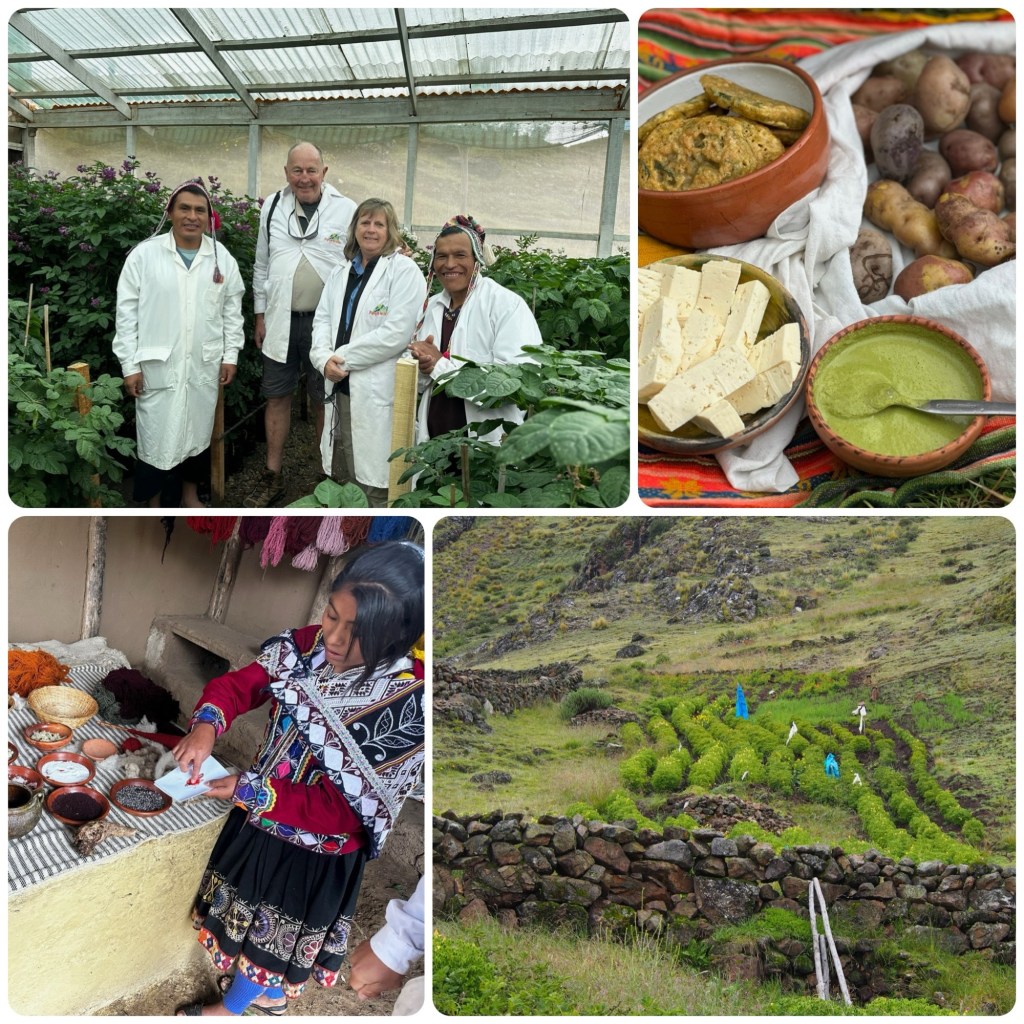
Today Philip is excited as we are on a private tour to the Parque de la Papa (Potato Park). This is a potato research facility within the heart of this area and as Philip has worked with Potatoes all his life it was an obvious choice to stop here. The information says:-

“Discover the breathtaking beauty and cultural richness of the Potato Park, where nature and tradition converge to create a truly unforgettable experience.”

Immerse yourself in the wonder of the Andean landscape as you navigate through our vast tapestry of pristine wilderness and farmland. From towering mountains to verdant valleys, each corner of the Potato Park offers a new adventure waiting to be uncovered.

Connect with the vibrant traditions of the Quechua people, who have thrived in these lands for centuries. Experience the warmth of Andean hospitality as you engage in cultural exchanges, traditional ceremonies, and hands-on experiences that will deepen your understanding of indigenous lifeways.”

Parque de la Papa

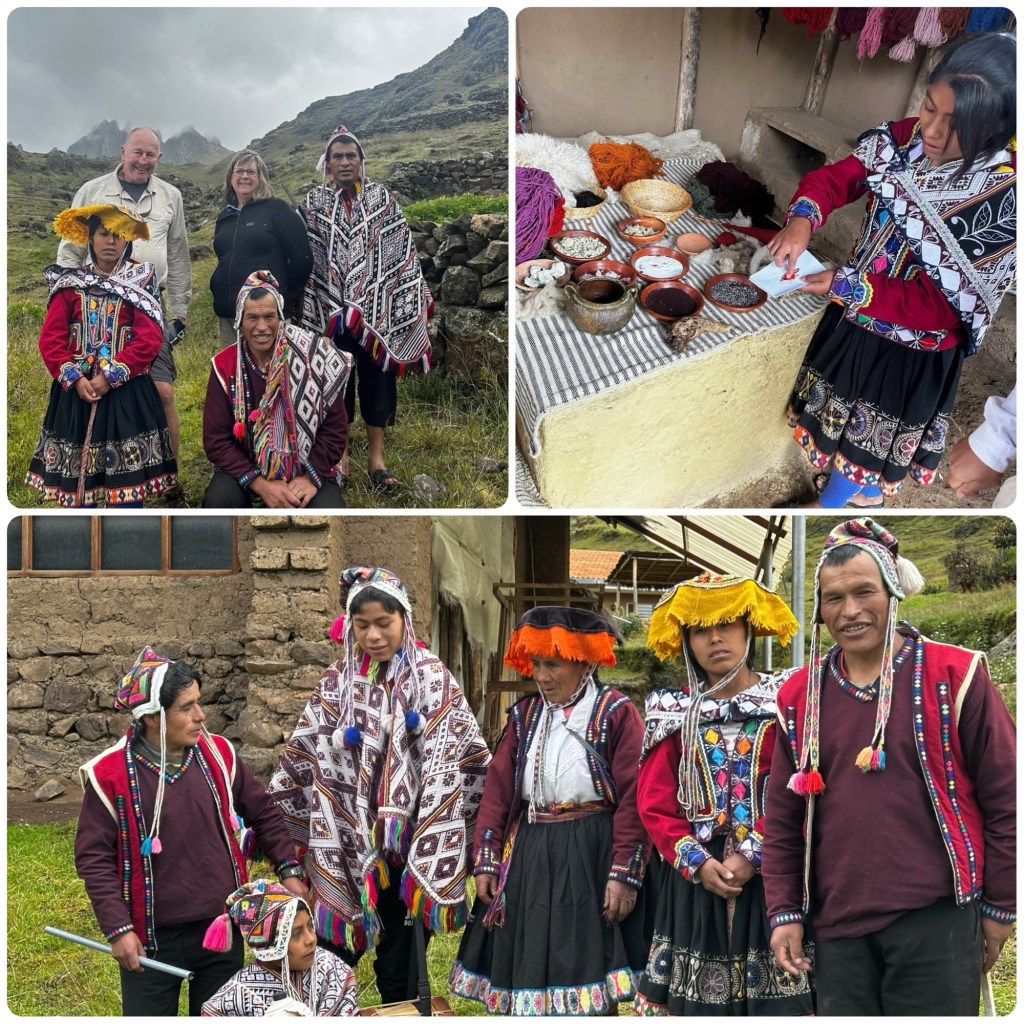
We more than experienced this today. The views were amazing, the people friendly the towns picturesque. We experienced tasty food, a hike in the Andes at 4200 metres to a tiny farm with majestic mountains in the background, local crafts and the local Seed Bank for the area. Our guides Ernesto and Nellie (who went to school in Quello Quello, one of the towns we stopped at) were both great and although Nellie couldn’t speak English, Ernesto was able to translate all she told us.

The roads we travelled on were at points heart stopping. At one point we had to cross a raging creek, on a corner with a steep drop to one side. Twice Flavio our drive got out to examine the crossing before with my heart in my mouth and my eyes closed we inched our way across. This was the worst of quite a few creek crossings, adding to that dodging around rocks that had slipped down the hillsides, small landslides and dogs that think they own the road, cows sheep and pigs tethered to the banks and tight corners made for an interesting drive.

Apart from the drive the Potato Park was very interesting as we stopped at 3 different areas to learn more about the potato.

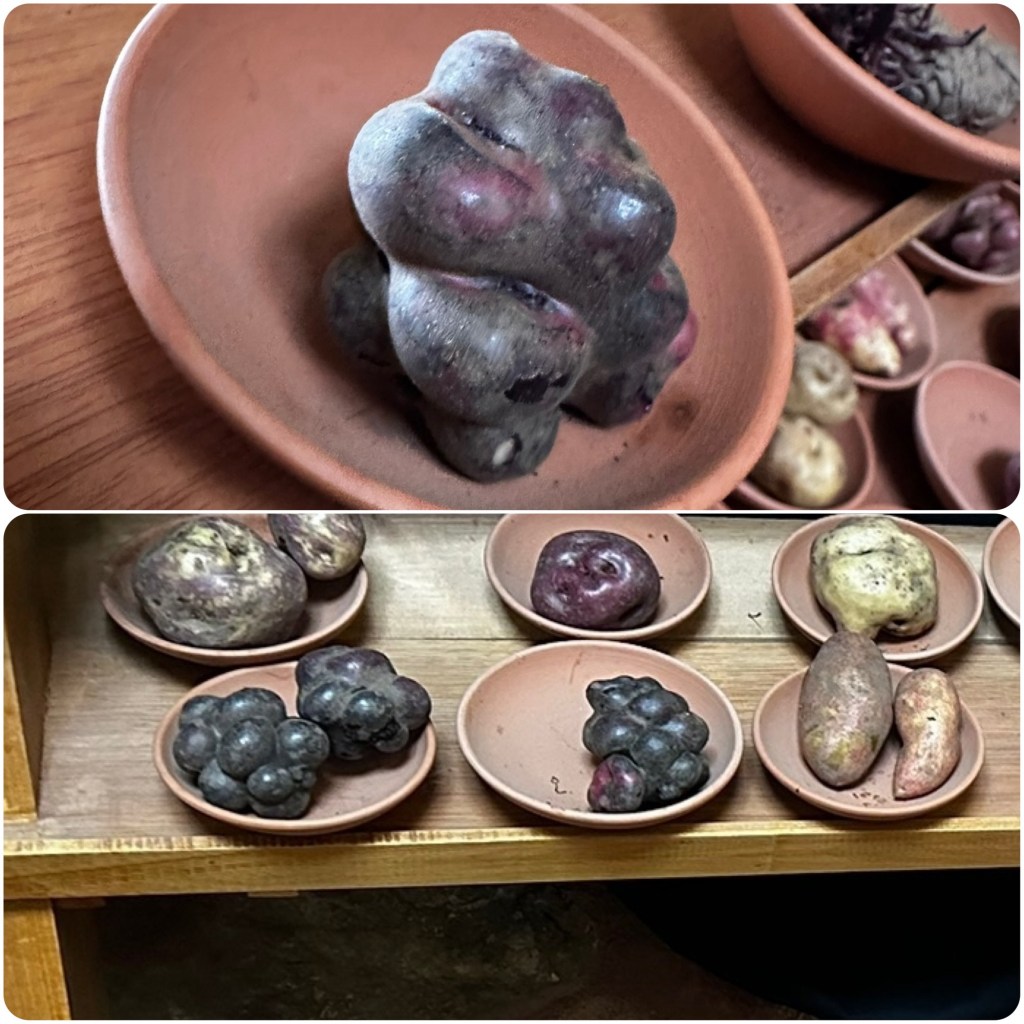
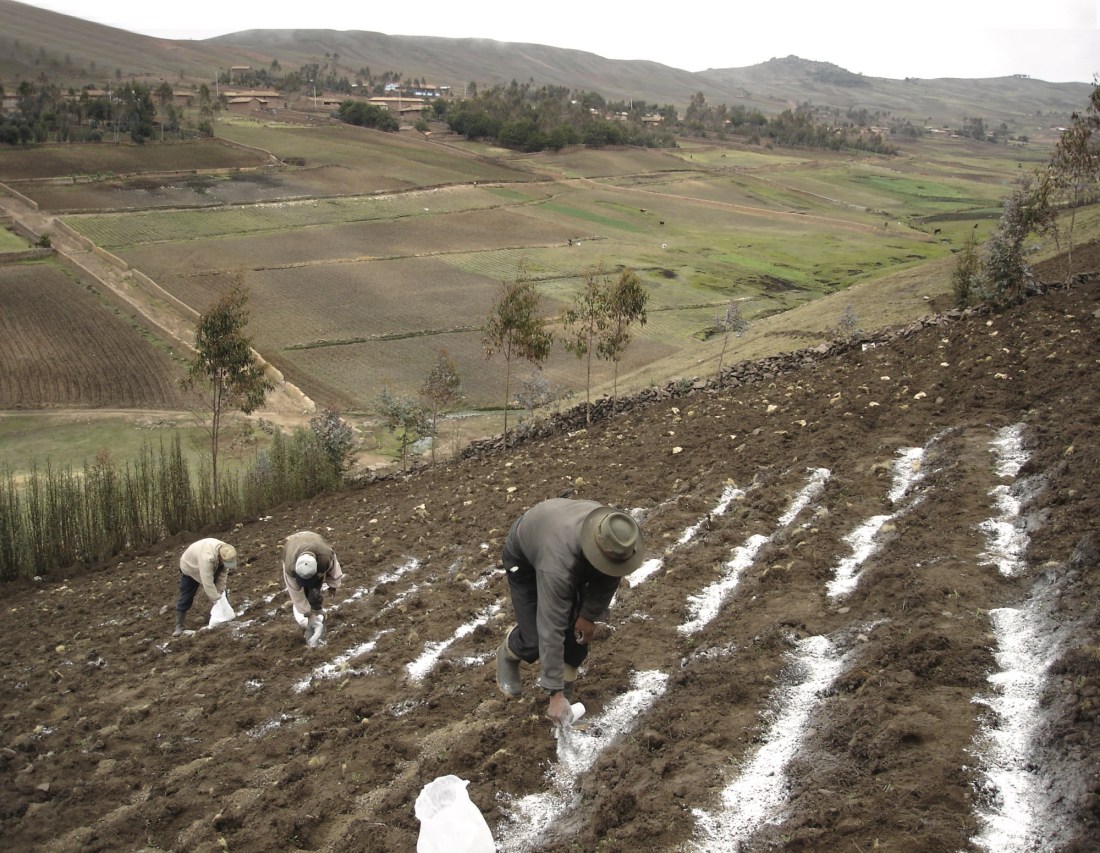
(P:- When we decided Peru was going to be visited I started researching and I knew in ancient times, the potato originated there. I also found out we were going to be within 40 klm of the Potato Park ( internationally sponsored) so proceeded to try and arrange a visit. When we were picked up this morning Ernesto’s first comment was “we have arranged an unusual and very special day for you. It is rare for private people to visit one of the most scenic, very private, valleys (13,000 ha) in the area. A most interesting day, local foods, the technical side of their aims is to protect and continue the life of some 1100 rare potato varieties, looking at propagation, growing and storing rooms wandering fields and (it felt like) hiking to the top of the Andes to see actual wild potatoes growing in their natural environment. After such a great day this Machu Picchu thing we are going to see tomorrow is going to have to be good to surpass today!)

Some of our hosts in traditional dress, with each coloured hat representing a different Community
Some of the Many Varieties of Heritage Potatoes
P. Peruvian Trivia:- when selecting a new wife, a young potato farmer presents the potato varieties above to peel. If she successfully has consistent thin peels and the potato shape remains, he can be confident he has a vey frugal future partner. (According to our hosts)

Adventure Awaits

11-3-25

We are on the move once again. Follow along as we experience new countries, new foods, new languages and new adventures.

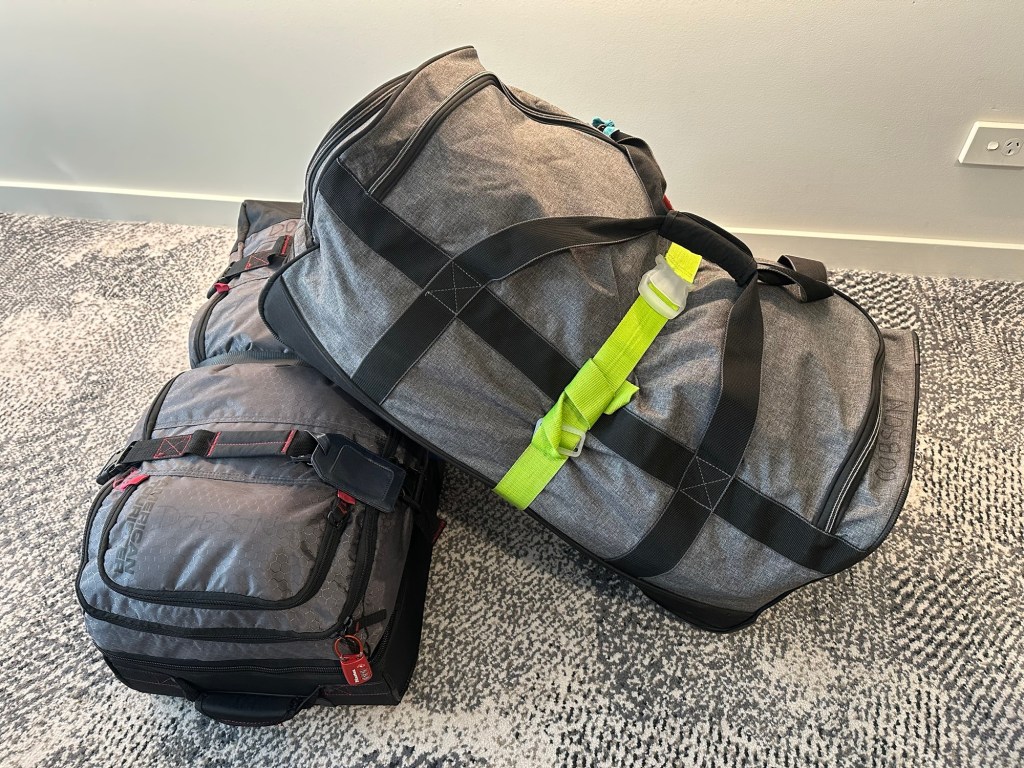
The hard part is done (packing the right gear) now to relax and enjoy our international flight before stepping into adventure somewhere………..

(P:- Yes another year and hopefully another adventure? – it’s been a while and I was starting to believe “I never get to go anywhere!”

Not a bad effort I think! 2 bags @ 19 kg each to see us thru the next 6 weeks 👍)

Where is he taking me now!!!