Uluru and Kata Tjuta

13-16th July

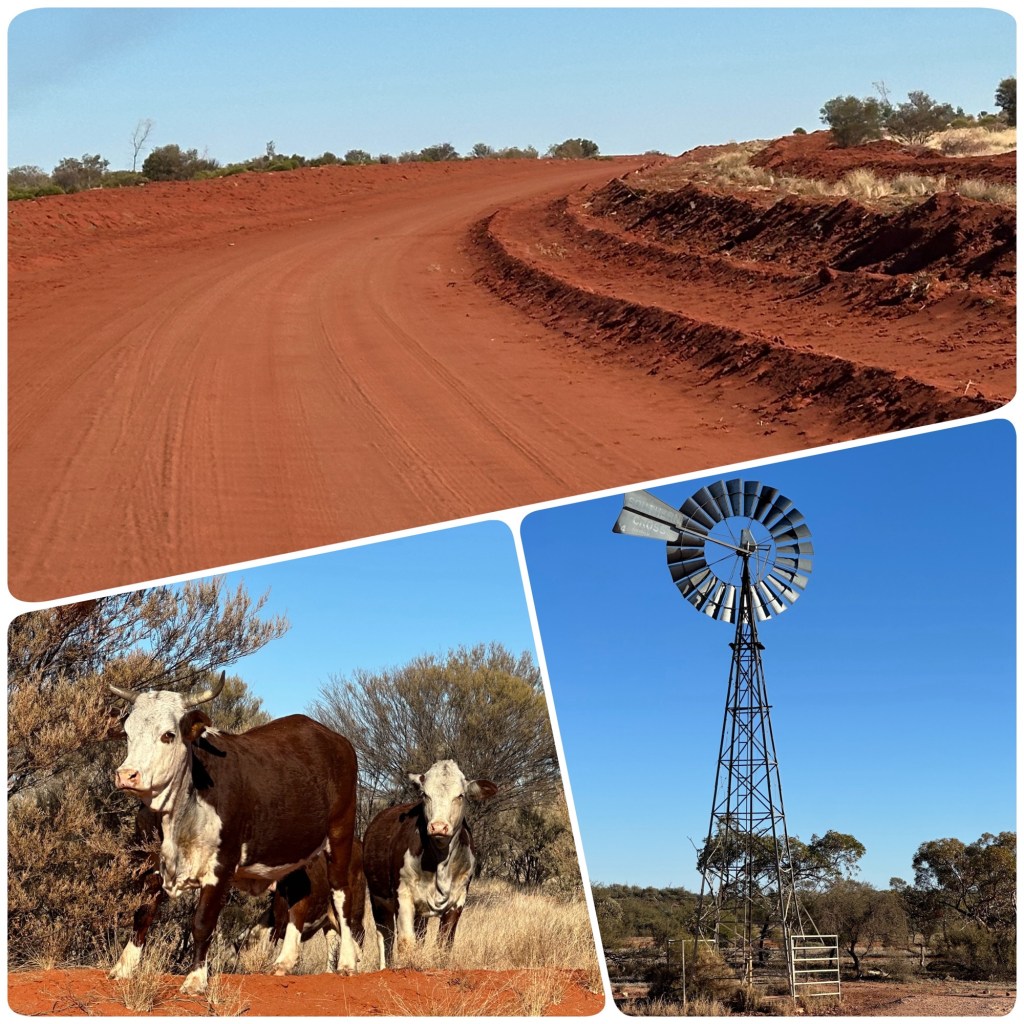
After a gorgeous night camping out at the start of the Mulga Park Road, enjoying a campfire dinner and a wonderful sunset, we aimed our vehicle towards Uluṟu. The Mulga Park road is a very underrated road, heading along the South Australian border then north to Curtain Springs. Philip last did this road in 1974 on a school trip when it was very wet and the bus got bogged and they camped on the road side for around 48 hrs waiting to be rescued. It’s much different now, extremely dry and dusty but a lovely drive. (P:- the road conditions would soon change with 50 or 60mm of rain, Mulga park road is actually the Eastern start to Len Beadell’s Gunbarrel Highway, it is also an access road to Victory Downs and Mulga Park Stations as well as a few Indigenous communities. We travelled for over 200 klm before meeting another vehicle. I do so enjoy the dirt back roads, both van and Truck are now impregnated with the Central Australian red dust!

Mulga ParkRoad Camp
Mulga Park Road

After topping up with fuel, both diesel and food, we continue on to Uluṟu where we are staying at the Campground in the Overflow area.

Kids are off for a swim once we are set up but discover the pool is unheated and very cold, so only the bottom halves got wet. Back to the van for an early dinner before we wander up to the bus stop for our Field of Lights tour.

When we arrive out at the Field of lights we are given some information and sent on our way to wander along the pathways enjoying this spectacle. This visual sight was initially installed for a 12 month season, in 2016, and has now been extended indefinitely. The Field of lights is made up of 50,000 handcrafted frosted spheres that are illuminated by solar powered leds and cover an area of more than seven football fields, with more than 330 kilometres of cable.
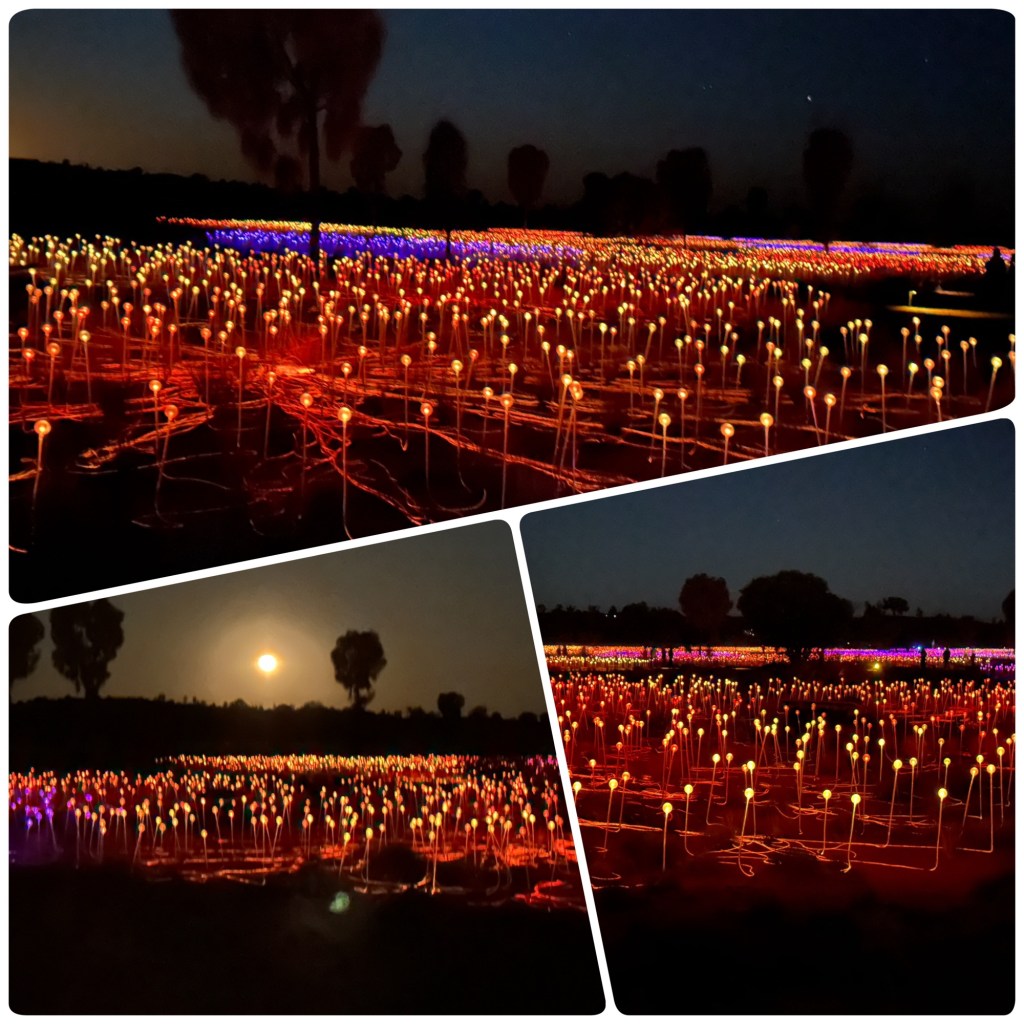
14th

Philip is making bread this morning so we take our time getting motivated. Kids had a good sleep in and slow start to the day, but the fresh bread got them moving.

(P:- nothing like camp oven tucker in the great outdoors! Do enjoy the challenges of bread making and meat cooking on the camp fire).
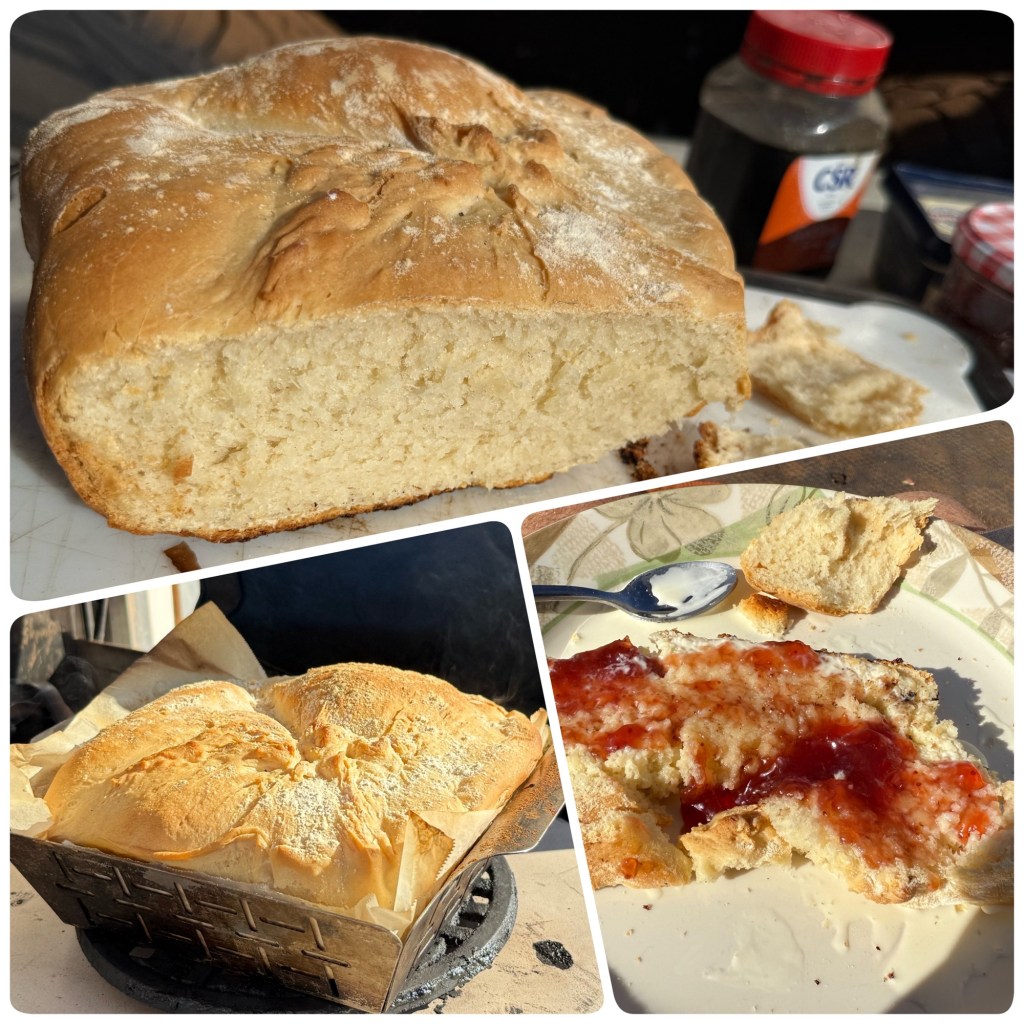
Bread for Breakfast

Around 10am we are off to walk, ride and drive around Uluṟu. It’s a balmy 28 degrees with a light breeze and very pleasant for walking or riding. We unload Em and Hugh and the bikes at the first car park and they are off to circumnavigate the rock. Philip and I do a walk and then I continue further round. We walk into Muṯitjulu waterhole which is a tiny oasis tucked into a fold in the rock, then back to the car where we meet Em and Hugh. We load up the bikes while they walk into the waterhole. Then a stop at the cultural centre and back to the van for a late lunch.
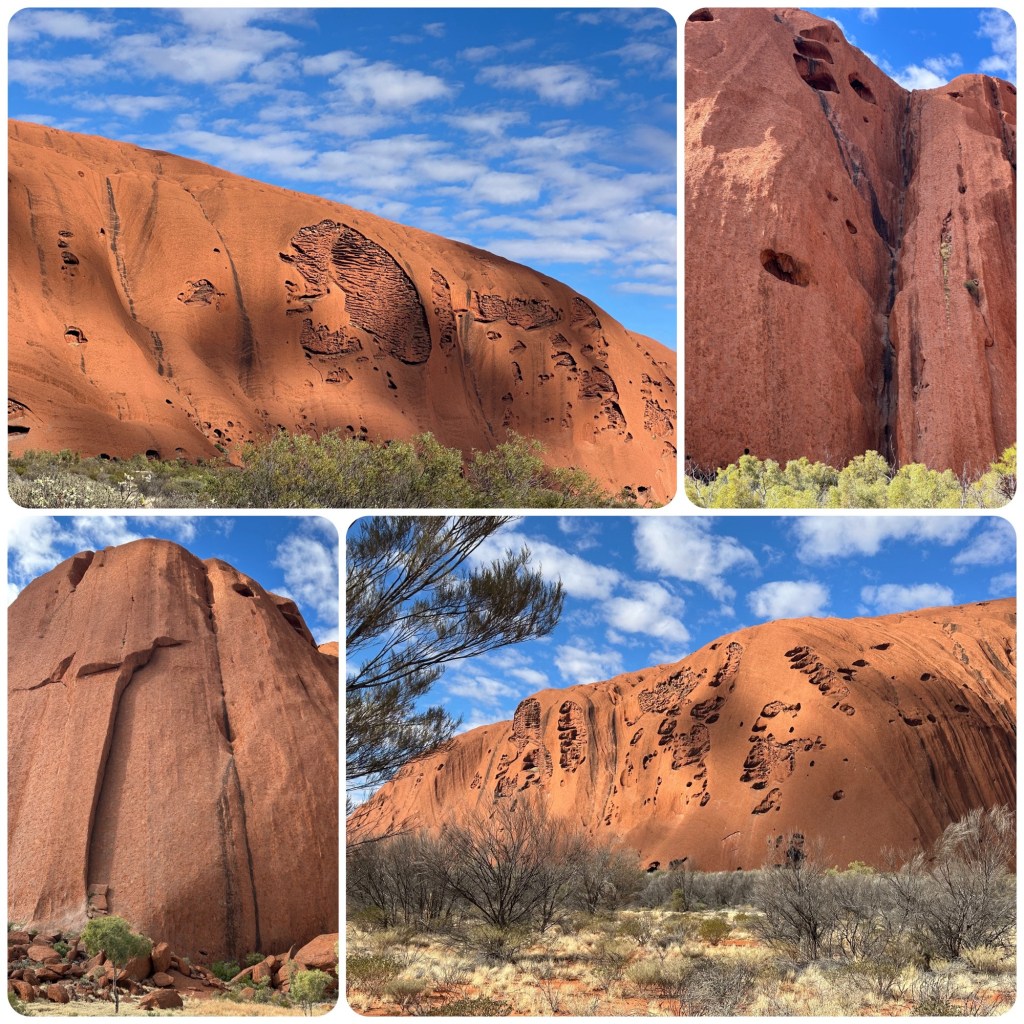
Snaps of Uluru

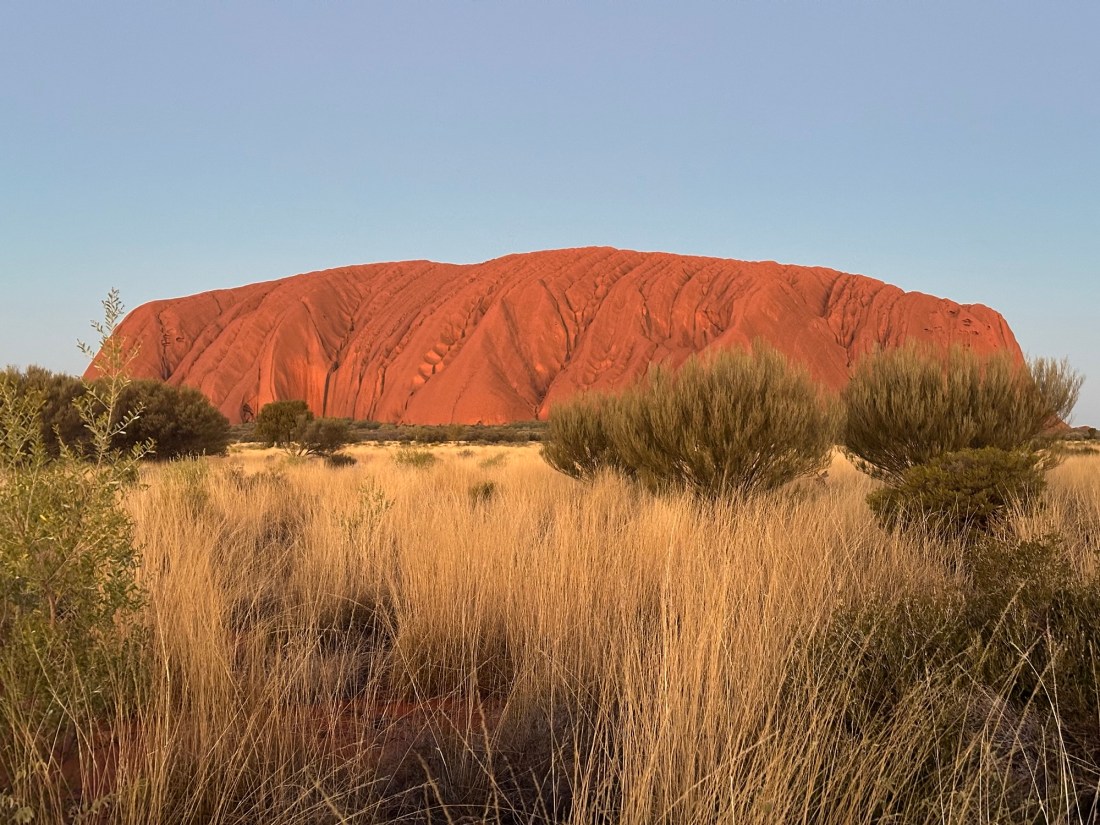
It’s a lazy afternoon for everyone with the kids heading to the pool for a quick dip before we take off to the sunset viewing area. We find a park and the kids find the viewing platform (the tailgate of the truck) and play with the digital camera as the sun sets. It always amazes me how the rock changes colour and tonight it almost glows as the suns last rays bring it to life and then it fades into darkness.

Sunset on the Rock

Back to the van for dinner and some sorting of photos, along with some laughs at the wobbly, blurry ones.

(P:- we wandered thru a souvenir shop or two didn’t need to buy as I still have my 1974 souvenirs – A Diggeredoo and some digging sticks – obviously buying direct from the local community ( still living in stick and grass lean to’s then) was a lot cheaper than souvenir stores nowadays! I recall paying $5.00 for the Diggeredoo (now over $500) and 50 cents for the digging sticks (now over $180). Guess what I still have them! Both never used. We are camped at Yulara Resort Campground, in 1974 we camped right by Ayres Rock and we could still go for a wander up it – went part way up in 2013 when I was here also. Now there is no touching, No climbing and about 1/3 of it a no Photo Zone! Every one has a different opinion and mine is it’s a shame we can’t enjoy what we like to do. It’s Amazing the memories that come back after so many years!

15th

This morning we are up early and heading out to Kata Tjuṯa. It’s a cool 14 with a very cool wind. We are doing the Waḻpa Gorge walk, along with several bus loads of other tourists. As we walk into the gorge the wind picks up and just about blows us off our feet. It funnels up the gorge and swirls around the end where it has nowhere to go. We don’t linger for long as the wind is too cold. Quite amazing to see that within 50 kilometres Uluṟu and Kata Tjuṯa are two very different rock formations. Uluṟu is sandstone and one solid rock and Kata Tjuṯa is Conglomerate sedimentary rocks which is many rocks fused together with silt and mud.
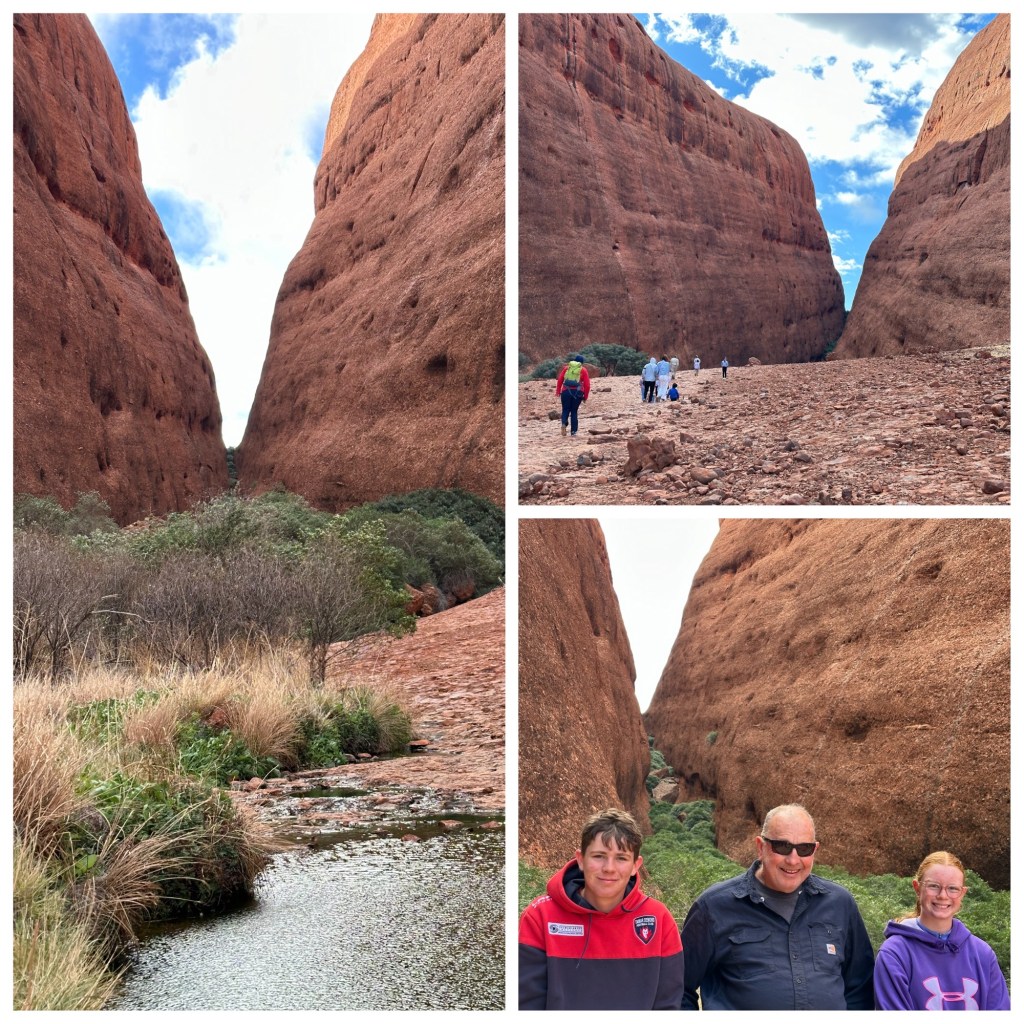
Waḻpa Gorge

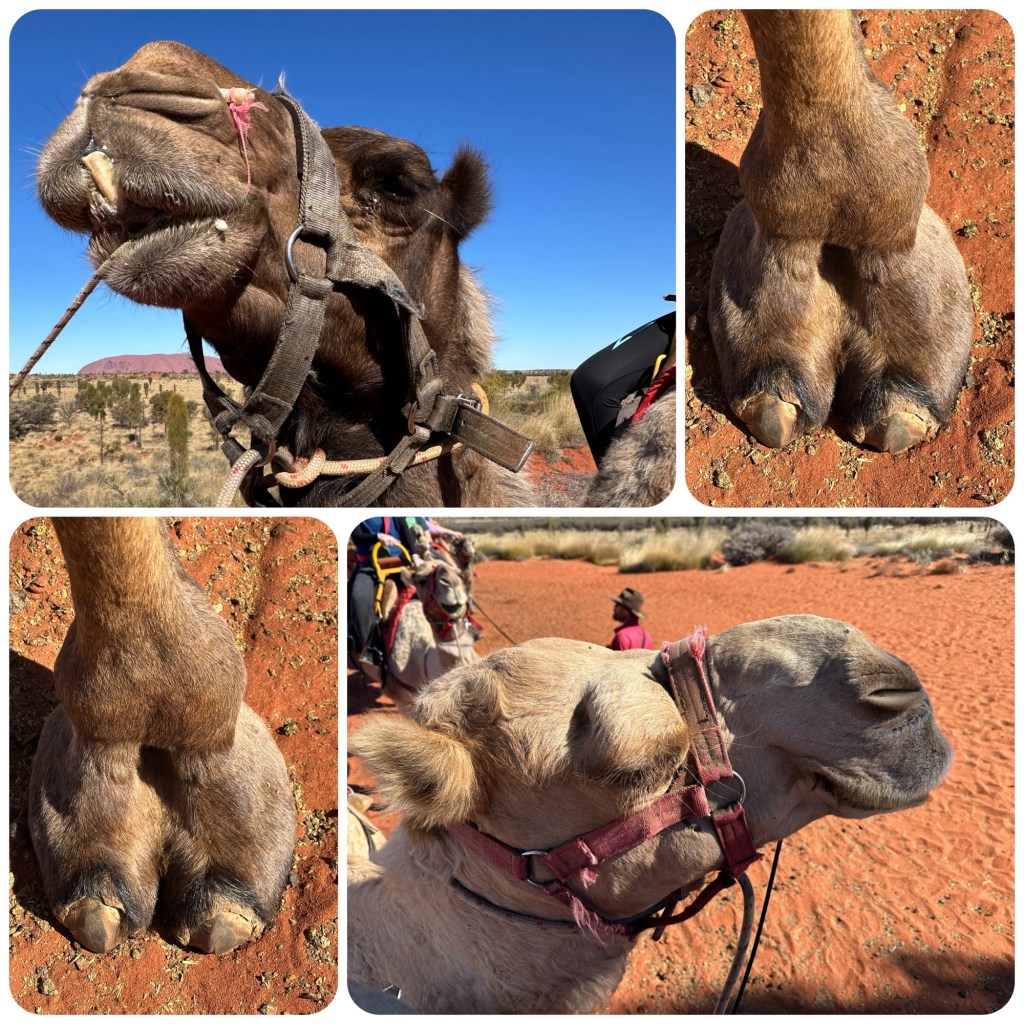
After lunch we are picked up at the shuttle bus stop and taken out to the camel farm for our camel ride. Both Hugh and Em have been looking forward to this and think it’s funny that Ma is going too. After a quick briefing we load up Philip and Hugh on Jed and Em and I on Tim Tam. We are out for a 45 minute ride which surprisingly we all enjoyed. Philips camel Jed spent the whole walk chewing and regurgitating food right next to me, making some awful noises, which the kids thought was hilarious.
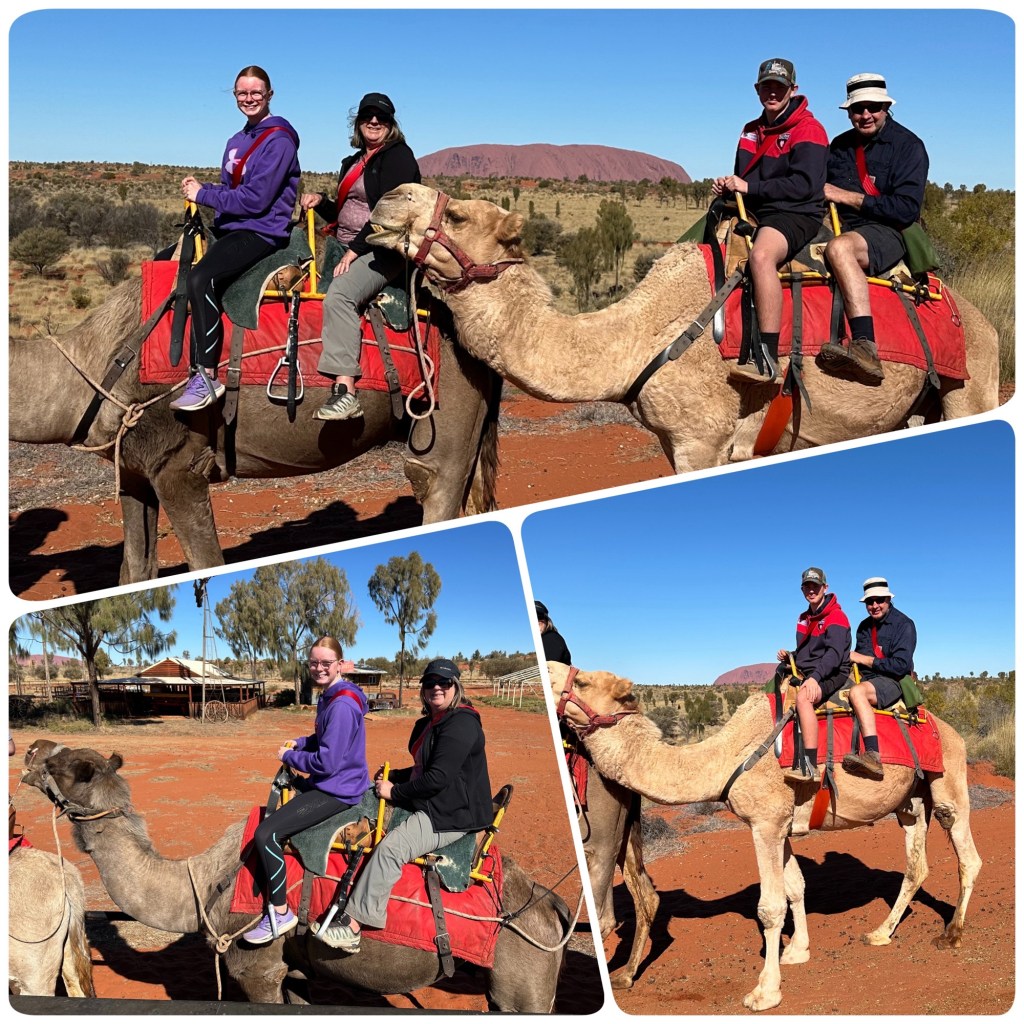
Camel Rides
Tim Tam (top), Jed (bottom)

Back to the van to pack up, kids have a swim and organise tea. We are off in the morning to our next adventure.
William Creek, Lake Eyre and Coober Pedy

July 9- 10th

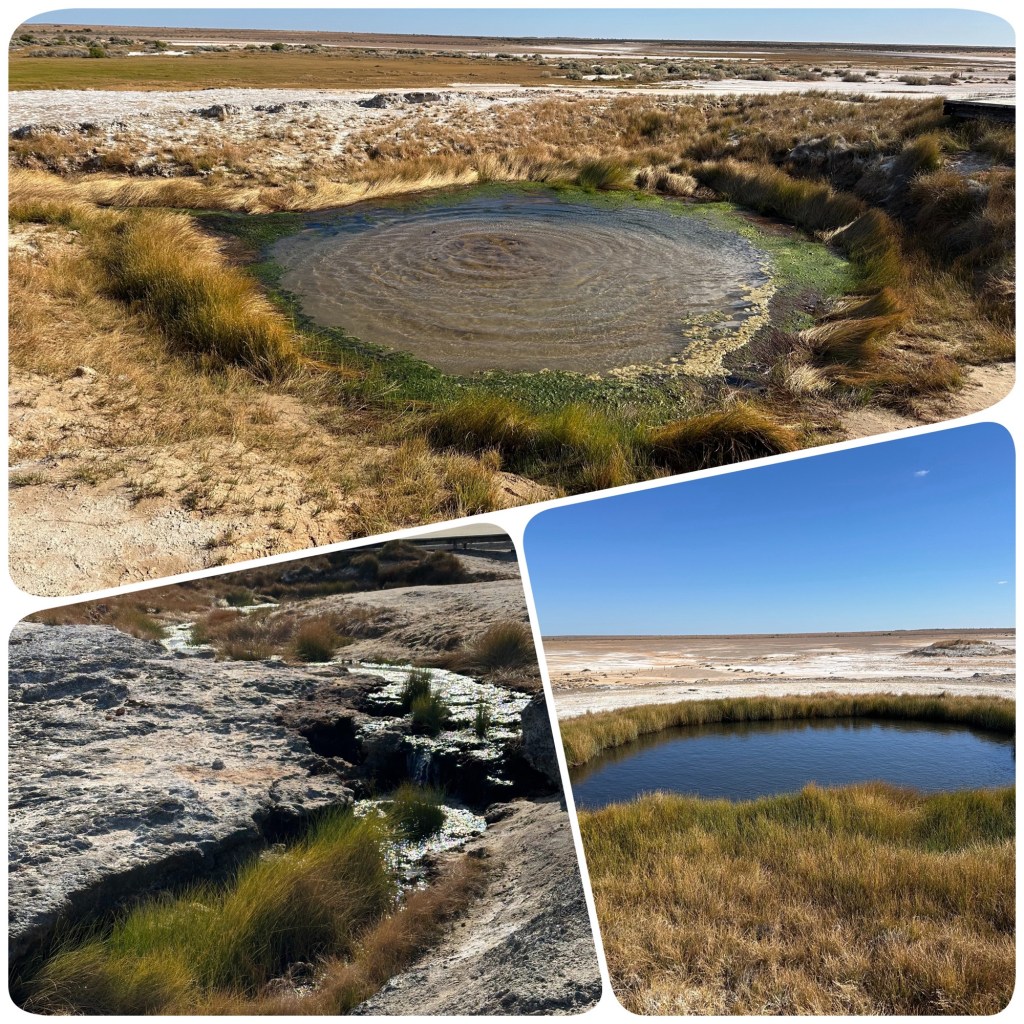
Blanche Cup and the Bubbler are two of the numerous mound springs that filter through the earths crust in this area. These small oasis are natural springs bubbling up from the artesian basin. The wetlands (although not very wet) provide habitat for native birds and animals in the area.

The Bubbler and Blanche Cup Mound Springs

(P:- Great to be doing a Central Aussie road trip again, there is something special about the “Outback”. Dirt roads and tracks, wildlife, cattle and sheep stations are all part of the attraction. Not to mention the fine red dust that penetrates every gap in a vehicle or caravan, this dust seems all but impossible to remove completely once it has invaded the vehicle).

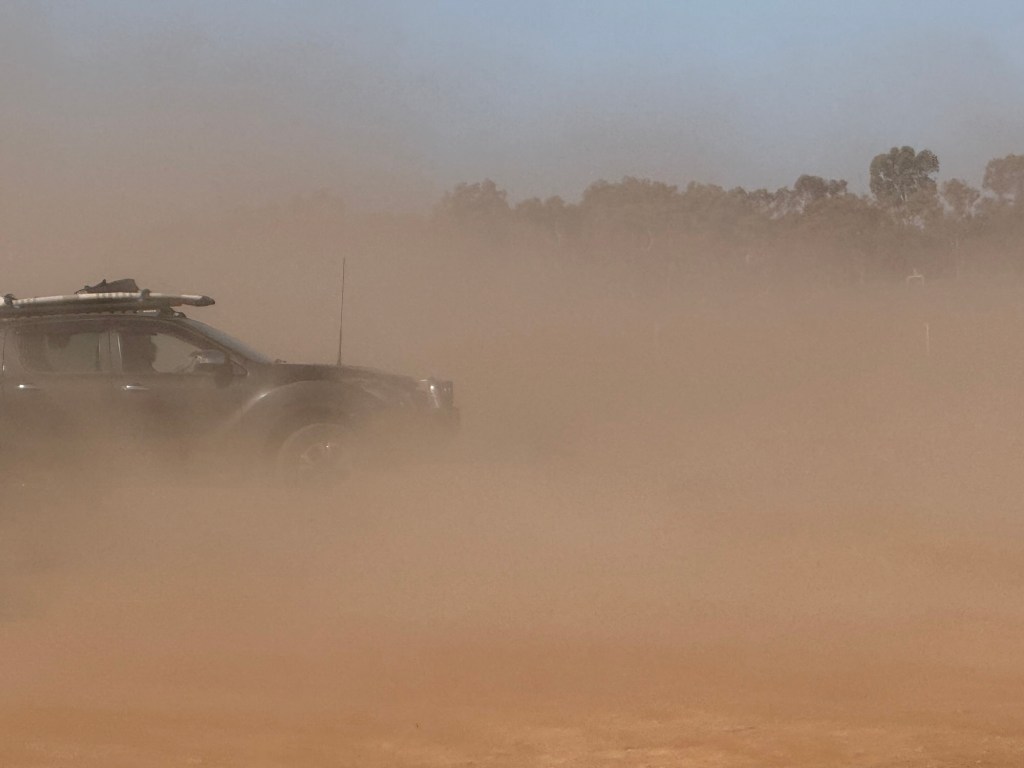
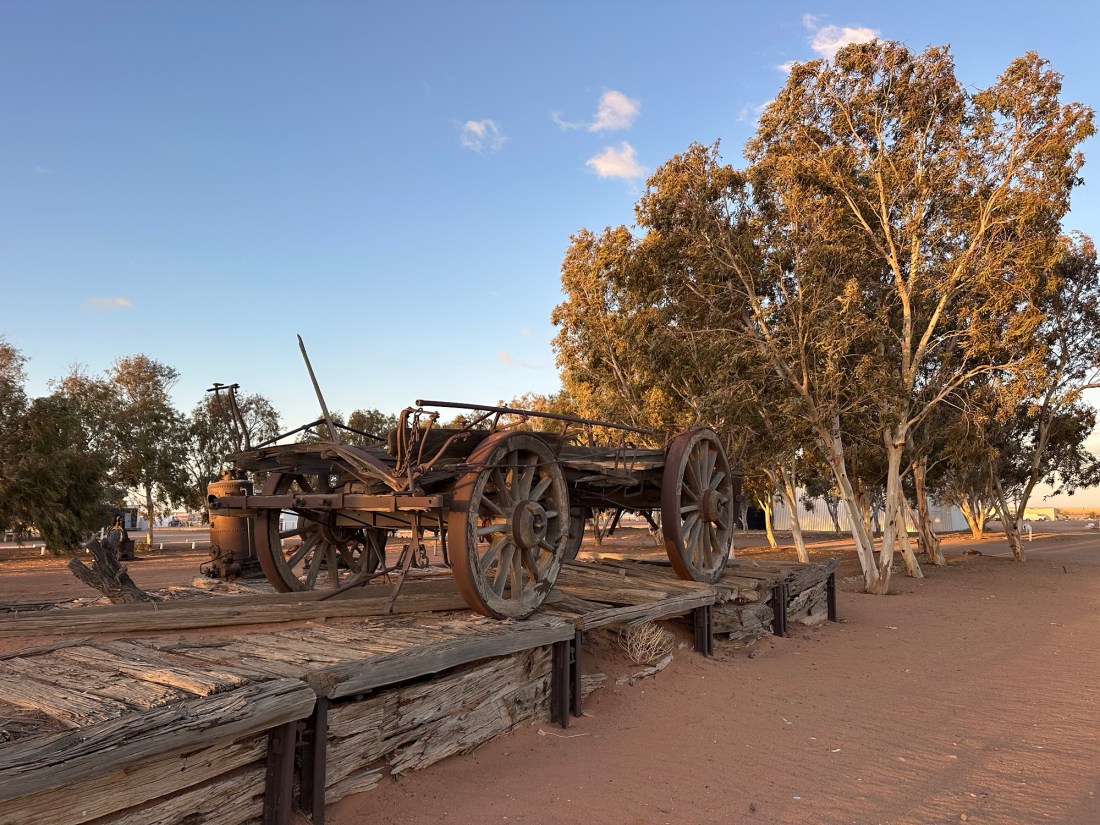
William Creek is our overnight stop and we arrive just after midday and settle into the park. (P:-The Author must have been asleep when we stopped and viewed South Lake Eyre -still a dry salt lake as no water has entered it from the recent flood waters filling Lake Eyre North). After setting up we spend the afternoon in the van while a wind storm blows dust around us and through everything. Blew the neighbours tent down and sand through his open door. We realise how small the van is when we are all cooped up for the afternoon. Em and Hugh claimed our bed and played UNO for ages. Philip and I made a break for it late afternoon to go and check in for our flight tomorrow. Not pleasant being out in the cold dusty wind. Weather forecast is suppose to be much better tomorrow. Over to the William Creek Hotel for dinner along with many others staying in the park. A lovely meal and some great momentos on the walls and ceiling.

Dust Storm
William Creek Hotel

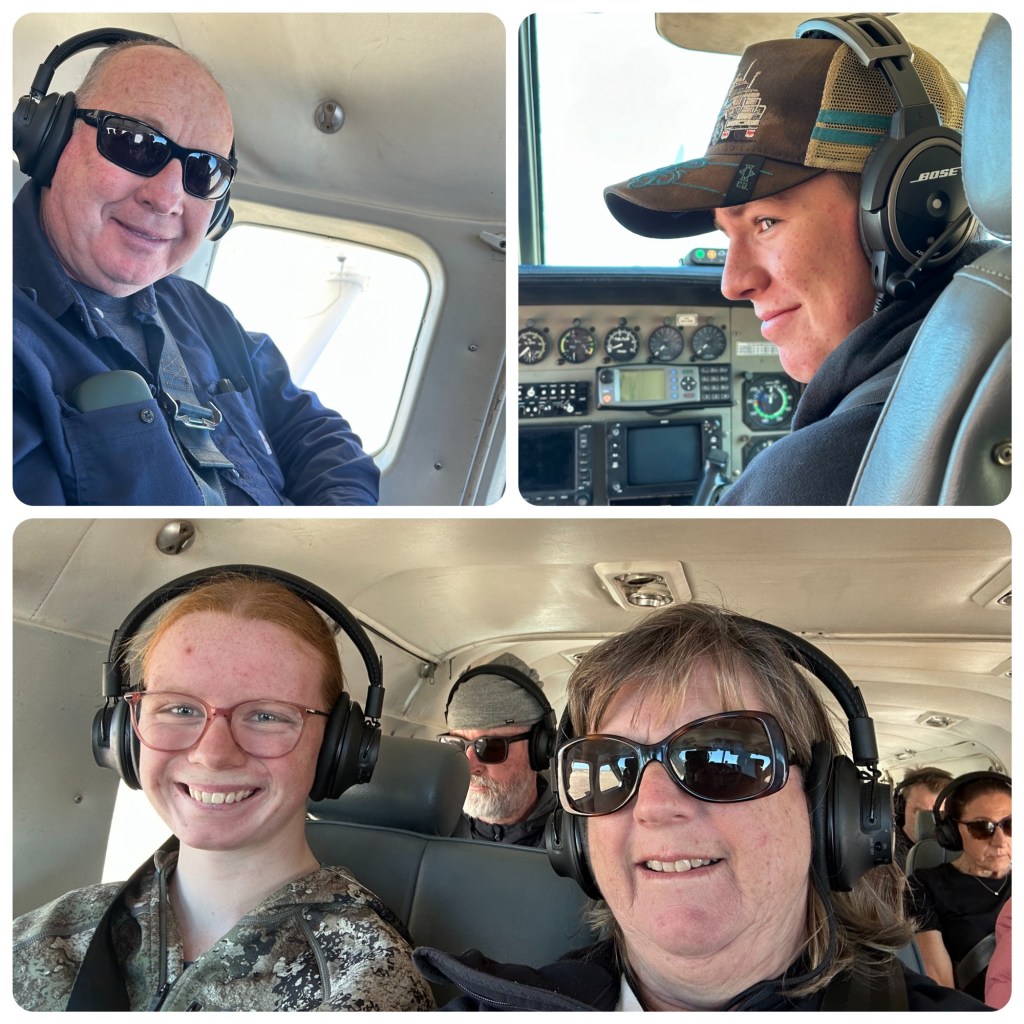
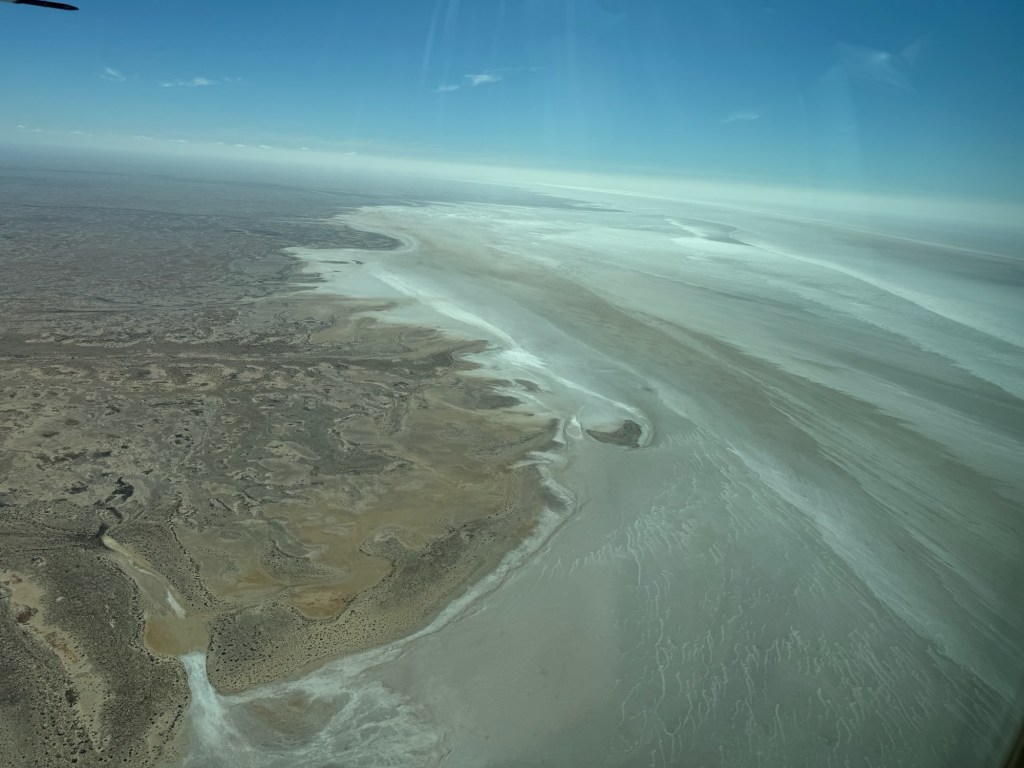
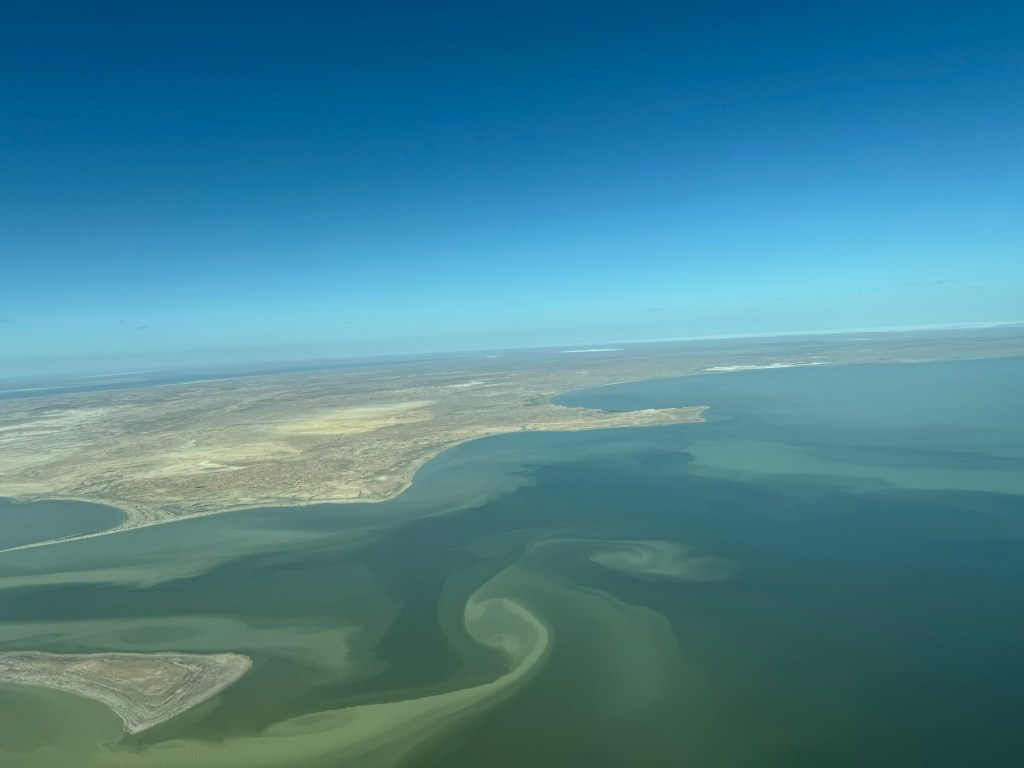
Our flight day dawns clear and still, thankfully. We pack up and park outside Wrights Air ready for our flight at 11am. Alex is our pilot and after our safety talk allocates our seats. Hugh is lucky enough to have the front seat with Em, Philip and I next row back. We are doing the deluxe, 2 hour flight and once we are in the air we start to see the vastness of the area and how small William Creek is. Normally has 6 permanent population and over the tourist season they have 35. Our flight takes us out over the southern end of North Lake Eyre, then over the Warburton Groove along the Warburton River before flying over North Lake Eyre down the Warburton Cannel and then the islands long the southern side. We could see South Lake Eyre in the distance which still has no water in it. The water colours, sand colours, creeks and washouts make amazing patterns. It is expected to fill this year for the 4th time in recorded history.

Ready to fly with Wrights Air

(P:- We spot a few squadrons of pelicans, the numbers of these are expected to increase massively over the next few months. Some how they know the lake is filling and we were told they even fly in from South East Asia and Japan! Evidently they are smart enough to know there is water in the lake and a supply of fresh fish but when the water dries up and food diminishes they perish ( not smart enough to fly off to another location) nature is peculiar with how it works. Worth noting that 17% of Australia drains into lake Eyre it’s the lowest point in Australia at -15m (below sea level). Once the waters from the rivers feeding it enter the lake evaporation is the only way this lake dries out. We are privileged to see it filling with water- a rare occasion)

Lake Eyre
Warburton Groove

On our return to William Creek we load into the car and we are off. It’s lunch on the run today as we have to make it to Coober Pedy today. About 160k. Our drive takes us through Anna Creek Station, the largest Station in the world. It’s a pretty barren area with 1 head of cattle per 1 square kilometre.

11th July

Coober Pedy

We are doing Tom’s Opal Mine tour this morning. Quite an involved tour lead by Mila who has lived in the area for 55 years and has mined here most of that time. She had some stories to tell but wasn’t the best guide. After the tour we enjoyed scones and jam and cream and hot drinks before checking out some jewellery and making some purchases.

Back into town for some lunch and then to Fay’s Underground Home. Amazingly 3 women excavated this home with pick and shovel, adding extra rooms as necessary.

Faye’s Underground Home

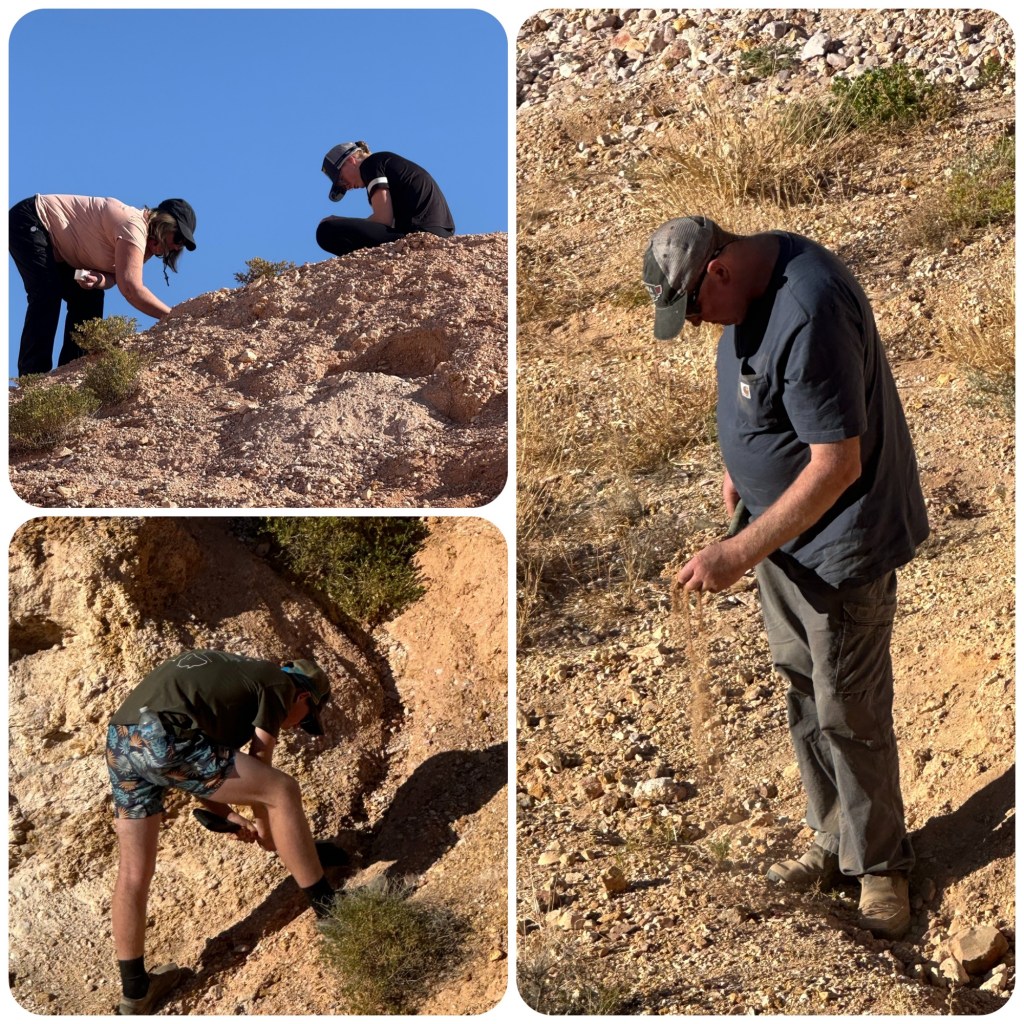
After trying some noodling without any luck we headed back to the van to catch up on a few chores before dinner.

Trying our luck at Noodling

Heading to South Australia

4th July, 2025

Departure day on the Spirit of Tasmania. Two very excited young people and a couple of eager to travel adults. After a short delay at departure due to a medical emergency we were off on a very smooth sailing. Neither Em or Hugh were impressed that we had a 5.45am wake up call but this meant we we on the road early. We were 4th off the ship and on our way.

First stop is Bendigo for breakfast with Kevin and Isabel and to check out their new home. Very nice home and a lovely couple of hours catching up before we hit the road and head towards Kaniva our stop for the night.

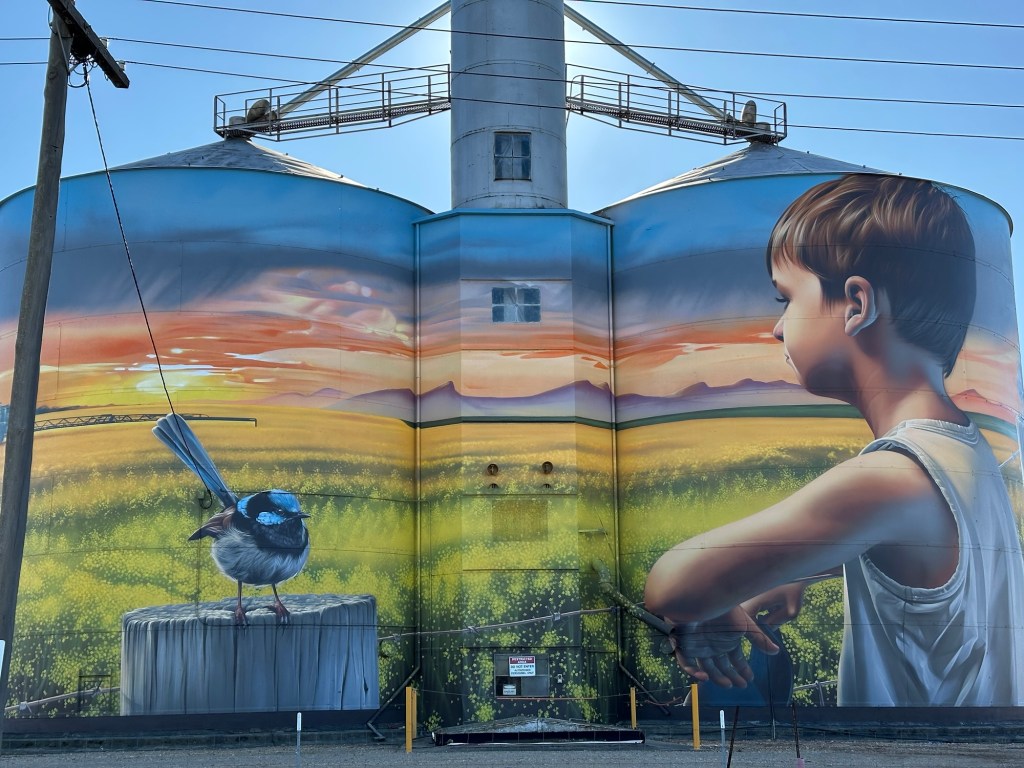
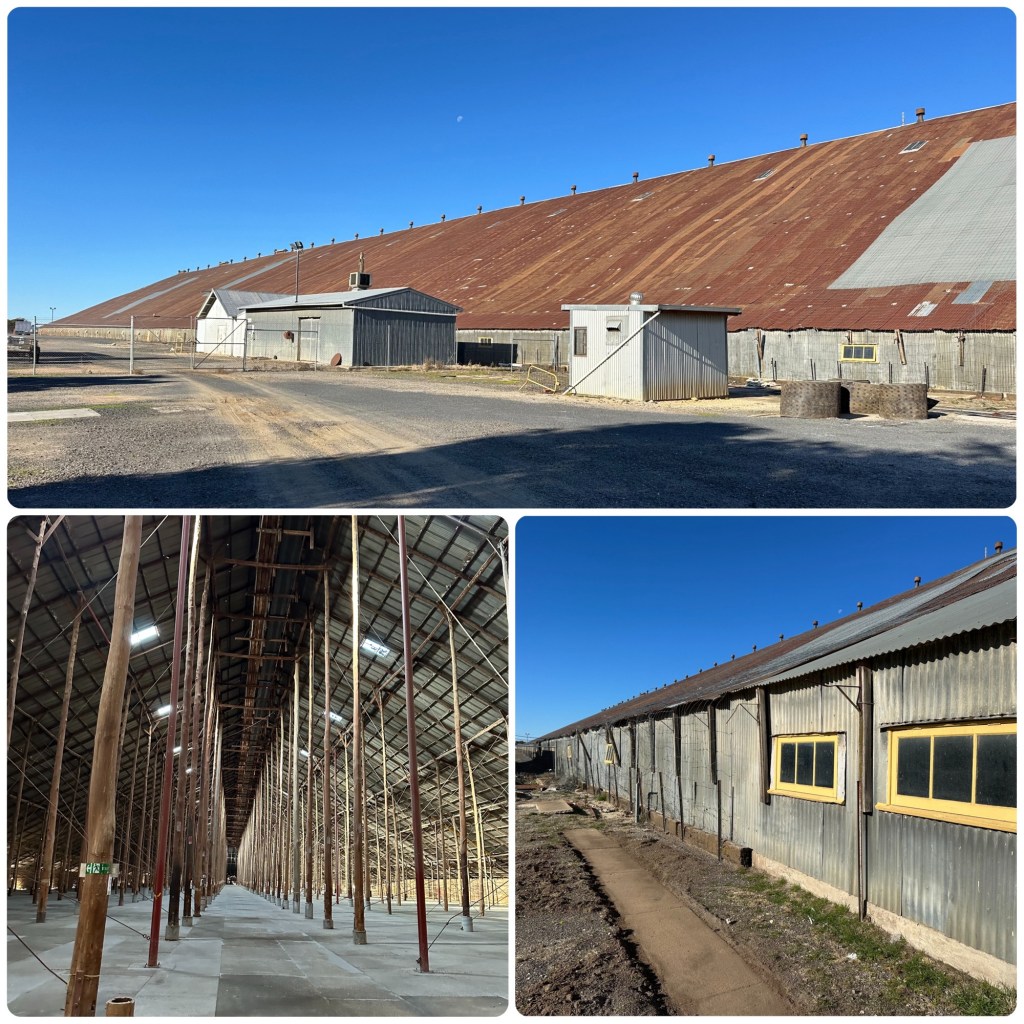
A stop at Dimboola to see the Silo art and another stop at Murtoa to visit the Stick Shed, a very interesting grain store. This is the only remaining grain store of this type. It was built during World War Two. It was constructed over four months in 1942 and was designed to store 92 500 tonnes of wheat. It measures 265 metres long, 60 metres wide and 19 metres high. Inside it has 560 wooden poles for support which are made from unmilled mountain ash, laid out in 10 rows. It is a very impressive building.

Dimboola Silo Art
Murtoa Stick Shed

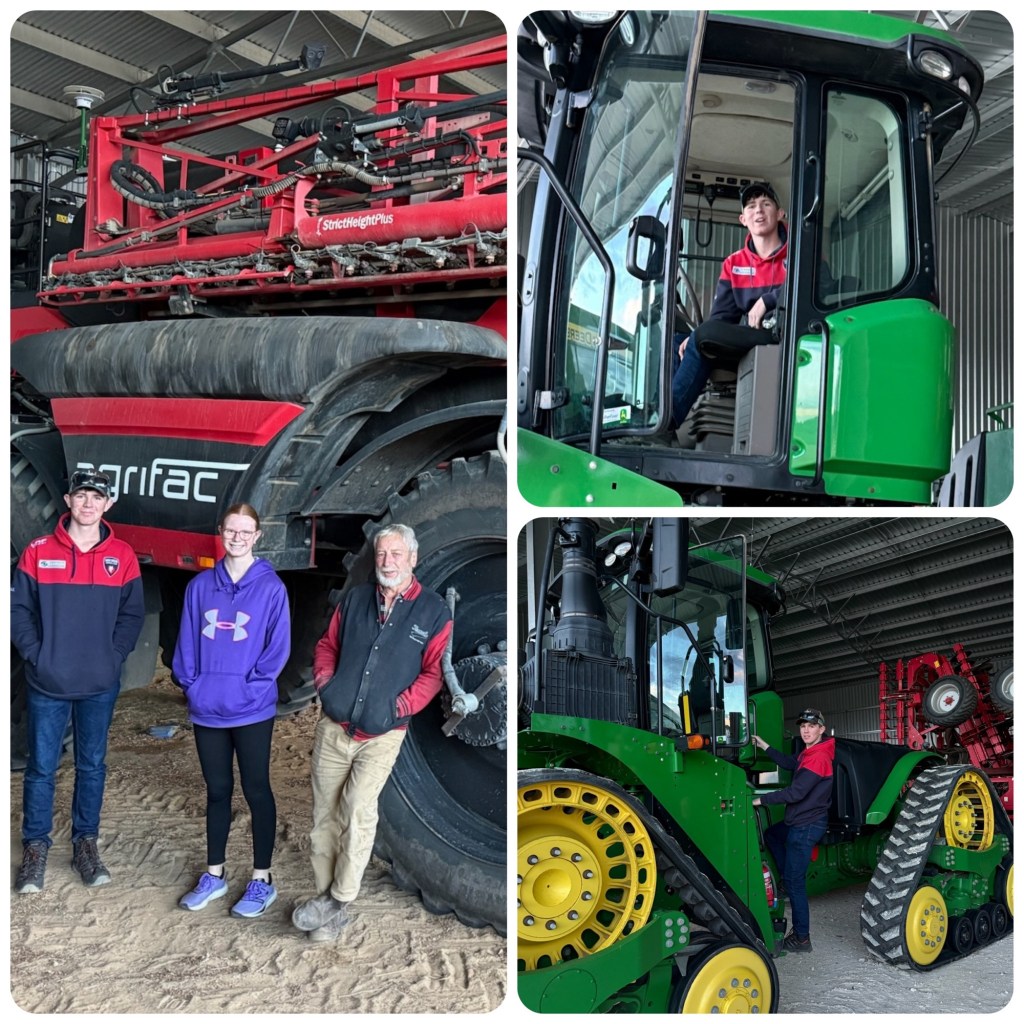
Then on to Kaniva where we are staying with friends Kerryn and Alwyn. Kerryn informed me that we had been friends for 52 years. And we still had plenty to talk about. Philip, Alwyn, Hugh and Em went for a tour of the farm and some of their machinery. Hugh checking out the cabs on the harvesters and sprayers. It’s always great catching up and sharing our travels with each other. We may even cross paths later in our trip.

6th July.

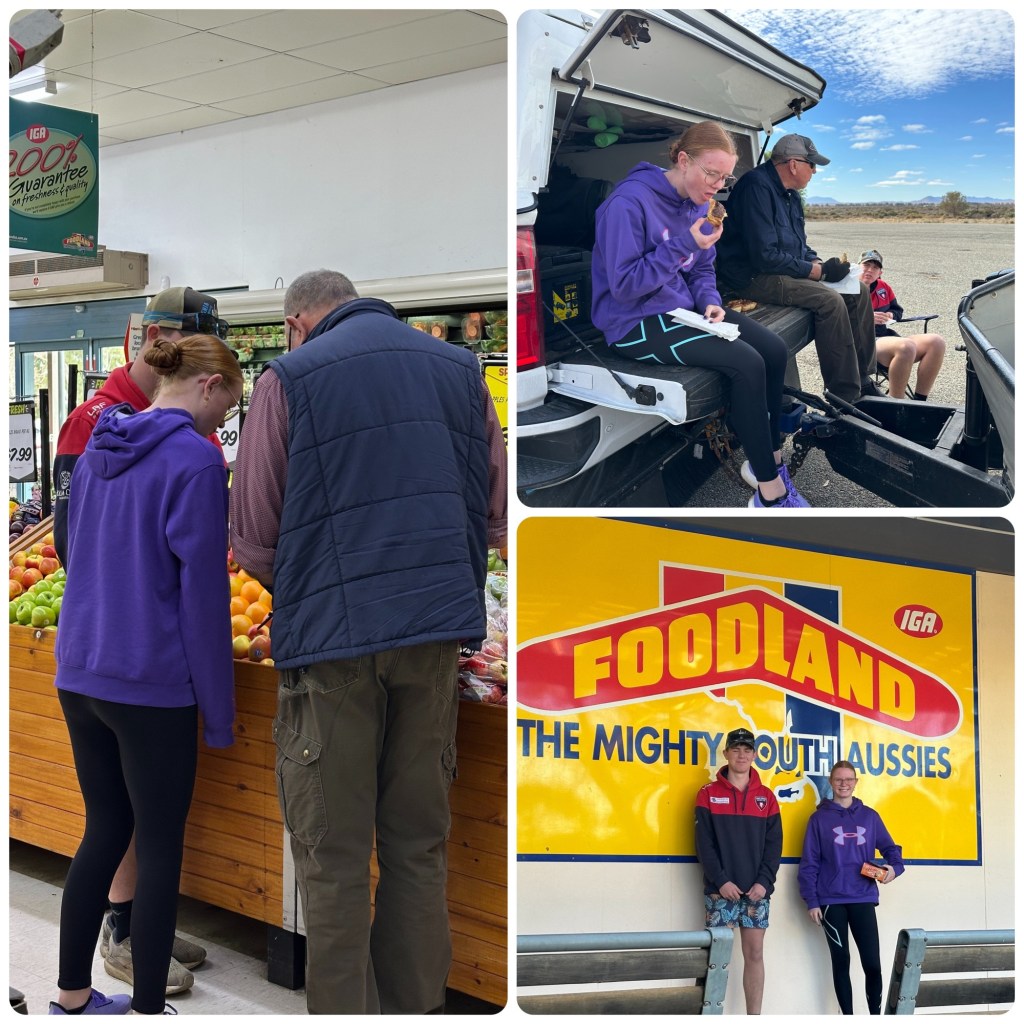
After a relaxed breakfast and more talking we left to head into South Australia and then north to Burra. Stopping at Bordertown for groceries, had to stock up on veggies etc as we couldn’t bring any from home. We had a pretty long day arriving in Burra about 4.30, ready to start the real touring tomorrow.

Supermarket discussions, tailgate lunch and ice creams at Leigh Creek

7th July.

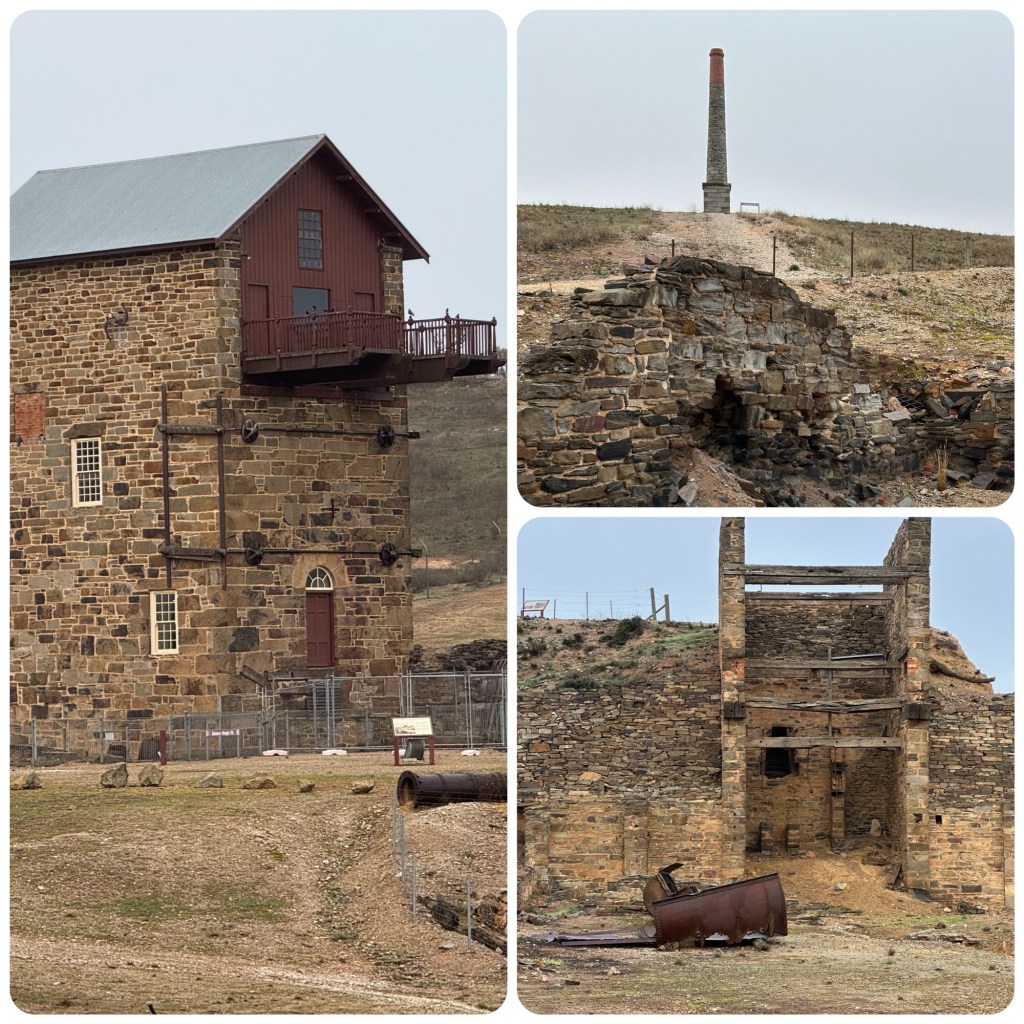
We head up to the old Heritage Copper Mine for a look around before heading north towards Peterborough, Orrooroo, Hawker, Parachilna and Leigh Creek. Lots of emus along the roadside with goats and sheep and a few roos. We kept Em and Hugh busy with them googling history of the areas and station details which made the trip more interesting. We have learnt from Em that Sir Sydney Kidman had a one eyed horse ( she can remember this from a podcast listened to 3 years ago), drove past Sir Hubert Wilkins birth place (he was a polar explorer), many stations around this area have around 30000 acres and Leigh creek has a population of 92 and still has an operational school with 42 students.

Burra Mine

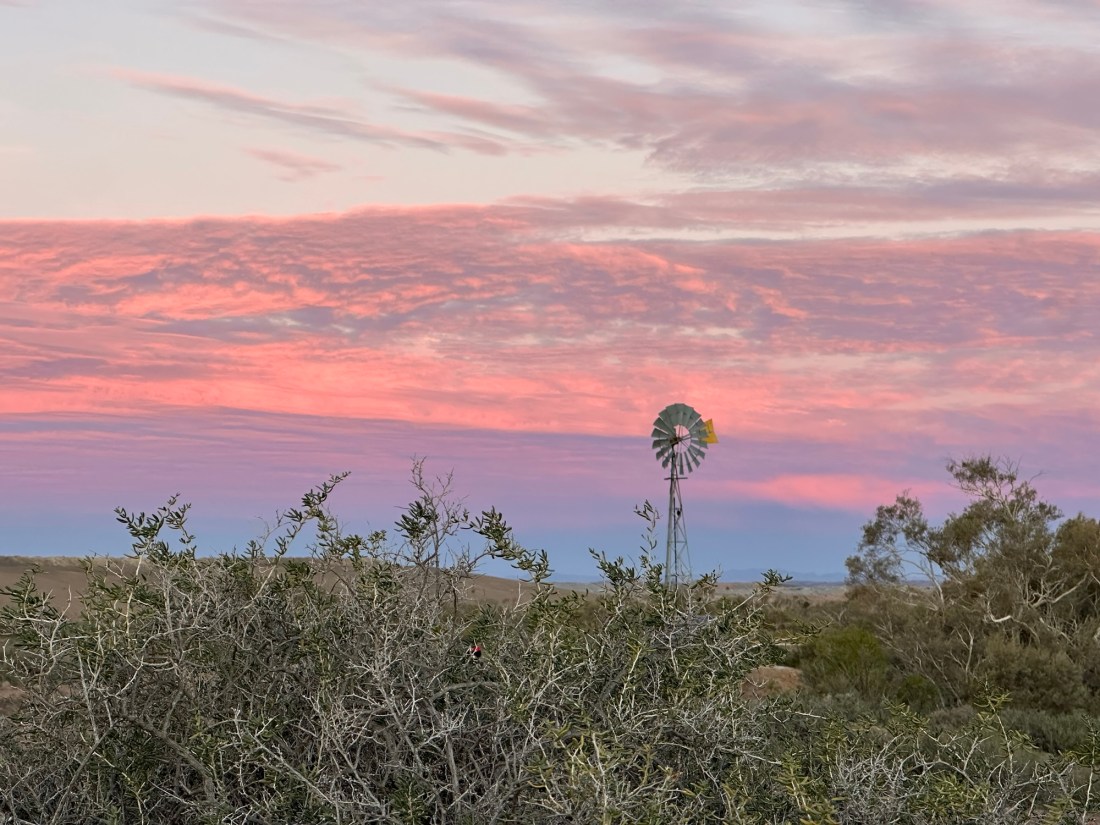
Tonight’s bush camp is just north of Leigh Creek and we were blessed with a gorgeous sunset.

Leigh Creek Sunset
Old Building by Our Campsite

8th July

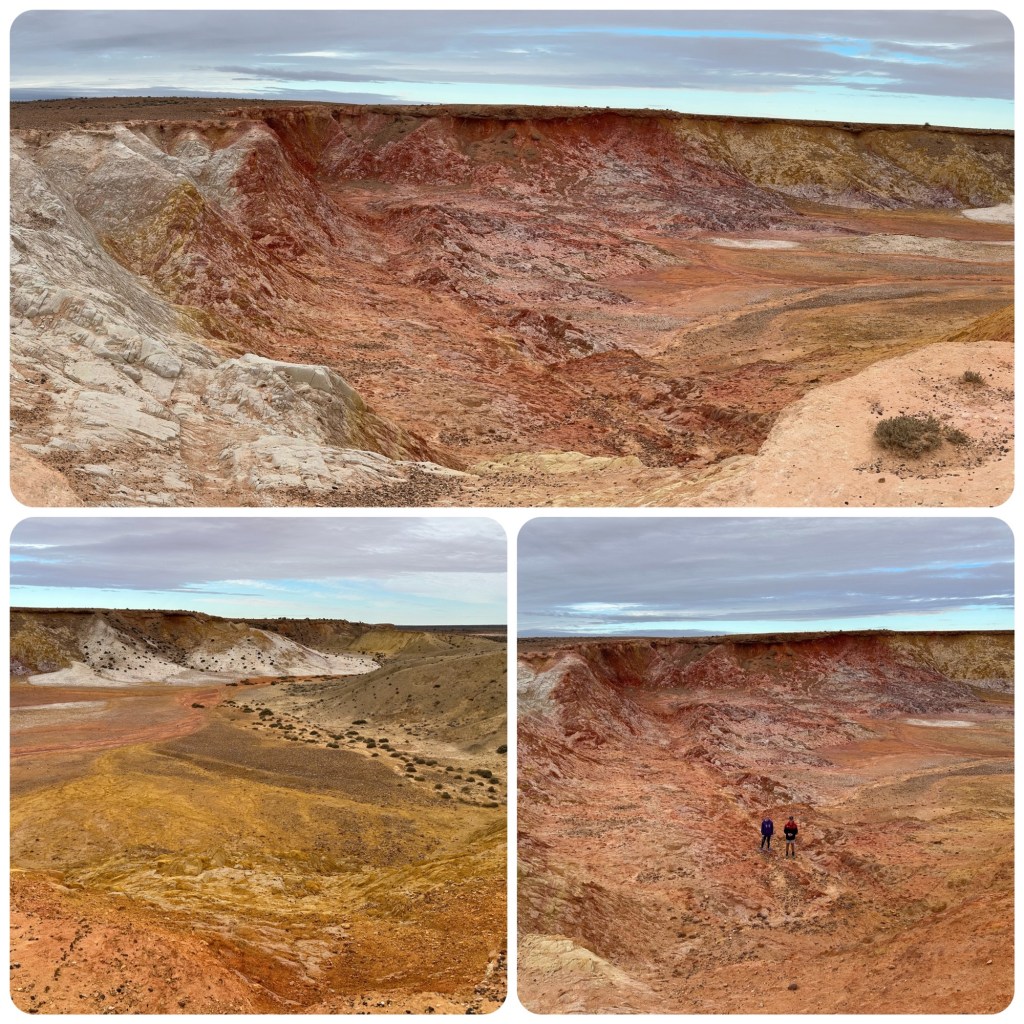
First stop today are some Ochre Pits on Mundownda Station just north of Lyndhurst. These are stunningly coloured cliffs with a palette of rich Australian colours from reds to browns, yellow to white. The cliffs are clay with ferric oxide giving the range of colours. The colour is darker and redder with higher levels of iron oxide, the white has little or no iron present.

Ochre Pits

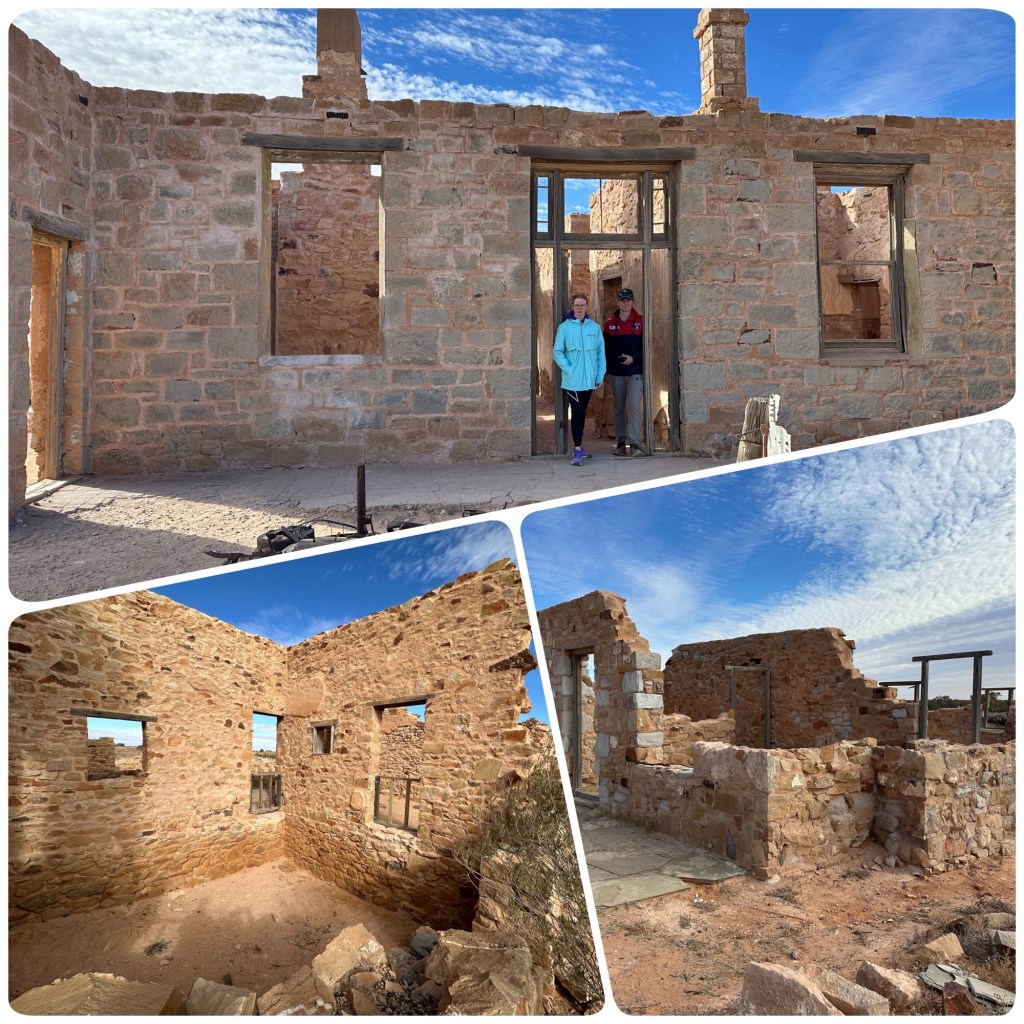
Next stop is Farina, an abandoned town that is now being preserved. The highlight of this stop is the underground bakery. And of course we had to make some purchases. Boston buns, pasties and sausage rolls and a pull apart loaf.

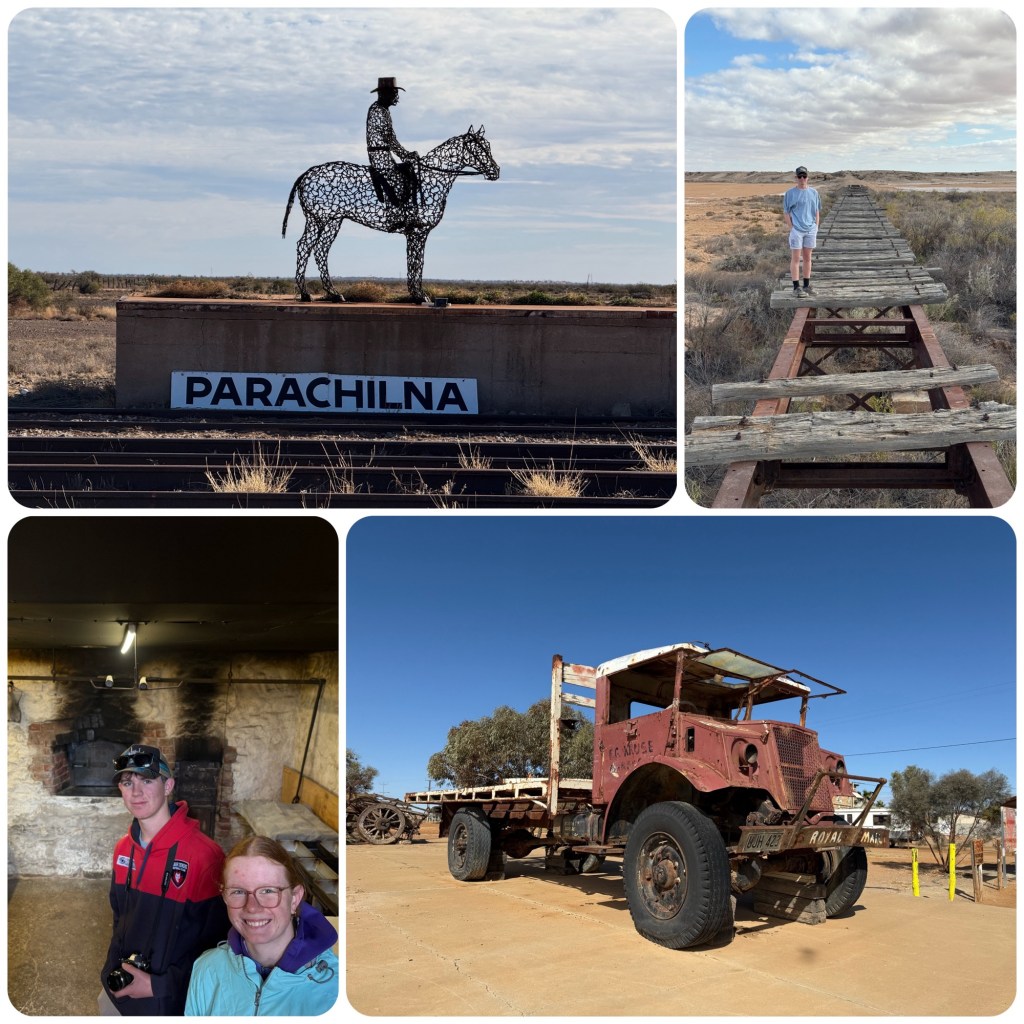
At Marree we wander along the old Ghan rail line and check out Tom Kruze’s (the Birdsville Mailman) truck and some display boards about Lake Eyre, then out to the cemetery to see some of the old graves. Here the area is divided into European, Aboriginal and Afghan which is quite unusual for a cemetery in Australia.

Farina Ruins

Our final stop for today is Coward Springs, where luckily we have a site booked as the campground is full.

Right now the cooks are in motion preparing dinner of Red Curry and Gyozas before we head down to the springs for a soak.

Old Ghan Rail Bridge, Farina Underground Bakery and Birdsville Mail Truck