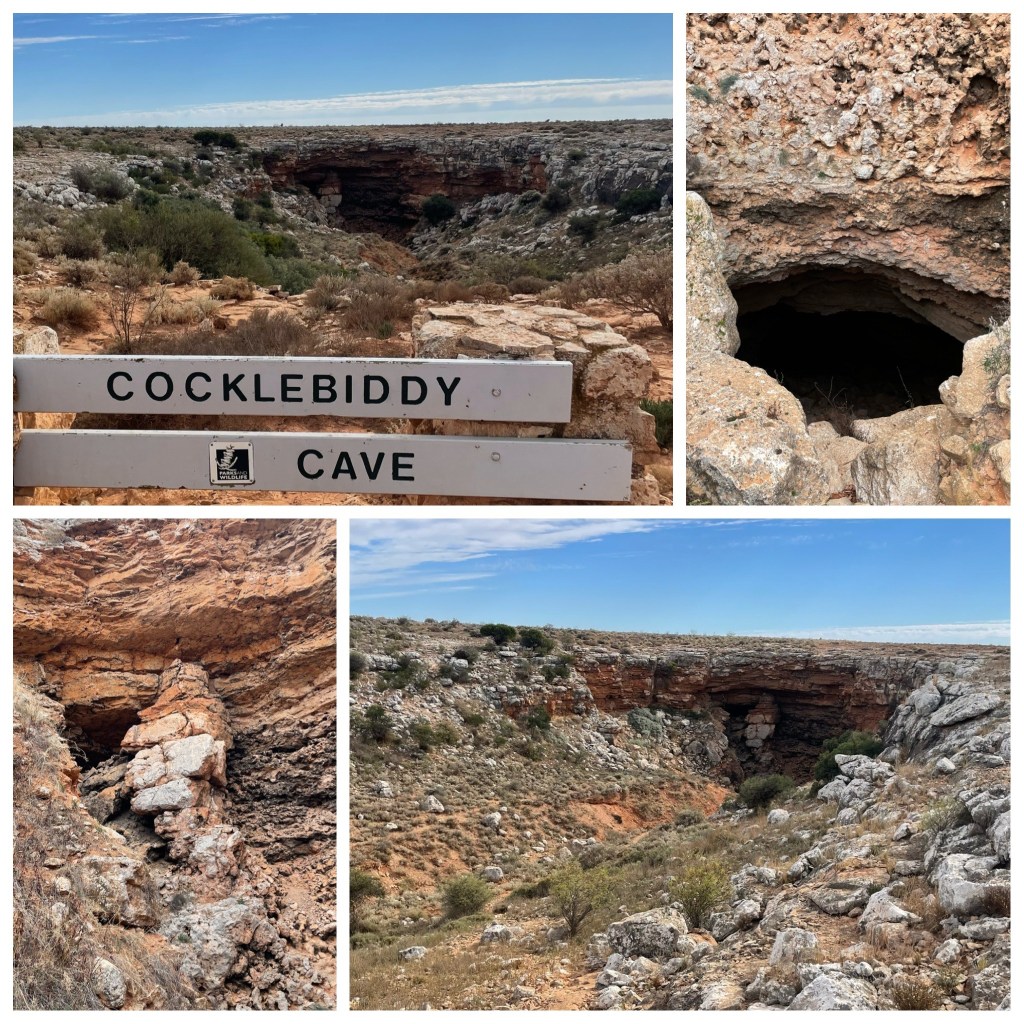
Cocklebiddy Cave

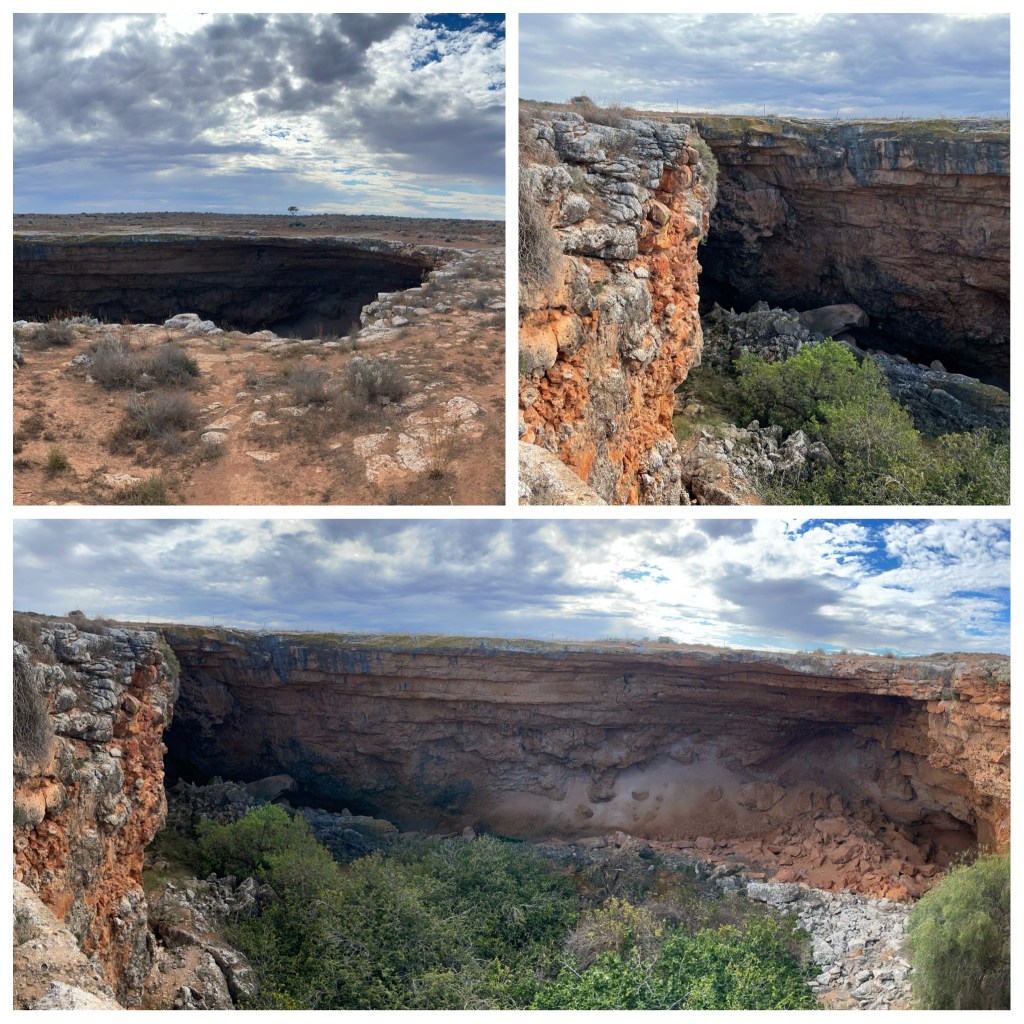
Cocklebiddy Cave is one of the hundreds of caves that dot the Nullarbor Limestone “Karst” Plain. This is the largest area of limestone in the world. Cocklebiddy is a sinkhole created when the cave roof collapsed to reveal massive underground caverns and more than 6 kilometres of underwater passage which have been dived by cave divers.

When we travelled this route 25+ years ago we were able to walk about 300 m down into the cave to the waters edge. Unfortunately today we couldn’t do that because of rockfalls and the instability of the rocks around the entrance. We could still walk down part way and look down into the cavern. It took us an hour to travel the 8 kilometres across salt bush plains into the cave site. There is no sign of the cave until you are almost on it. This is definitely not a regularly visited site with no signs on the Highway to even show its there (pleased we have live GPS off-road maps in front of us showing many unsigned places of interest).
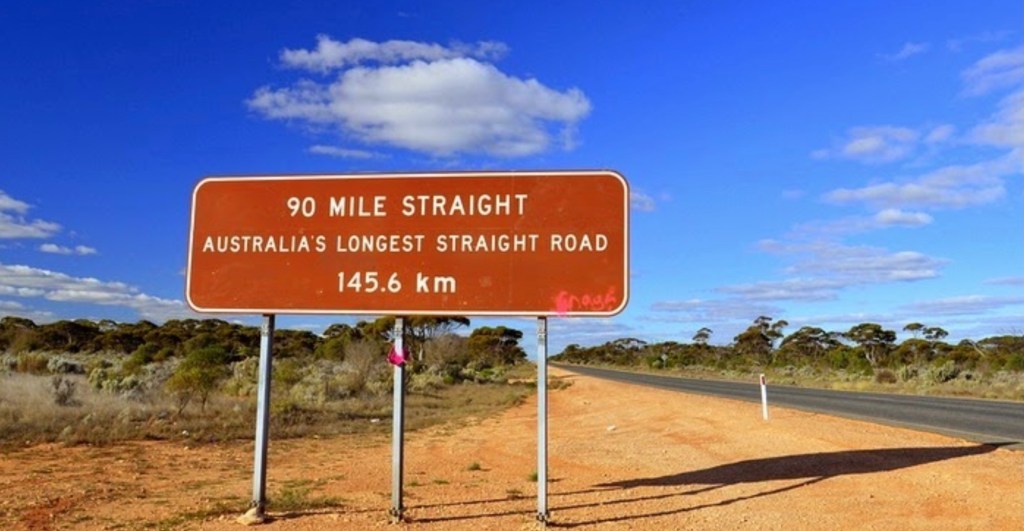
90 Mile Straight (145.6 kilometres) stretches between Caiguna and Balladonia. And now it was my (Judith’s) turn to drive. This should be easy. No corners, little traffic, good road, good music, Philip snoring in the passengers seat. What else could I want. This straight is regarded as the longest stretch of straight road in Australia, and one of the longest in the world.
We stopped for the day just east of Norseman with the intention of doing a short tourist drive around the Dundas Coach Road Heritage Trail in the morning before driving on to Kalgoorlie. It started off well, we stopped at the first point of interest and then followed the road for about 500 metres before coming to a Road Closed sign due to the rains they had a week ago. Oh well on the bucket list for next time.

Now we are settled into Kalgoorlie for a few days to explore this area. First thing Philip found was a Market/Swap meet on tomorrow morning 200 metres up the road. Guess we will be perusing the stalls there.
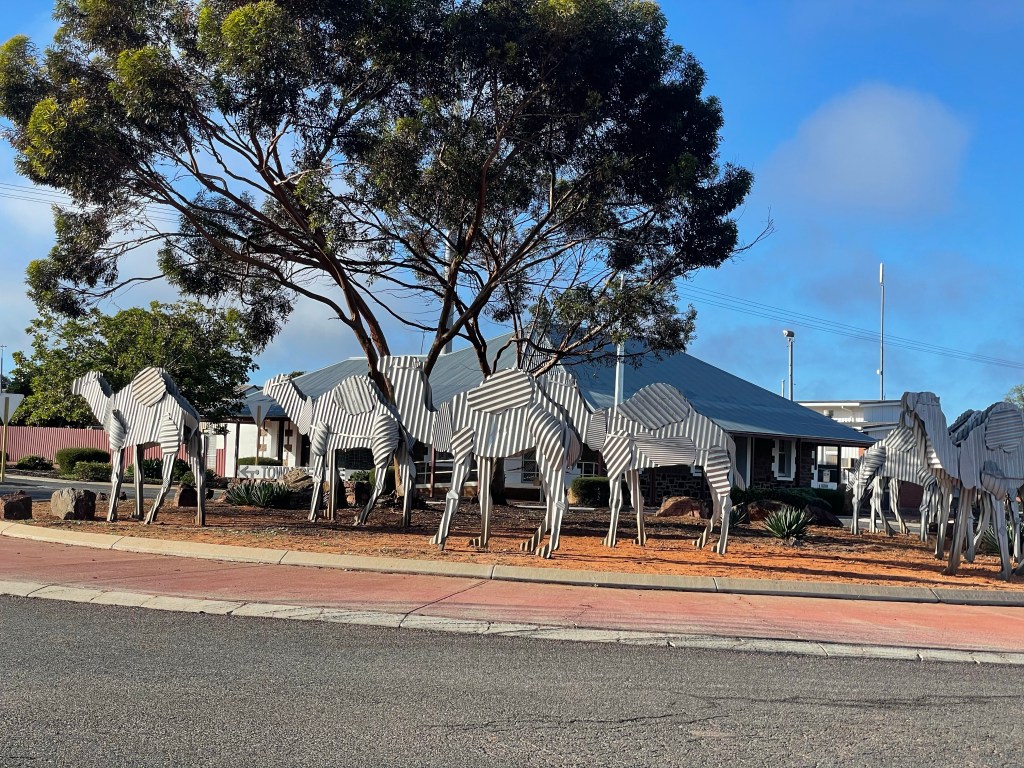
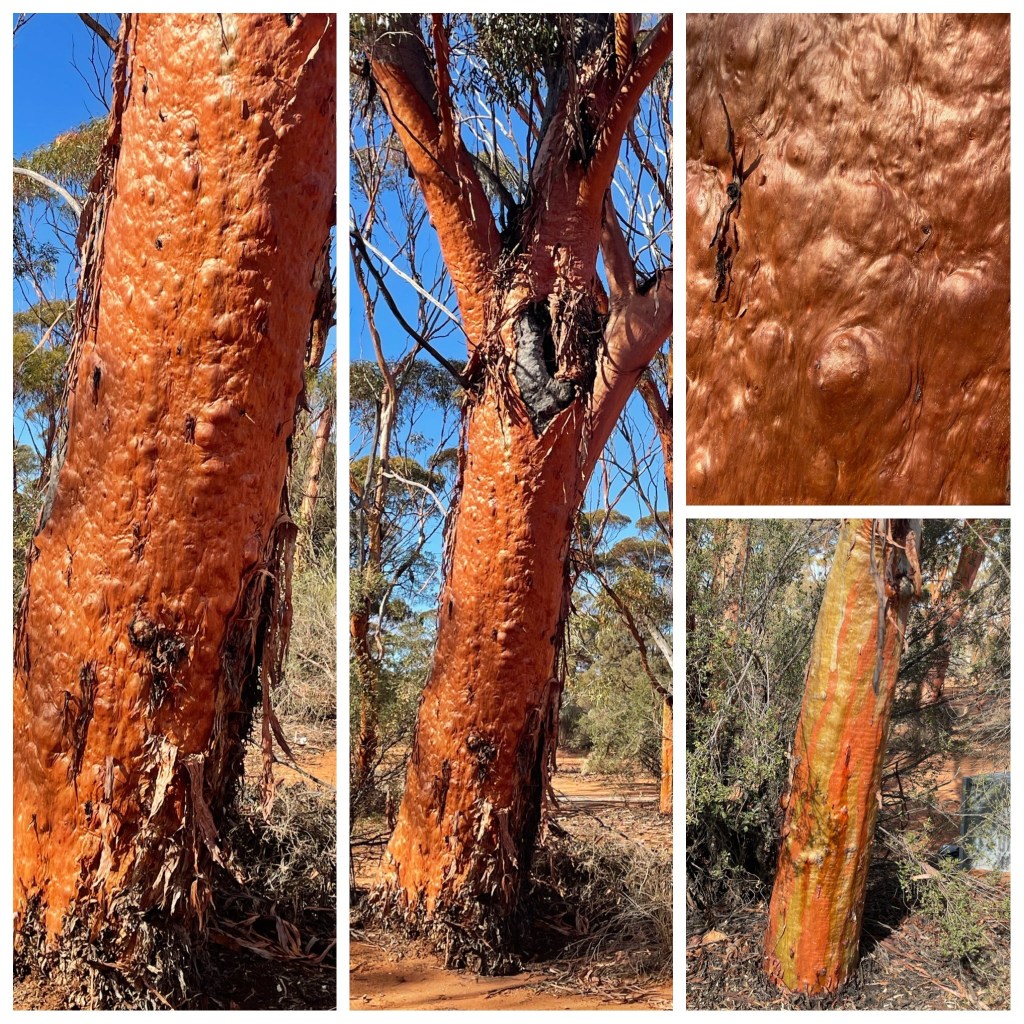
Camels in Main Street of Norseman
Salmon Gums along the Roadside

Turning Back Time (Continued)

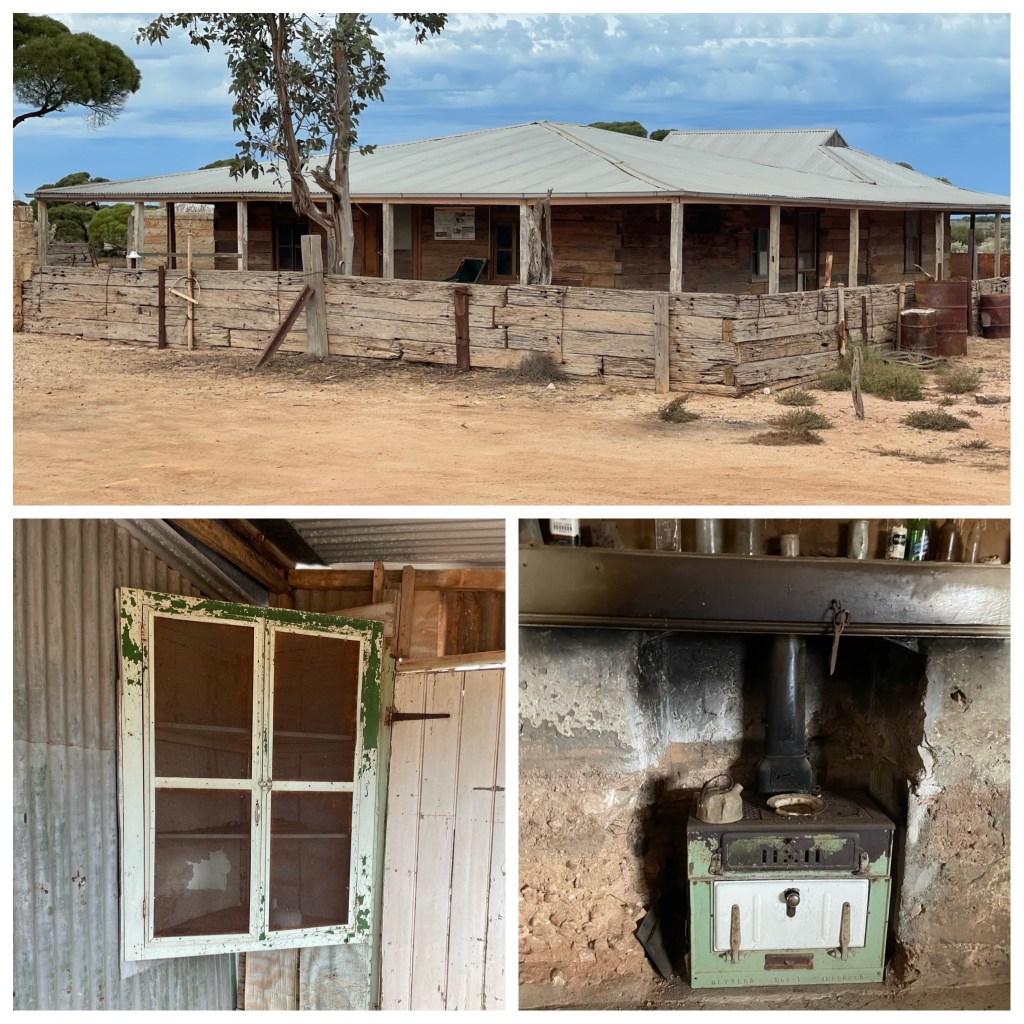
Koonalda homestead was leased by the Gurney family from 1938 to 1988. This station was feasible because water for their stock was pumped from Koonalda Cave, part of the Nullarbor limestone cave network, into above ground storage tanks. The homestead and out buildings and some fences were built from sleepers transported from the Trans Australia railway line at Cook some 175 kilometres away and were transported 20 at a time in an ancient small truck on rugged tracks. The timber windows and some doors are recycled from the old telegraph station at Eucla. The homestead is a rare example of World War 11 construction in the outback. Koonalda was South Australia’s most western pastoral property for 50 years. In 1989 it became part of the Nullarbor National Park.

The property is 1124 square miles and was started by Cyril and Audrey Gurney. They raised 6 children here. During her time here Audrey ran the household, nursed the travellers along the Highway, taught her children, was Station Cook, Baker and numerous other jobs.

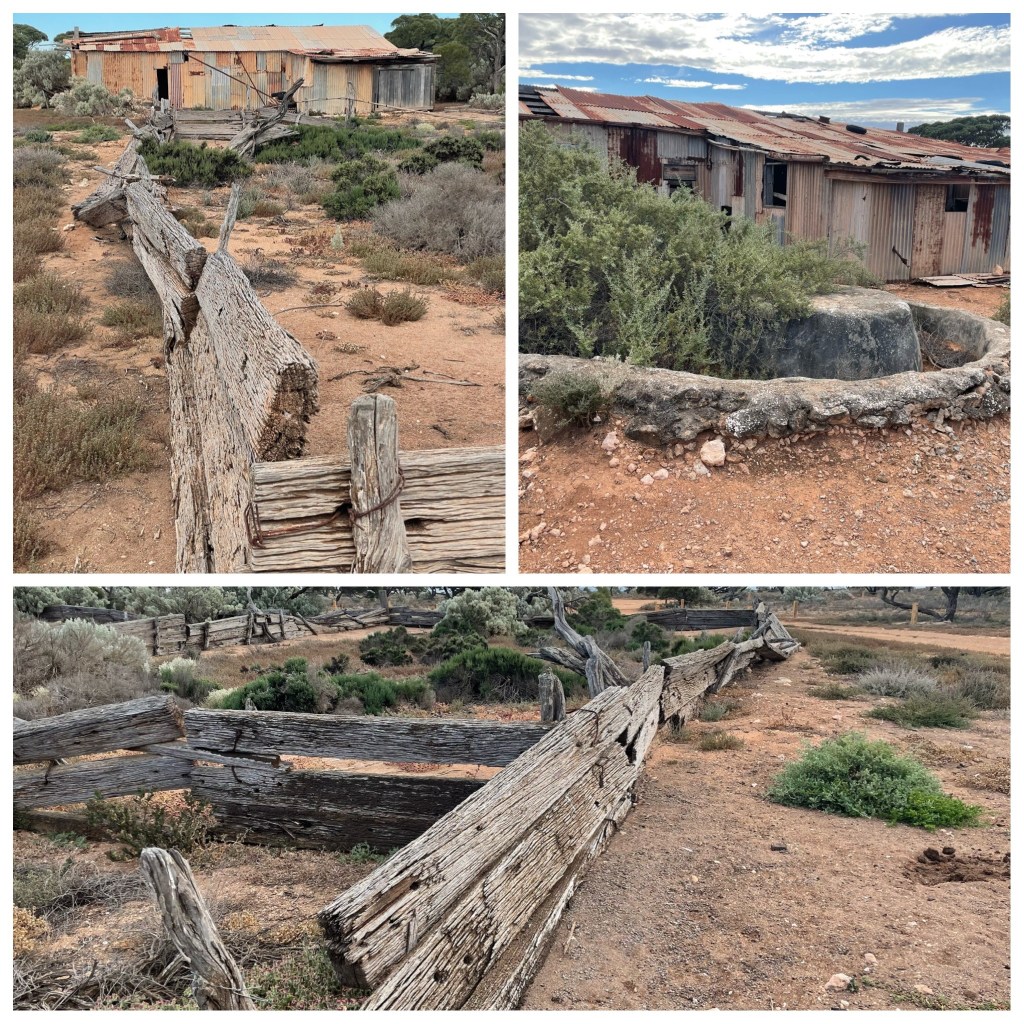
The old Woolshed, about 500 metres from the homestead, still stands mostly intact, even with sheep manure still under the boards (last cutout was around 1987! This was a four stand shed and was made from whatever timber and iron that could be found. The yards were again constructed of sleepers sourced from Cook. They certainly make good strong fences. There was a fascinating old sheep dip out the front of the shed.

Koonalda Woolshed

7 kilometres from the homestead is Koonalda Cave, where water was sourced for the area. At the bottom of the cave fruit trees were planted to benefit from the microclimate the cave creates.

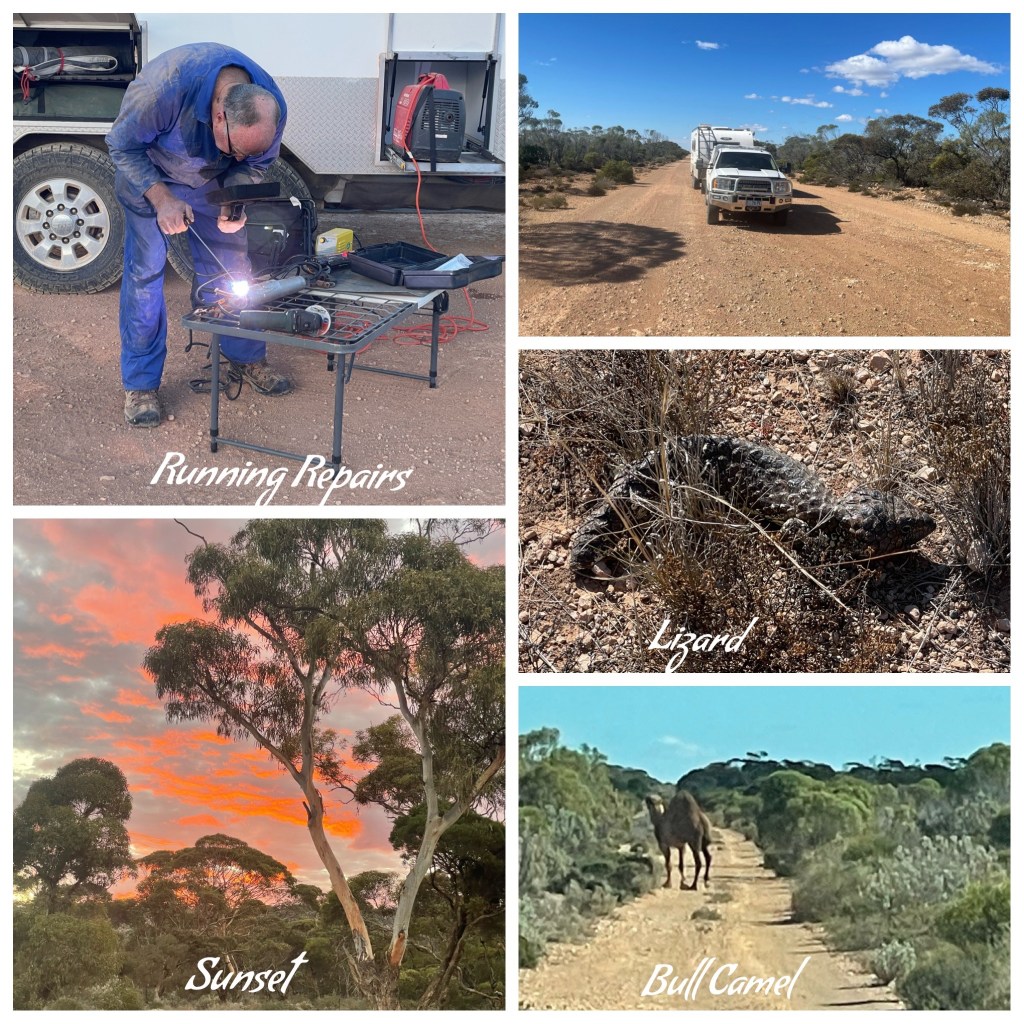
Before heading off this morning Philip had to do some running repairs. One of our new shock absorbers had the dust guard spot welds fail. What would one expect but that he would have a micro welder on board for just such an event. “See” he said “EBay”, 60 bux the welder just paid for itself”.

Sheep Yards
Koonalda Cave
Old Eyre Highway

Turning Back Time on the Nullarbor

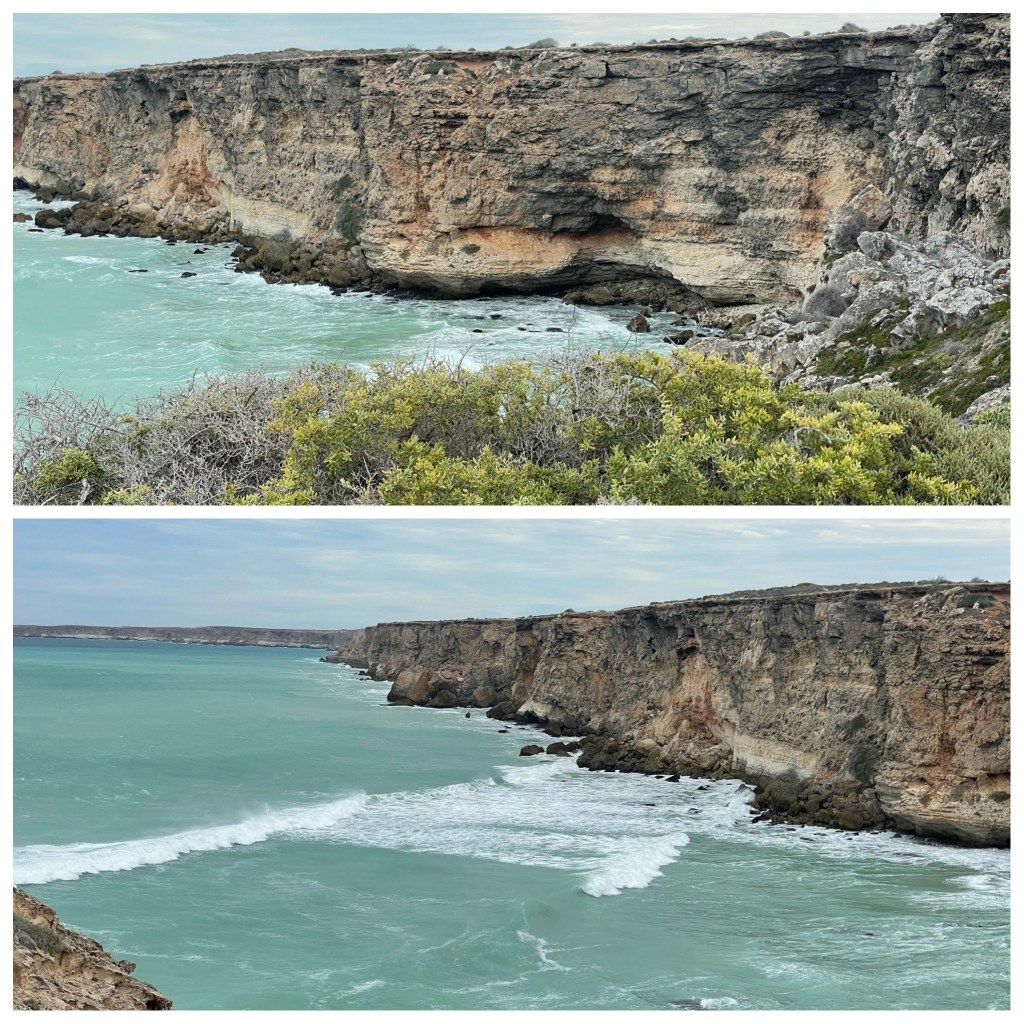
After a few days relaxing in Ceduna, eating oysters and King George Whiting, we were ready to hit the road again. Continuing our westward route we are on the road early, 7.45am, and head west towards Penong and beyond. We stopped for a break at the Head of the Bight and walked down to the cliffs. The last time we were here there was no visitors centre, board walks or lookouts, just the cliffs and rolling seas. Mind you that was about 27 years ago. How things change.

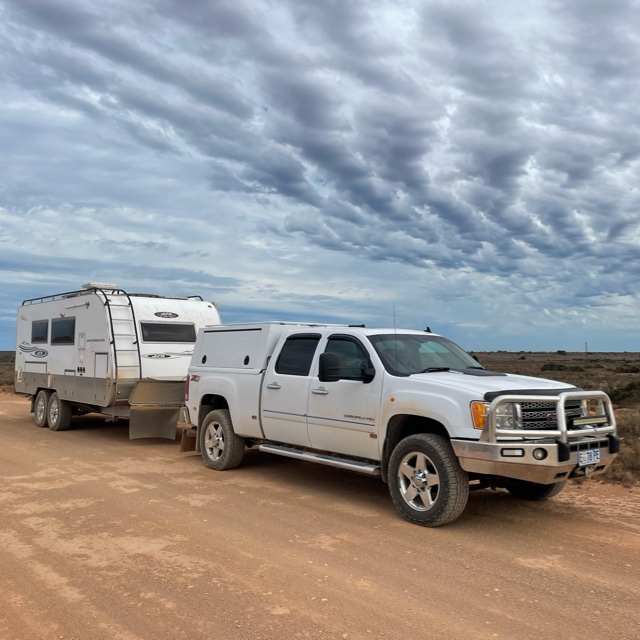
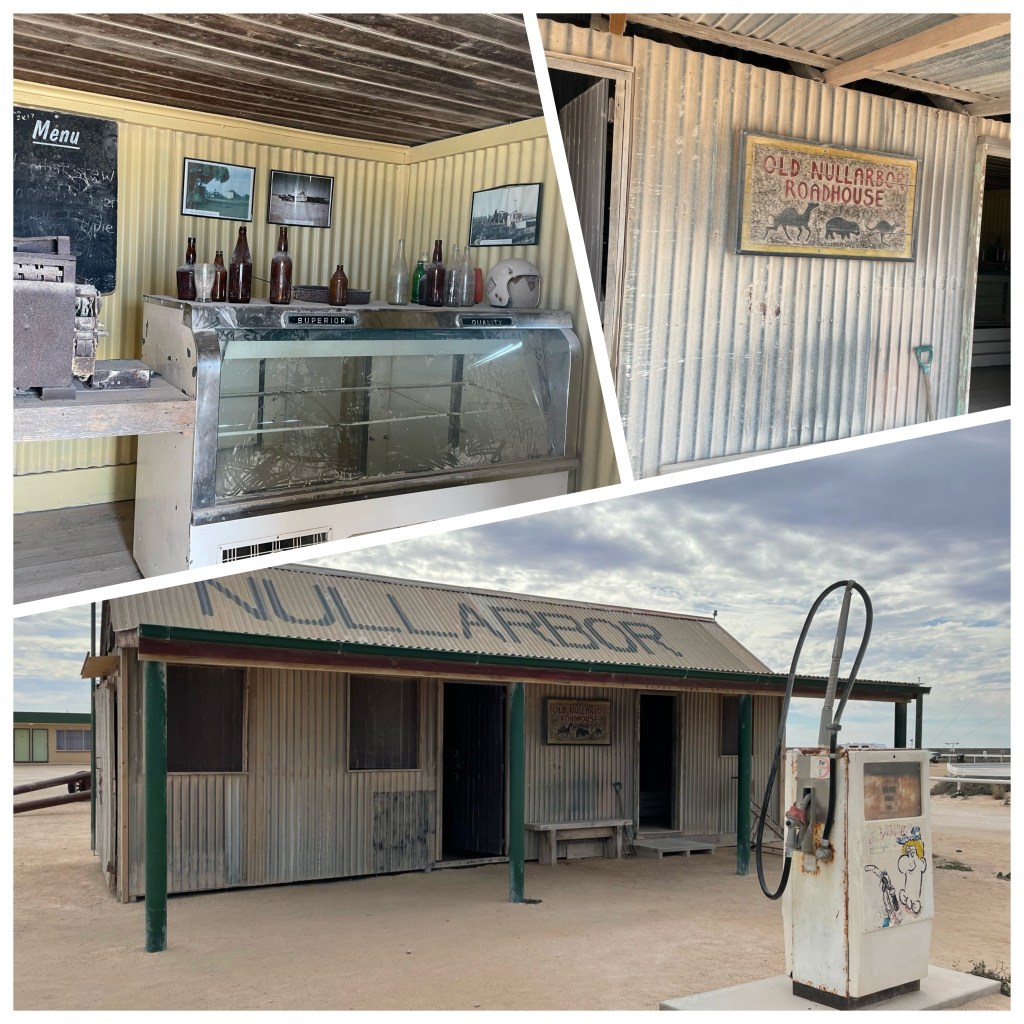
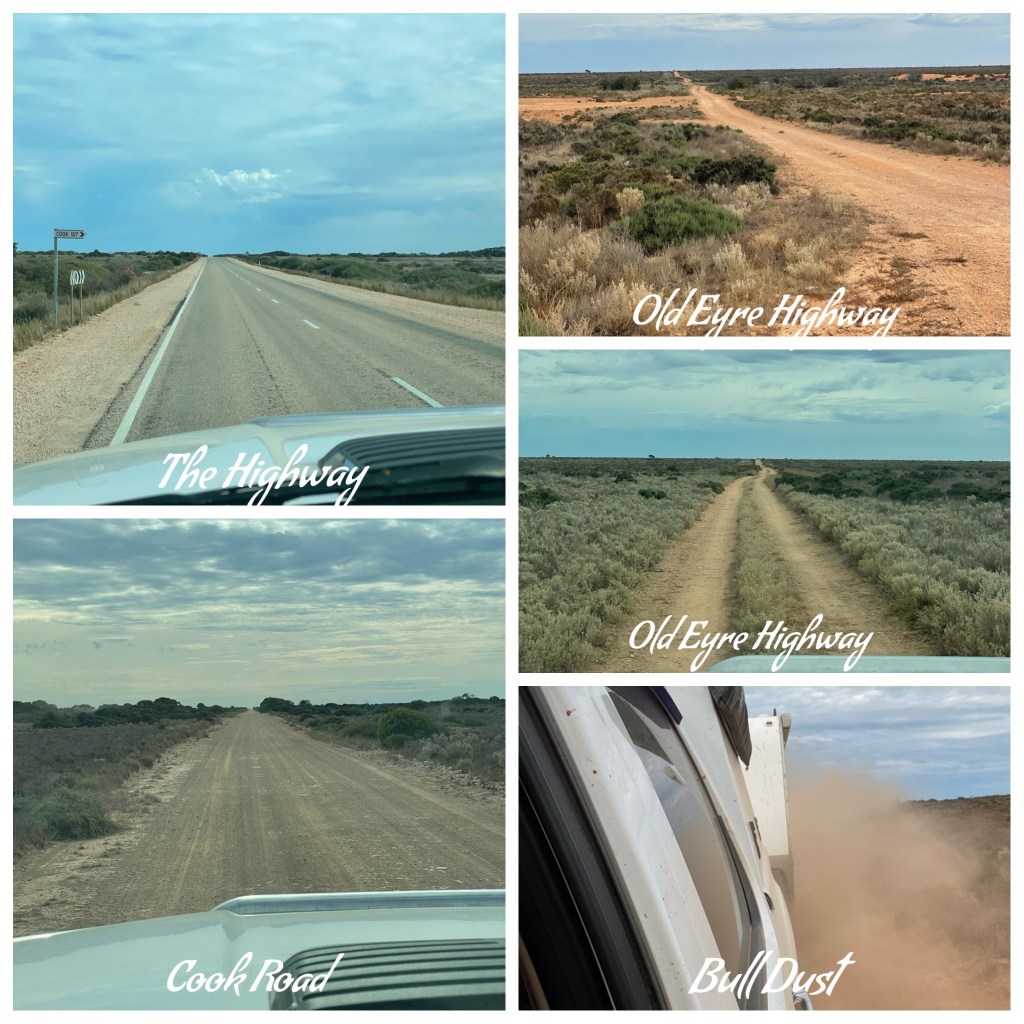
Next stop was Nullarbor Roadhouse to top up with fuel. $1.95 per litre, dearer than Mt Ive Station at $1.85 per litre. Checked out the old Nullarbor Roadhouse and displays before driving towards the Cook Road turnoff. Just up the Cook road we stopped for lunch and to let some air out of the tyres preparing for the next 150 + k of gravel roads. The roads today have been getting progressively narrower. Hmmmmm wonder how narrow they will get. Philip tells me it will be okay, he’s studied the maps.

Old Nullarbor Roadhouse

We are heading to the Old Eyre Highway. The original highway across the Nullarbor closed in 1976 when a new bitumen road was constructed 20-30klm south. Our first point of interest was the Wigunda Tank, where we turn west again onto the old Eyre Highway. This road hasn’t been graded since 1976. It’s still in pretty good condition with a limestone base and lots of bull dust in places. We pass several more tanks, before stopping to look at Yangoonabie Tank and sheep yards. This tank is still holding water and we can see how the water is filtered through the smaller tank before it flows into the large tank.

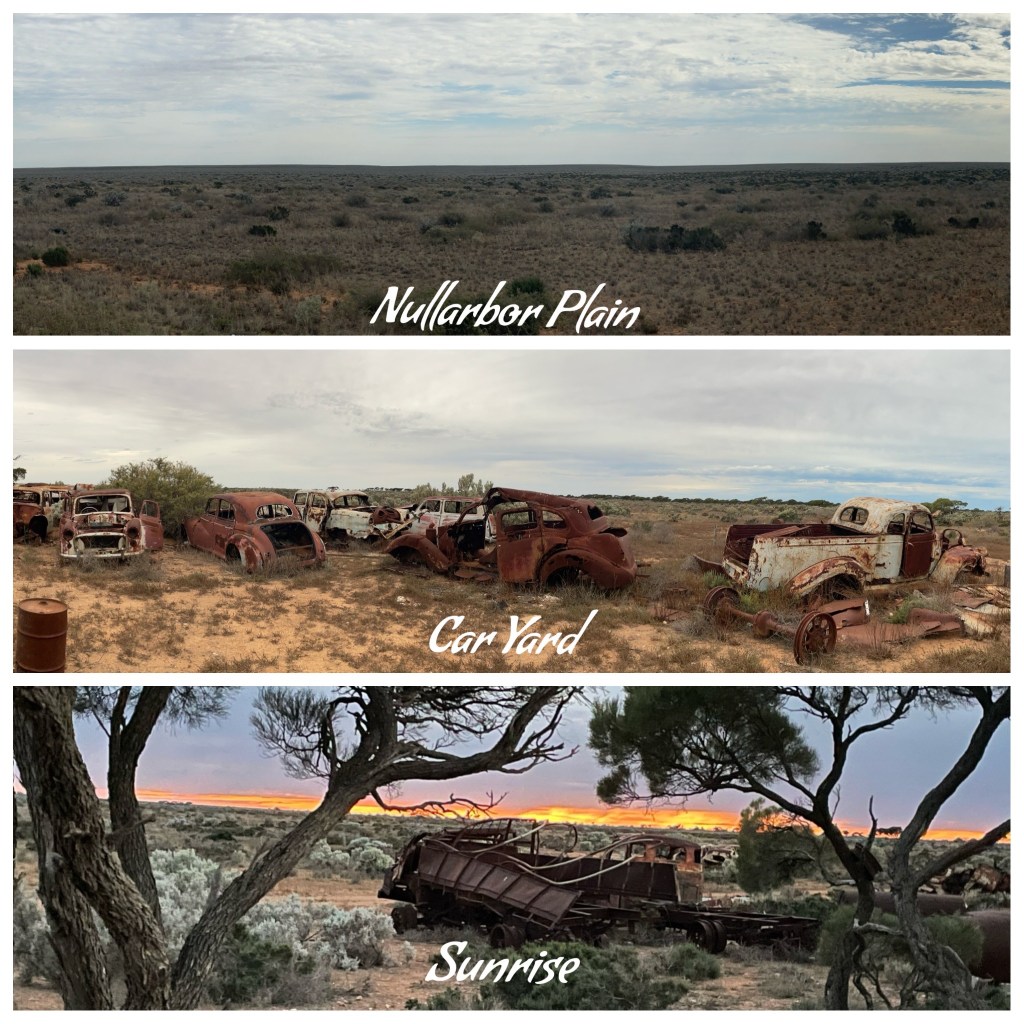
Back on the road and continuing along at 20-30 k an hour we head toward the old abandoned (1988) Koonalda Homestead, now deserted but open to visitors as a South Australia National Park. This is our camp spot for tonight and it looks like we will be the only ones here. Philip can’t wait to get out of the car and start exploring as there is a graveyard of old wrecked vehicles here. If only they could talk there would be some stories to tell. We also walked up to the blowhole, a small hole in the ground about 12” wide that the wind whistles up through. Obviously part of the huge cave system under the Nullarbor Plain.

And the roads get narrower
Koonalda Homestead
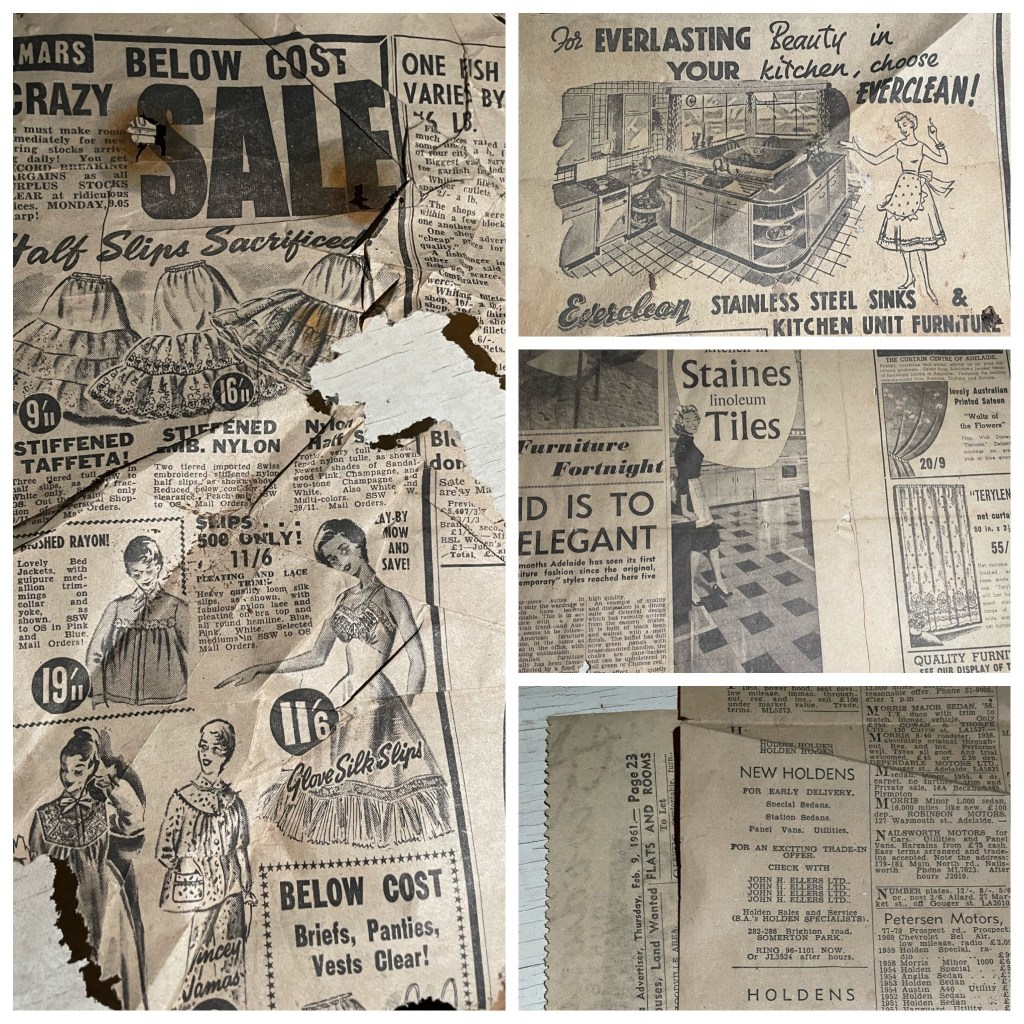
Newspaper Clippings
A small portion of the car wrecks

Mt Ive and Gawler Ranges NP

April 30th

Locheil to Mt Ive Station via Port Augusta and Iron Knob. We just followed the road today to reach Port Augusta. Just on the outskirts of the township is Sundrop Farms, a 20 hectare greenhouse that turns seawater and sunlight ( with a most interesting solar array) into energy and water. Then use sustainably sourced carbon dioxide and nutrients to maximise the growth of the crops. Because they don’t need soil they can grow their produce on degraded land in arid areas previously considered too barren for agriculture.

We refuelled in Port Augusta and drove on to Iron Knob where we stopped for a wander through their local museum, about the only place operational in the whole town. Quite an interesting little museum and a very “has been” town. It was once quite a thriving place and is considered the birthplace of the Australian Steel Industry. The iron ore was first mined by BHP in 1899 and was substantial enough to support a national steel industry. An average of 1 million tonnes per year was taken from the Iron Monarch mine and most of this was processed at the steelworks in nearby Whyalla. After driving around the town we stopped for lunch near an electric shovel which would have been huge in its heyday but is small in today’s world.

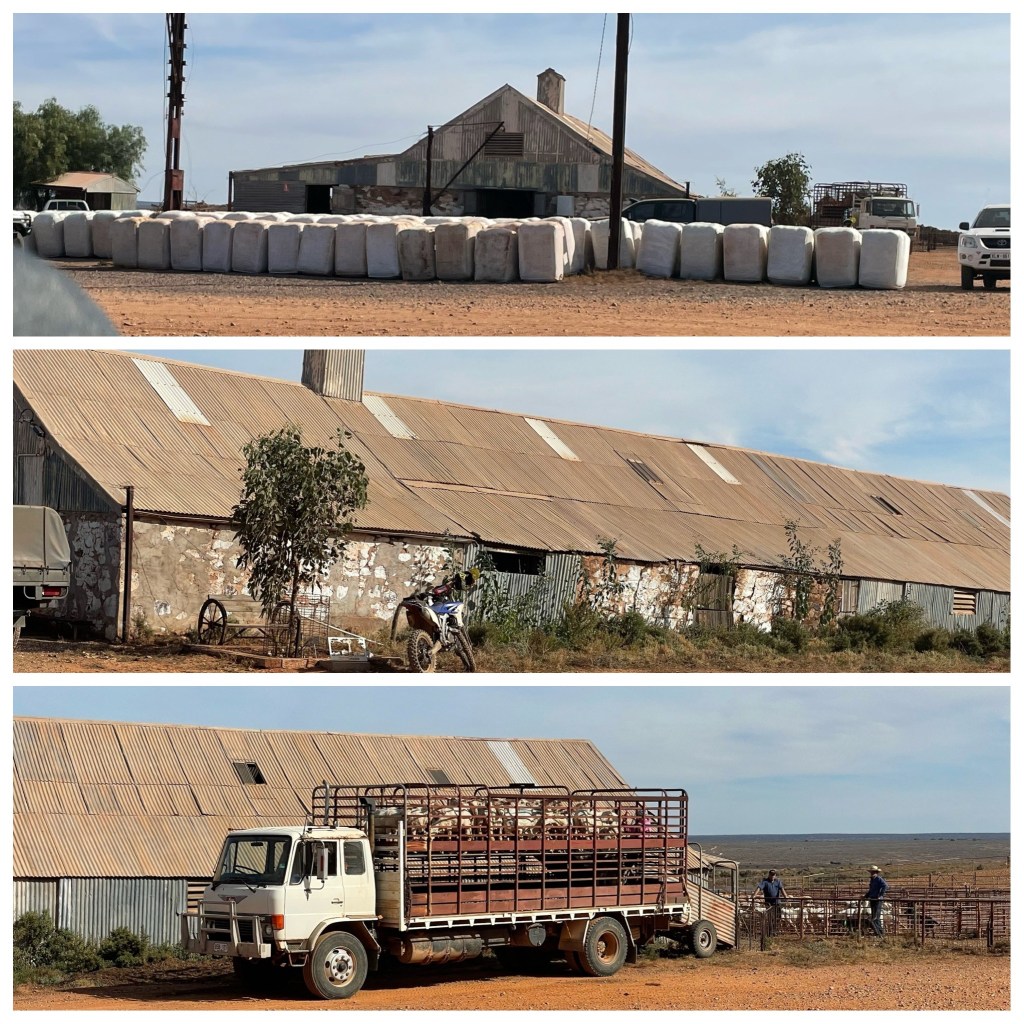
From Iron Knob we turned west towards Ceduna. We managed to travel 400m and Philip made an impromptu turn Right at the Mt Ive Sheep Station sign! This unintentionally became our first run of dirt and gravel roads. We were only a few kilometres in and we drove past Corunna Shearing shed where they were busy shearing. Got a big wave from the guys in the yard as they pushed sheep up the ramps from the outer yards. Then onto Mt Ive Station where we are camping for the next couple of nights.

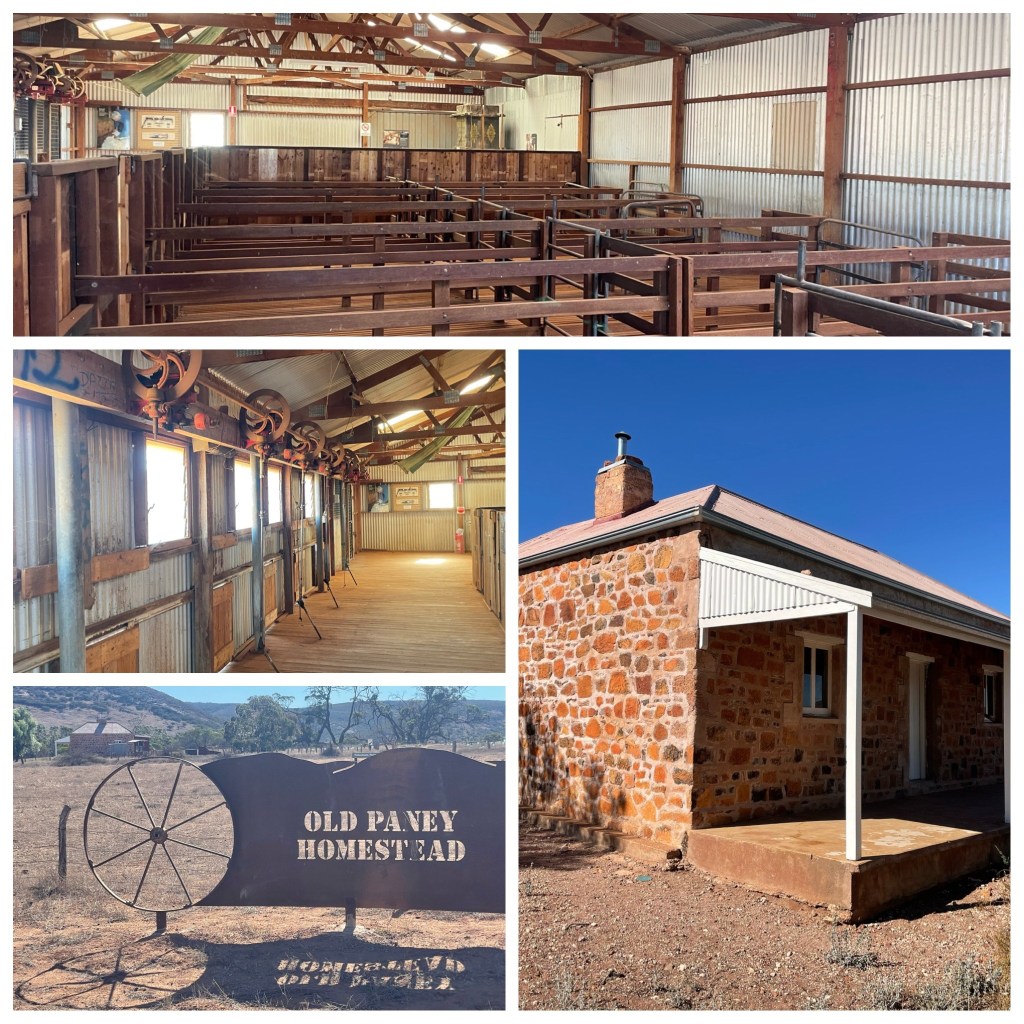
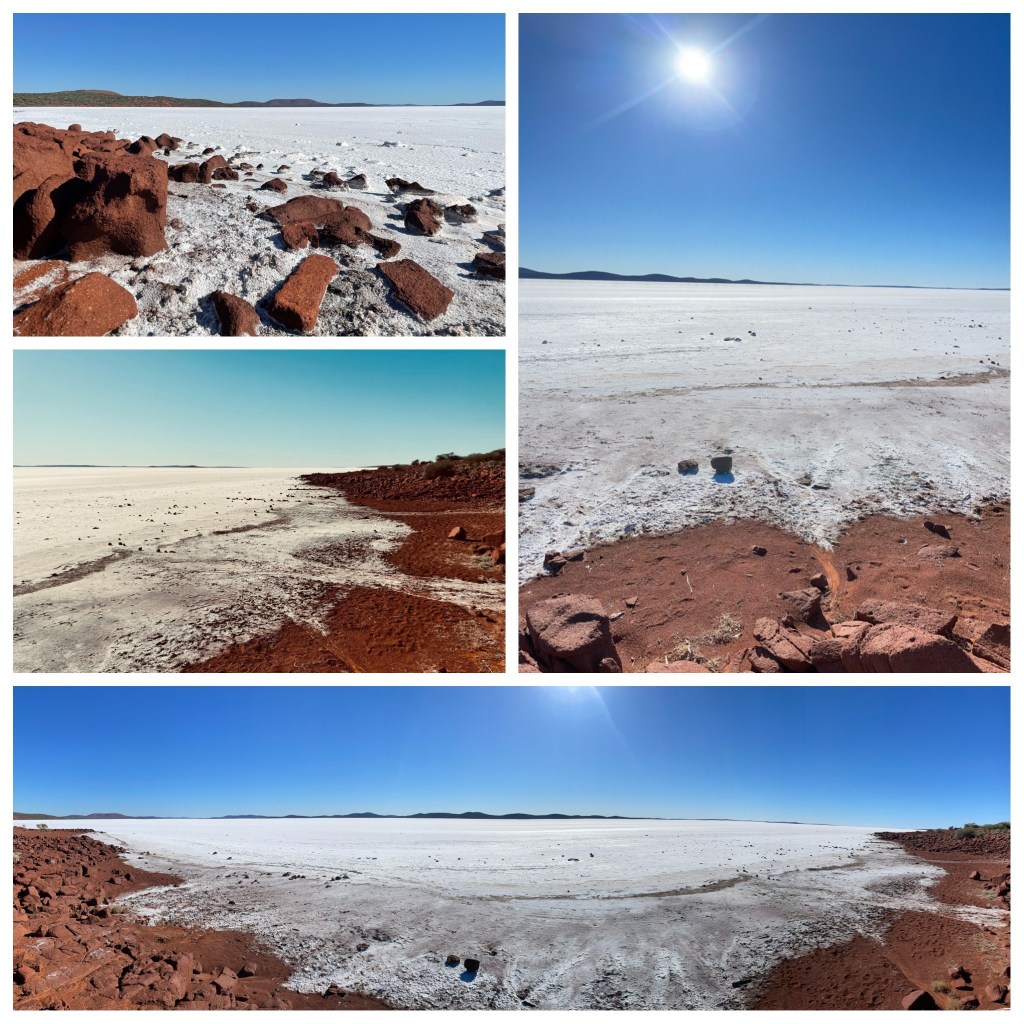
We woke this morning to a gorgeous sunrise. Then Philip cooked a lovely breakfast before we packed the car for a round trip through the Gawler Ranges National Park (250 k.) Old shearing sheds, Old Paney Homestead, Stone Dams, Organ Pipe rock formations and finally a trip out to Lake Gairdener, South Australia’s 2nd largest Salt Lake. We had to purchase a pass from Mt Ive to access Lake Gairdener. $30 well spent. It was a great day lots of different landscapes, road conditions and vistas.

May 1 Saturday (Election night in Tasmania)

We spent part of the evening listening to Tasmania Election Results. Another Liberal win.

May 2 Sunday.

Today’s destination is Ceduna, approximately 250k away. The first part of the trip is retracing part of yesterday’s loop to Yardea station before we continue on towards Hiltaba Nature Park, 770 square Kilometres, and then turn south towards Ceduna. Today’s trip started off with viewings of Kangaroo, wombats, (quite different looking to Tasmanian wombats. (Pointier heads, bigger ears and much darker fur.) emus which ran across the road in front of us and sheep. Again we had another varied trip. Scenery changing all the time. Creek bed crossings, corrugations, graded roads and dust in various colours, red gold and white.

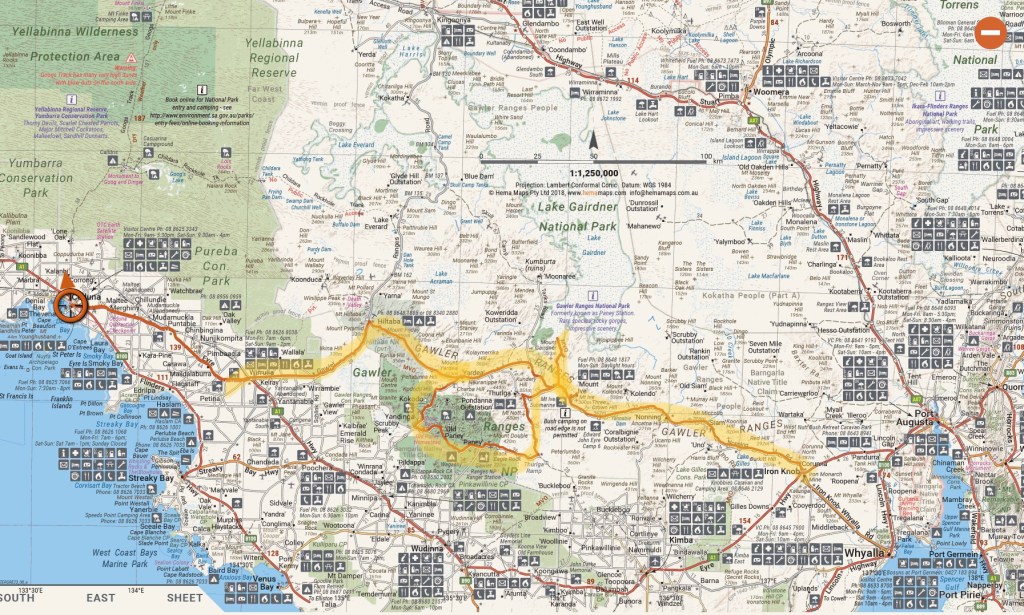
From leaving Iron Knob to arriving in Ceduna we did 560 k on dirt, rubble, sand roads. A great shakedown trip for the many gravel roads ahead of us.

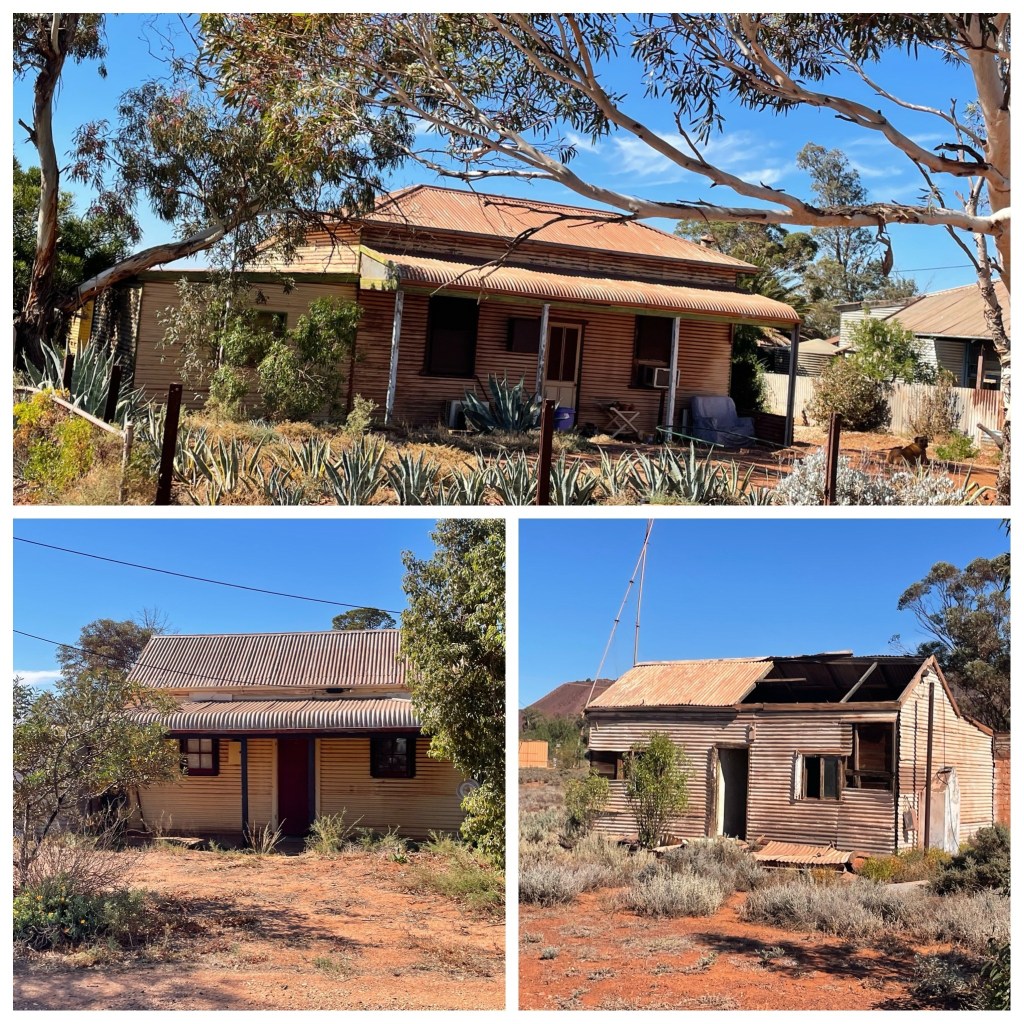
Iron Knob Real Estate
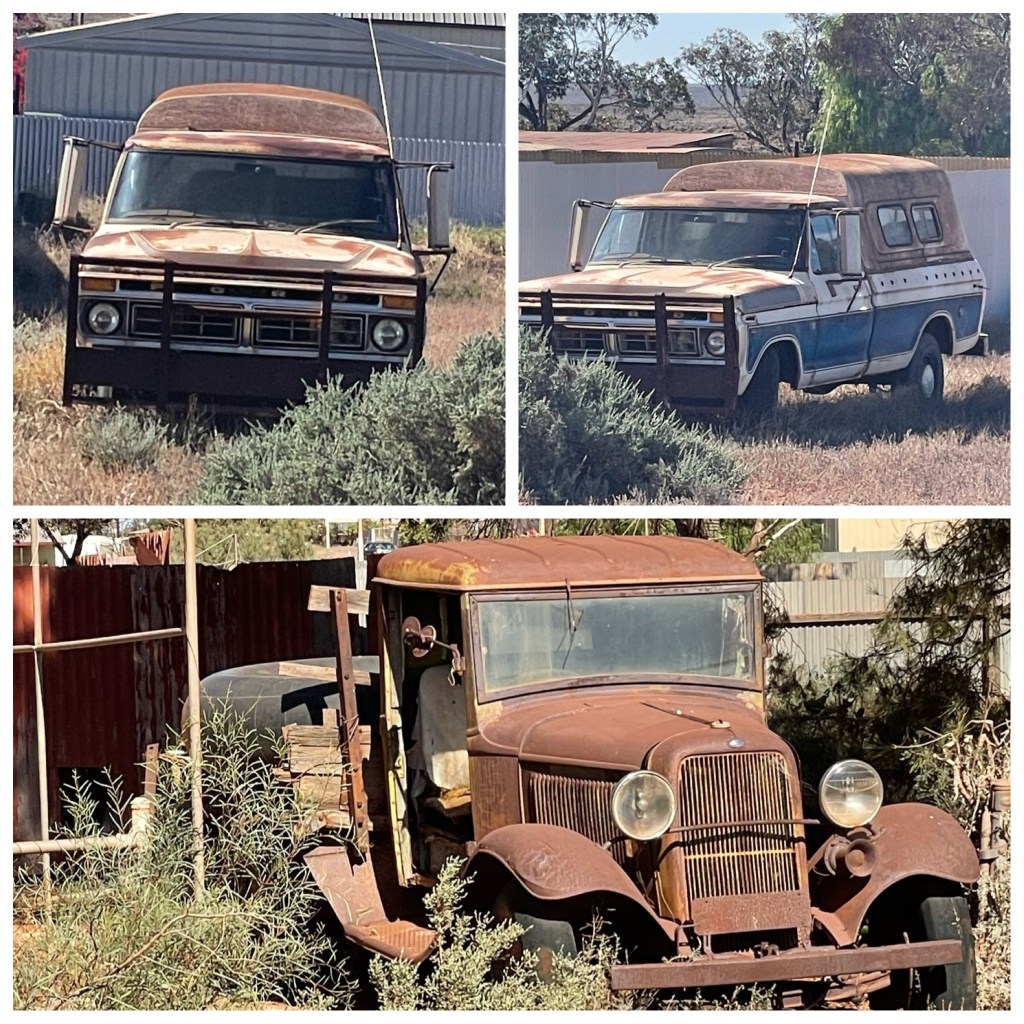
New Vehicle Anyone
Corunna Shearing Shed
Old Paney Station
Lake Gairdener
Iron Knob to Ceduna Route

Tassie to Melbourne, Kaniva and Lochiel

April 27, 2021

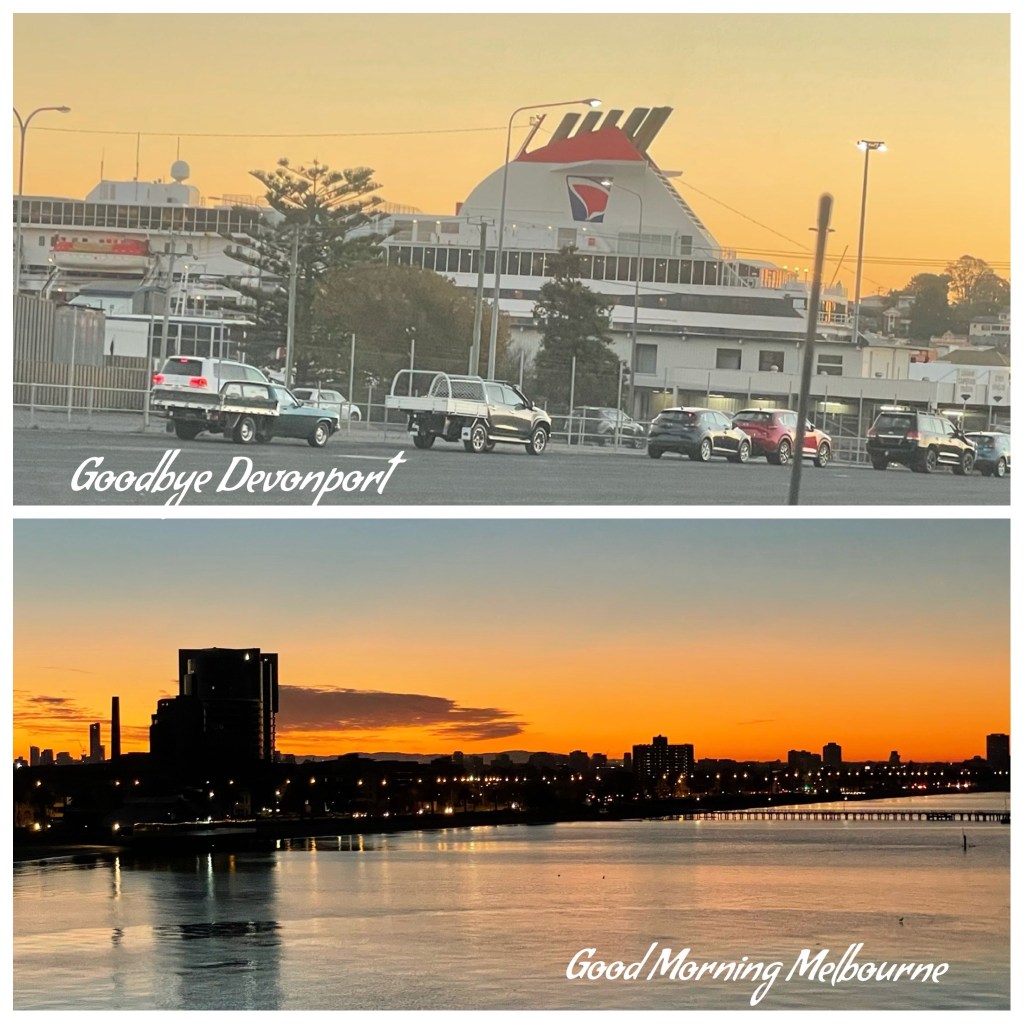
Well after a two year hiatus we are again hitting the road. Poor health and of course COVID 19 has kept us tied to Tasmania for the last two years, but tonight we head off on the Spirit of Tas and then we are westward bound. Once we hit South Australia Philip will finally decide if we continue west or head north to Alice Springs.

April 28, and we are 3rd vehicle off the Spirit and on the road by 6.45. We are heading towards Daylesford where we stop for some breakfast before driving out to Blampied to visit friends for a couple of hours. The morning soon disappeared catching up but we had to get on the road with a 3 1/2 hour drive ahead of us to reach Kaniva where we are stopping with more friends for the night.

We spent a wonderful late afternoon and evening with Kerryn and Alwyn. Philip went out with Alwyn to look at them seeding Canola. He then assisted in escorting the 18m ( when in operation mode) air seeder along the main highway to another property to continue seeding.

Kerryn and I checked out the garden and went for a short walk, watched the sun set and caught up on family and friends. Kerryn is a fellow quilter so of course we talked quilting for a while and I admired some of her work.

April 29 Thursday.

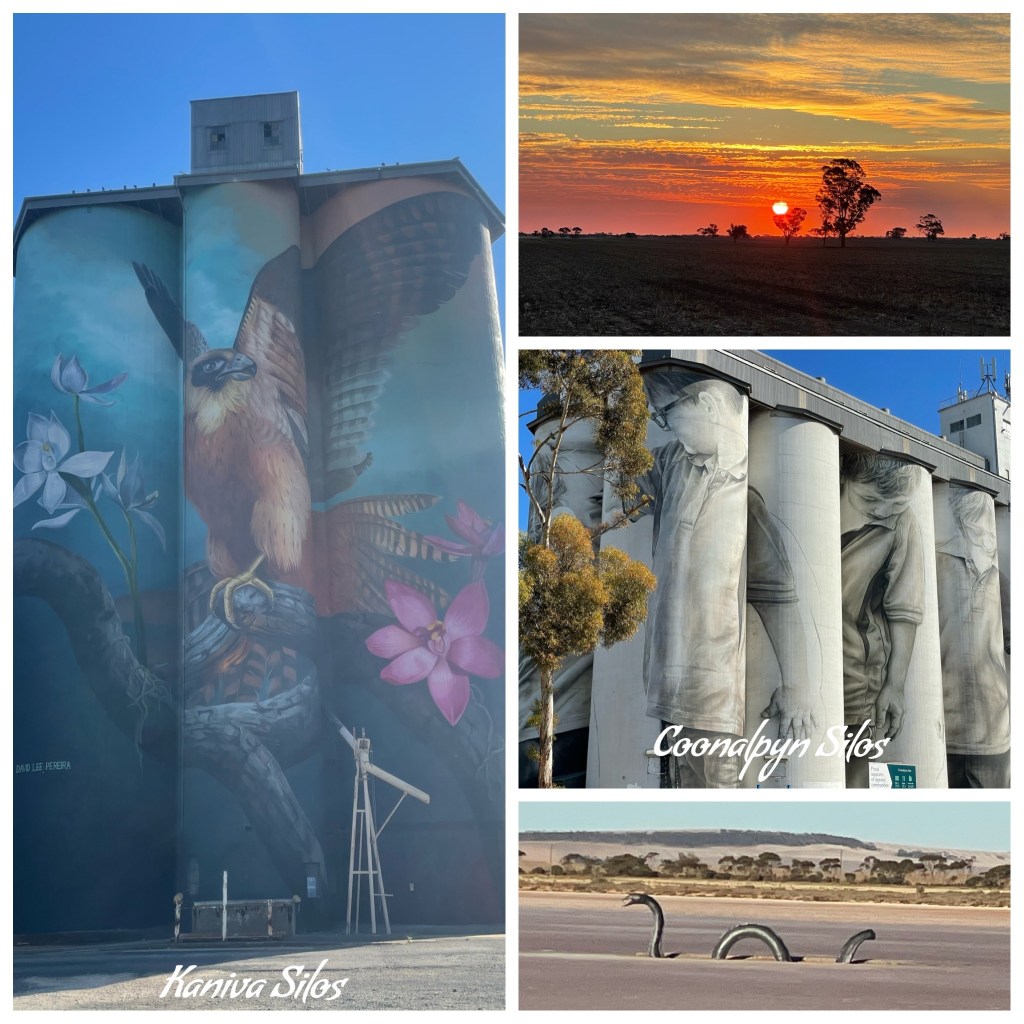
We shared breakfast with Kerryn and Alwyn before Alwyn had to take off to help with Seeding. Kerryn and I walked down the road to the bus stop to see her granddaughters before they headed off to school. Once back at the house we did a quick check of the van and left Kerryn just after 9am. Next stop was the painted Silo in Kaniva for a quick photo before turning onto the highway heading towards South Australia. Another stop to look at another set of Silos at Coonalpyn and then onto Murray Bridge.

We decide to take a route around Adelaide, so much of the next few hours was new roads to us, driving through Palmer, Mt Pleasant, Williamstown, Gawler, Balaklava and eventually stopping for the night at a tiny dot on the map called Lochiel. It’s been a lovely drive, even if Philip kept saying he had no idea where we were. Google maps had it all sorted. After arriving at Lochiel we walked down to the dry lake to see the “Loch Eel”. Quite the tourist attraction with numerous families stopping and walking down to see it. As the evening closes in the sky is turning pink and orange and the temperature starting to cool down from 26 degrees. We had to break out the shorts and t shirts today. Let’s hope it stays that way.