(P). My turn to share my favourite places from our cruise. “A no brainer”! The total cruise and what we saw – on land, tender and at sea. Although we have ticked this off our bucket list it has also added to it. Now I want to do the waterfall cruise at the end of the wet season. And to use one of my favourite sayings to sum up this part of the adventure.
“How lucky are we”
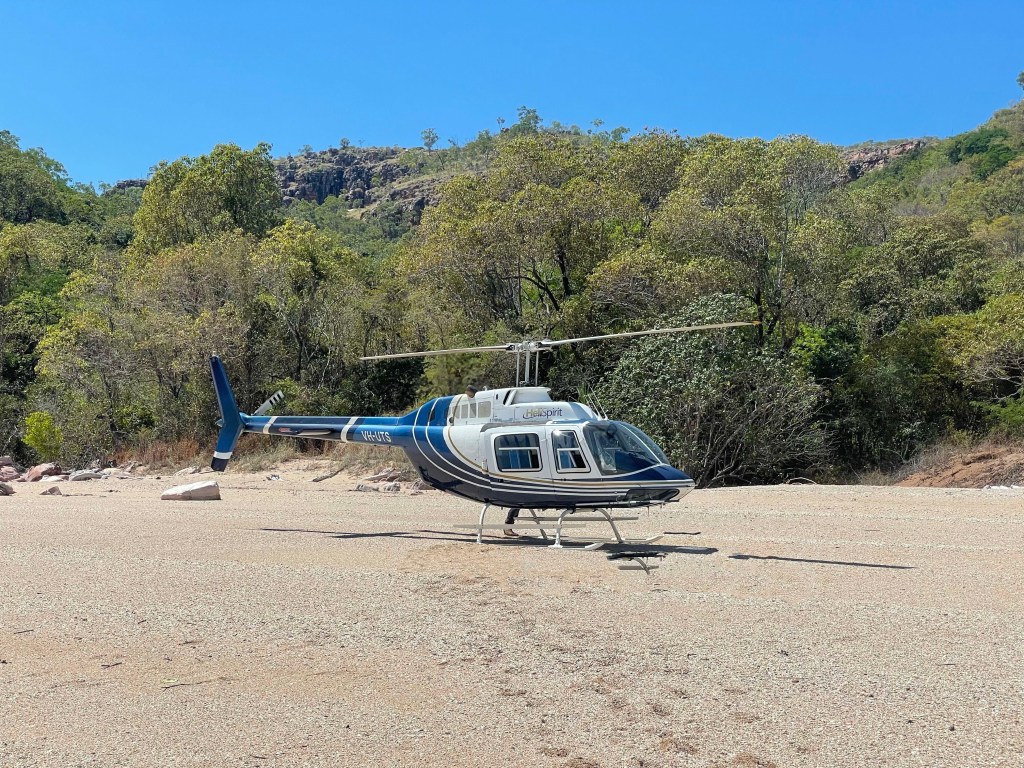
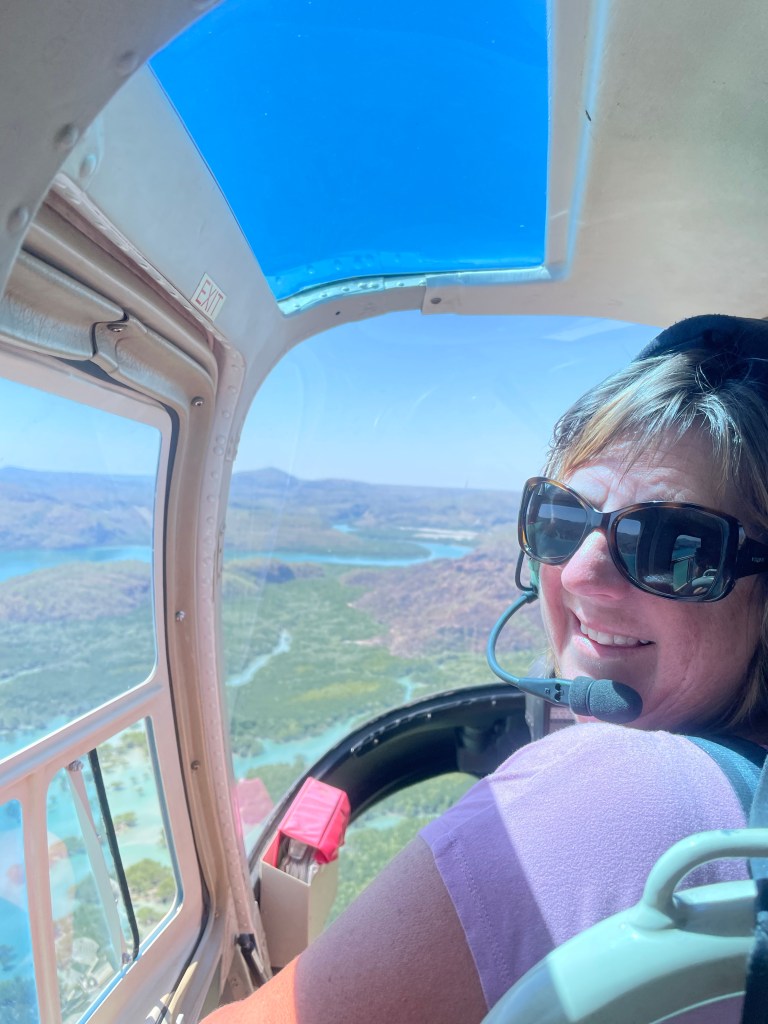
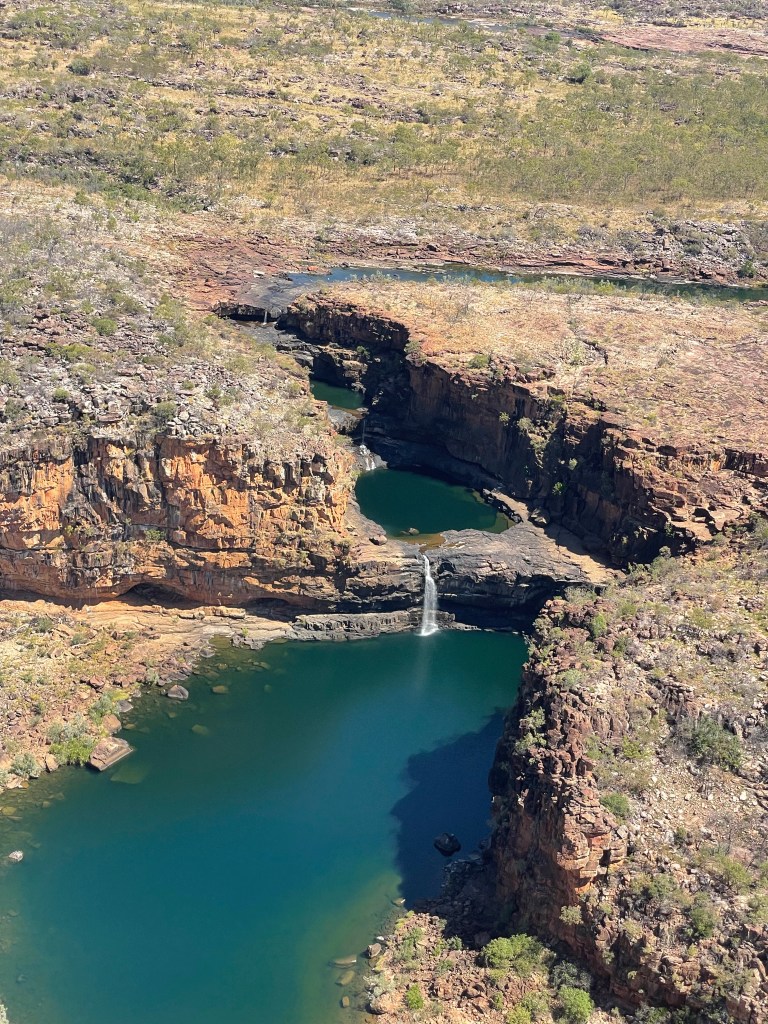
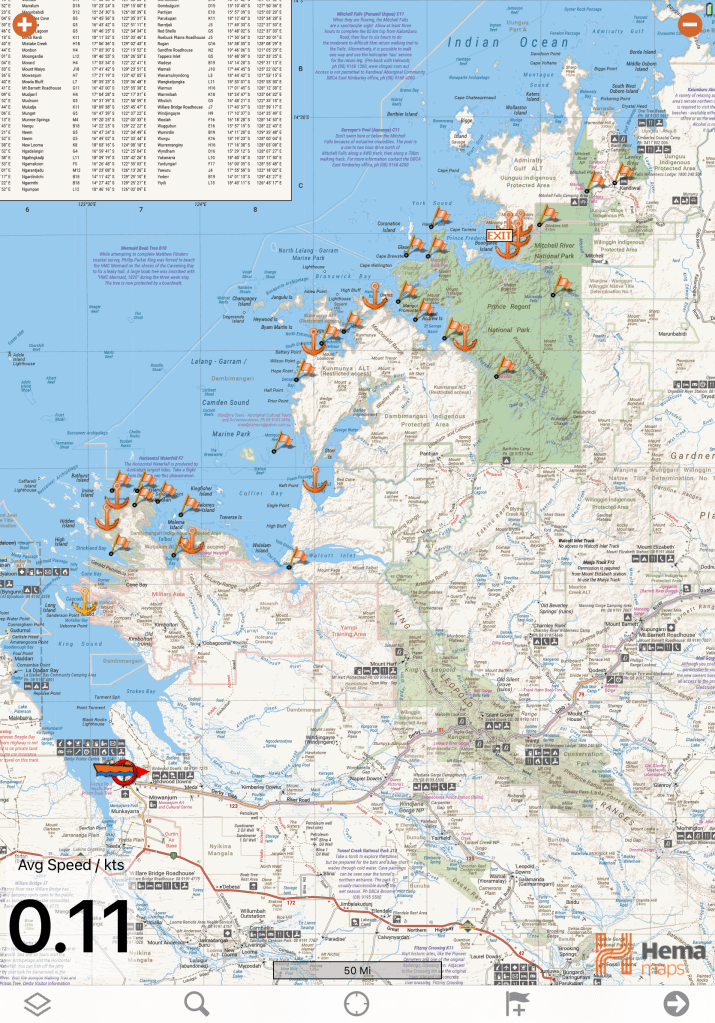
We disembarked at Naturalist Island where a helicopter picked us up and flew us over Mitchell Falls before landing at Mitchell Plateau where we boarded a Cessna Caravan for the trip over the Horizontal Falls and the archipelego back to Derby. A fantastic way to end our journey.
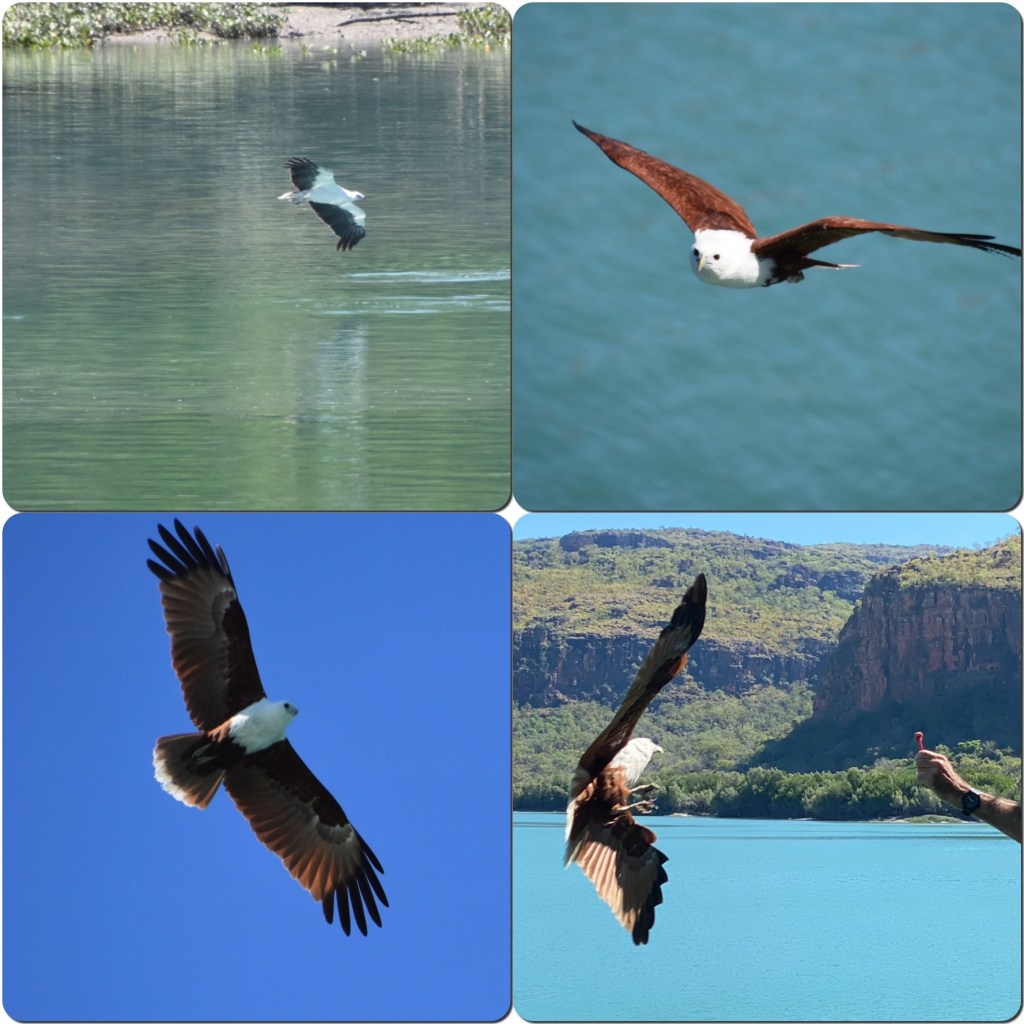
Osprey, Sea Eagles, Boobies, Terns and Brahmini Kites
Sunsets, sun rises and clear starlit nights.
Helicopter and small plane flight to get us back to Derby.
This cruise has it all.
(P) including my company for EVERY day of the cruise 👍)
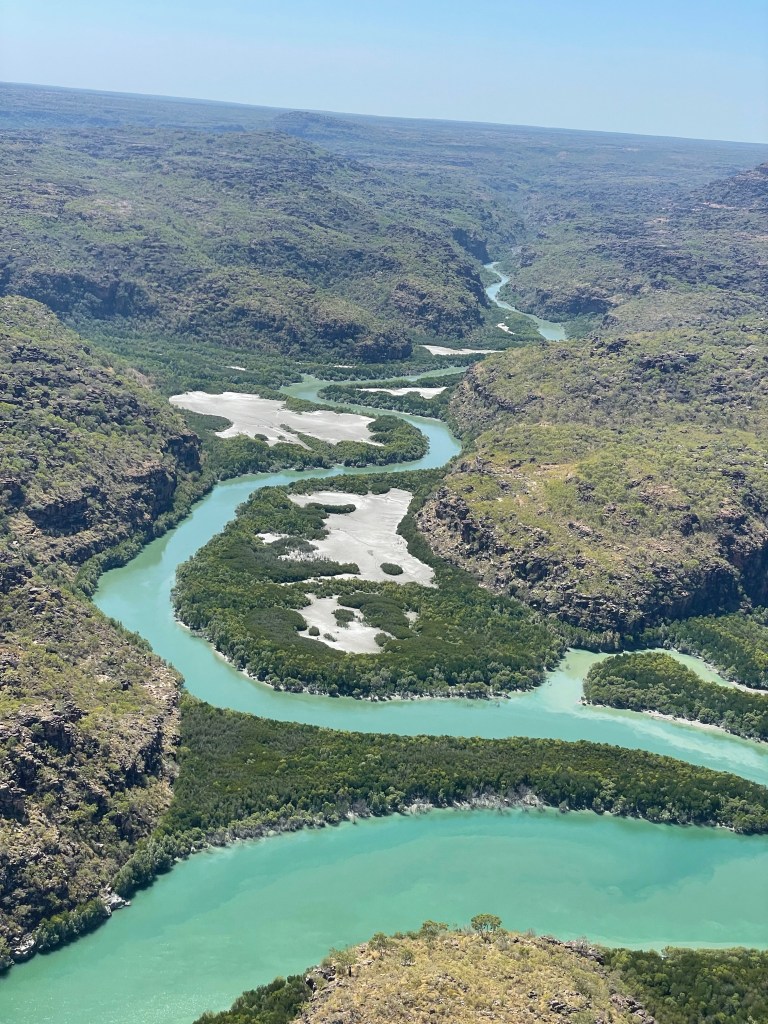
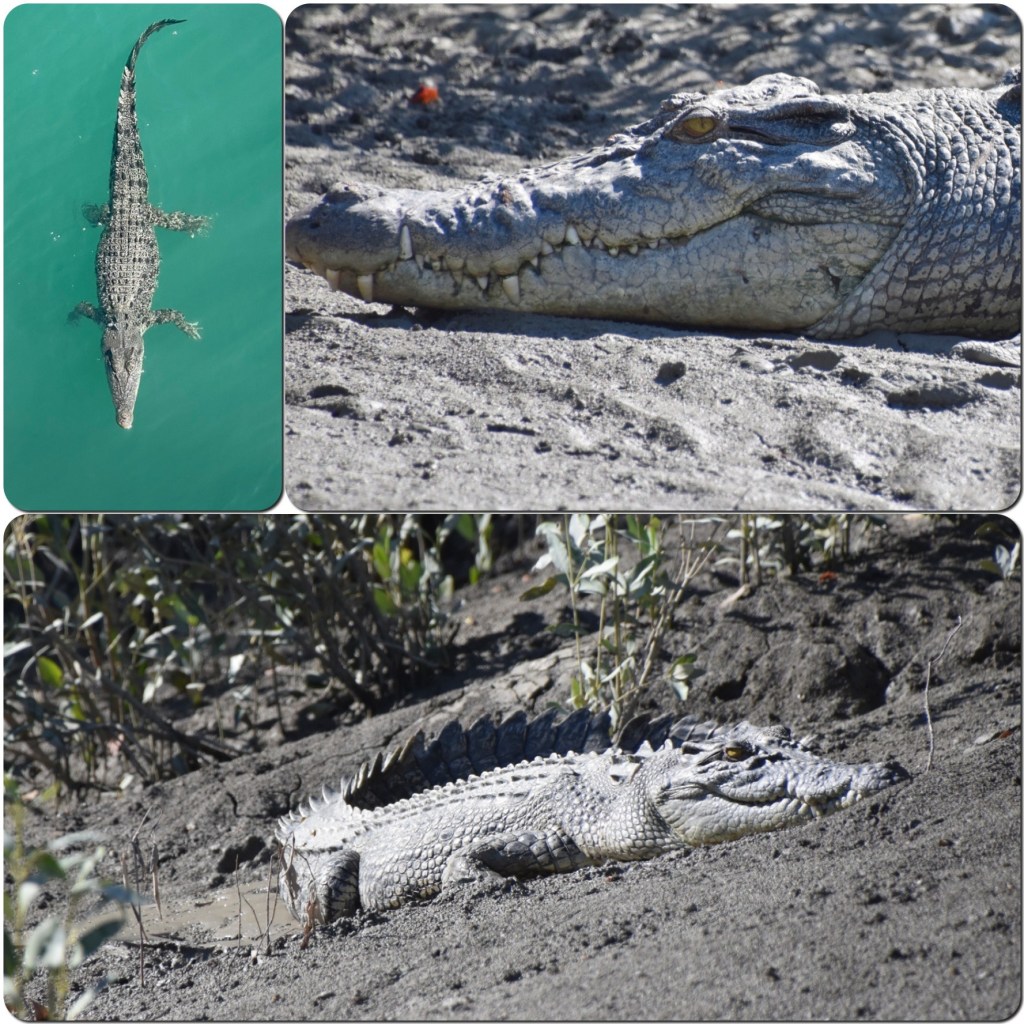
Some of the many vistasMany Crocodiles
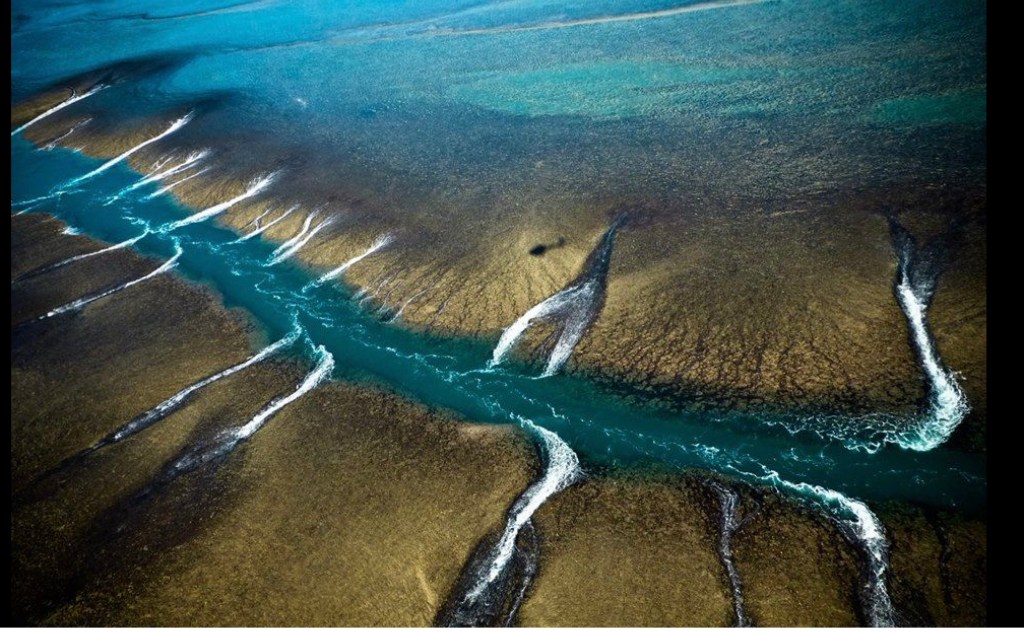
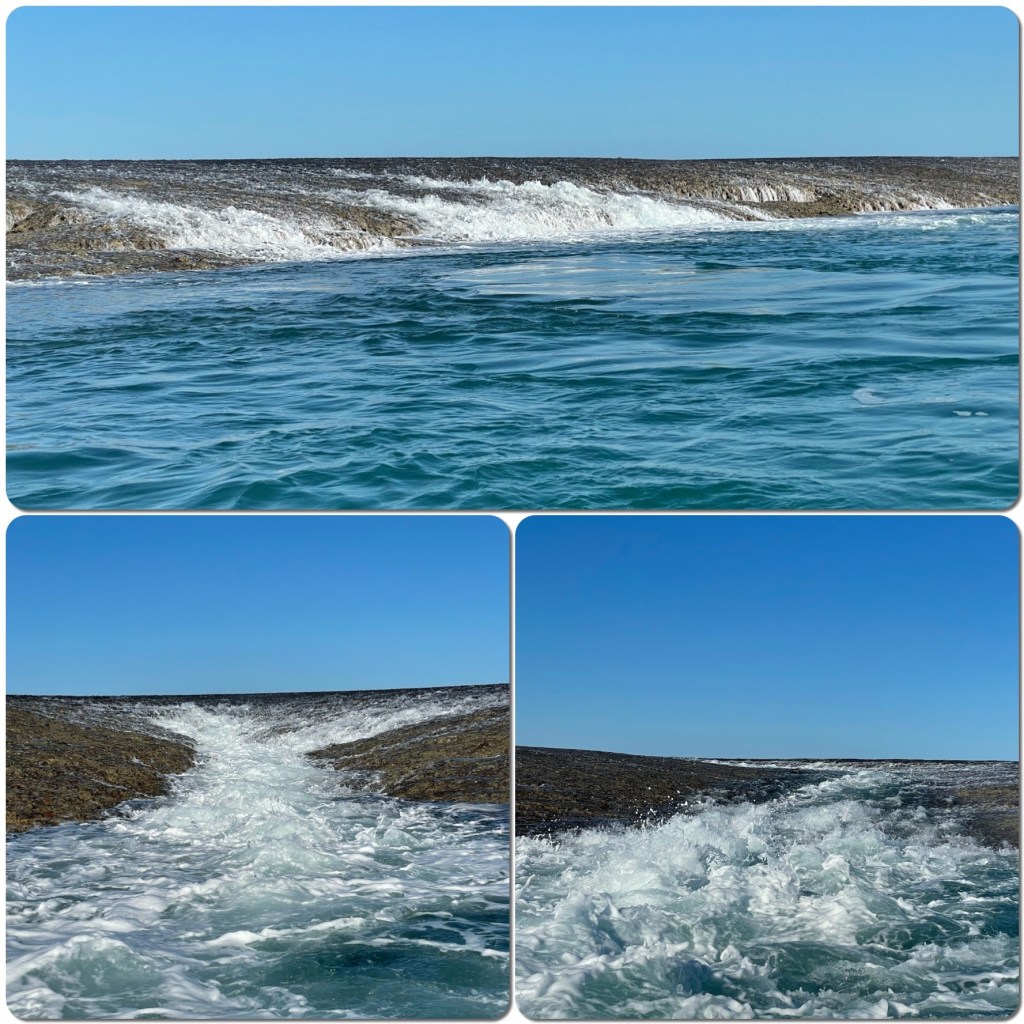
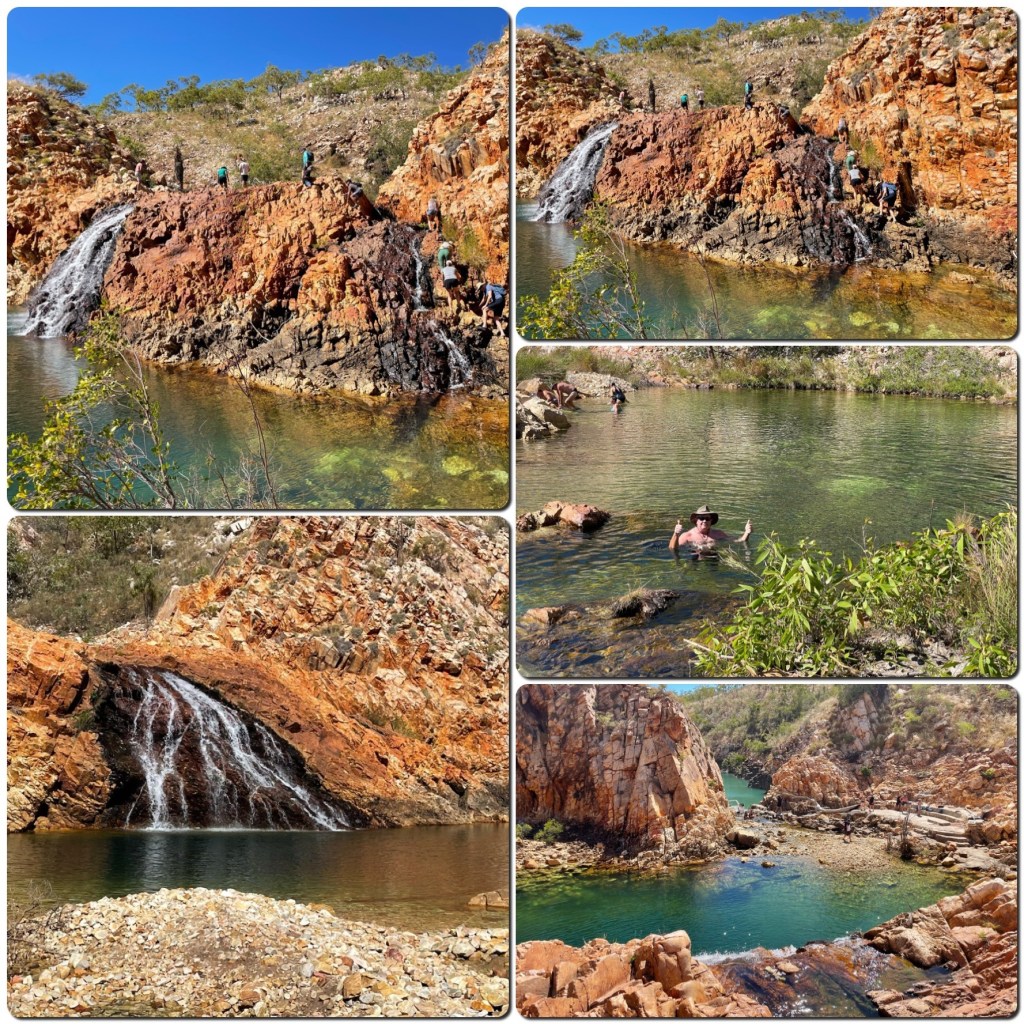
The highlights for me were King Cascades and the rock pools and cascades above the main falls. The Horizontal Falls, even though we had been there before the thrill of running the falls with a 1.5 metre drop and also Montgomery Reef. Watching the water cascade off the centre of this huge reef in numerous cascades was mind blowing and seeing the turtles feeding along side our tenders was fascinating.
Montgomery Reef
We have seen rock art that is dated back to 20000 years before the last know aboriginal tribes were living in this area and we have cruised past crocodiles sunning themselves on the river banks. 21 in an hour on our last croc spotting episode.
Montgomery Reef is the worlds largest inshore reef. When the tide falls the reef emerges to rise from the ocean in a torrent of cascading water. The tide here can drop up to 8 metres. The reef is around 400 square Kilometres and supports a variety of marine life, including turtles and whales.
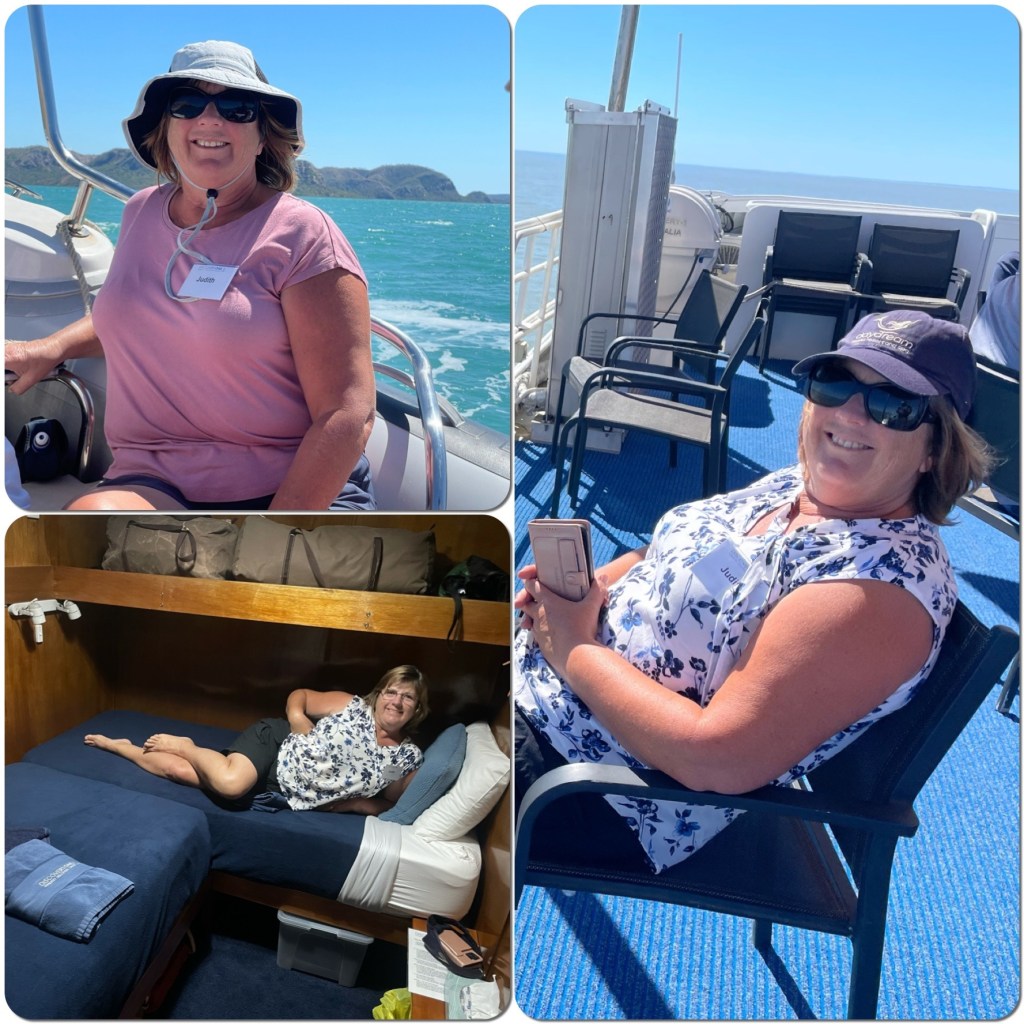
Aboriginal Rock ArtWe climbed under this huge balancing rock to view Rock ArtBrahmini KiteClimbing down into the Engine Room to check Cleanliness with Adjat the EngineerOur Cabin, Tender Trips and Top Viewing Deck
(P) Over the years we have been fortunate to travel a considerable amount. Experience has told us that the best planning is to “frame” out a basic trip and then just go with the “flow”. This year’s Western Australia road trip being no exception. With minimal forward bookings it gives us the opportunity to explore areas without being tied to a schedule, dictated by bad weather etc. Despite reading and hearing on the “travellers grapevine” how busy the camps are, we have not been prevented from staying anywhere we wished to.
Judith was browsing thru Facebook a few days back and saw a comment that some of the Kimberley Cruise companies were cancelling cruises due to Covid-19 state border lockdowns. Further investigations revealed some serious discounts were being offered to fill cabins. After a little more (like 10 minutes) research we booked ourselves on a 12 day Cruise departing Derby on the 8th August. Always eager for a bargain deal, the considerable discounts we received to fill a cabin was almost too good to be true. (I had visions of me scrubbing decks and doing dishes for 12 days to balance out the fare payment!)
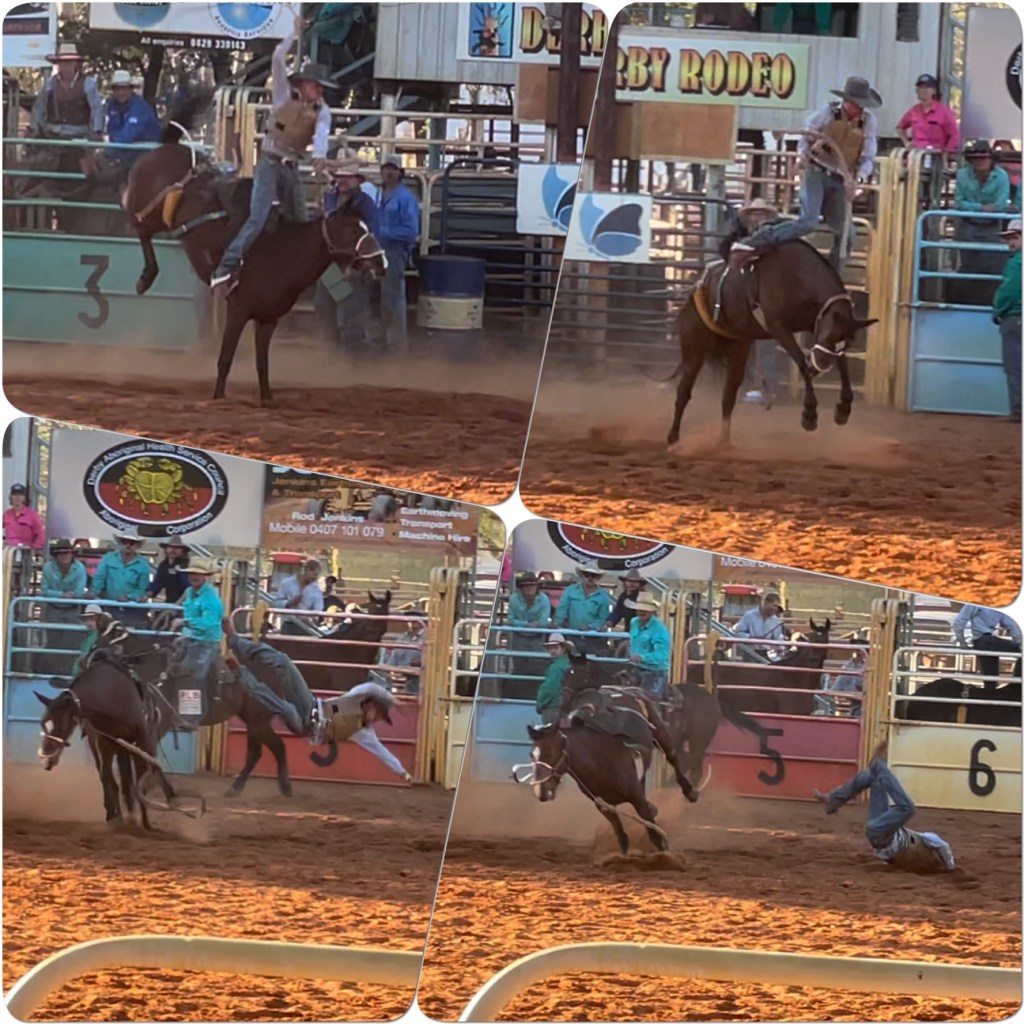
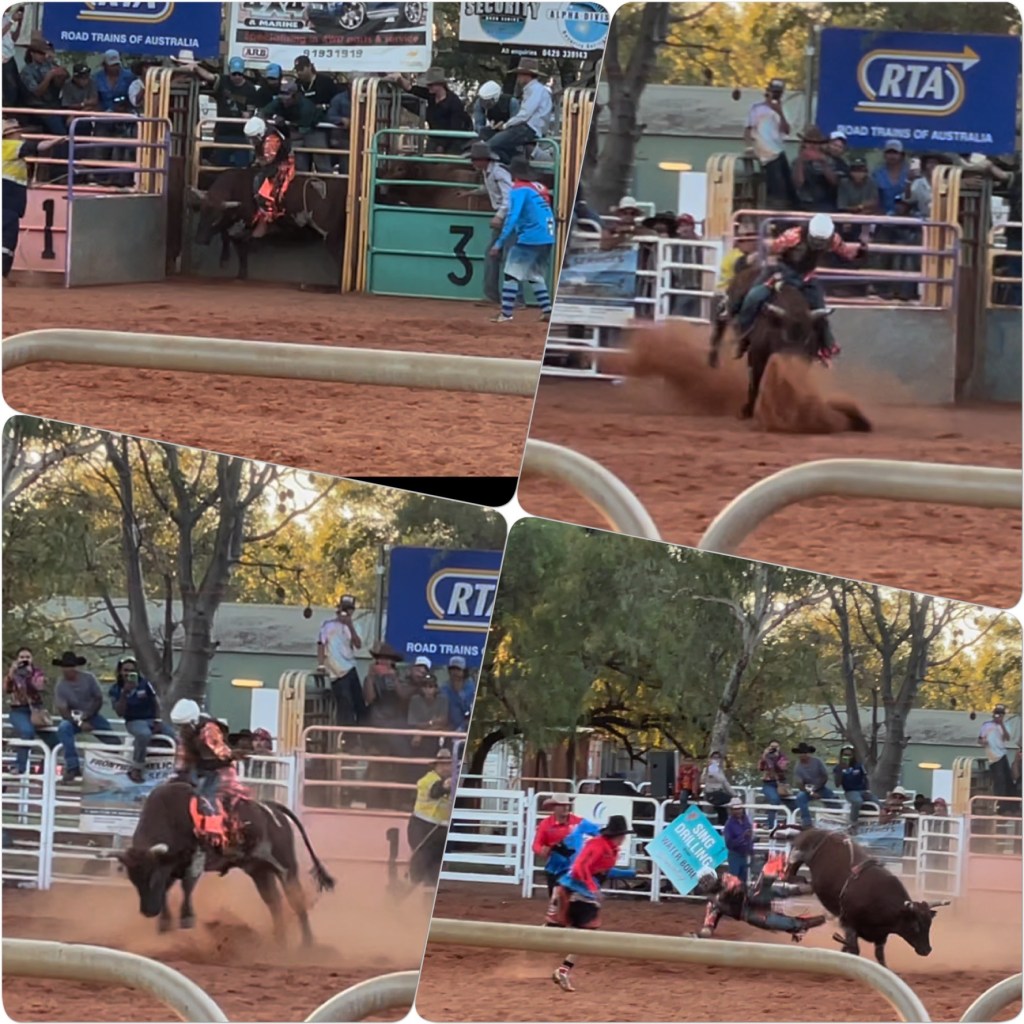
As we were cast afloat departing Derby (it must be mentioned I had to sacrifice one day of the 2 day Derby Rodeo (an awesome local event) to board “Discovery One”.
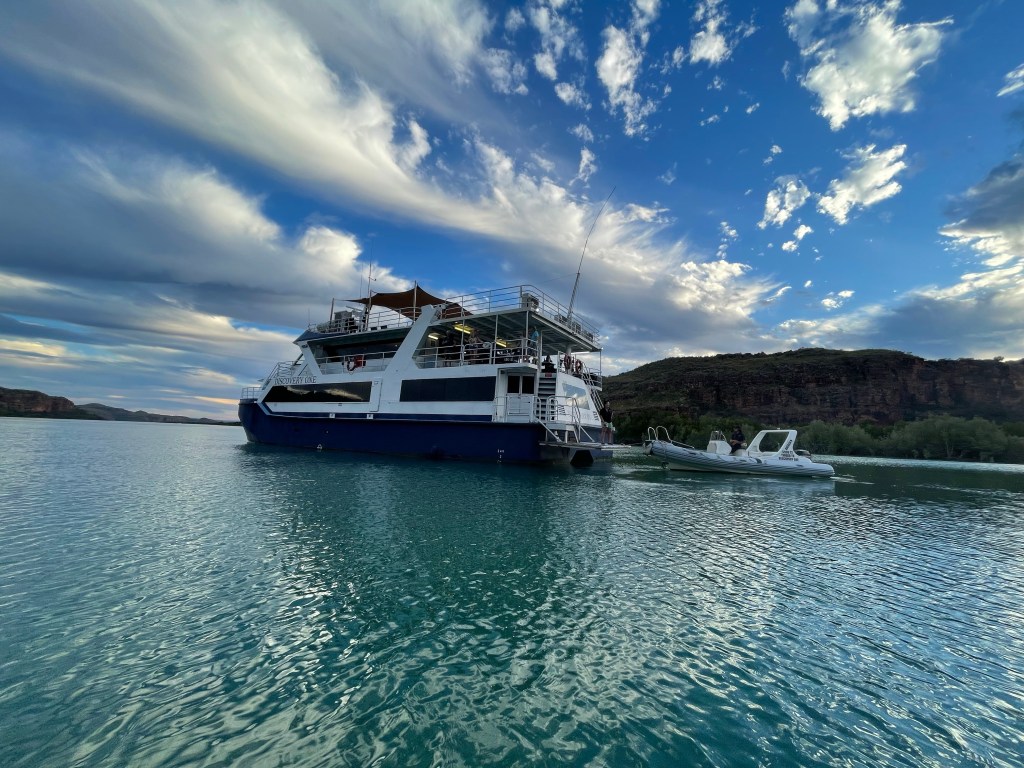
Discovery One is a grand old Catamaran that started her life as a Sydney Harbour Cruise Boat, then a Whale Watcher off Harvey Bay, Queensland, before being refitted as a Kimberley Cruiser.
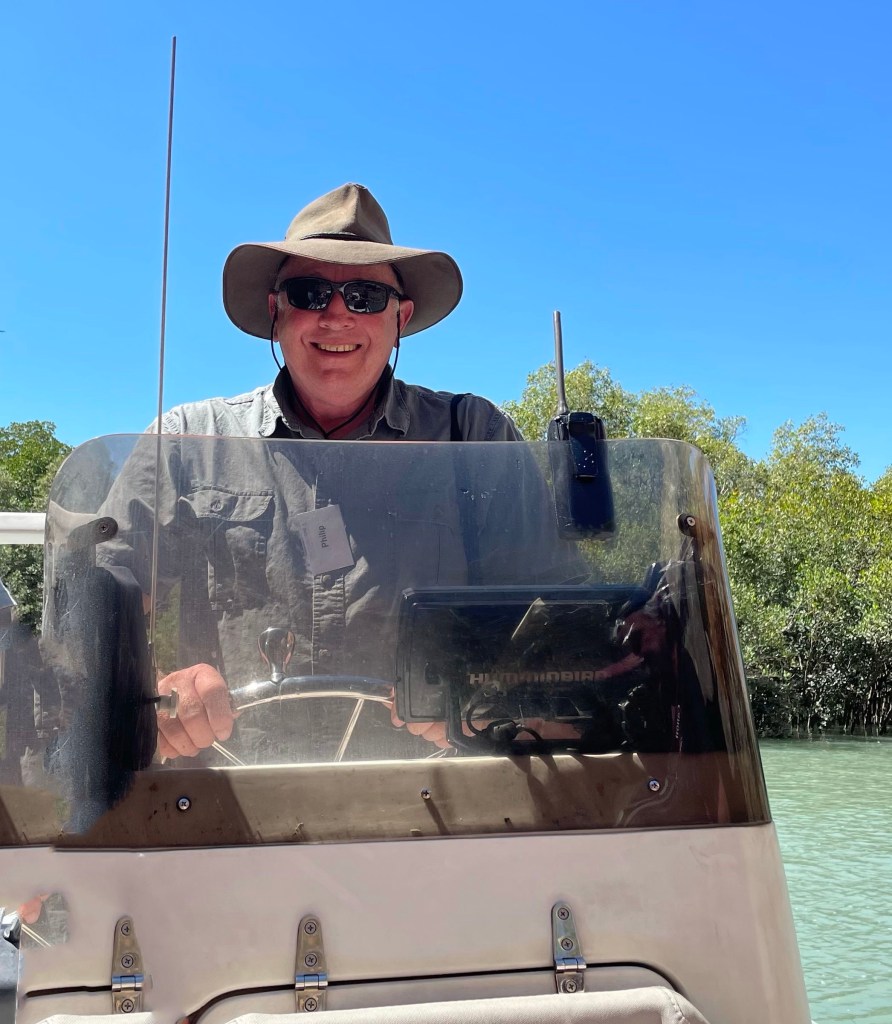
She is very well fitted out and carries an experienced crew of 6 for the maximum 22 passengers. The 3 most important crew (Captain Lennie for 17 years ) and hostesses Melissa and Sarah, have been on board for many cruise seasons. Equipped with 2 well powered tenders we were treated to 29 shore excursions during the cruise.
The scenery and shore excursions were awesome, everyone was friendly and fortunately there was an abundance of food ( I have been able to avoid those salad options!) A few nice compliments from me has worked wonders with our Hostesses Sarah and Melissa delivering my daily Latte requirements on time without needing to order!! As we have seen so many awesome places we will let the photos do the “talking” over the next few blogs.
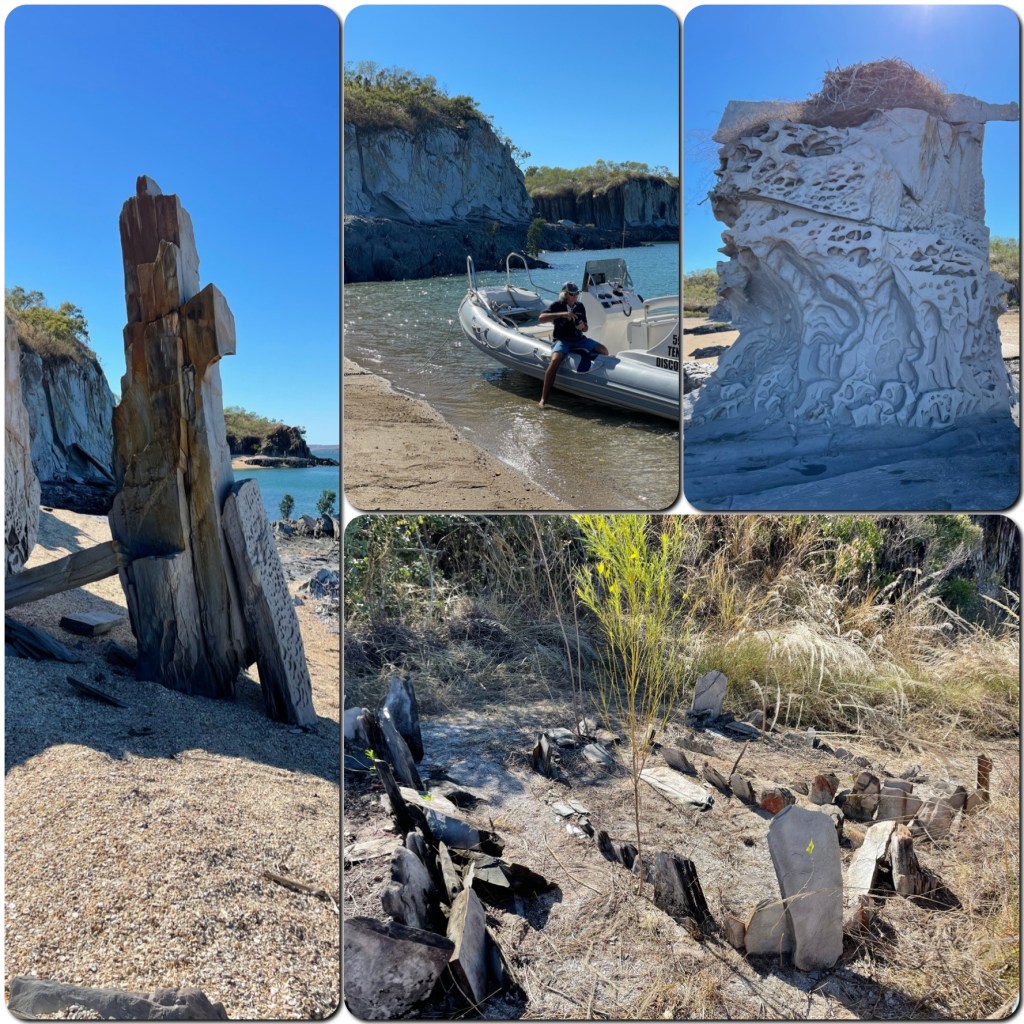
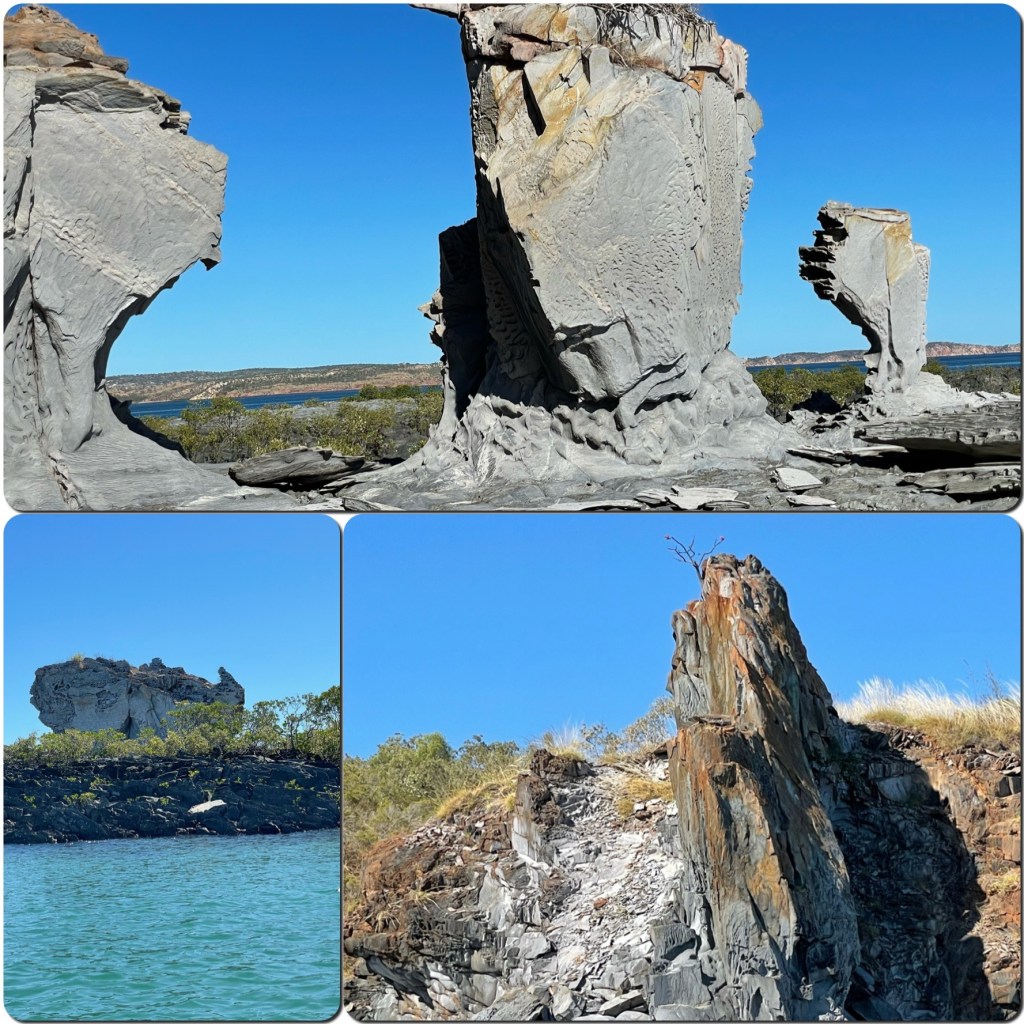
Derby RodeoDerby RodeoDeparting Derby on Discovery OneEdeline Island Rock FormationsRock Sculptures by Mother NatureCrocodile Creek Falls and Water HolesMundurral Bay Coastline
More to come over the next few days as we sort and collate photos.
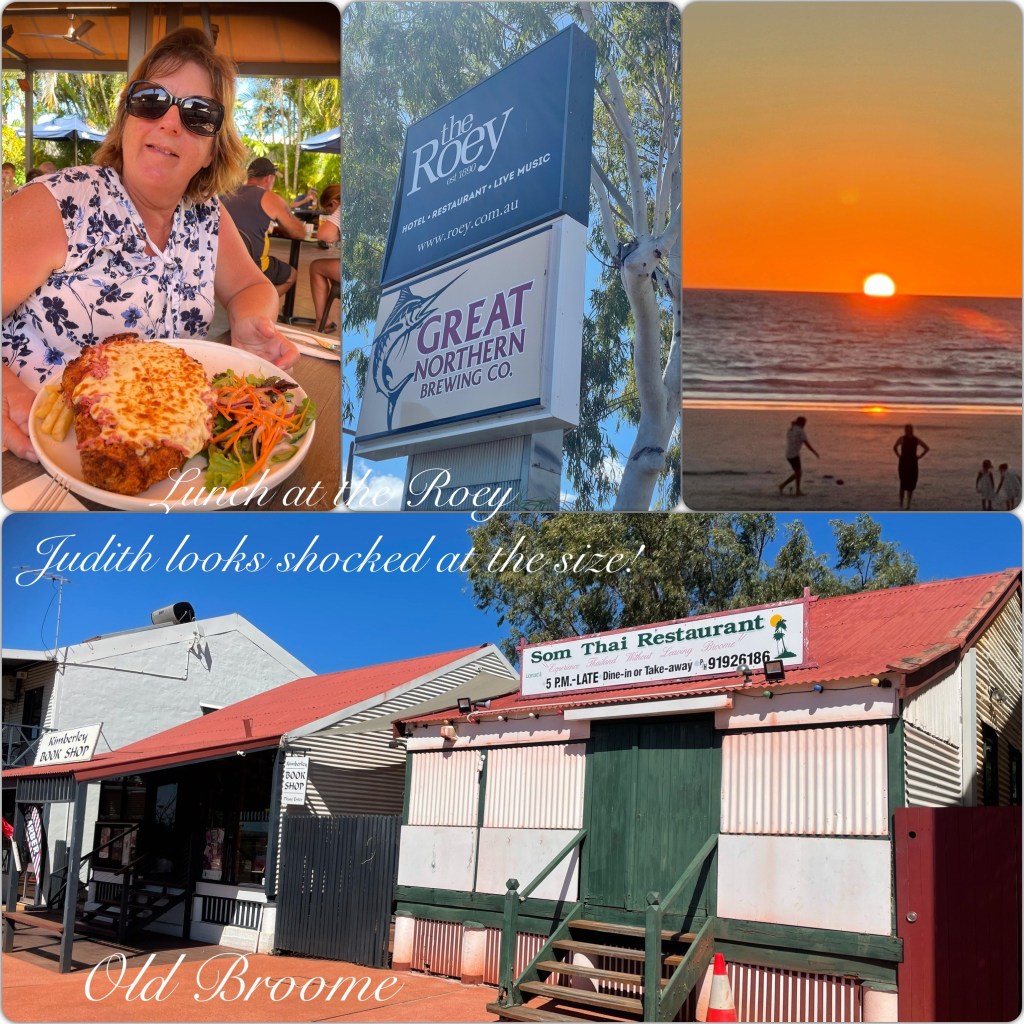
From Cape Keraudren we continued north to have had a couple of days stopover in Broome, a night at Cable beach and then out to the Broome Gateway Caravan Park. Much prefer this park where we have room to breathe unlike being crammed into Cable Beach. We did the obligatory Cable Beach Sunset but have seen much better sunsets out in the bush. We had a wander through the Courthouse Market and then walked down to the “Roey” Pub for lunch in the open air courtyard. A lovely meal in a nice setting.
(P) I have visited Broome a few times over the years, the “Old world” charm of the Old town and China Town has almost disappeared with just a few of the old buildings left! Broome has become a popular “short stay” getaway, the local population of 14-15,000 swells with visitors bringing the population up to 50-70,000 in the town and the ever popular Cable Beach. There are many popular bars, clubs and restaurants to entertain the tourists. Whilst great to see Broome and Cable Beach, the sunsets and nature of the remote coastal areas we have been fortunate to camp at, to us are far superior than the hustle and bustle of hundreds trying to jockey for prime sunset viewing at Cable Beach. However I must mention how great the “Tenderspot” Butchery is – evidently I may have over spent there a little!)
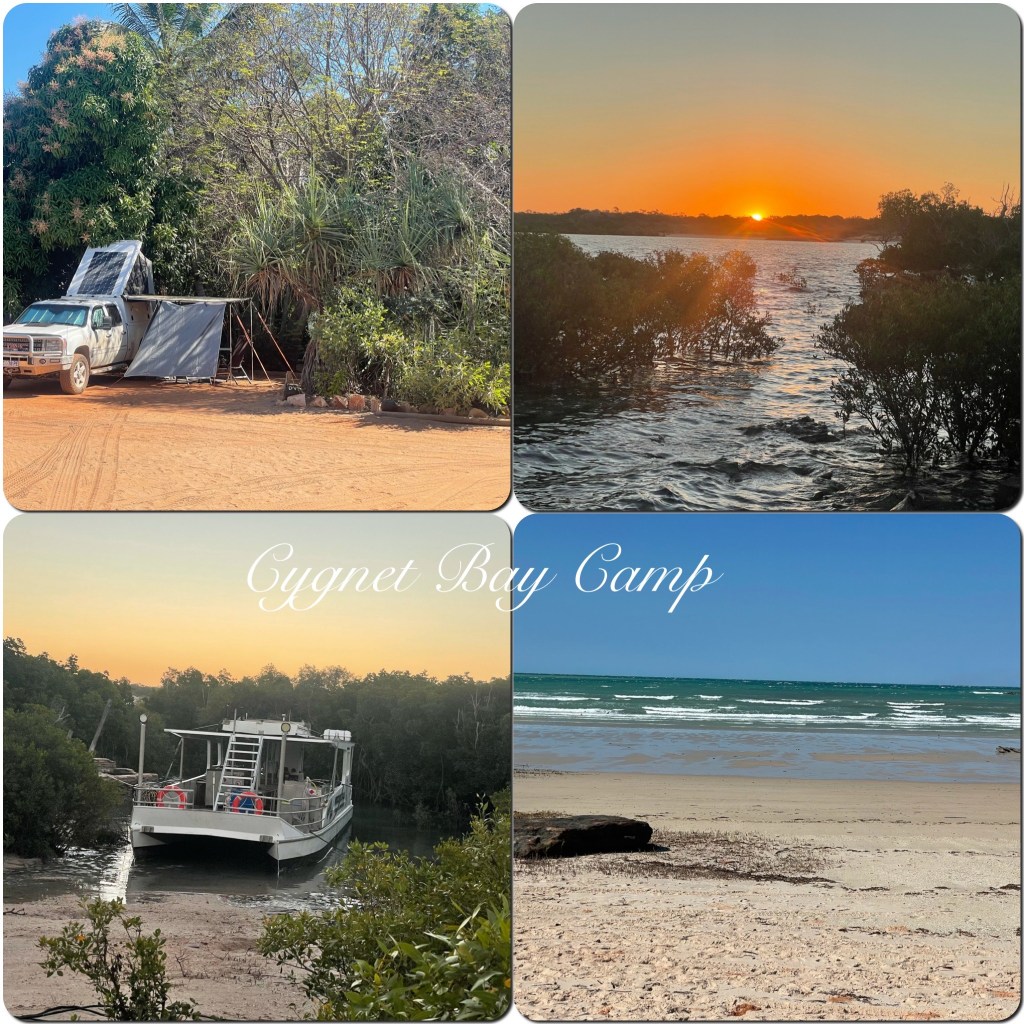
We are leaving our van at the Caravan park and heading up to Cape Leveque with our rooftop Penthouse for a few nights. We have heard so many rumours about places being closed up here so not sure what we will find but we are here so we are not going to miss the opportunity to drive up and tick a few spots off our bucket list. Our first two nights are at Cygnet Bay Bush Camp, almost at the tip of the Cape, 200k north of Broome, on a mostly sealed road. The trip is nothing to write home about, being scrubby to the edge of the road, flood plains and flat most of the way. It’s not until you take the side roads, that you start to see the gorgeous coastline. Many of the aboriginal communities are closed but the camping areas are open and if you don’t have a camping spot booked you can just get a day pass to have a look around. We arrived at Cygnet Bay Pearl Farm early afternoon and checked in. Drove out to the campground and set up. We have a beautiful little spot, shaded by big trees and sheltered from the hot sun. After lunch we walked down to the beach. This is not the most spectacular beach area but it’s a bush camp not a beach camp. We walked around the bay keeping a check out for crocodiles even though they said they hadn’t seen any for a few years. Then back to relax at our camp. Later in the afternoon we walked back to the beach to watch the sun set over the mangroves.
After breakfast we take the walking track around to reception in time for our Pearl Farm Tour.
This is the write up about where we re staying
“An epic story; the original Australian owned and operated pearl farm spans four generations of the Brown Family over more than 70 years. Until recently, it has been an exclusive pearling village accessible only to our pearl farm team and the local Bardi people. In an industry first, Cygnet Bay Pearl Farm “opened the gate” and invited travellers to share in this very special place, recently described as “one of the most unique destinations in Australia”.
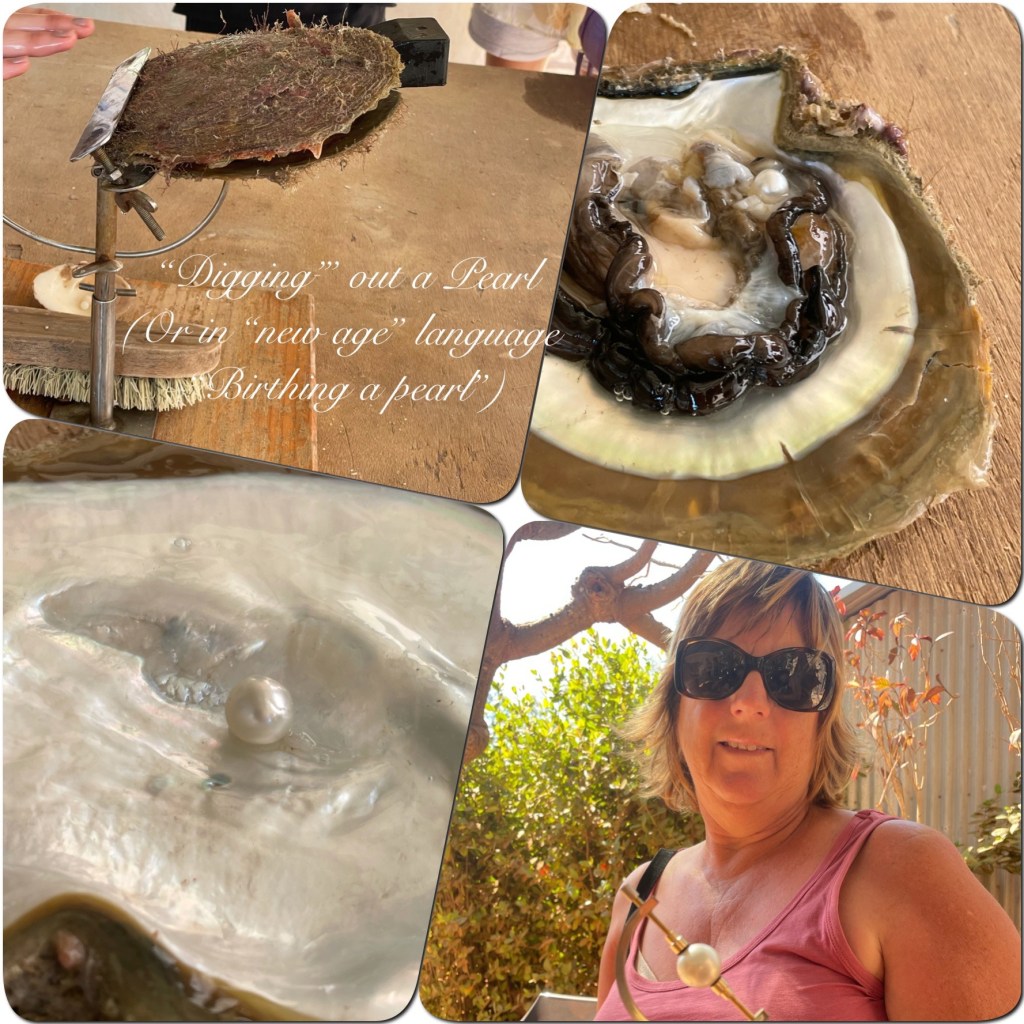
The tour gives us an insight into the pearling industry up here and how this family has worked with the indigenous people to create a thriving industry here. We were shown how the oysters were seeded to produce pearls and then shown how they “birth a pearl” and have it assessed for quality, size, colour and lustre. It was a very informative tour. After the tour we wander back to our camp for a while before returning to the restaurant for lunch, which we enjoyed on the deck overlooking Cygnet Bay.
(P) I was all ready to purchase the said “new birthed pearl” for Judith but when I was ready to inspected the 10mm diameter shimmering “new born” some other male obviously keen to impress purchased it before I could fight my way through the moths in my wallet to extract the cash! Maybe another time Judith!!! )
Next day we pack up and head out to visit Kooljaman, another camping area and the tip of the Cape. This again is a lovely area with beaches on both the east and western side of the cape. The eastern side being the most sheltered today. White beach, sand dunes and blue waters and safe swimming. The western side is red cliffs, white sands, sharks and no recommended swimming. Such a contrast between each side. We payed $20 to have access to the area for the day, most worthwhile to be able to see what the area is like, we noted it for a camp spot next visit.
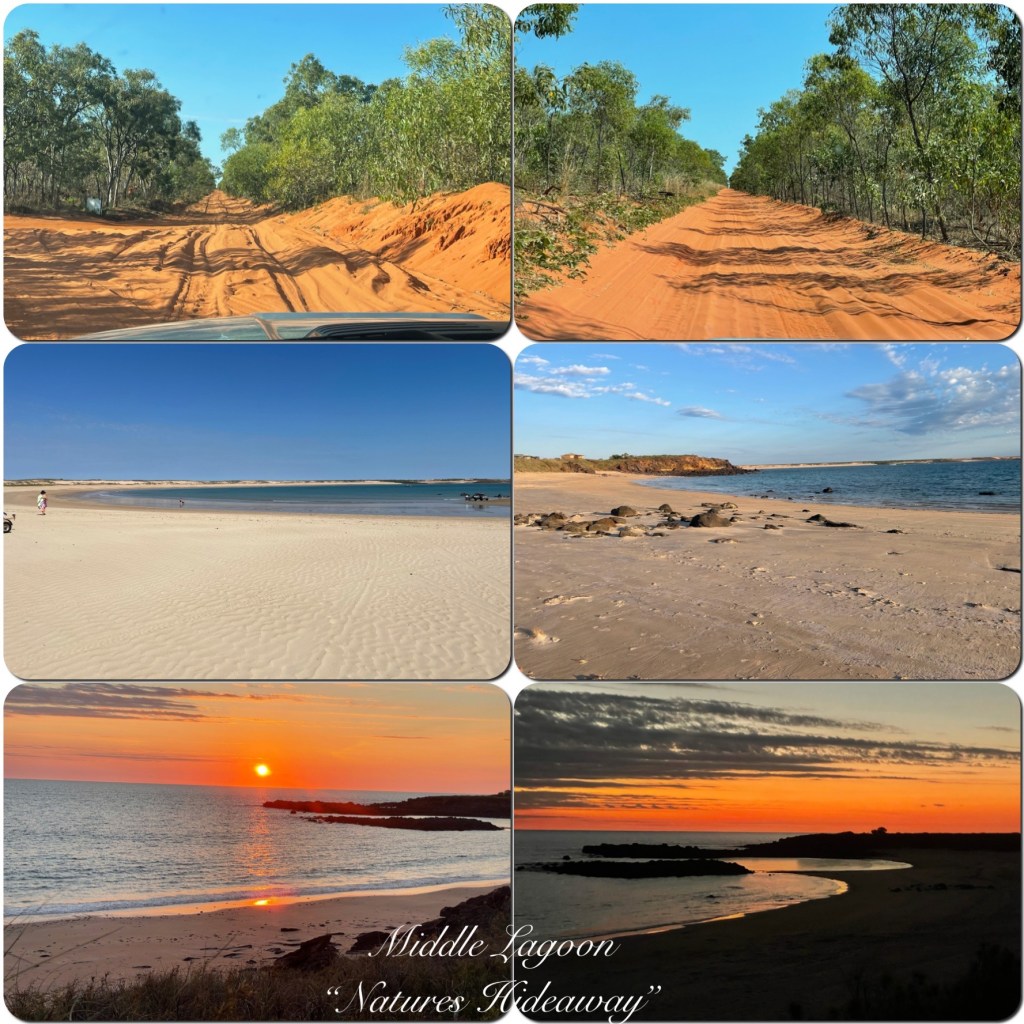
From here we head back down south until we reach the turn off to Middle Lagoon. We now have a 40 kilometre sand track into the campground where we booked yesterday for tonight. This bit of track could bring a few people undone if they didn’t know what they were doing. It was very sandy in places and a one vehicle track in but it was well worth the drive to come out at Middle Lagoon
Two lovely beaches to choose from. Sun set point to sit and watch the whales and the sunset from and warm water to swim in. We fitted in two swims, one at each beach.
Next day we have to leave as we have an appointment to keep in Derby. But we will be back this is a gorgeous spot.
(P) One would say Cape Leveque would have to rate highly as a place to revisit and spend more time. Whilst we ticked a couple of places off our bucket list, we added more!)
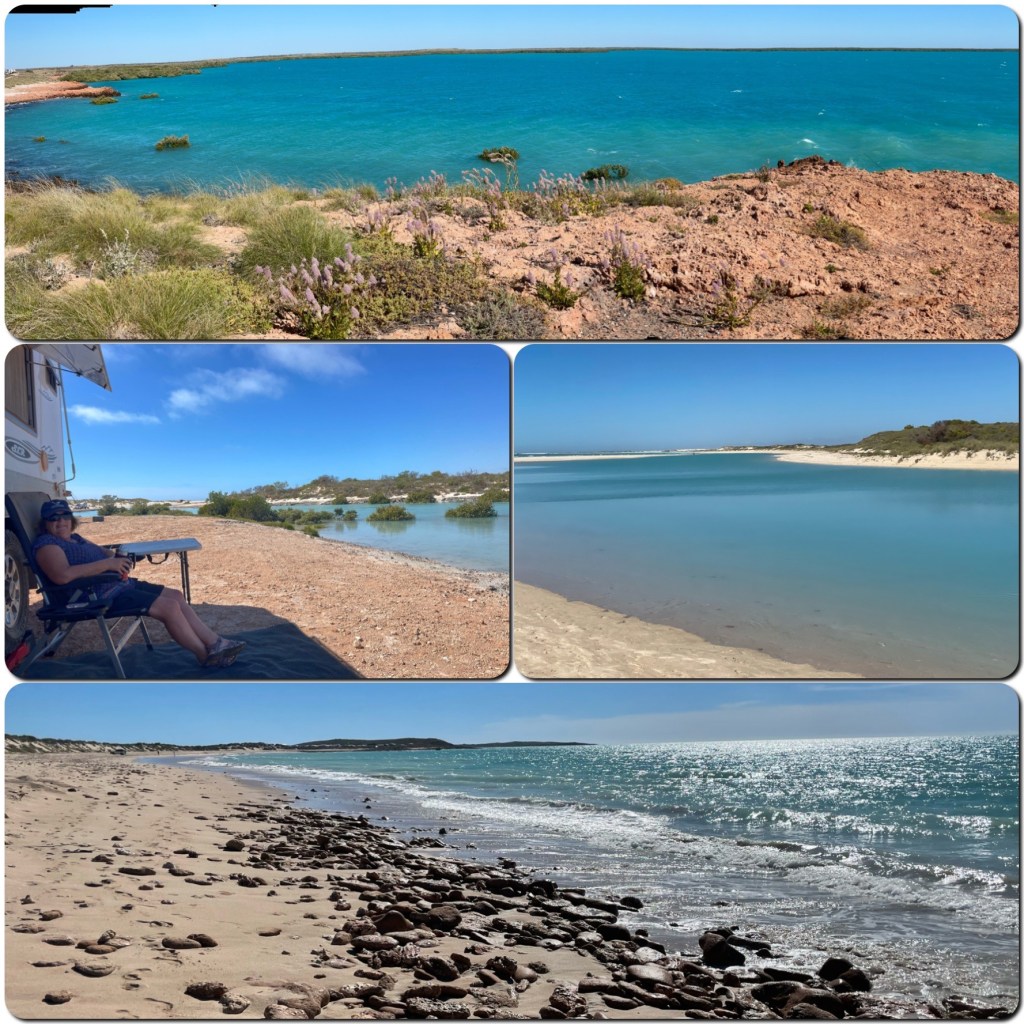
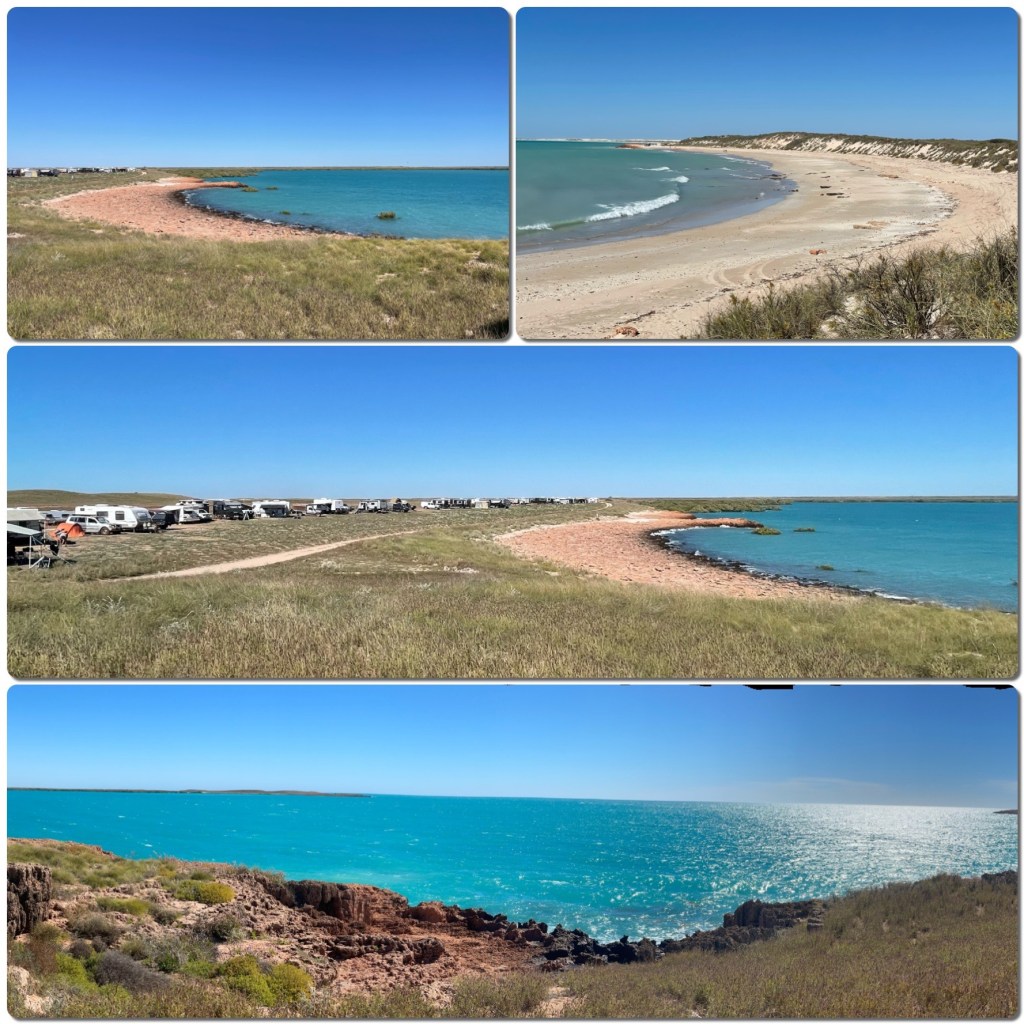
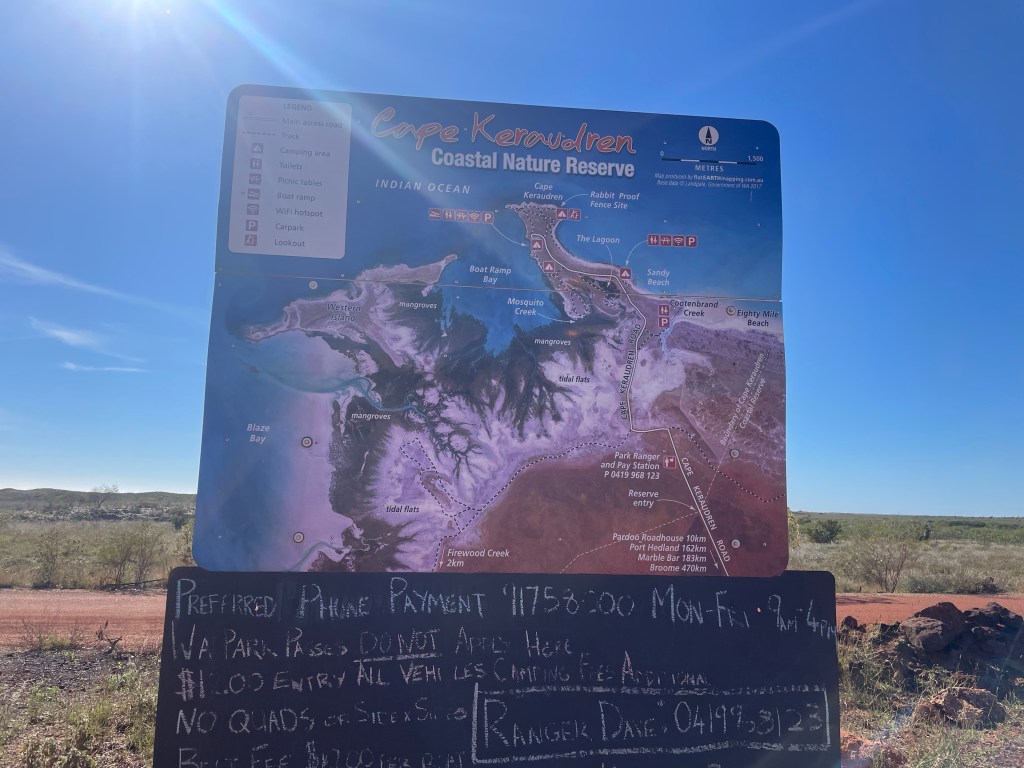
Last week we have had a pretty relaxing time. From Emu Creek Station we headed back to Port Hedland for a few days to stock up on groceries and for Philip to watch some more ships enter and leave Port. This time we stayed at the Free camp at the Turf Club. Each night there would have been at least 80 vans on site. They are very strict here and to stay you must have a grey water tank and toilet on board. No facilities are provided. This didn’t seem to stop some people with out grey water and toilets from trying to stay. The camp host was very much on the ball and quickly moved people on if they didn’t comply. From the camp site it was just a quick walk up over the hill to a local lookout to sit and watch the harbour, or a few minutes walk to the supermarket. We had a couple of very lazy days here then on Wednesday 28th we did a big drive up to Cape Keraudren, (164k.) This is the southern end of 80 Mile Beach. We just thought we would drive in and see what it was like as we had heard it was a nice spot but hard to get a camp spot. As we filled out our registration at the park entrance Philip talked to a guy who told us there were plenty of spaces so we decided to stay a night. We drove the short distance in and found a lovely spot on the edge of Cootenbrand Creek. Tide is out when we arrive but before too long the tide changes and the water rushes in. Totally changes the view from our van. It’s extra nice now with the tide high. The creek fills and drains all over the space of two hours.
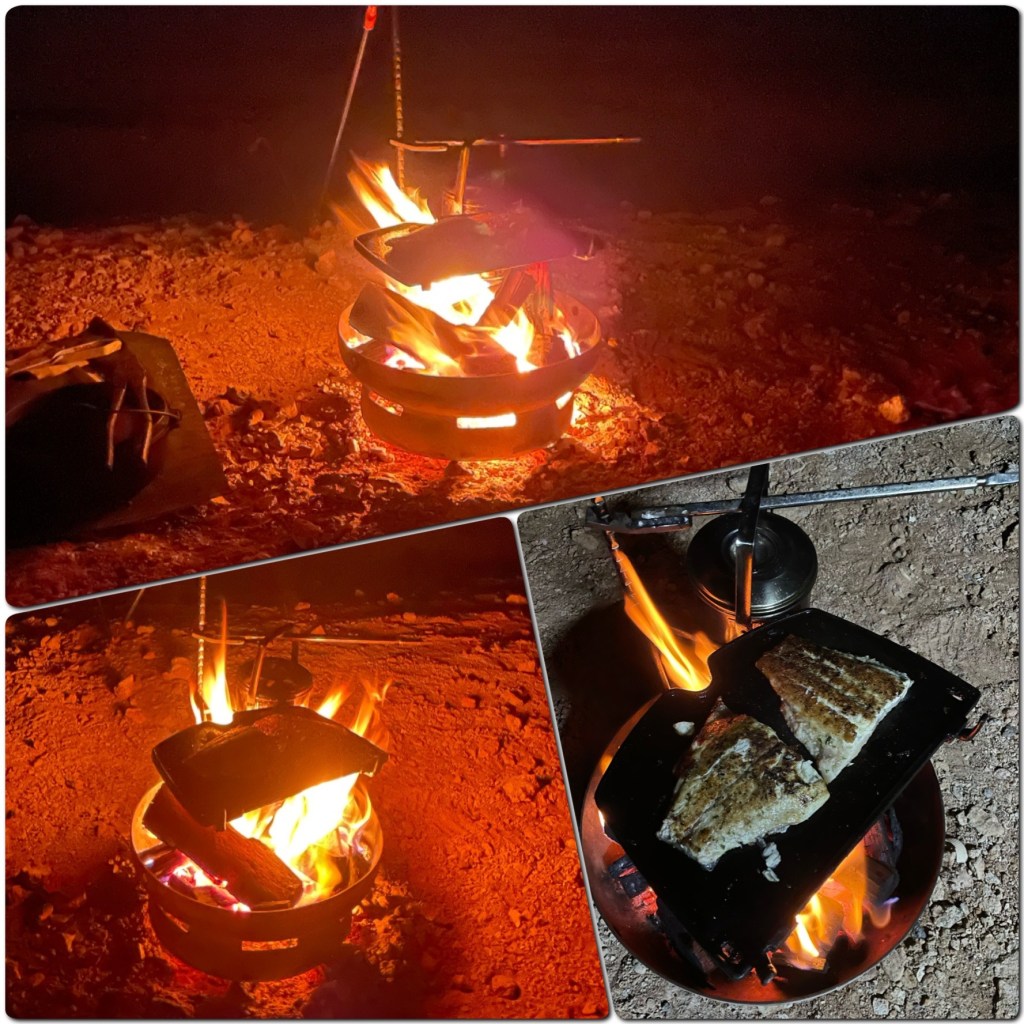
After a walk down to the beach with its beautiful blue waters and some shell collection we head back to the van and relax for the rest of the day. Fresh Barramundi on the camp fire for dinner tonight. Yum.
Barramundi on the CampfireTide Out, Tide In
Thursday morning we decide to stay another night so we take the truck out and pay our fees. Stop at Pardoo Roadhouse to fill up with fuel and buy an ice cream (it’s only 10 am but Philip tells me he hasn’t had one for days)! (P) Poor deprived Phil!!!) then head up a side road to collect some firewood for tonight’s campfire. Back to the van and I whip up some cookies for our travels, have some lunch then head out for a walk along the beach to the further two campground areas. Total walk 9 kilometres mostly along the beach and around the headland. There are lots of sparkling blue bays here, lots of people fishing, not much evidence of fish caught though. There are heaps of campsites still available even though the websites say camping is booked out. (P) never believe FB and other internet gossip sessions, we rarely book ahead and have, to date, not been refused a site where we wanted to stay. Even thru the school holidays! Maybe we will get caught out one day – we will worry about it when it happens)
After returning from our walk it’s time for a swim in the creek. The water is lovely and refreshing and the sun soon dries us off. Now it’s time for a drink and the Blog.
(P) and light the camp fire so I can cook a nice thick T Bone steak over the hot coals- gotta love camp fire cooking!
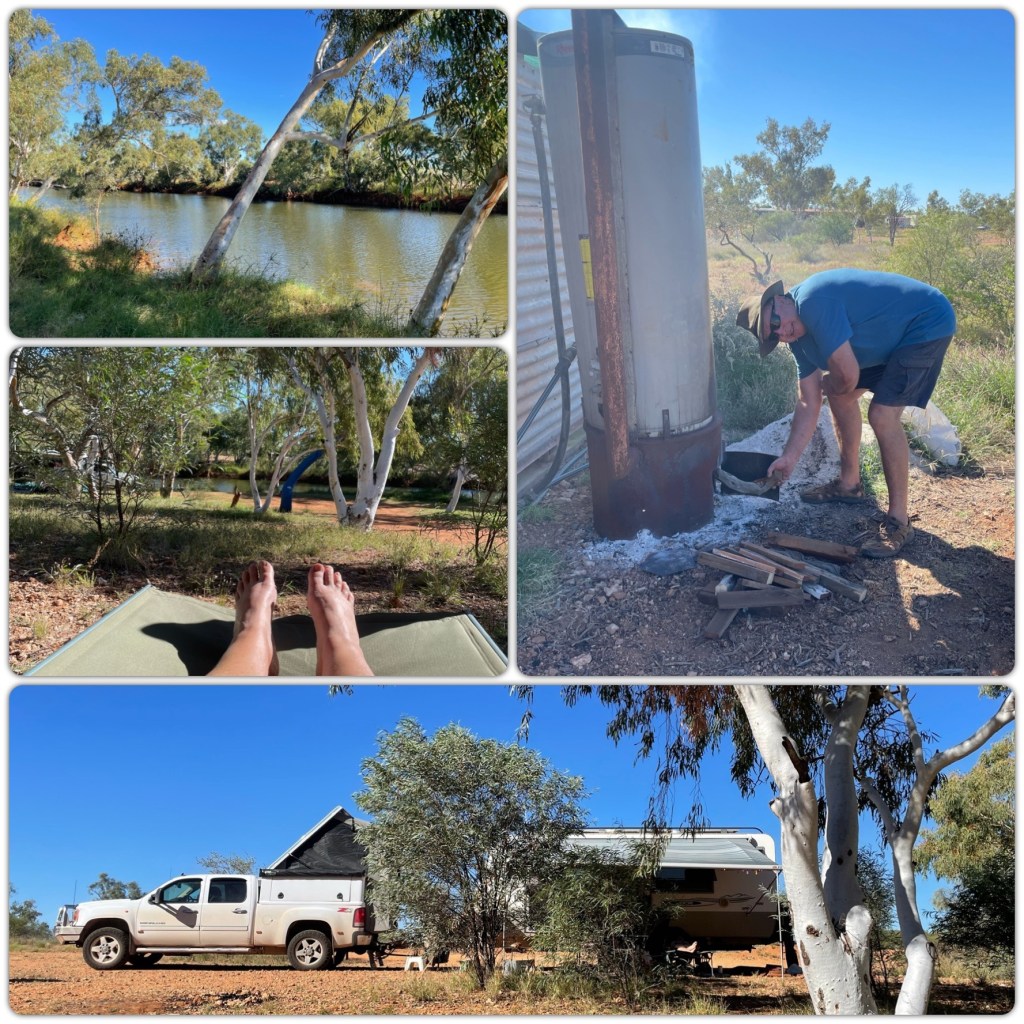
After leaving Denham, Shark Bay Area, our next destination was Emu Creek Station. We stopped in at Coral Bay on the way and am I glad we are not staying there! We have both visited before and it is a beautiful place but it was wall to wall tourists, packed into the caravan parks so close the vans were almost touching. Not our idea of fun. We continued on to Emu Creek. This station is 25 kilometres off the main road and turns many tourists off. The road in is gravel but not rough. We call in to reception but no one is about so we continue on to find our spot in the campground. Almost the same spot we parked last time. Up on the main level overlooking the river and large permanent waterhole which has dropped in level considerably since we were here 6 weeks ago. There are quite a few campers here but with plenty of room around each set up, we are not crowded. This is such a relaxing spot and we are setting up for a few days of relaxation. There are families here and the kids are having a ball in the river on kayaks and floaties and a rope swing. It’s great to see them having so much fun and not a iPad or computer game in sight.
Yannarie River Crossing
Denise and Andrew, station managers, call around later in the afternoon to collect fees and have a chat. I organise to have my hair cut again on Friday morning before heading out on Saturday.
Philip gets a job while he is here, as we are camped about 100 metres from the shower block which has a donkey wood heater to heat the shower water. He has to stoke the fire throughout the day to keep the water hot. Not a terribly difficult job but the campers do like hot showers between 3 and 5 pm.
(P) it pays to “be nice to Phil” when he has a technical job like this! One lady did take the trouble to mention “ her yesterday’s shower was only Luke warm”. My reply was “it is a bush camp lucky there is a shower at all”!)
Emu Creek Campground
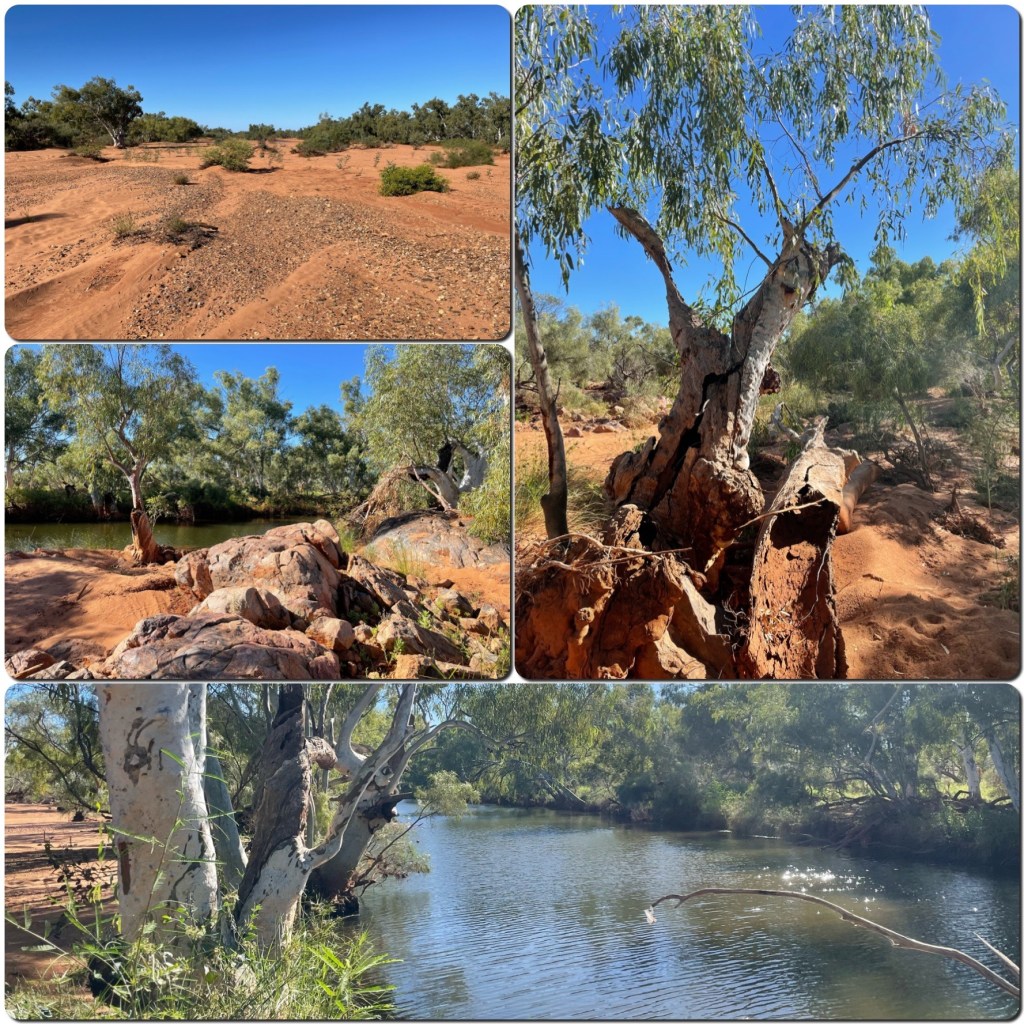
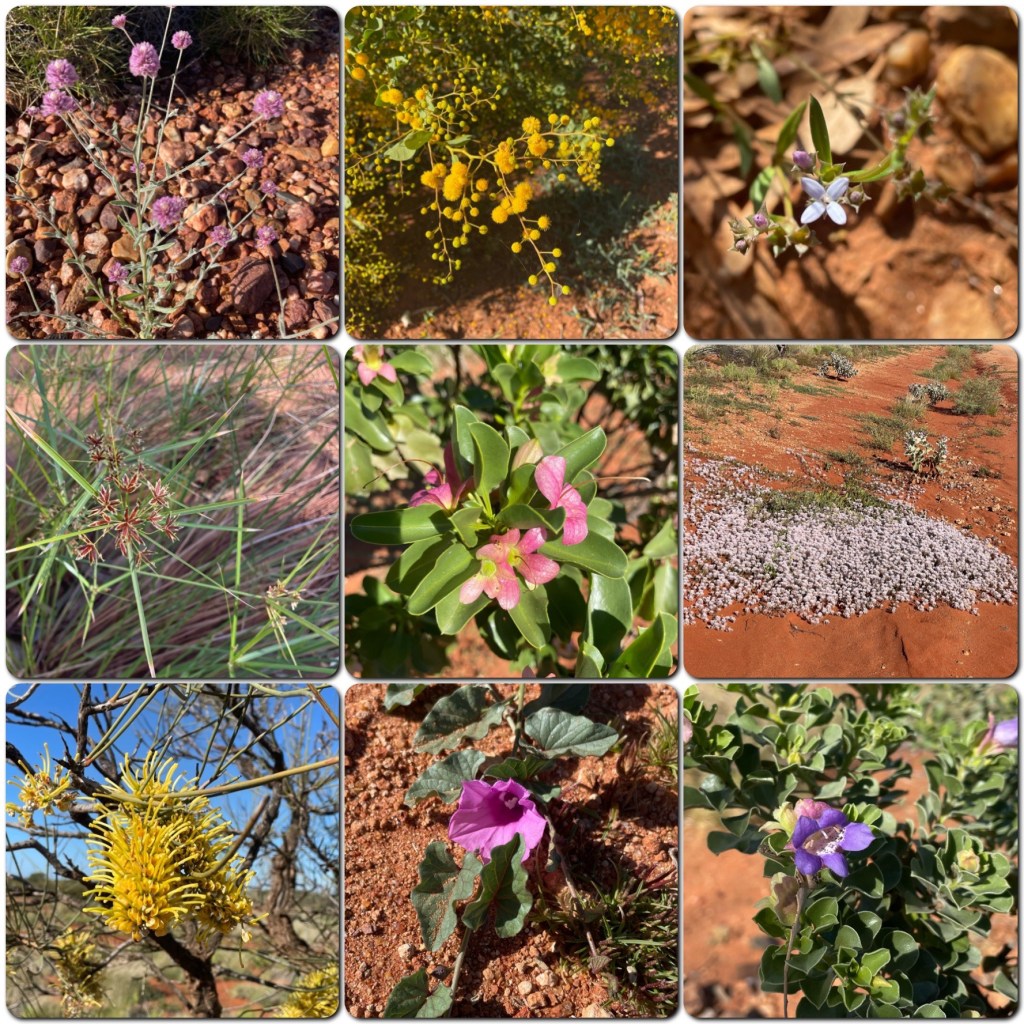
During our stay here we walk up one side of the Yannarie River to the river crossing and back down the river bed to Emu Creek and back to the campground, about a 5 k round trip. Last time we were here the river was impassable. Not this time, it’s dry and sandy. It’s a lovely walk along the river with quite a few wildflowers about.
Three days of relaxing, reading, stitching and walking and a great haircut again have made this stay immensely enjoyable. It’s such a lovely spot with great hosts and somewhere we can really relax.
Yannarie RiverWild Flowers
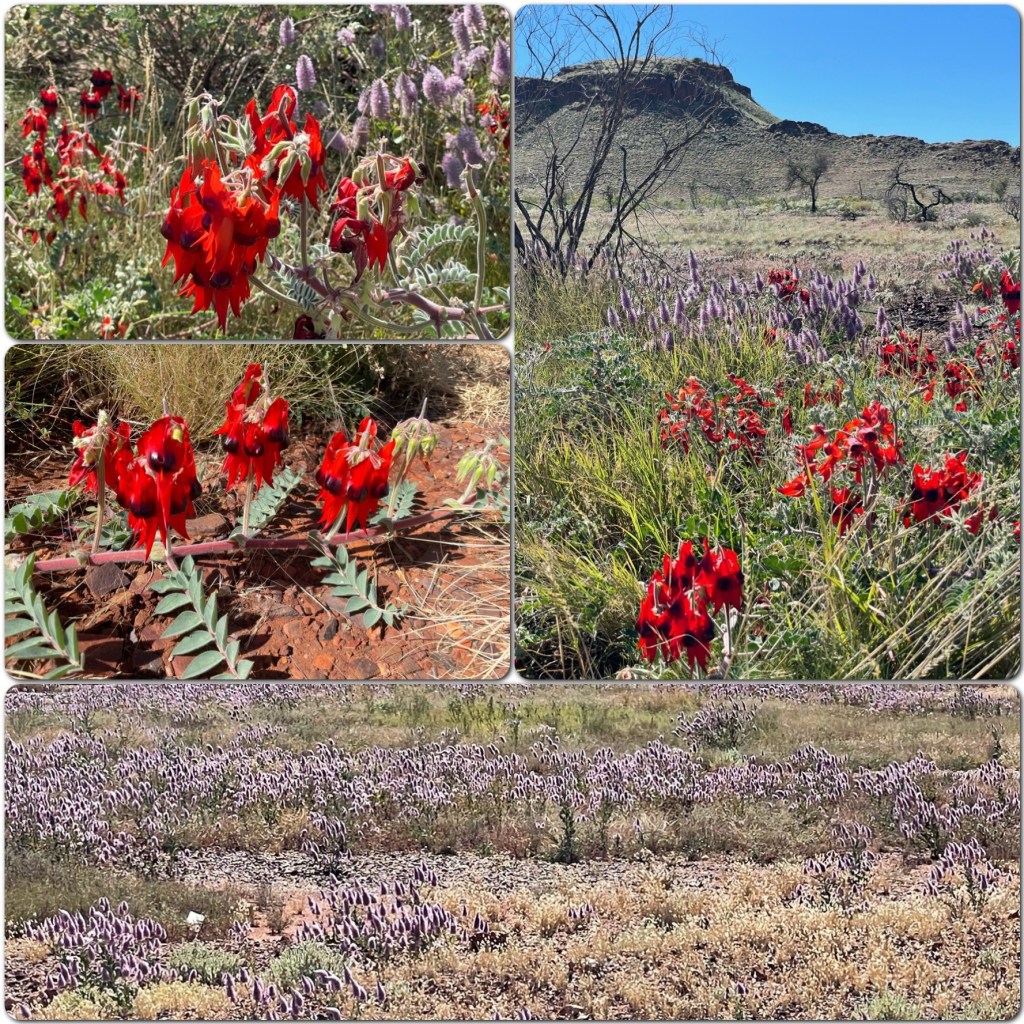
We are now on the road towards Karratha and Port Hedland and what a treat for the eyes. Acres and acre of purple Mulla Mulla, as far as the eye can see and then Sturt Desert Pea sprinkled in amongst it. I have never seen so much desert pea, it’s certainly flourishing this year and the bright splashes of red make the view so much more interesting.
(P) even tho it is a pea that I can’t eat! It would have to be one of my favourite flowers! We are so fortunate that we were preceded by a wetter than average season. No matter where you look the countryside is so colourful and picturesque! Not to mention how healthy the cattle look.
Off Road driving, sand dunes, rugged cliffs, carpets of wildflowers, crystal clear waters, whales, turtles, fantastic fish and the most westerly campsite in Australia. Where are we and what have we been doing? (P) no mention of good company Judith!)?
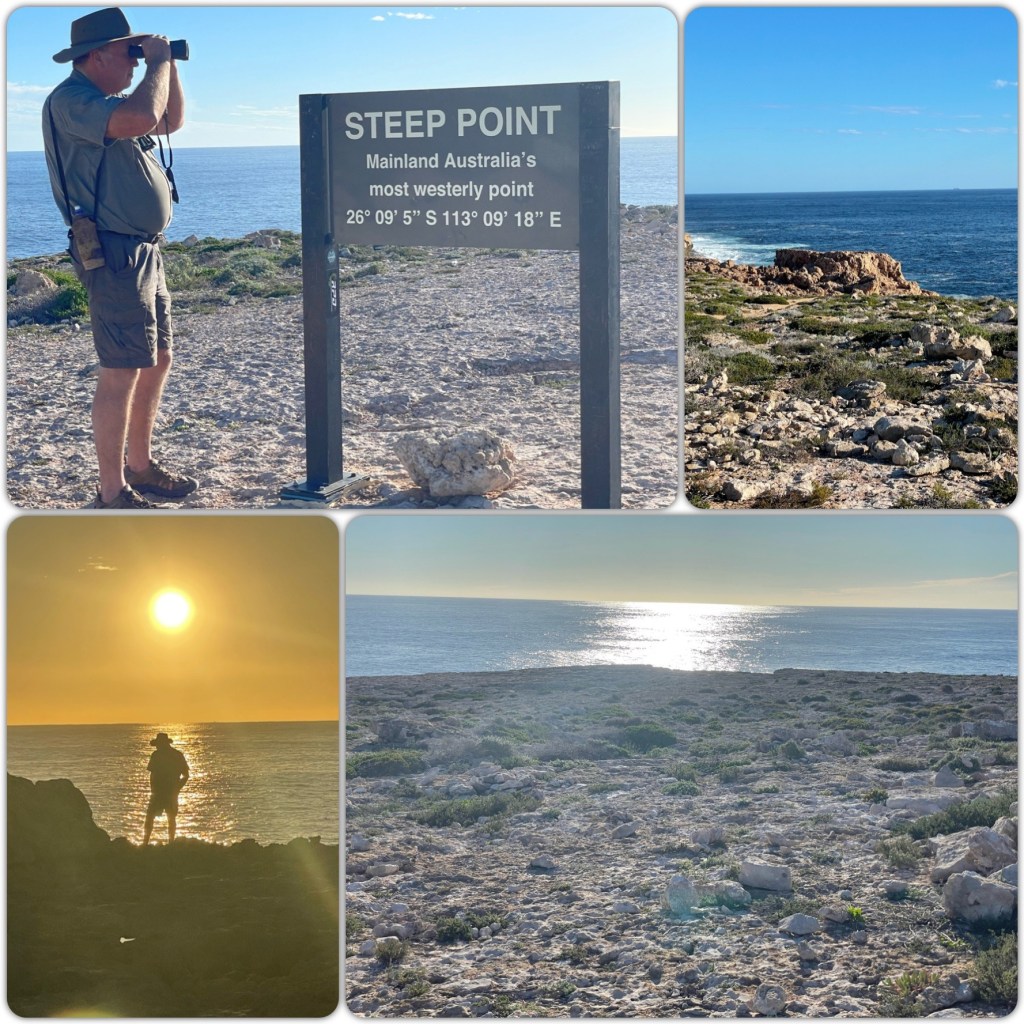
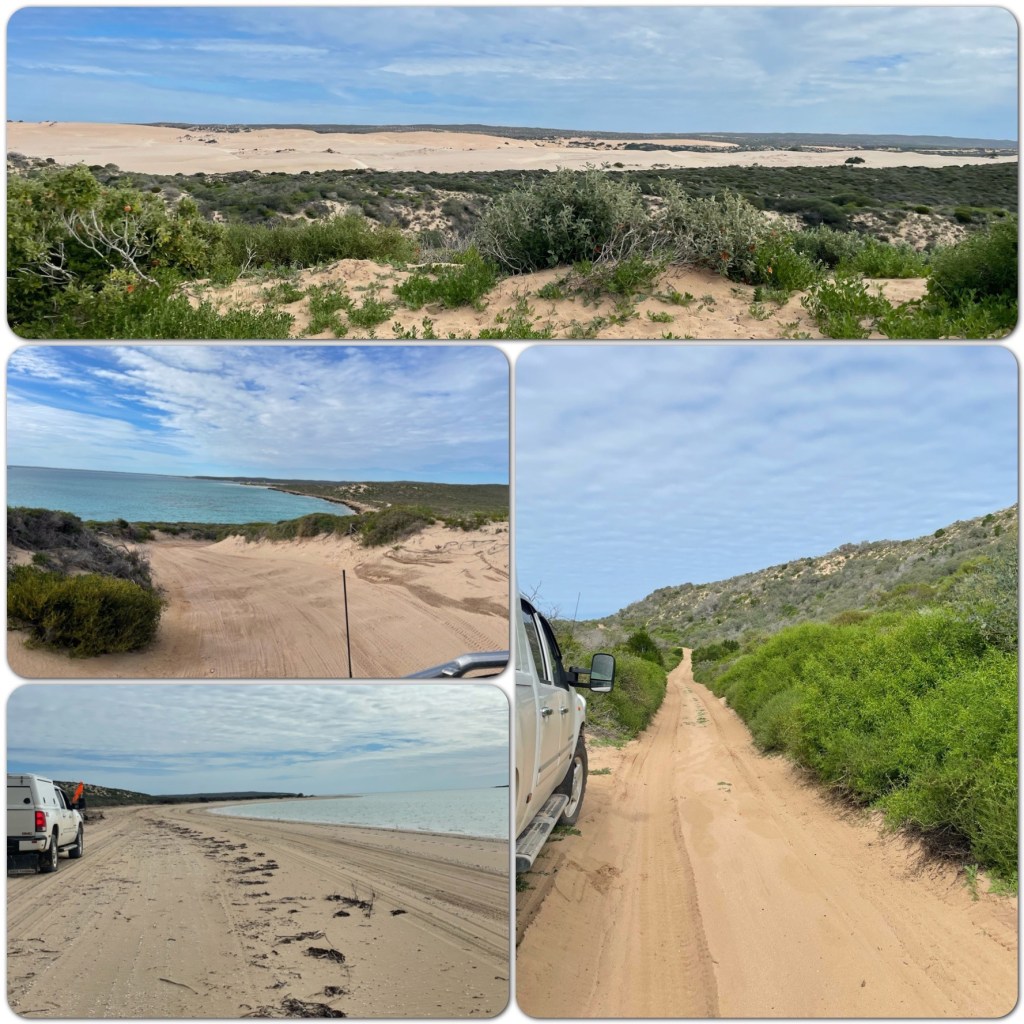
We have taken our rooftop tent-“penthouse” and travelled to Steep Point, the most westerly point on the Australian mainland. About 100 km of off road sand tracks and approximately 100 km of gravel roads to get to the off road area. Four hours of slow driving with tyre pressures down to 25 PSI on the sand. Most of the off road was single lane so extra precaution when vehicles are approaching. One vehicle just has to find somewhere to get off the track. But at the end of the track our campsite awaits. Sitting on the cliff top just 400 metres from most westerly point In Australia. Standing on the cliff edge ( not too close for me) we could watch fish swim off the reefs edge. Lots of fishermen dangling a line but no evidence of fish caught. Luckily we saw several whales off shore. As tonight’s sun sets we are sitting in the most westerly campsite on the Australian mainland!
Steep Point“The Oven 3” Campsite
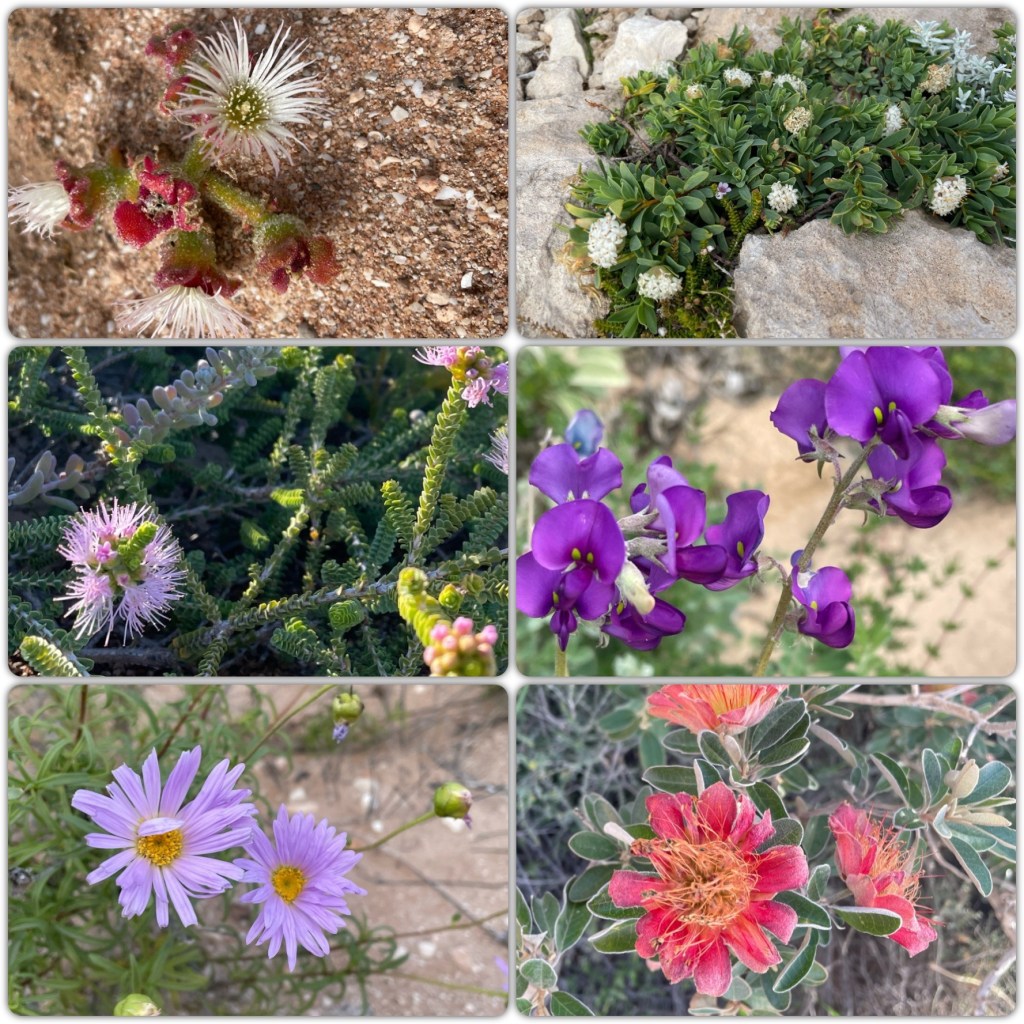
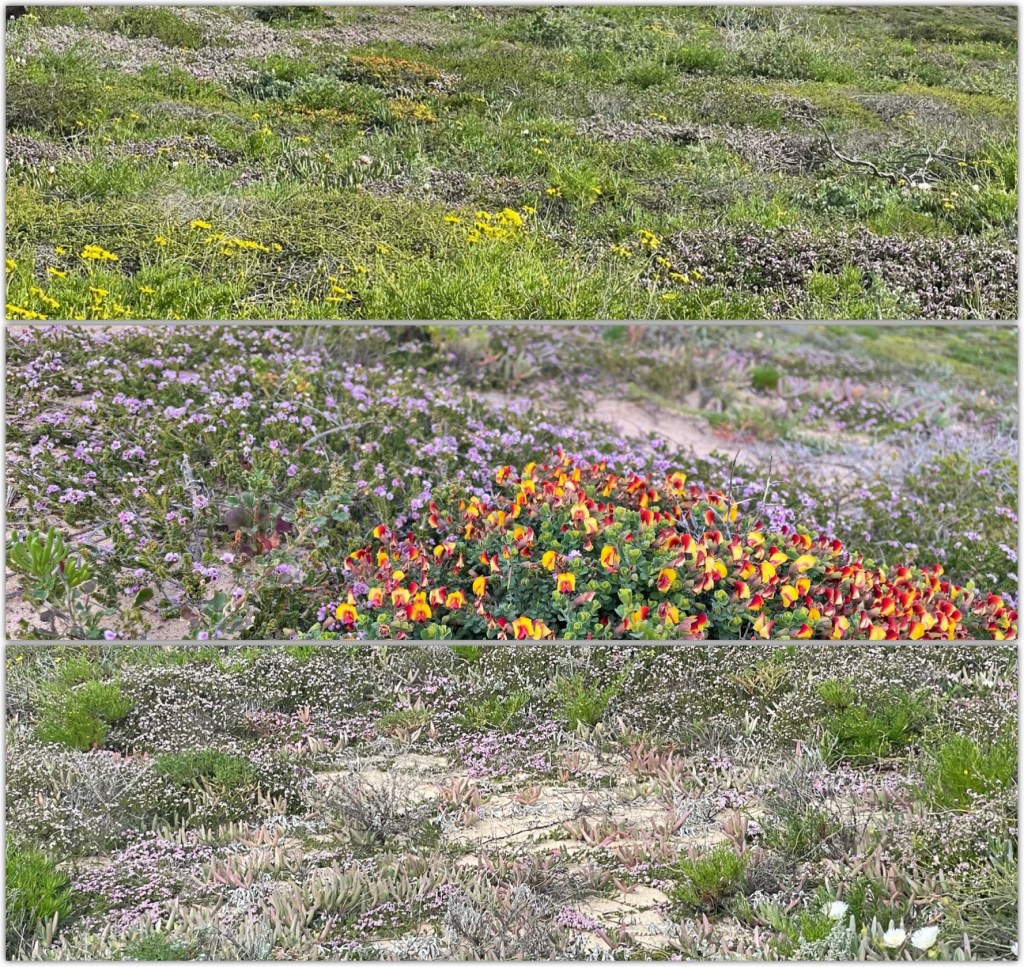
A highlight for me has been the mass of wildflowers carpeting the sand dunes and roadsides. Purples, yellows, pinks and whites and multiple shades of green are everywhere we look.
Carpets of Wildflowers
After a peaceful night listening to the sea roll in along the cliffs and a nice feed of bacon and eggs for breakfast we head back down the track to stop at some cliffs where we try to spot some more whales. Alas, no luck this morning. We did spot a huge turtle though drifting close to the breakers along the cliffs.
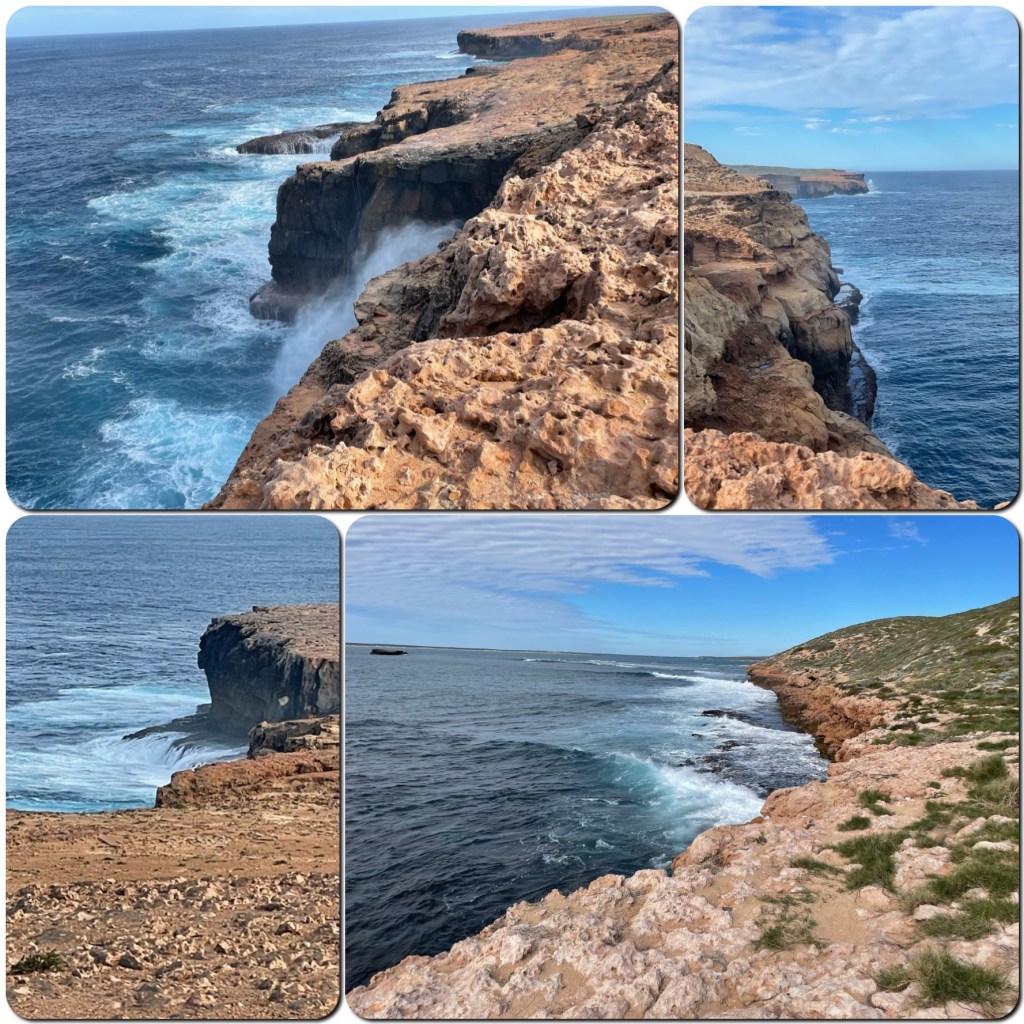
The Zuytdorp Cliffs run for 150 kilometres from Steep Point south to Kalbarri. The cliffs are named for a Dutch East India ship that was wrecked along the cliffs in 1712. At the highest point they are 250 metres high. Again we enjoy the numerous wildflowers along the track. Unfortunately our photos don’t do justice to just how spectacular they are.
Zuytdorp Cliffs
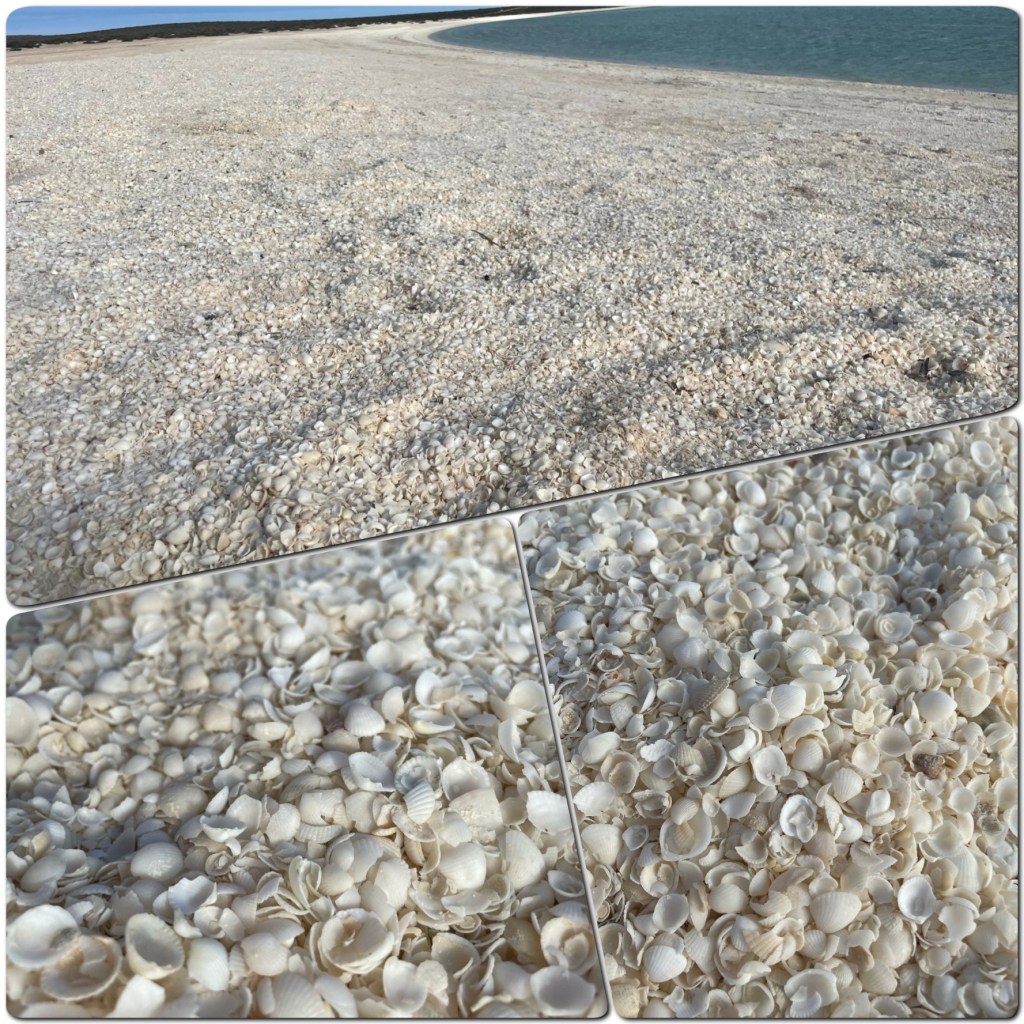
We also have a stop at Shell Beach where the entire beach is made up of trillions of tiny cockle shells, in some areas 10 metres deep. The sea water at nearby Hamelin Pool and Shell Beach is twice as salty as normal sea water. This causes a lack of competition and predators for the cockles, leading to incredible abundance of this species.
Shell Beach
(P) – Another destination now ticked off the bucket list! We have now been to the four compass point extremities of our awesome land. Pure luck and a lack of planning gave us camp # 3 at the “Ovens” campground at Steep Point booked at 9pm the previous evening where we were fortunate enough to experience this great area! (J. We now understand why it is called the Ovens. It’s the hottest spot we have been in around here, sheltered by cliffs, on rock and sun shining back off the sea. It holds the heat very well. Luckily it’s not 40 degrees or we would have melted).
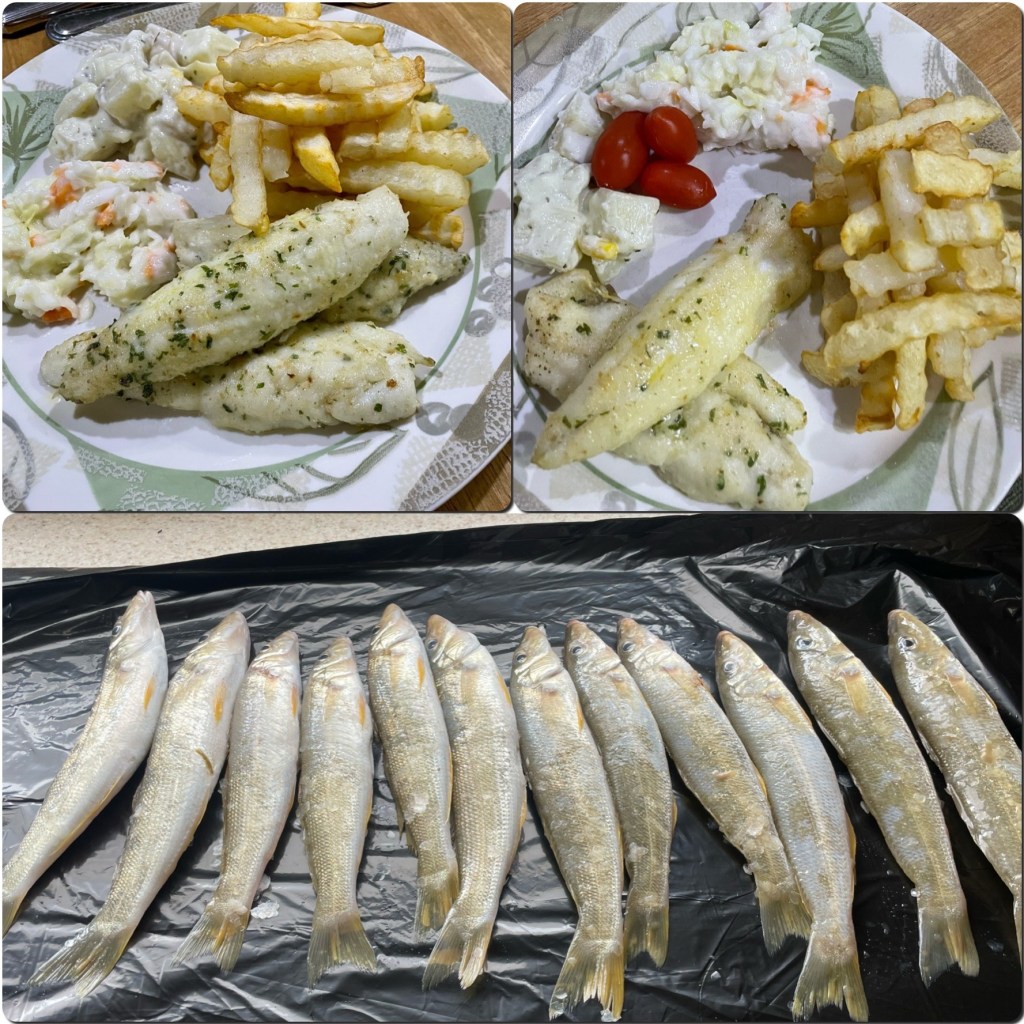
Seafood abounds here also (as well as protected marine parks). The bucket full of fresh whiting caught this morning will be enjoyed for dinner this evening I am sure! Whilst we would like a little more warmth than the 21-23 degrees here Sharks Bay/ Denham has been a great 5 day stay. Tomorrow we are heading north, looking forward to warmer weather, more seafood and hoping to catch a Rodeo or two to throw into the mix of nature, mining, bush camps and whatever we can find of interest- Northward bound to destinations unknown)!
After an extended stay at home in Tasmania due to COVID lockdowns in Perth, we have made it back to Western Australia. After a delayed departure from Hobart and storms and lightening over the Perth airport as we arrived we finally reached our van just before midnight, we threw our bags into the van and plugged in the power and went to bed. Next morning Philip went up to the office to pay our outstanding fees (an extra week) only to be told there was no charge as we had let them know we were stuck in Tassie due to COVID and we couldn’t be expected to travel during lockdowns. This was a big surprise as we had fully expected to pay for our site while we were away.
Before leaving the park we did a quick trip to Costco to stock up on a few items before we head out of Perth. Back to the van and we saddle up and head out of the city south to Binningup to stay with friends for a few days.
Our original plan was to be back in Perth on the 29th June in time to surprise Peter for his 70th birthday but as that didn’t happen we are now staying with them so we can celebrate with Peter, Rad and friends on the 10th. What a great day we had sharing this celebration with them. Only 15 of us but boy could we all make some noise. We shared an awesome lunch that stretched from midday to 4 pm. Antipasto platters, Roast pork, lamb and beef, stuffed capsicum (yum), garlic beans, baked veggies, salads and then birthday cake, angel cake, chocolate slice, plus lots of other nibbles. We were full by the end of the day.
Monday 12th
We are up early and packed ready to depart at 6 am. Huge storms are forecast for late morning and we want to get north of Perth to miss the worst of them. After our goodbyes we head north and the closer we get to Perth the heavier the rain gets. Rain, darkness, wind and wet roads makes for a steady trip but as we leave Perth behind us the weather eases and the sun starts to poke through intermittently. Our first stop is GinGin to refuel both body and truck. We even have driveway service at this little fuel station and then nice freshly cooked toasties to stave off the hunger pangs.
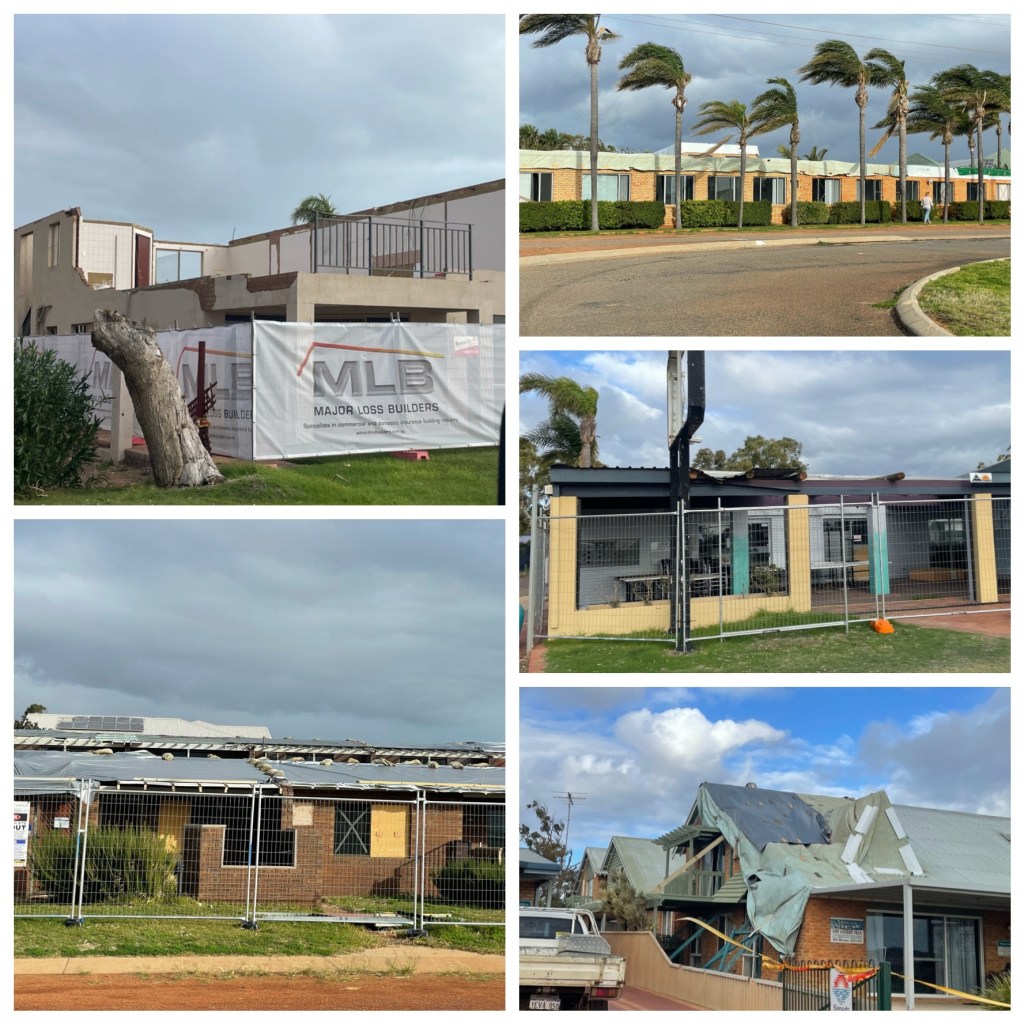
Our destination today is Kalbarri, 770 k from Binningup. Way too many kilometres in a day for us but as we had made arrangements to meet up with friends, Cameron and Margaret for a few days. As this catch up was prearranged we made the effort to get there as soon as possible. With us both driving we made our destination by 3.30 and set up for several days stay. Once we were settled we wandered around the park until we found “the Bulls”. Coffees, teas and some catching up was done before Philip and I headed off for a walk before dark. We needed to stretch our legs after a long day in the car. There is still considerable damage visible here from Cyclone Seroja which struck here in early April. Homes without roofs, whole motel complexes demolished, cafes gone. But the town is now busy and full of tourists which is great to see.
Cyclone Seroja Damage
We head back to the park and stop by Cameron and Margaret who have prepared dinner for us tonight. It was lovely not having to cook after our long day. Cameron had slaved over a pot all day to make a lovely “stew” which we had with mashed potatoes, very tasty!!!. Thanks heaps.
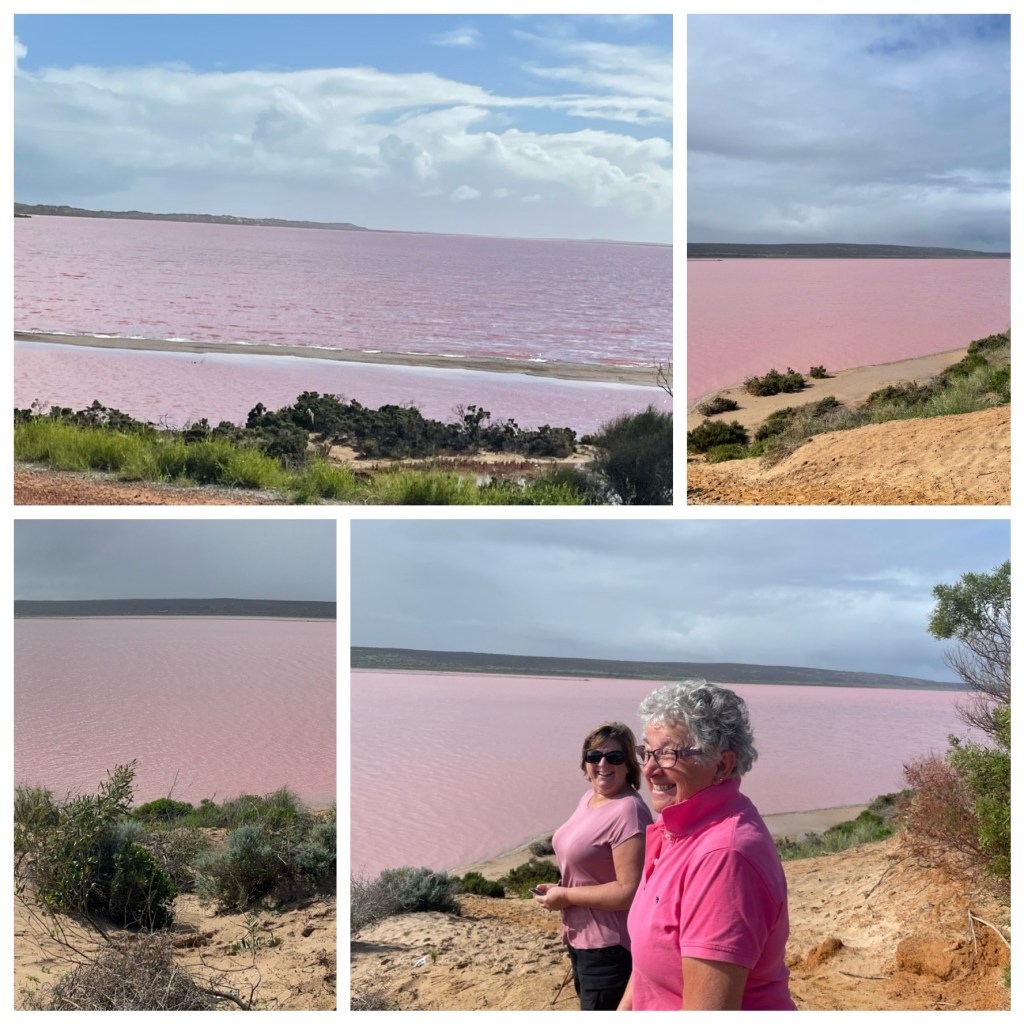
Tuesday was stormy and windy so we all took off for a drive around the area. Ended up doing a loop down the coast to Hutt Lagoon and Port Gregory. Hutt Lagoon is famous for its pink colouration caused by the algae dunaliella Salina that turns the salt pink. This lagoon also contains the worlds largest micro algae production plant. Although not as pink as in many photos the lagoon doesn’t disappoint today. Next stop was the Lyndon Station Heritage site. This was settled in 1853 and was the first convict depot north of Fremantle. Over 60 convicts were housed here to supply labour to the nearby mine. It was closed in 1857.
Next stop was Northampton for some lunch from the local bakery and a wander along the Main Street. We stopped in to the general family store and found a great little sewing machine museum at the back of the store. Lots of old machines nicely displayed with dates and details. Then to complete the circle we headed back to Kalbarri past the entrances to the National park.
Our turn to cook dinner tonight and share more stories of each of our Travels.
Ladies in Pink at Hutt LagoonLyndon Convict Depot
Wednesday 14h July
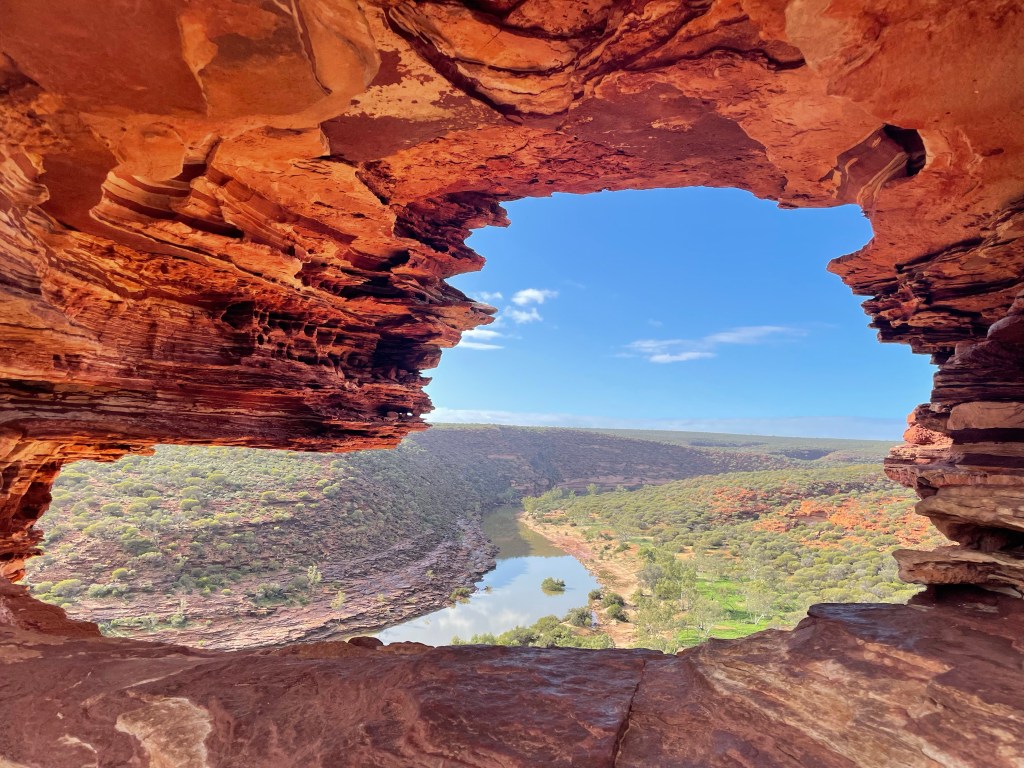
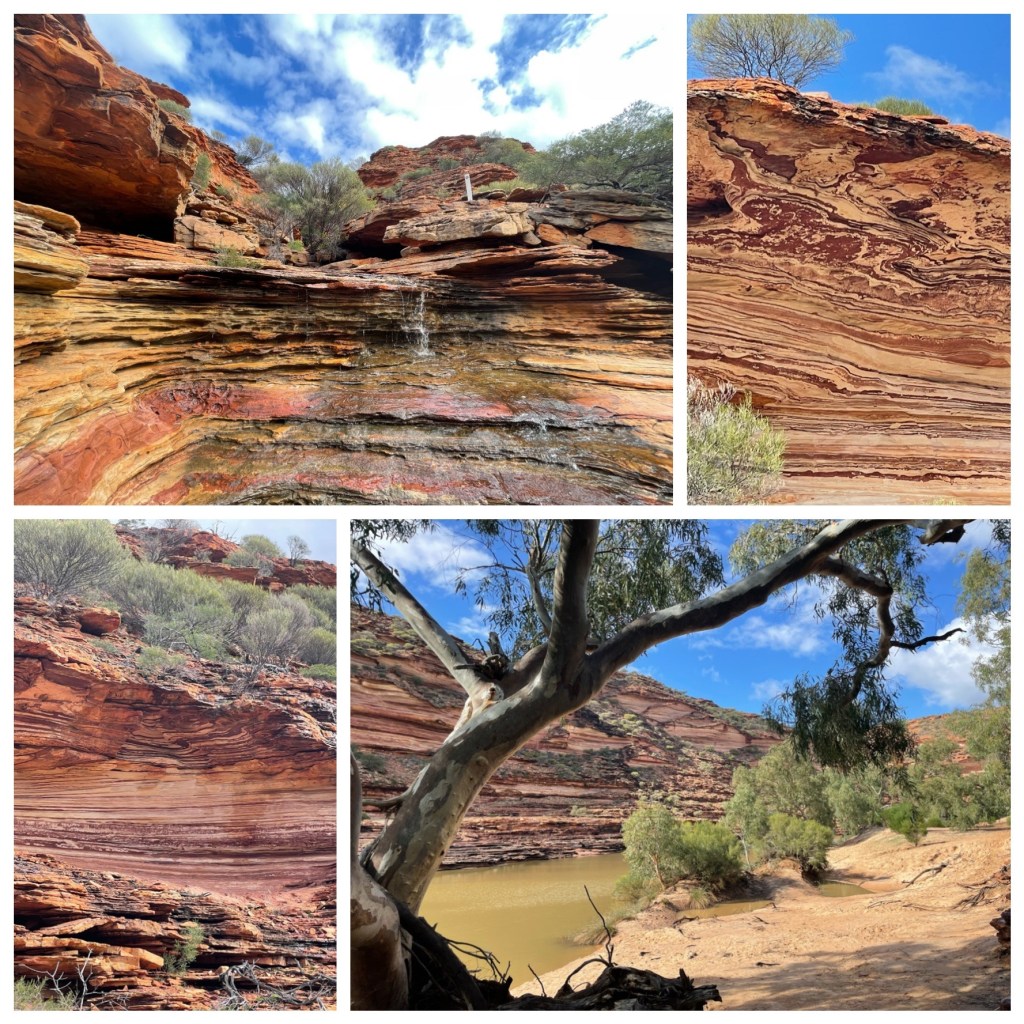
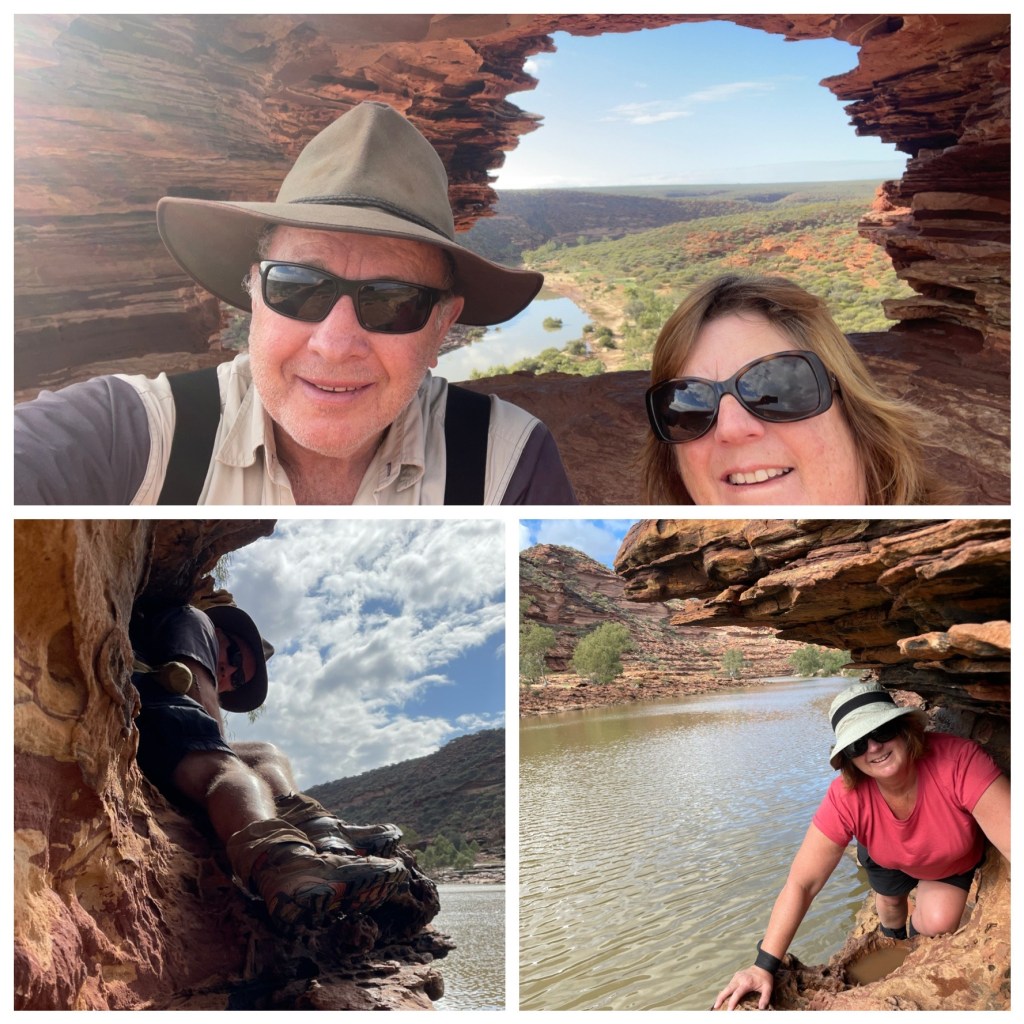
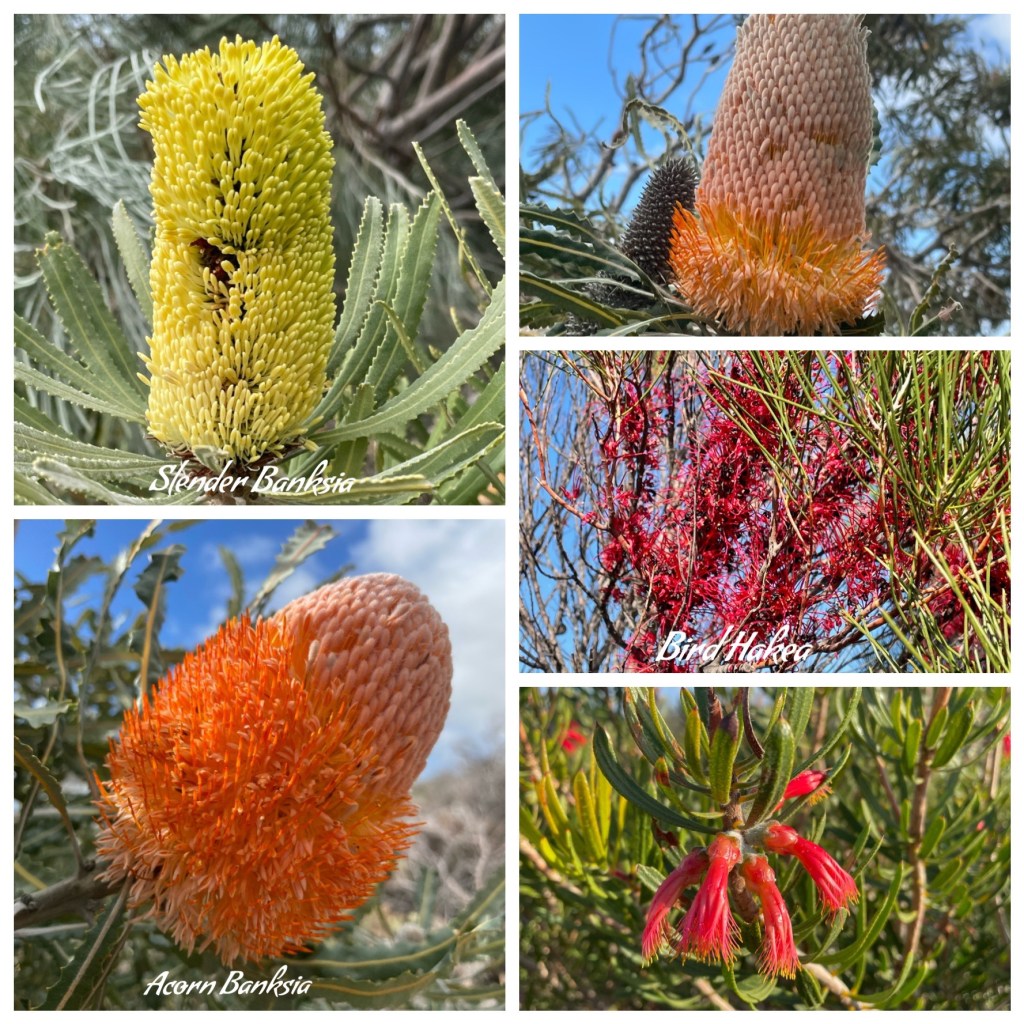
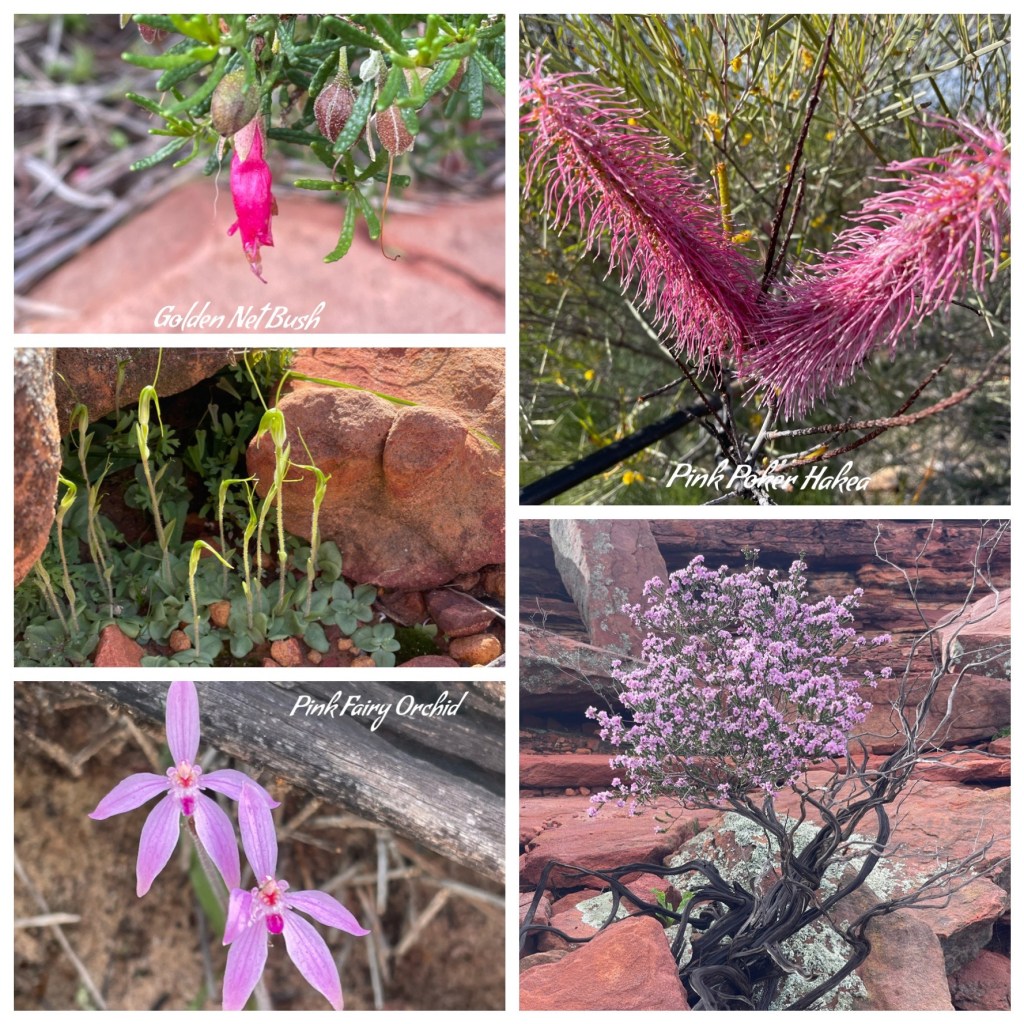
Today has dawned clear and sunny, mostly. We are heading out to Kalbarri Gorge to tackle the Loop Walk. Class 4, 9 km. We are off early and at the start of the walk by 9am. This walk begins at Natures Window and what a spectacular sight that is, especially with no other tourists about. (Lucky we got good photos early as later in the day it was packed with tourists). This walk traverses some of the cliff tops along the gorges edge before heading down into the base of the gorge. Walking and scrambling along rocky ledges, squeezing around tight corners and then opening out to walk along sandy stretches before climbing back to Nature’s Window. A fantastic 4.5 hour walk. The weather was really good, no rain showers, some cloud cover so it was pleasant walking unlike summer temperatures when it reaches 50 degrees at the base of the gorge. Spectacular scenery and some wildflowers revealed themselves at every turn. Once back to the car we drove out to the Skywalk, which everyone says is a must do. I’m not so sure of that! I did walk out onto the cantilevered walkway but it’s really not something I enjoy so left a Philip to it. Our last stop was Z Bend Lookout. Another great view of the gorge and Murchison River.
Natures WindowKalbarri GorgeA couple of tight spotsZ Bend Lookout and the SkywalkWildflowers
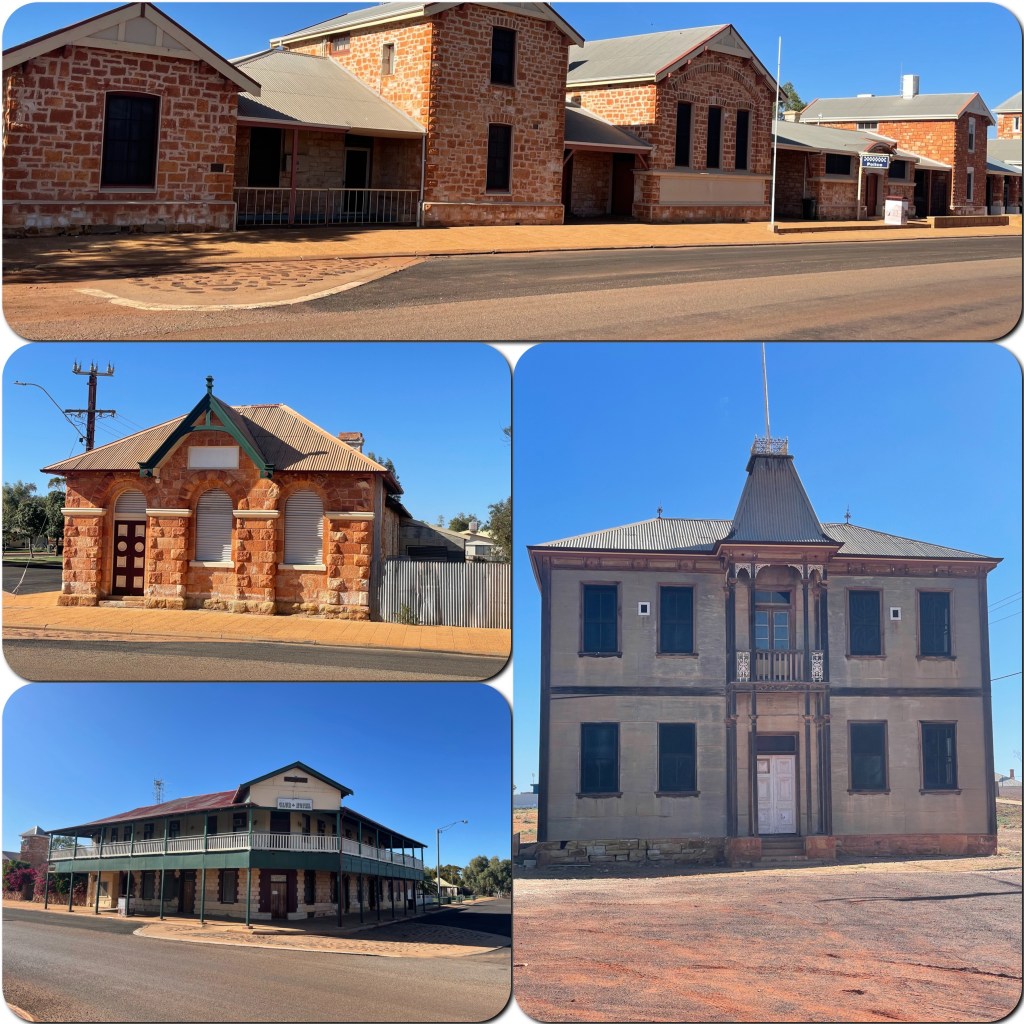
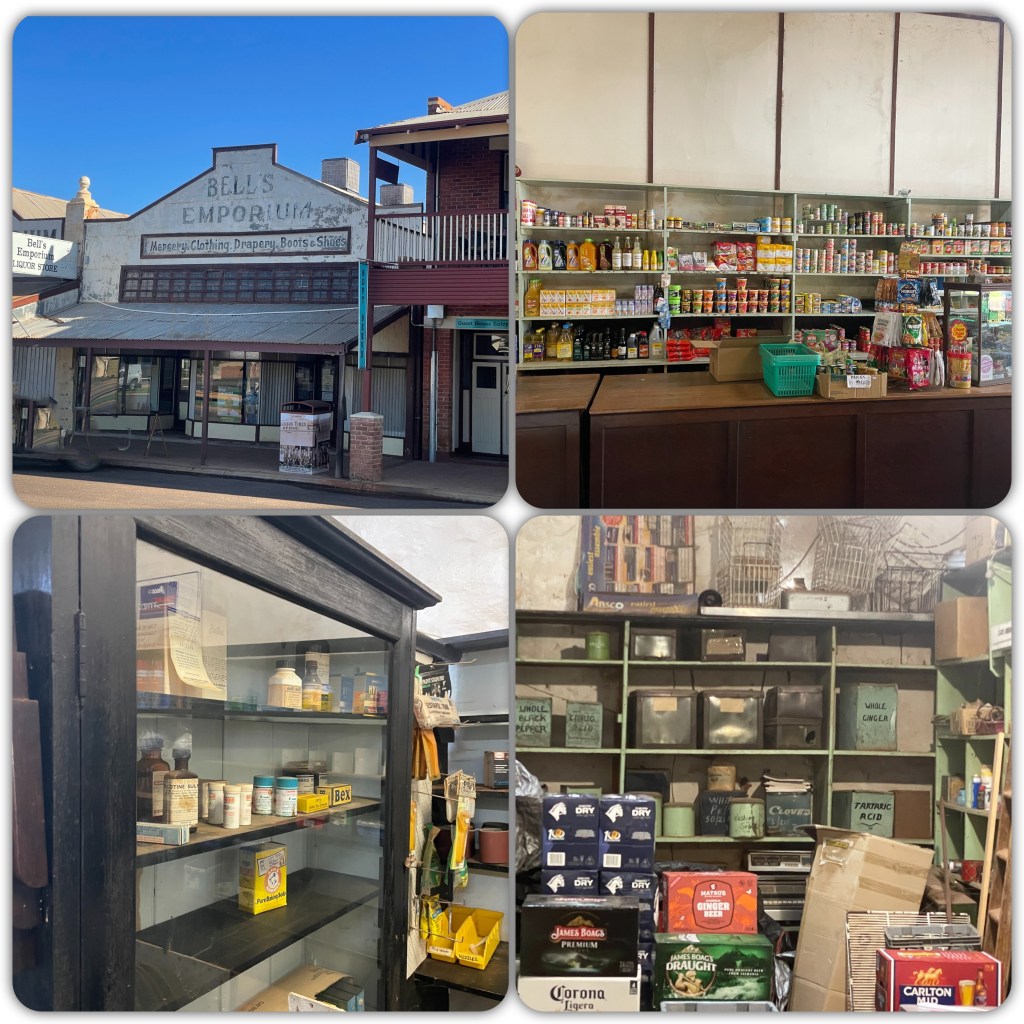
We had a lazy start to the morning and after getting some washing done and packing some lunch we took off for our tour of the area. First stop was Cue. This is a lovely town full of historic buildings. We enjoyed a walk around town reading about some of these sites. My favourite building was the old Masonic Lodge which was built in 1899 of timber and corrugated iron, with a pressed tin interior. Very few buildings of this type remain in Australia. Murchison Lodge was consecrated on 21 April, 1897 and held regular meetings until 1979 when they were cancelled due to dwindling numbers. Other buildings of interest were the Shire Hall, Fire Station, Railway Station and the Rotunda in the centre of the Main Street.
Cue was named after Tom Cue, an early prospector, who became a major figure in the towns development. It is thought that gold was first found in 1892 by Michael Fitzgerald when he pegged a lease on what is known as Kintore Reef and a week later found a nugget weighing 7 kg, just near the Main Street. Tom Cue also dug up nuggets of his own. Within days over 400 men had rushed to the area, a year later the town of Cue was officially proclaimed.
Cue Town BuildingsCue General StoreCue General Store
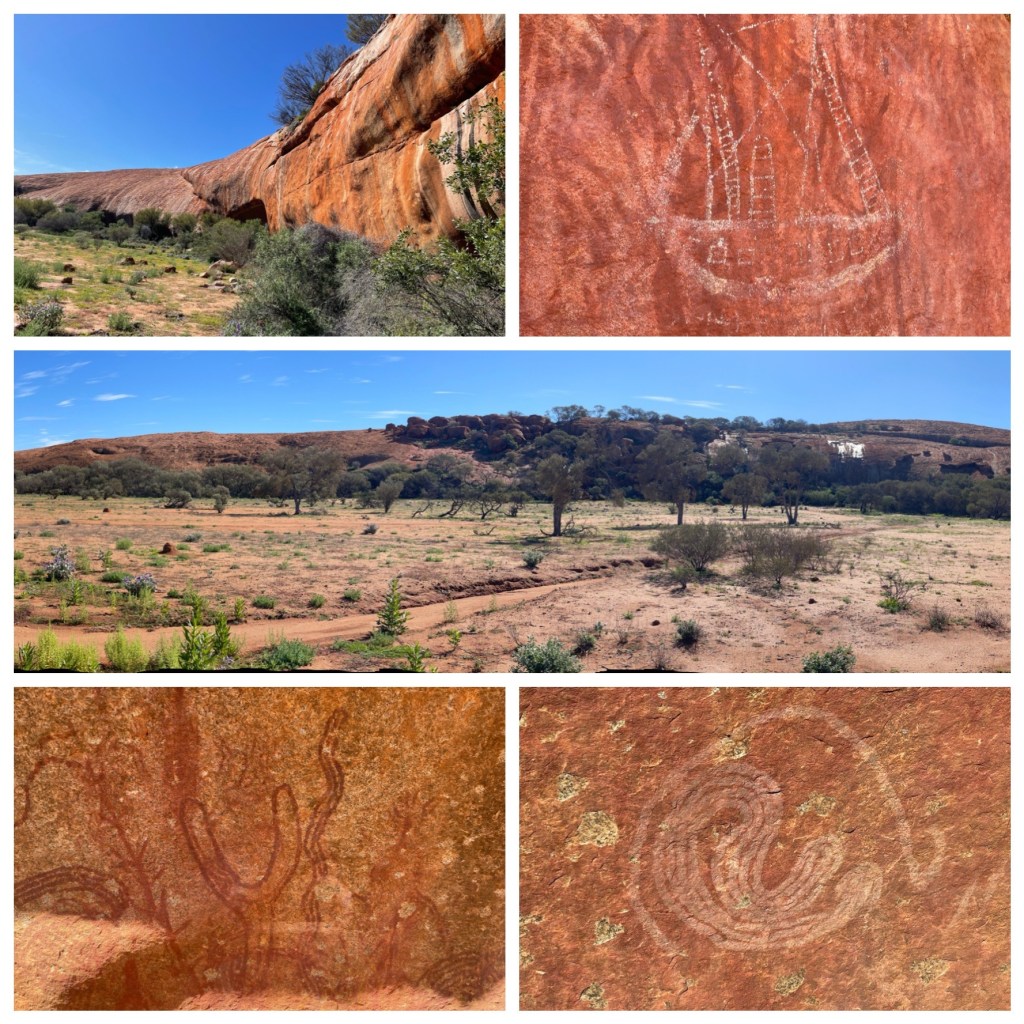
After leaving town we drove out to Walga Rock which is located on Austin Downs Station, 48 k west of Cue. This is suppose to be the second largest monolith in Australia. At Walga Rock we could view a large gallery of Aboriginal rock paintings. Walga Rock was a meeting place for Aboriginal people. Over thousands of years paintings representing snakes, goannas, spears and a sailing ship were painted before people moved on. The paintings were done using ochre from nearby ochre mines which are considered to be tens of thousands of years old.
The origin of the mysterious sailing ship is unknown. One theory says that it has been made by a Dutch sailor shipwrecked on the coast and looked after by Aborigines, another is that it was made by an Afghan Camel guide.
Walga Rock
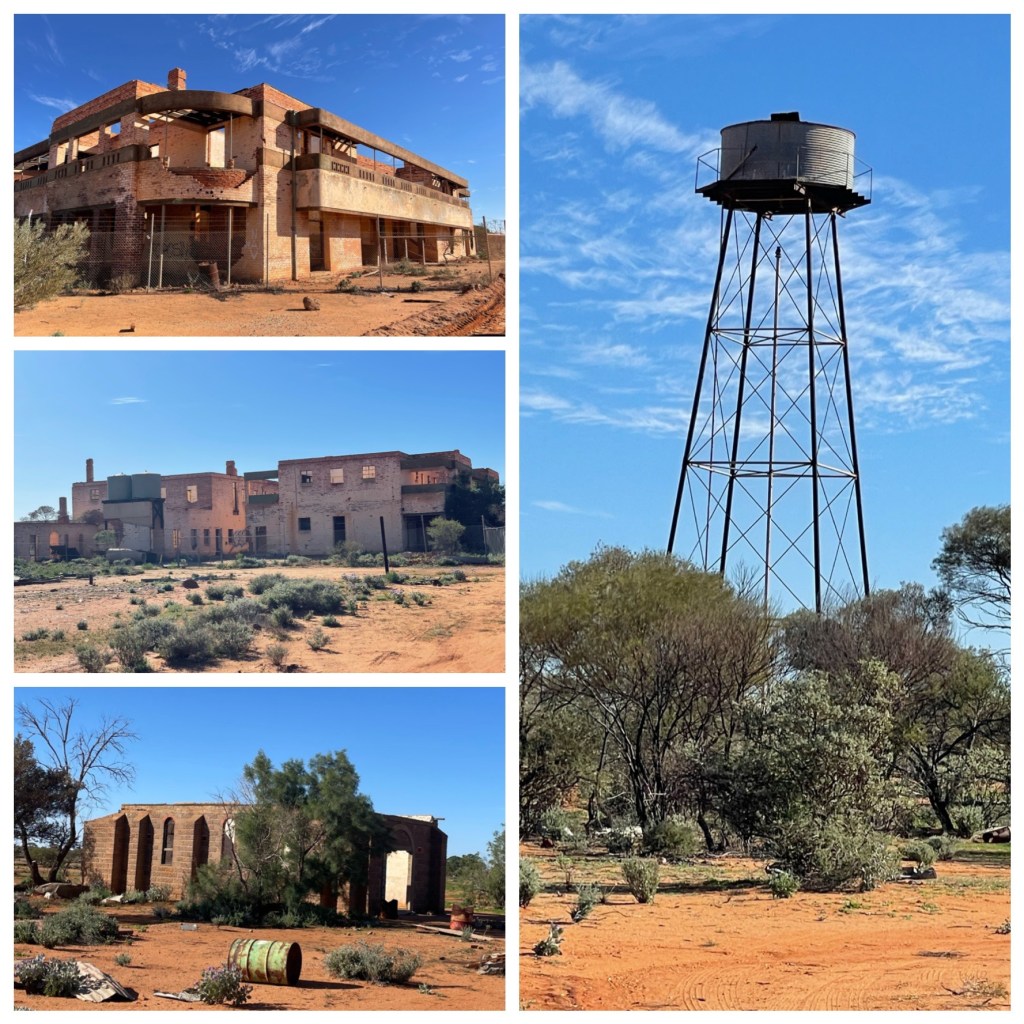
After a drive around the rock we head back down the road and into Big Bell Ghost Town. We would consider this a modern day ghost town as it operated from 1936–1955. It was established to house the influx of workers for the Big Bell Mine. During the Second World War production was suspended to free up man power for the armed services and for the production of munitions and food. The number of employees fell from 417 in 1941 to 15 in 1944. When the war ended the mine returned to full capacity and operated until 1955. Houses soon sold for as little a £60, whilst the Big Bell Hotel sold for £3500. During the 14 years of operation the mine produced 726,298 fine ounces of gold worth nearly £9,000,000.
Big Bell Ghost Town
16th June
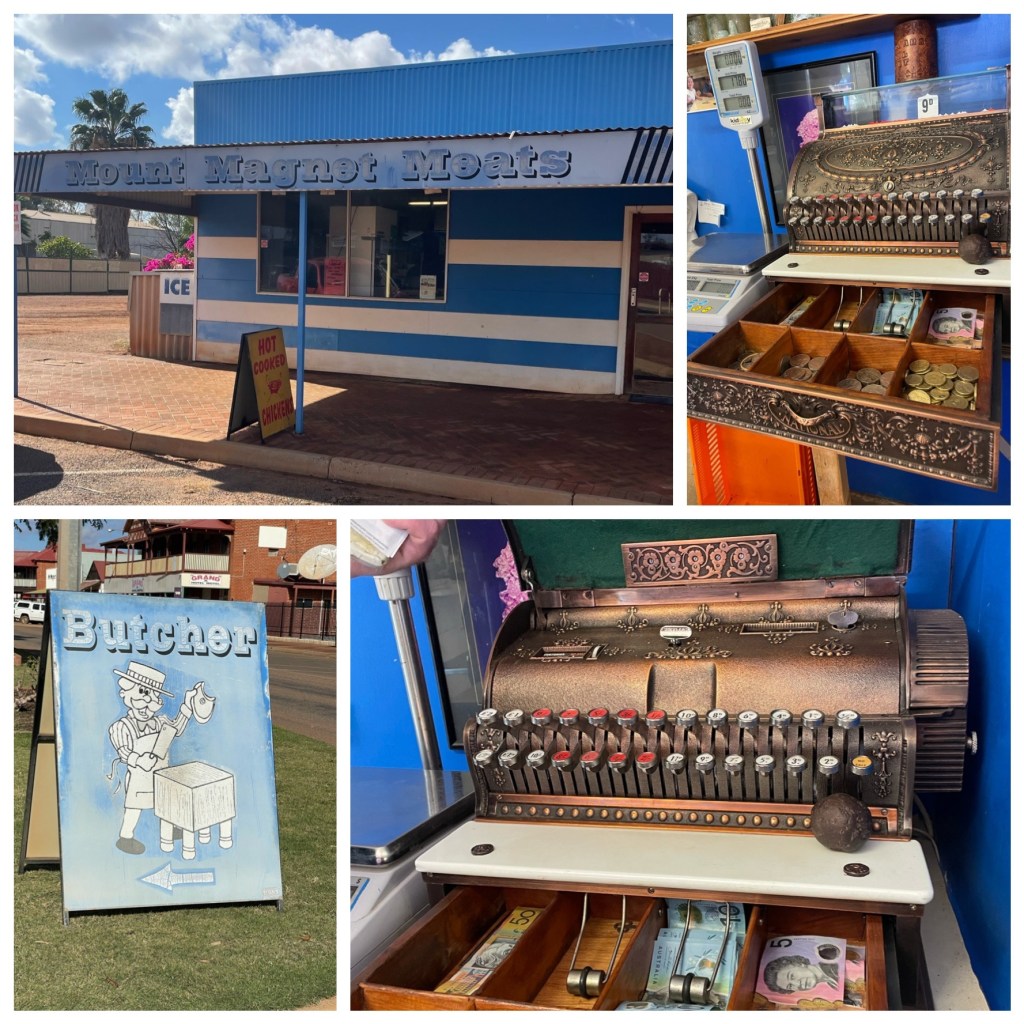
Leaving Nallan Station today we are headed down the road to Mount Magnet. Again Mount Magnet has a lovely Main Street. It’s such a shame they are dying out and most shops are closed. The butcher remains open and we called in. Even though we don’t need any meat Philip had to buy some beef ribs. A change of plans for dinner tonight. Inside, the butcher had a lovely old 1910 cash register still in working order. He was quite happy for me to go behind the counter and take a photo of it. Next stop was the visitors centre and Mining and Pastoral Museum. This museum houses a diverse collection of artefacts and relics from a bygone era.
(P) Fresh beef ribs from the butcher (and a character he was) and straight into our 12v Oven to slow cook as we drive South down the Great Northern Highway to this evening destination ( unknown at this stage). At 4pm in went the potatoes to roast and at 5 a steamer pot of veggies- at 6.30 pm we are treated to an awesome 12 volt meal!
Mount Magnet Meats
Last evening I receive a txt from my Son suggesting Gumtree Tasmania was in financial trouble due my absence! Today the subject of improved bank account balances (and negative comments about Gumtree) whilst we are travelling was raised again. I am starting to feel victimised! The response from my wife when I suggested I would have an accumulated budget to spend when I return home best not be repeated! Poor Ole Phil!)
17 th June
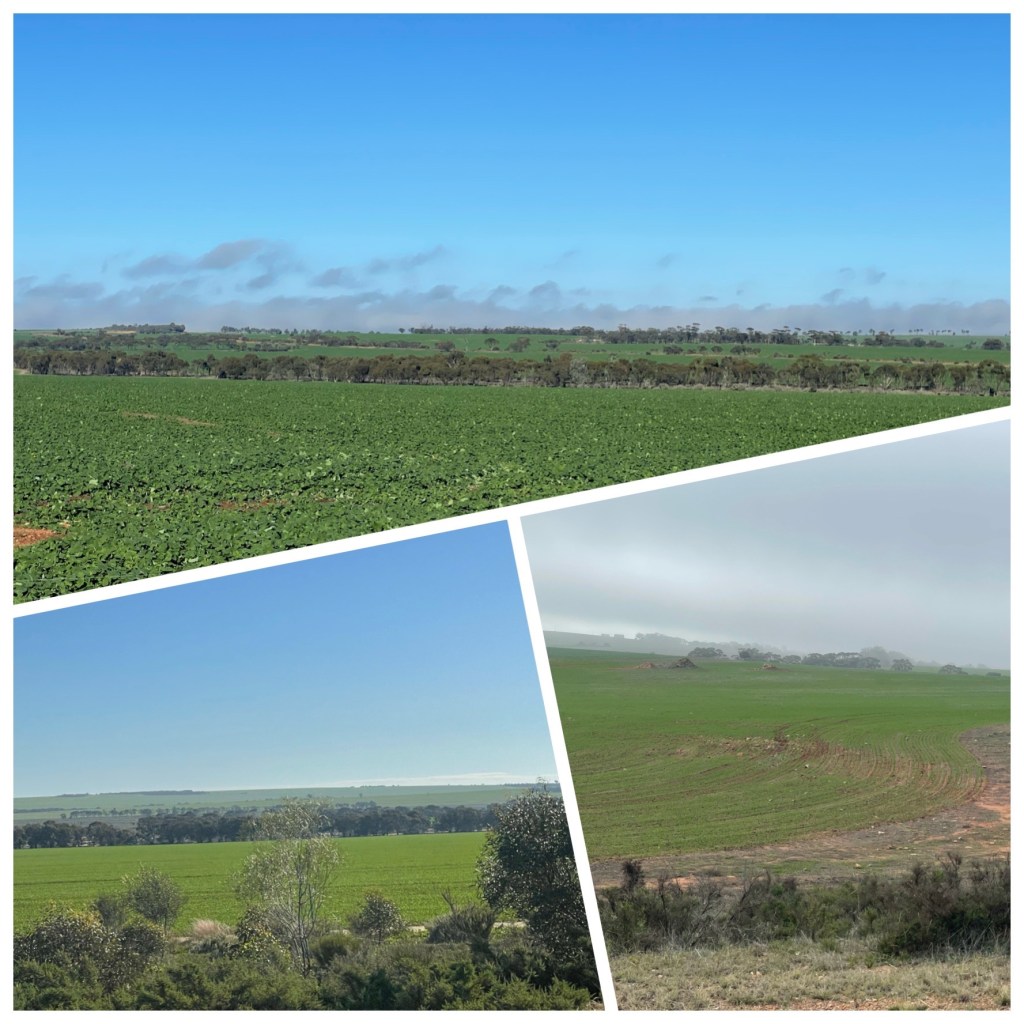
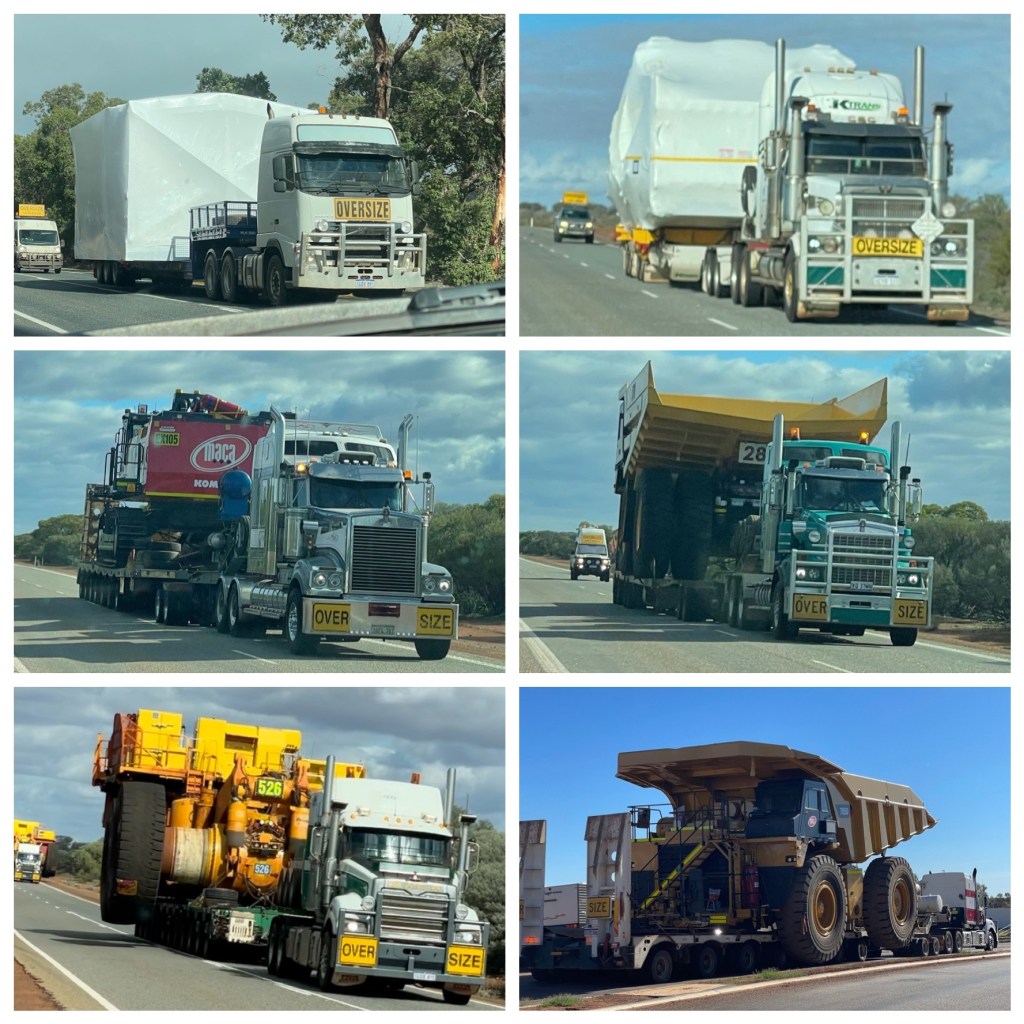
Today as we drive towards Perth we go from gold fields and scrub to wheat and canola paddocks, cattle and sheep and then vineyards. Makes a change from all the miles of red dirt, dry plains, mining operations etc that we have seen over the last few weeks.
Our main stop today was at New Norcia, Australia’s only monastic town. An historical and spiritual treasure in the Australian bush, so the brochure says. I must admit it was quite unexpected to see such interesting architecture out here. The Monastery is home to a community of Benedictine Monks since 1847. There are colleges and old convent, a monastery guest house and Olive House which is still used today, a blacksmiths workshop and more. Very interesting to wander around and read the history of the buildings.
Continuing down towards Perth we stop at the quaint little town of Bindoon where we pull into the sports ground for the night. Philip got talking to a couple parked next to us and discovered they knew the same people from Tasmania and Manjimup. We had a great time talking to them and hearing about their travels over many years.
We arrived to Perth Caravan Park just before lunch and set up and sorted washing etc so it’s all done before we fly home tomorrow.
Later this afternoon we are catching up with Margaret and Cameron for a coffee before they start to head north on their travels and we head south to Tasmania for a few days.
So this will be the end of part one of our trip. We will catch you when we return to WA.
(P) for all those super concerned about our well-being, returning to supposedly “Cold Tasmania” . I wouldn’t be too concerned! It was down to Zero degrees the last couple of mornings! And max’d out at 15-16 thru the days!
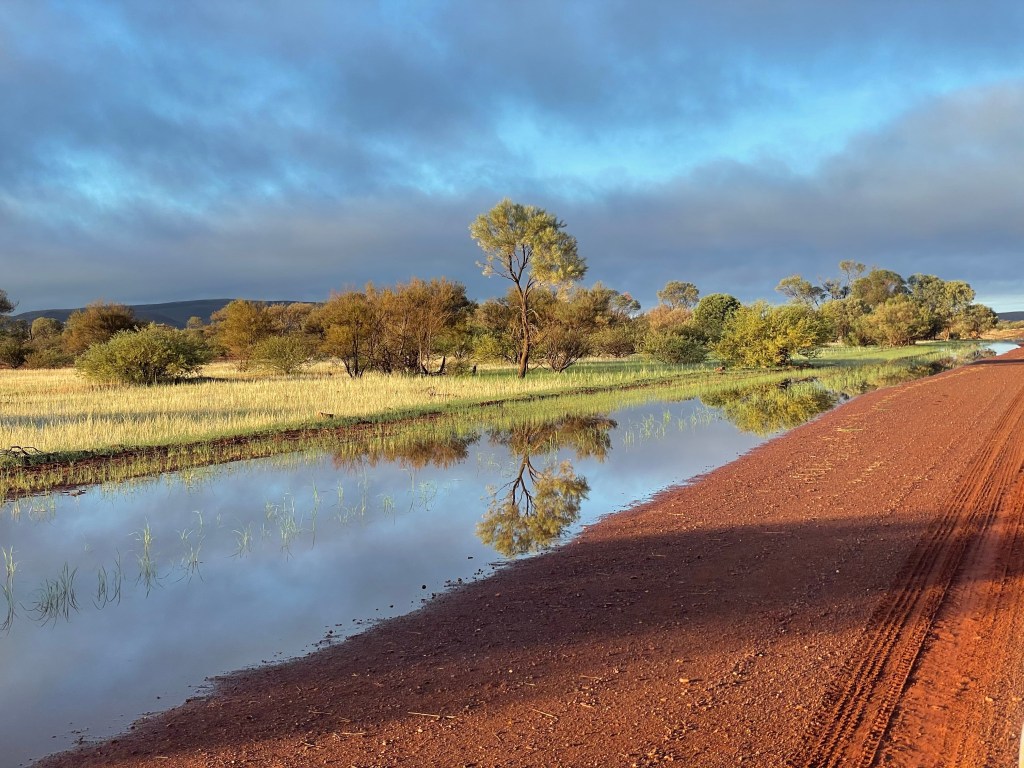
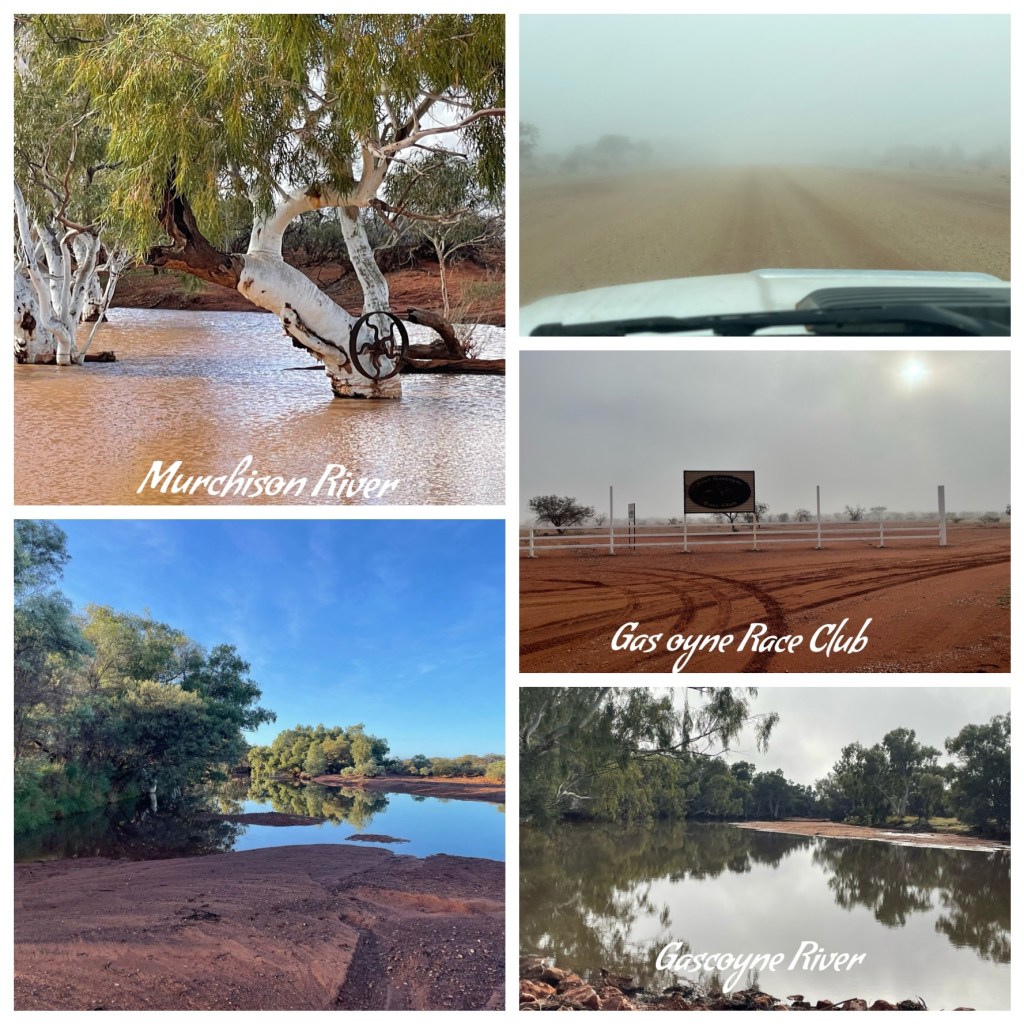
We are free from Mt Augustus but only one route out is available and that’s heading to Meekatharra. Fortunately that’s the direction we wanted to travel. We are up and on the road early, departing just after 7 am. We are not the first to leave, there have been several vehicles out before us. The road has dried out quite nicely but it’s pretty wet off to the sides. Lots of water laying about so some great reflections in the pools. Not far down the road we come into thick fog which lasts for some time before slowly lifting.
An unusual sight to see out here in the middle of no where is a race track for the Gascoyne Race Club. Big sign and white fences leading into the club. Last race meeting was in 2018. The race track is serviced by a large airstrip nearby and is about 30 k from Landor Station on the Gascoyne River. The river has been well over the road but is now thankfully just lapping the Ford. This is also a place where Charles Kingsford Smith stopped on his mail run ( yes the pilot of fame, after flying for Qantas, came to the west and started the Gascoyne Trucking Company)! through this area. When the river was in flood they used a flying fox to deliver the mail across the river. The remains of this can be seen around several of the trees along the river bank.
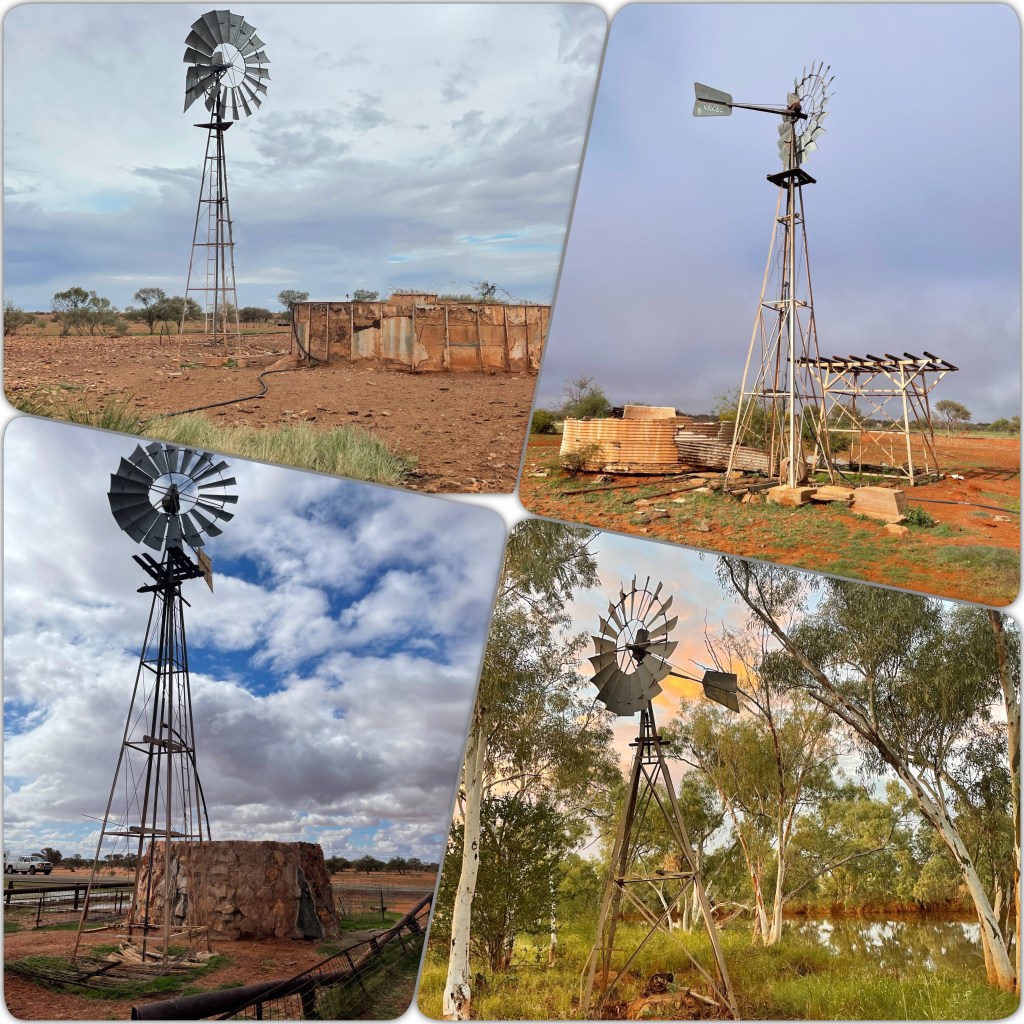
Further up the road we stop at a windmill and some outbuildings which we wander around and through. There used to be a shearing shed here once as well but all remains of that are gone now. The shearer’s quarters still remain, with a great old wood stove at one end and a large meat safe at the other end of the building. Not sure how the meat and other perishables would have kept in a tin shed with a huge cook stove and 40 degree heat during summer. It’s interesting to walk through these old places and wonder how they survived out here.
Next stop was Mt Gould Lockup. This was manned from 1888 with four officers and half a dozen Aboriginal Trackers. Serious offenders were taken on a 450k trek to Carnarvon on foot (in chains) with police on camels. Non serious offenders were held in the lockup behind the station. After crossing the Murchison river later in the day and then another smaller river but with water over the road we reached Meekatharra where we fuelled up with both fuel and an ice cream before finding a camp spot just down the road.
Roadside ReflectionsAlong the RoadA symbol of the Outback, Sadly in Decline
Sunday 13
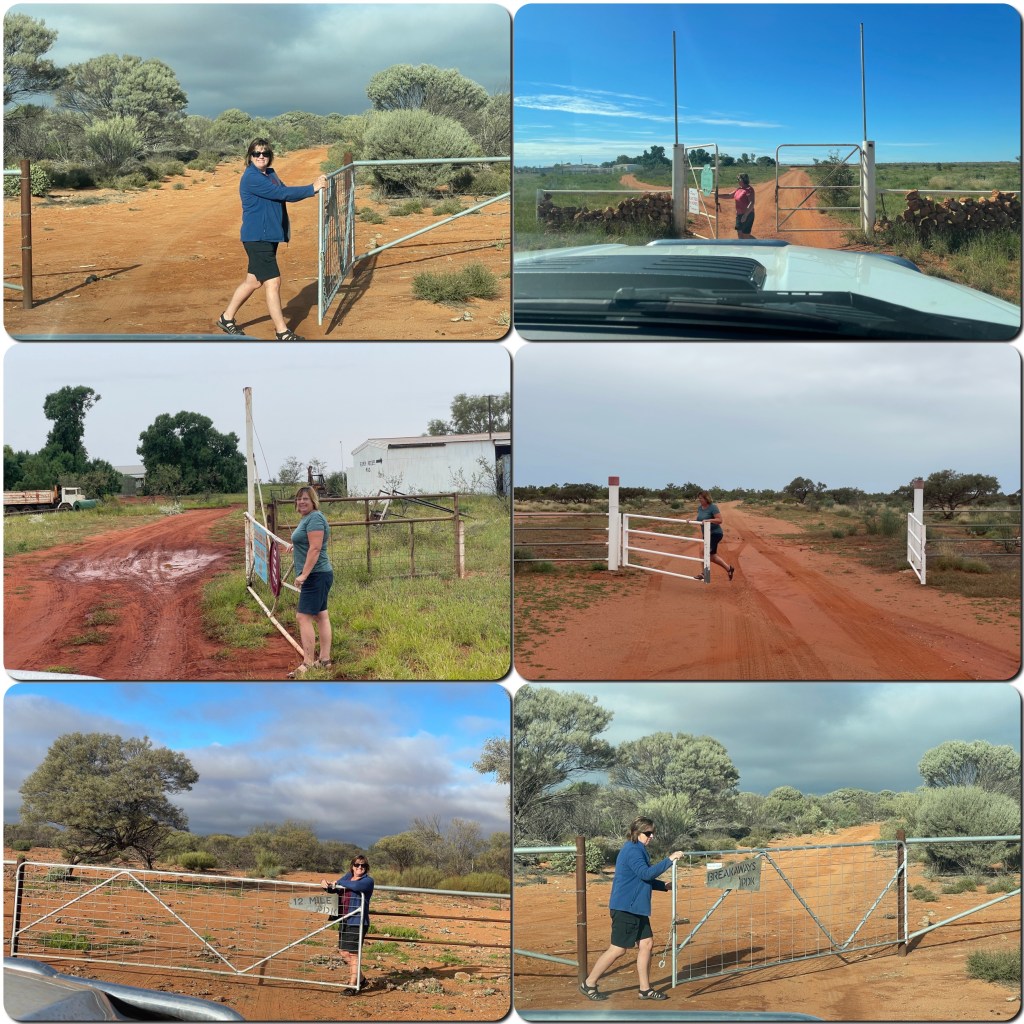
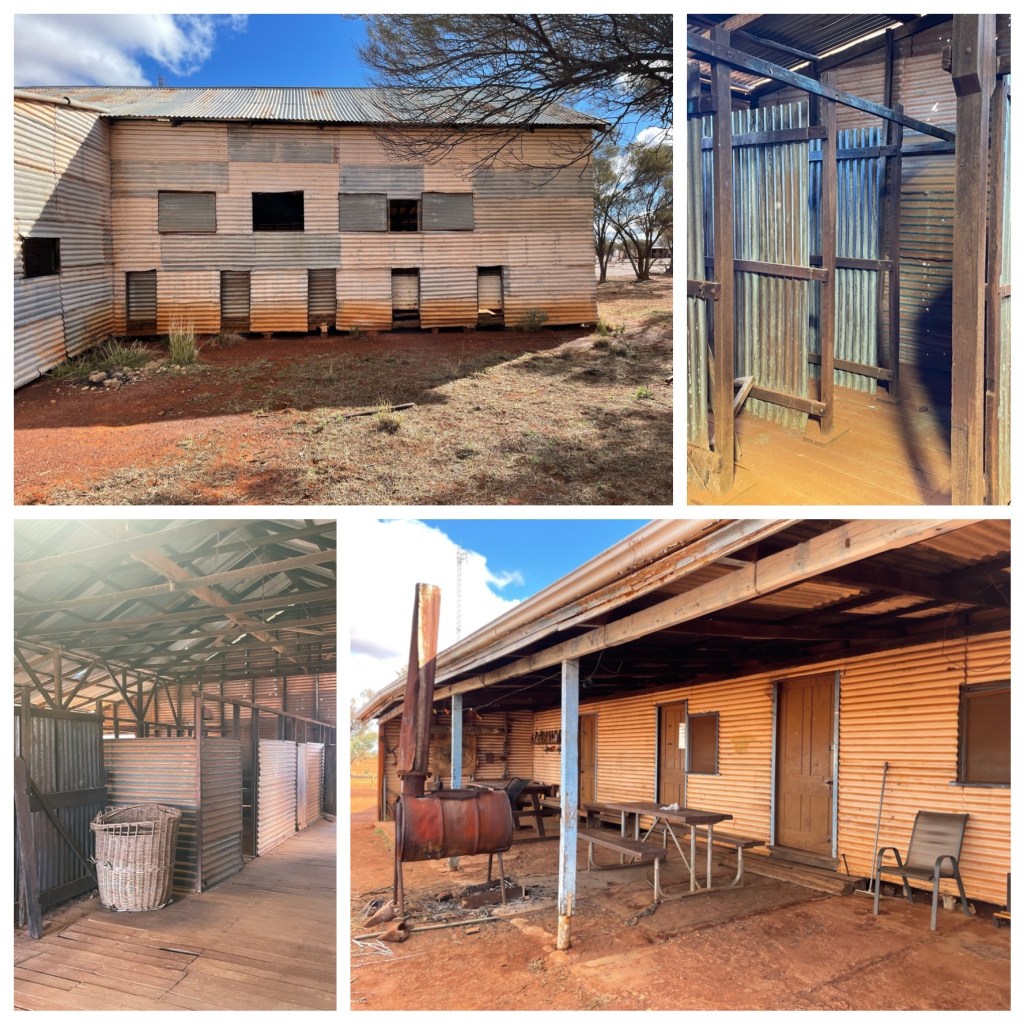
An easy day today. After exploring Meekatharra for a while, there’s not much there so it didn’t take long, we drove south to Nallan Station where we are staying for 3 nights. Arriving about lunch time we found our site and settled in for a lazy afternoon. A walk around the station yards and a chat with station hand, Carl got us entry into their old Woolshed. They also have shearer’s quarters here which they let out to guests, a lovely old style kitchen facility, an outdoor bbq area and a large fire pit which was quickly claimed by a group of travellers all with Trackmaster vans. They weren’t very friendly for a chat when we ventured over later in the afternoon. We also talked to Cathy who along with her husband purchased this property 4 1/2 years ago and have had drought ever since. The station is 250 000 hectares and they run 300 head of cattle. Just the bare minimum. They would normally stock 1000 head. (P) These people really take pride in their property, the cattle in excellent condition (considering the dry) along with great fences yards etc. not to mention being great Campground hosts.)
Gate Opener Extrordinaire
Monday 14
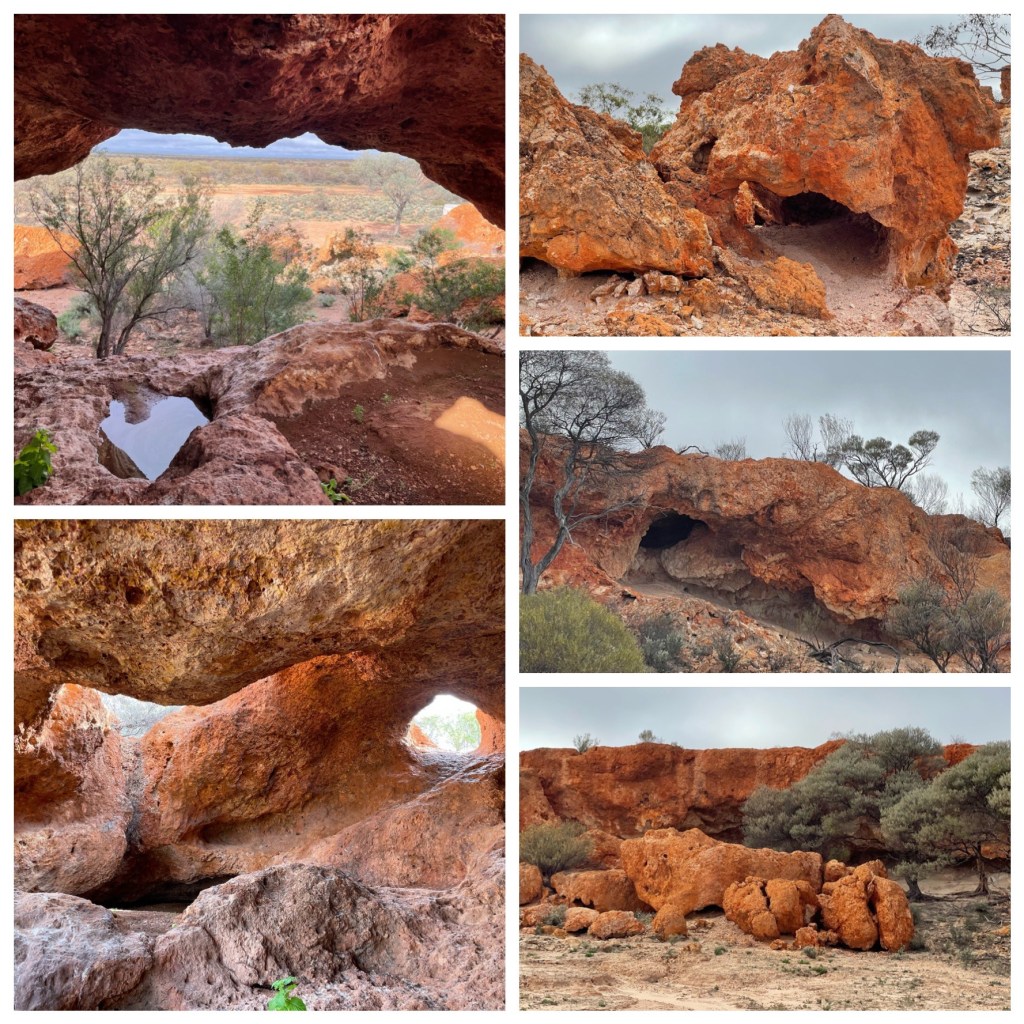
We are leaving the van here today and doing a loop out to Lake Mason. May stop in the Rooftop tent overnight. First port of call is The Breakaways which is a short 50+ k from the homestead and deep within Nallan Station. Not sure what we will find but that’s all in the adventure. Armed with our instructions we find the turn off and follow the directions. Only having to backtrack a short distance near a windmill to get to the right gate. After a short time we arrive at the area of interest. It is amazing. The Breakaways are cliff faces that have, over time been eroded and collapsed, hence the name breakaways. The rock is very porous and caves and holes and interesting formations have been carved out of the cliffs.
The Breakaways, Nallan Station
Back on the road and we drive north through Cogla Downs, where we find another old Woolshed. Wool still on the floor and the classing table, lanolin scent in the air, electric shearing heads still on the wall. People just up and left. (P) The different management style between Nallan and Cogla are noticeably different- Nallan fit for a picture and Cogla an absolute mess, all cattle, regardless of age, we saw were unmarked and obviously have never been mustered not to mention the machinery, vehicles etc just left around the station where they broke down! We found out later that the property is owned by the Indigenous Land Council as a “training and economic development” property. What a disgrace ( in my opinion).
On to Lake Mason Station. Originally established in 1906, when it was known as Berrigun. Over time it has had numerous changes of boundaries and owners. Initially it was a cattle station before changing to sheep and wool production as its primary income for more than 80 years. In 2000 it was purchased by the government and joins Black Range lease and Kaluwiri Stations also purchased in 2000 and forms the Lake Mason Conservation Area covering an area of over 230000 hectares
Philip really wanted to visit this station and see the Woolshed that is still standing. It’s a bit of a disappointment, almost all gutted and just the shell standing. Of all the Woolsheds we have visited this is the only one with no machinery left inside. The old homestead was a step back in time with pressed tin ceilings and walls, tongue and groove walls and an outdoor laundry with copper stand in the corner. It did have an addition of an inside bathroom but also had the outside dunny. The shearer’s quarters were still standing and being used by campers. An outdoor wood stove and chimney stood solidly off to the side of the shearer’s quarters. I’m sure if it could talk there would be some tales told. Why anyone would live out here I have no idea. It’s barren, wind swept and miles from anything, but those early pioneers must have seen something to make them want to stay.
Lake Mason StationLake Mason Homestead
From Lake Mason we drive on to Sandstone. This is a very tidy town, lovely gardens down the centre of the street. A pub/grocery store (now that’s an interesting combination) is about all that is open. You can buy your bread and milk and have a beer before returning home. We top up with fuel and drive out the Heritage Trail that takes us through some more breakaways, (not quite as impressive as earlier today.) to London Bridge. This is part of a larger formation 800 metres long. It is formed from weathered basalt and is believed to be 350 million years old. It is gradually eroding away or falling down. Years ago it was wide enough for a horse and cart to drive over. Today it makes for a good photo opportunity.
London Bridge
We had intended to camp the night but it’s cold and windy so we keep driving back through Mt Magnet and Cue back to the van. 550 k predominantly dirt station tracks in a day is a bit much but it’s been a good day with lots of varied scenery. (P) I guess by now most who read this must realise I (and I trust Judith) enjoy our early pastoral activities and the history and stories that accompany it! I often comment “if only those walls could talk” as we wander through old relics of buildings. It is hard to imagine the tough times our early pastoralists went through ( as well as some very good times as well). Again I think some photos will be better than words!).



















 Tassie Travellers