28th July
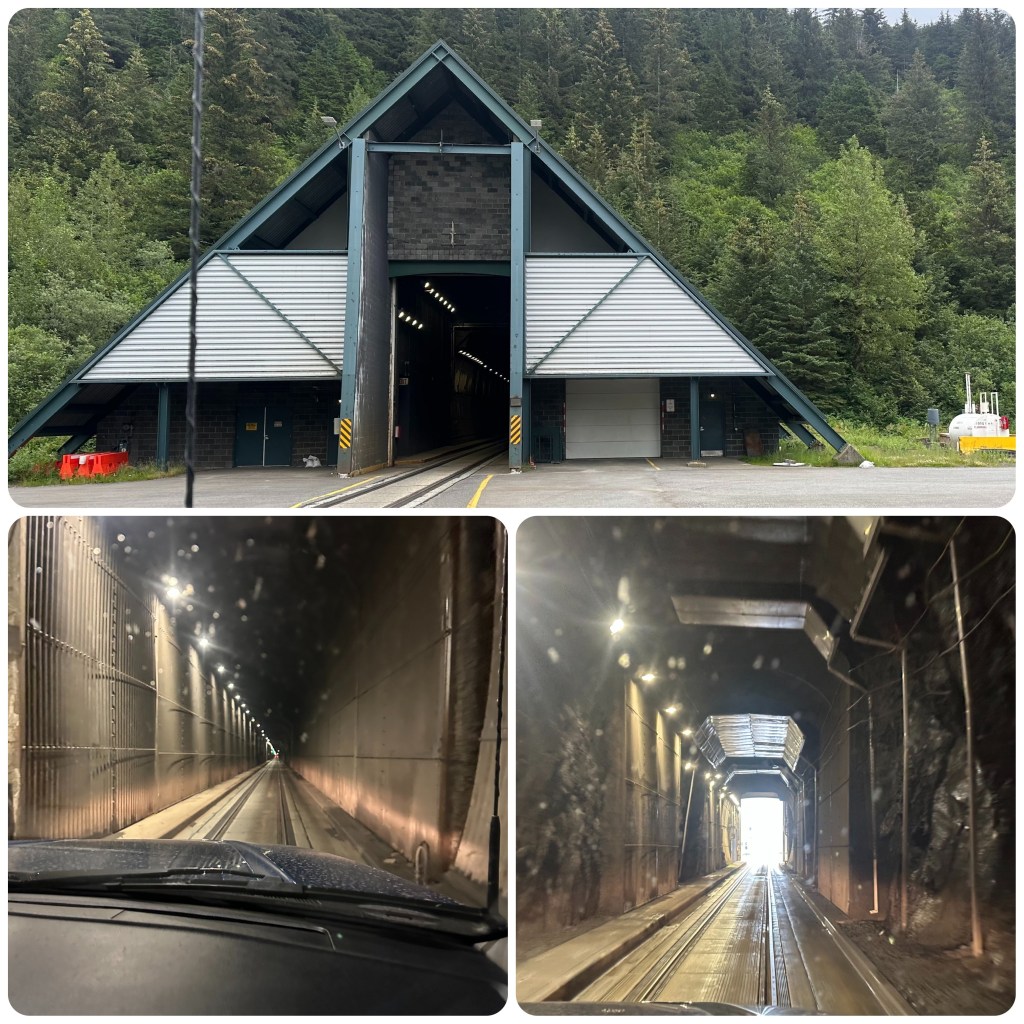
This morning we drive from Tern Lake into Whittier where we are booked to catch the Alaska Marine Highway Ferry to Valdez. We are currently sitting on the ferry as I write this enjoying some spectacular views as we cruise past mountains, glaciers and many, many islands. But back to Whittier. This is an amazing little town. Access to Whittier is via a train/vehicle tunnel 2.5 mile long. It is the longest tunnel in North America and the first designed for -40 degrees and 150 mph winds. The tunnel was originally built for the train and it wasn’t until 2000 that the road was constructed so that both trains and vehicles could use it. The tunnel is only a train width wide. Trains have priority and traffic lights control this one way at a time tunnel.
Wandering along the boardwalk we spot a whale right in close to the shoreline. We stopped to watch it for a while. They are such graceful animals for being so large.
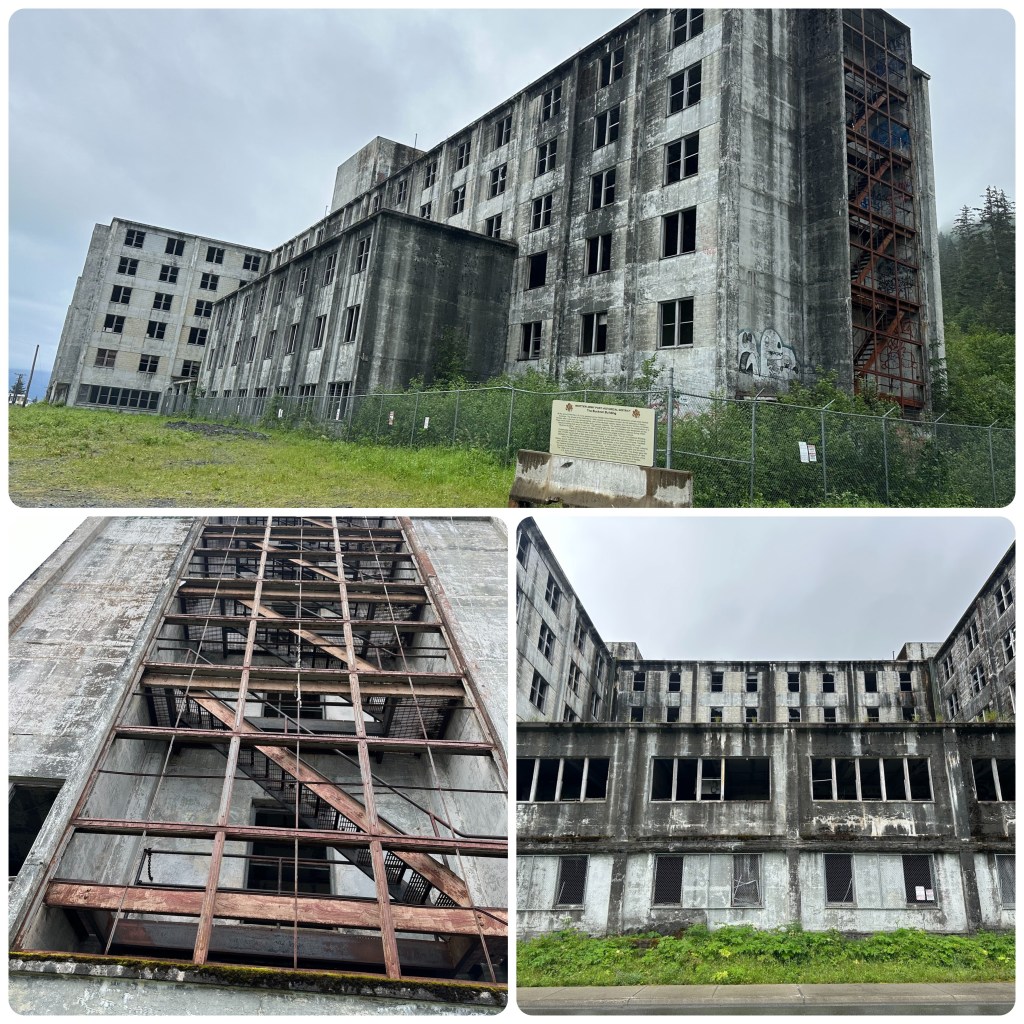
Whittier was an Army Garrison and at the end of WW11 people were still wintering in small wood framed buildings. With the advent of the Cold War it was deemed necessary to build a more substantial building that would house 1000 troops under one roof. The building was designated the Buckner Building and was destined to become the largest building in Alaska. Construction began in 1949 and was ready for occupancy in 1954. The building was a city under one roof. In addition to housing the troops it also had a 350 seat theatre, hospital, 4 lane bowling alley, bakery, church, barber shop, library, radio and tv station and a huge cafeteria. It was all connected with wide stairwells and elevators. This massive building was in 7 sections, each separated by 8 inch gaps. This design gave the building flexibility and when the 1964, 9.2 Alaskan Earthquake hit the building survived when most of the other structures around the town crumpled. The military mothballed the building in 1960 when the Whittier Army Port was closed.
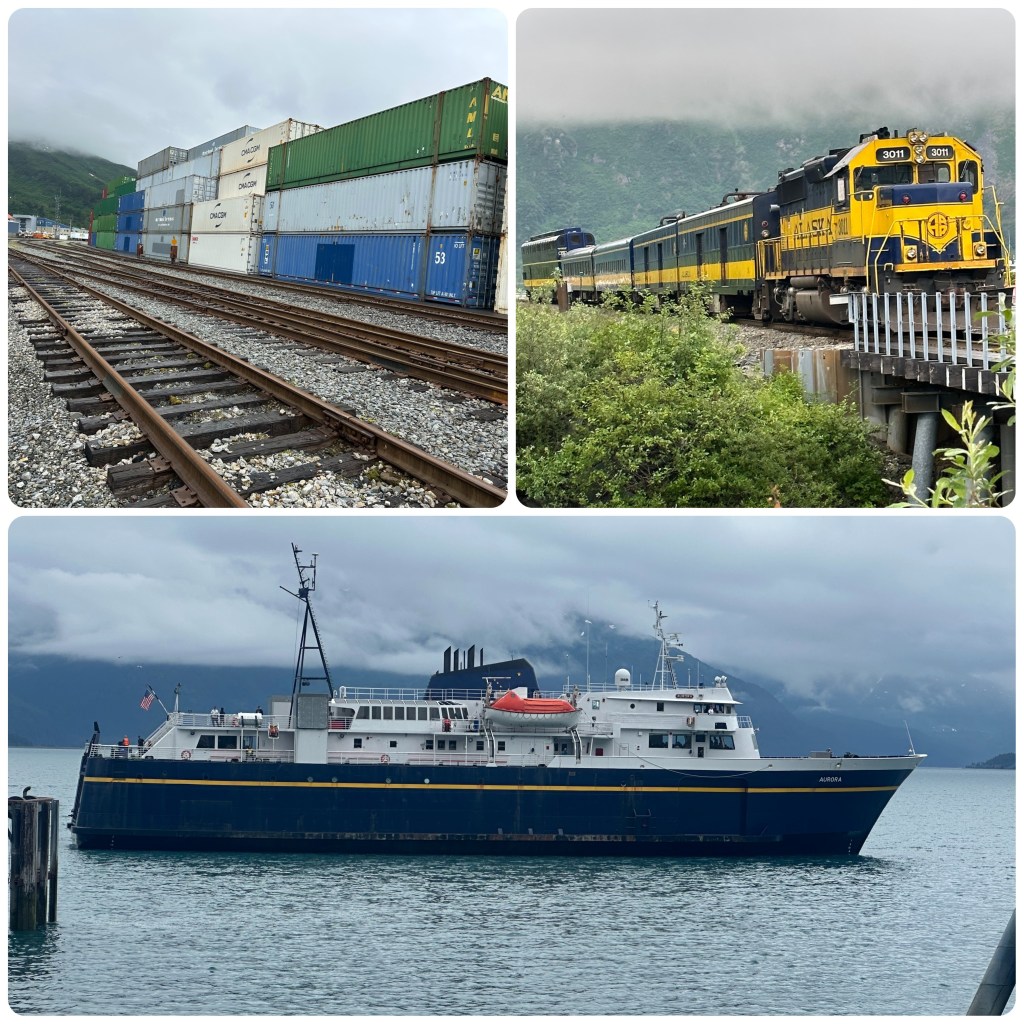
Whittier is now predominantly an all weather freight destination which supplies Alaska from an ice free port and almost all weather rail system, the tourist and fishing industries are also significant. From the Alaska Marine Highway to local kayakers and fishing boats to cruise ships. The town population fluctuates as the seasons dictate. Even though this is a deep water port and open all year Whittier still receives huge dumps of snow. The average snowfall per year is 50 inches and it’s also the wettest town in Alaska having an average rainfall per year of 197 inches (5metres).
We board the Aurora, Alaska Marine Highway Ferry from the rear, park and head upstairs to find a couple of seats for the 6 hour ride through to Valdez. The route takes us out into Prince William Sound and through Valdez Arm before docking in Valdez just after 8.30pm. It’s been a spectacular trip, skirting islands, spruce covered mountains, past numerous waterfalls and past icebergs floating out from Columbia Glacier. Fishing boats pass us continually as does the cruise ship Majestic Princess as it sails towards Whittier. The water is calm and it’s not too cold to go out on deck to get the odd photo or two.
Docking at Valdez we unload from the Starboard side of the Vessel and head just down the road to Bear Paw Campground, our destination for the next 3 days.

 Tassie Travellers